New Jersey lawmakers are raising serious concerns over proposed World Cup security plans that would restrict access at New York Penn Station for NJ Transit commuters on match days. Officials say the plan could shut out everyday riders for hours at a time, creating major disruptions during peak travel periods while prioritizing fan and security movement for the tournament at MetLife Stadium. Critics argue the changes put commuters last in an already strained transit system.
In 1969, the heavily polluted Cuyahoga River in Ohio caught fire several times, leading (some say) to Nixon establishing the Environmental Protection Agency in 1970 and the rise of the modern environmental movement. The first Earth Day was in 1970, and the decade saw the country begin to reckon with the environmental impact of decades of industrialization.
When New York enacted the State Environmental Quality Review Act (SEQRA) in 1975, the goal was to ensure that government decisions accounted for environmental consequences before construction began. Many environmental advocates say the law has worked: forcing agencies to study impacts, disclose risks, and incorporate mitigation into projects that might otherwise have proceeded unchecked. But over time, critics argue that SEQRA’s broad scope and open‑ended timelines have turned it into a procedural bottleneck that slows or derails even environmentally benign projects, including projects to address the state’s housing shortage.
New York faces an estimated housing shortage of more than 500,000 units, while over half of renters are cost‑burdened, paying more than 30% of their income on housing, and many see SEQRA as a roadblock to address this.
The Weight of the Current Rules
SEQRA applies to any project requiring discretionary government approval, from rezonings to infrastructure upgrades to affordable housing developments. Under the current system, agencies must complete an Environmental Assessment Form (EAF) to determine whether a project may have significant environmental impacts. If so, they issue a Positive Declaration, triggering a full EIS, a process that can take years and requires extensive public comment, interagency coordination, and often litigation.
Even reaching the initial determination can be slow. Agencies may request additional studies, developers may revise plans, and community groups may raise objections. Critics argue that the process is vulnerable to delay tactics unrelated to environmental protection, while supporters say the flexibility is essential for meaningful review.
In practice, SEQRA review can take up to two years, even for modest housing projects, according to reporting from City Limits. Those delays add an estimated $82,000 per apartment, or more than $8 million for a 100‑unit building, costs that ultimately shape rents, financing, and feasibility. Developers and housing advocates note that the vast majority of SEQRA reviews end with a “Negative Declaration,” meaning no significant environmental impact was found but only after years of procedural steps.
Infrastructure projects face similar challenges. Governor Hochul’s office cites data showing that major projects take 56% longer to reach groundbreaking in New York than in comparable states, largely due to environmental review timelines. That includes clean‑water upgrades, manufacturing facilities, and renewable‑energy installations, all central to the state’s long‑term economic and climate goals.
Local officials often describe SEQRA as a barrier even on sites that are already paved or previously developed. A parking lot, for example, may require the same review as a greenfield site, despite posing far fewer environmental risks. The result is a system that many planners say is misaligned with the urgency of New York’s housing shortage and infrastructure needs.
Hochul’s Proposal
In January 2026, Governor Kathy Hochul introduced her “Let Them Build” agenda, a package of reforms aimed at modernizing SEQRA and accelerating construction. Her administration frames the effort as a way to preserve environmental protections while removing procedural barriers that slow down projects communities already support.
The proposal includes several major components:
Clear timelines for environmental review
Standardized procedures across agencies to reduce litigation risk
Expedited approval for categories of projects shown not to have adverse environmental impacts
Lower costs by shortening multi‑year review periods
Faster delivery of infrastructure, including clean‑water systems, parks, and green infrastructure
The most debated element is a set of full SEQRA exemptions for qualifying housing projects.
Inside New York City, projects would be exempt if they:
Are not in coastal flood zones
Are not in industrial‑only zones
Are mixed‑use with ≤50,000 sq ft of nonresidential space
Contain ≤500 units in medium/high‑density zones or ≤250 units elsewhere
Outside New York City, projects would be exempt if they:
Connect to existing water and sewer systems
Are built on a previously disturbed site
Are mixed‑use with ≤50,000 sq ft or ≤20% nonresidential space
Contain ≤100 units
The definition of “previously disturbed” is narrow: the site must have been developed within the last two years, cannot be in a FEMA 100‑year floodplain, and cannot have been used for agriculture for three of the previous five years. Maintained lawns can qualify; greenfields cannot.
Supporters argue these exemptions would meaningfully accelerate construction of affordable and mixed‑income housing, especially in suburban and upstate communities where zoning and infrastructure constraints already limit supply. They also note that the exemptions apply only to projects with modest footprints and clear environmental parameters.
Public Comment and Reaction
Public reaction to the proposed reforms has been mixed, reflecting deep divisions over how to balance environmental protection with housing and infrastructure needs.
Housing advocates, municipal leaders, and some planners argue that SEQRA has become a tool for delay rather than environmental protection. They point to the high cost of review, the rarity of significant environmental findings, and the urgent need for housing. City Limits’ reporting highlights that delays directly affect families waiting for affordable homes and contribute to rising rents.
Environmental groups acknowledge the need for modernization but warn that exemptions must be tightly defined. They worry that broad exemptions could allow developers to bypass meaningful review, especially in ecologically sensitive areas or communities already burdened by pollution.
Many local officials support reforms that give them more flexibility to approve projects without years of procedural delay. Others worry that state‑level exemptions could limit local control or create pressure to approve projects without adequate community input.
Developers generally support the reforms, particularly the clarity around what qualifies for exemption. But they also note that zoning, financing, and infrastructure constraints remain major barriers.
The Road Ahead
SEQRA reform is now one of the most closely watched issues in Albany. The Legislature has signaled interest in some form of modernization but remains divided on the scope of exemptions. Budget negotiations will determine whether Hochul’s proposals move forward intact, are scaled back, or become part of a broader housing package.
What is clear is that New York’s housing and infrastructure challenges are pressing — and SEQRA, once a pioneering environmental law, is now at the center of a debate about how the state can build for the future while protecting the environment.
City Limits. (2026). Opinion: The cost of delay, and why SEQRA reform matters for New Yorkers. https://www.citylimits.org
Nixon Peabody LLP. (2026). New York SEQRA reform aims to fast‑track affordable housing approvals. https://www.nixonpeabody.comOffice of Governor Kathy Hochul. (2026). Let Them Build: Landmark reforms to cut red tape and build more housing and infrastructure. https://www.governor.ny.gov
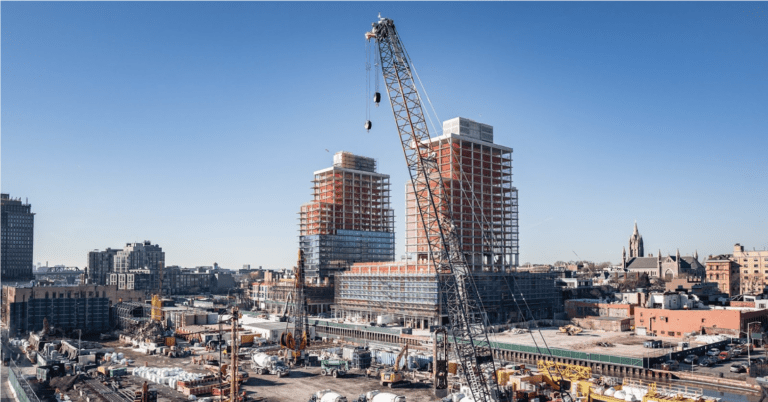
Governor Mikie Sherrill signed legislation at the Salem Nuclear Power Plant removing a decades-old barrier that effectively blocked new nuclear development. The new law allows modern, federally approved waste storage methods, clearing the way for future projects and a stronger, more reliable energy supply.
With demand rising and energy costs climbing, state leaders are positioning New Jersey to lead the next generation of clean, carbon-free power. The move also launches a Nuclear Task Force focused on workforce development, infrastructure and innovation.
This shift has been decades in the making, and it could be one that reshapes the state’s energy future.
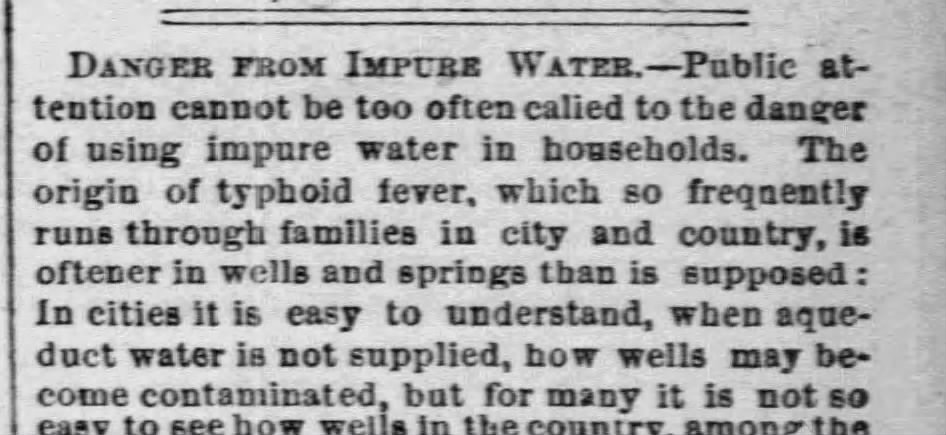
From polluted rivers and epidemics to reservoirs and regulations, New Jersey’s municipal water systems were built out of crisis during the dawn of a new industrial era. Smoke from mills and the sharp tang of tannery waste hung over river towns. Families drank from shallow wells or public pumps that sometimes tasted of sewage. Outbreaks of typhoid and cholera left streets lined with mourning. Public outrage, lawsuits and the work of early engineers forced a shift: cities bought failing private companies, built protected reservoirs and adopted filtration and disinfection that finally made running water reliably safe. This article traces the arc of New Jersey’s water systems, from the failures that made reform urgent to the challenges on tap today.
Roots of crisis
The Star Ledger, March 17, 1875
In the 19th century, New Jersey’s population and industrial activity rose sharply. Towns clustered along rivers because mills and factories needed water for power, cooling and chemical processes. At the same time, households still relied on shallow wells, springs, or small private water companies with minimal treatment. The combination of industrial waste, limited sanitation, and fragmented private suppliers created the perfect conditions for public‑health and service failures.
Newark and the age of waterborne disease
Newark provides one of the clearest examples. During the mid‑ to late‑1800s, the city suffered repeated cholera and typhoid outbreaks traced directly to contaminated drinking water. Public‑health investigators found sewage from upstream communities — Paterson, Passaic, Clifton — flowing into the very rivers Newark used as drinking sources. Newspapers ran stark headlines linking typhoid to the Passaic intake and a New Jersey State Board of Health report in 1898 described parts of the river as “little better than an elongated sewer.” Hundreds died of typhoid between 1890 and 1900. This human toll galvanized residents and city leaders, who demanded a safe, reliable supply rather than the improvised and under‑regulated systems of earlier decades.
Police chase boys for swimming in the Passaic River, 1936. Photo courtesy of Newark Public Library
Industrial contamination and the decline of the Passaic
Disease was not the only threat. As industrialization intensified, the Lower Passaic became a symbol of unchecked pollution. By the early 1900s, factories involved in silk‑dying, tanning and chemical production discharged their wastes directly into the river. Local newspapers described stretches of the Passaic turning black and putrid; fish kills and foul odors became routine. Downstream residents reported chronic illness linked to the water. These visible harms spurred court cases, street‑level protests and growing agreement that no single town could solve pollution that crossed municipal boundaries. A watershed problem demanded a watershed‑scale solution.
Fragmentation, private suppliers and small‑town failures
Throughout the state, many small municipalities depended on private water companies that often delivered intermittent service, charged high rates and invested little in maintenance or treatment. Wells ran dry in summer or became contaminated after storms. In some places, low water pressure undermined firefighting, allowing small blazes to spread. These failures made it clear that water needed to be a public responsibility with professional management, consistent standards and long‑term planning.
How municipal governments and regions fixed the problem
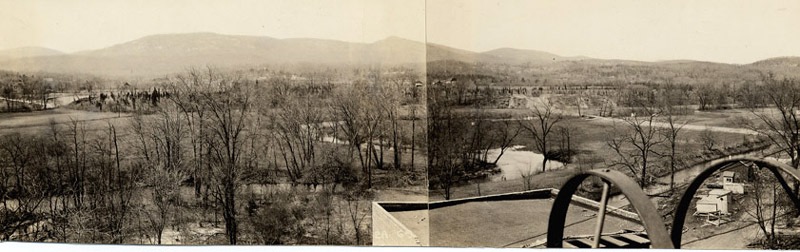
Caption: The Wanaque Reservoir, built to replace polluted river sources, became a lifeline for cities like Paterson and Newark. Built in the 1920’s, it provided more reliable water from protected upland watersheds and ended decades of dependence on the contaminated Passaic. Photo provided by the New Jersey State Archives.
The path from crisis to stability unfolded through several practical steps. Cities and towns began acquiring private companies or building their own waterworks. Cities and towns began acquiring private companies or building their own waterworks. In Newark, municipal control was established in 1892, Jersey City expanded its city-owned system with the Boonton Reservoir in 1904, and Camden purchased its private water system in 1899, reflecting a statewide shift toward public water supply. Public ownership allowed decisions to be made around health and safety, not profit margins and created predictable budgets for upgrades and repairs.
Many of these early municipal systems were also built with materials that were later found to pose serious health risks. Lead service lines were widely used in the late 19th and early 20th centuries because lead was durable, easy to work with, and thought to be safe for drinking water at the time. In reality, corrosion inside older pipes can cause lead to leach into tap water, especially when water chemistry is not carefully controlled. It wasn’t until decades later that the public health impacts became clear, linking lead exposure to neurological damage and other long-term health problems, particularly in children. As a result, many of the same systems that marked a shift toward public control are now undergoing expensive replacement efforts to remove legacy lead infrastructure.
Recognizing that river pollution and supply shortages affected entire watersheds, New Jersey established regional bodies to build and operate protected water sources. A key turning point came with the formation of state‑supervised commissions and the construction of reservoirs, pipelines and conduits. These systems drew water from cleaner upland watersheds and reduced dependence on polluted rivers. The Boonton and Wanaque reservoir systems, built in 1904 and 1296, became foundational to North Jersey’s modern supply.
Advances in filtration and the adoption of chlorination in the early 20th century drastically reduced waterborne disease. Cities built sand‑filtration plants, later expanding to multi‑stage treatment that removed sediment, pathogens and chemical contaminants.
State health boards and later state agencies, introduced sanitary surveys, source‑water protection zones and rules governing industrial discharges. Municipalities and industries were required to limit activities that threatened drinking‑water sources, often enforced through litigation and state oversight.
Because single towns often lacked the financial or technical resources to manage large systems, authorities and regional utilities became a practical solution. These entities pooled money and expertise, borrowed at lower interest rates and operated systems more efficiently.
Federal laws and the modern regulatory framework
By the 1970s, growing environmental awareness and lingering industrial pollution prompted national reform. The Clean Water Act (1972) placed strong limits on wastewater discharges, while the Safe Drinking Water Act (1974) set nationwide standards for contaminants, monitoring and treatment. In New Jersey, the Department of Environmental Protection (DEP) became the state’s enforcement agency. These laws raised expectations and ensured that even small systems followed consistent health standards.
Asbury Park Evening Press, September 13, 1970
Legacy systems and today’s challenges
Much of New Jersey’s water infrastructure was built 50 to 100 years ago. That legacy now strains under modern demands.
Cast-Iron Mains
Cast-iron water mains are almost everywhere in New Jersey’s older towns and cities, especially in systems built between about the 1890s and 1960s, when cast‑iron was the standard material for both mains and service lines. These can crack and leak, wasting water and driving up maintenance costs. Cast-iron main failures can also surface as water‑main breaks and road‑bed collapses
Lead service lines
Lead service lines (LSLs) are the pipes that carry water from the public main under the street into individual homes and buildings. In much of New Jersey, these lines were installed from the late 1800s through the mid‑20th century, long before the health risks of lead exposure were understood.
New Jersey took an aggressive stance with a 2021 law requiring every community water system to inventory and replace all lead service lines within 10 years. Full replacement typically costs $5,000 – $10,000 per line, depending on the property and soil conditions.
Plants and PFAS
Water treatment plants built decades ago were designed for different contaminants. New threats, including PFAS and other emerging pollutants, require advanced treatment technology that aren’t always available.
Combined Sewer Overflows (CSOs)
Combined sewer systems, common in many of New Jersey’s older cities, were designed to carry both stormwater and wastewater through a single pipe. During dry weather, the system works as intended, directing flow to treatment plants. But during heavy rain or snowmelt, the volume can overwhelm the system.
This causes CSOs to discharge a mix of stormwater and untreated sewage directly into waterways. New Jersey has identified dozens of CSO outfalls that require long-term control plans under state and federal mandates. Addressing them often involves major infrastructure upgrades, including storage tunnels, expanded treatment capacity and green infrastructure designed to absorb stormwater before it enters the system.
These projects are complex and costly, but they represent a critical investment in modernizing aging infrastructure.
Ensuring Tomorrow’s Water
New Jersey has no shortage of options for rebuilding its water systems, but none of them are simple or inexpensive. The choices range from expanding state loans and grants to forming stronger regional water authorities, turning to public‑private partnerships, or selling systems to private utilities. Communities can also invest in green infrastructure to handle stormwater more effectively or adopt phased, risk‑based replacement programs that tackle the most urgent pipes and lead lines first. Each approach carries its own costs, trade‑offs and political implications, but the reality is that the work must be done.
Sources:
City of Newark, Department of Water & Sewer Utilities. (2021). Lead service line replacement program. newarkleadserviceline.com
Jersey Water Works. (2023). New Jersey’s water infrastructure: Status, needs, and financing options.jerseywaterworks.org
New Jersey Department of Environmental Protection. (n.d.). Lead service line replacement: SRF requirements.dep.nj.gov
North Jersey District Water Supply Commission. njdwsc.com
UPDATE: Officials in Sayreville have removed data centers from the borough’s proposed energy master plan, signaling growing local resistance to the rapid expansion of power-intensive AI infrastructure projects.
A former industrial wasteland along the Niagara River is poised to become something entirely different: a hub for the infrastructure powering artificial intelligence.
Developers have proposed a nearly 500,000-square-foot data center as the first phase of a broader redevelopment of the former Tonawanda Coke site, a property long associated with heavy pollution and one of the region’s most high-profile environmental cleanups. After more than a century of industrial use and years of remediation, the site is now being repositioned for the digital economy.
The project reflects a growing national trend. As demand for AI and cloud computing accelerates, data center developers are increasingly targeting brownfield sites, properties once considered too contaminated or costly to redevelop. These locations often come with a critical advantage: existing access to power infrastructure. In Tonawanda, that access is central to the proposal, with the planned facility expected to consume roughly 300 megawatts of electricity, comparable to the usage of hundreds of thousands of homes.
Supporters argue the redevelopment offers a practical path forward for land that might otherwise remain idle. Local officials have pointed to the potential for new tax revenue, replacement jobs following the site’s 2018 closure, and the broader economic benefits of reinvestment in long-neglected industrial corridors.
But the proposal also underscores unresolved tensions around environmental justice and infrastructure siting. Community advocates warn that data centers bring their own impacts, including significant energy demand, noise, and continued industrial activity in areas already burdened by pollution. Critics argue that placing new infrastructure on historically contaminated land risks perpetuating patterns in which vulnerable communities shoulder disproportionate environmental costs.
The Tonawanda project also highlights a broader sequencing strategy emerging nationwide: using data centers as an initial, lower-sensitivity use that can unlock future phases of redevelopment, including commercial and even residential construction.
As municipalities across the tri-state region confront rising demand for power-intensive digital infrastructure, the question is no longer whether these projects will be built—but where, and under what conditions. In places like Tonawanda, the answer may increasingly lie in the legacy landscapes of America’s industrial past.
The Buffalo News. (2026, March). Data center proposed for former Tonawanda Coke site along Niagara River.
U.S. Department of Energy. (2023). United States data center energy usage report. https://www.energy.gov
Politico. (2026, March 30). No one wanted to build on this polluted site. Then came AI.
PJM Interconnection. (2024). Load growth and data center demand in PJM region. https://www.pjm.comNew York Independent System Operator. (n.d.). Large load interconnection process and requirements. https://www.nyiso.com
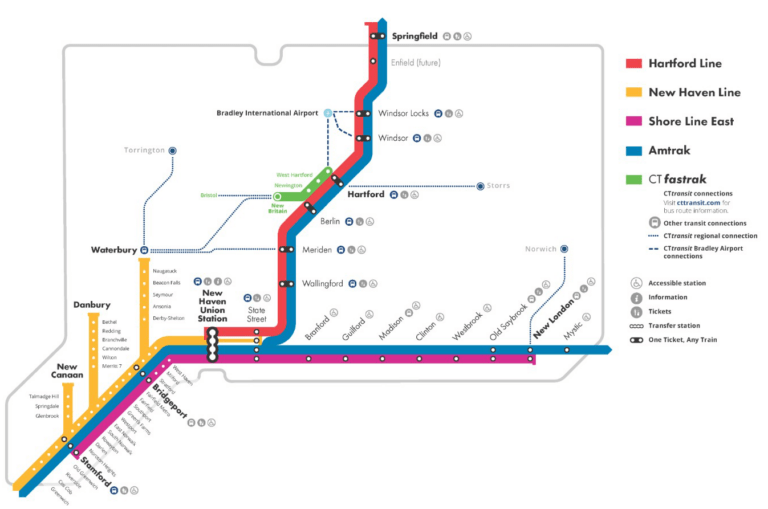
A long-overdue modernization effort is coming to the Metro-North Railroad New Haven Line, where officials are moving to replace aging passenger information systems with a more integrated, real-time digital platform.
The upgrades, reported by CT Insider, focus on improving how riders receive critical service information especially during delays, disruptions, and peak-hour congestion.
From Patchwork to Platform
For years, passenger communications along the New Haven Line have relied on a fragmented mix of legacy systems: static signage, inconsistent LED boards, and often unintelligible public address announcements. The result has been a commuter experience defined less by service reliability than by information gaps.
The planned improvements aim to standardize and centralize that system.
At the core of the project:
Real-time train tracking integration
Upgraded digital display boards with dynamic updates
Improved audio announcement clarity and consistency
System-wide synchronization between control centers and stations
In plain terms: fewer contradictions between what riders see, hear, and actually experience.
The Operational Value: Information as Infrastructure
While the project does not increase track capacity or reduce travel times, it addresses a critical—but often overlooked—component of rail operations: information reliability.
Transit planners increasingly treat passenger information systems as essential infrastructure, not an add-on. When disruptions occur, the ability to deliver accurate, timely updates can:
reduce platform crowding
improve boarding efficiency
prevent cascading delays caused by rider confusion
maintain public confidence in the system
For a corridor as heavily utilized as the New Haven Line, even marginal gains in rider flow and decision-making can have system-wide impacts.
Phased Rollout, Targeted Impact
The upgrades will be implemented in phases across Connecticut stations, including high-volume hubs such as Stamford, Bridgeport, and New Haven.
Rather than a single systemwide switchover, riders can expect incremental improvements as installations and testing proceed. Some temporary disruptions are likely during deployment, but officials characterize them as limited in scope, primarily tied to equipment installation rather than service outages.
Funding and Context
The project is funded through a combination of state and federal transportation dollars, aligning with broader efforts to modernize aging rail infrastructure across the Northeast.
While less visible than track replacements or rolling stock upgrades, investments in communication systems are increasingly prioritized as agencies confront rising rider expectations shaped by real-time data in other sectors.
A Necessary Upgrade, Not a Flashy One
For infrastructure observers, the significance of the project lies less in innovation than in standardization and execution.
This is not a leap forward in rail technology, it is a correction of longstanding deficiencies.
But for the hundreds of thousands of riders who depend on the New Haven Line, the impact could be immediate and tangible: clearer information, fewer missed connections, and a system that behaves less like a black box when things go wrong.
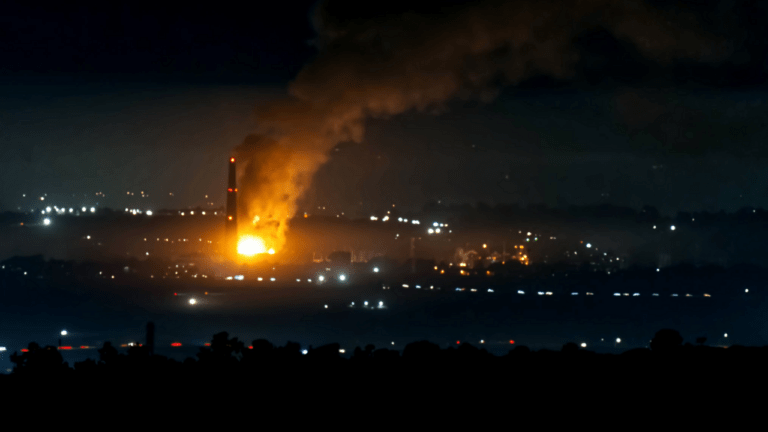
In January 2025 a fire erupted at the world’s largest battery plant. Vistra Energy’s Moss Landing burned for days, and a year later there is still no clear culprit. Community trust remains fractured.
At first it was just a smell, sharp and metallic, drifting inland from the hulking battery plant at Moss Landing, situated on Monterey Bay along California’s scenic Pacific Coast Highway. Then came the headaches. The burning eyes. By nightfall, flames were tearing through what had been the largest battery energy storage system in the world.
“There are no active fire suppression efforts going on, as the best approach, according to fire staff, is to allow the building and batteries to burn,” according to a Monterey Sheriff official.
So while a county waited out the fire, Highway 1 shut down. Schools sheltered in place. Monterey County declared a state of emergency. And for many residents, a line was drawn between life before the fire, and everything that came after.
Caption: CBS News reports on the fire, “For anyone near Moss landing, make sure you keep the windows closed. Make sure you don’t run the air conditioner, because the air conditioner will pull in air from the outside.”
The immediate crisis was extinguished, the longer-term impacts were only beginning.
The blaze at Moss Landing damaged about 50,000 lithium-ion battery modules, sending ripples through both human health and surrounding ecosystems.. Following the fire, residents reported metallic tastes, headaches, rashes and respiratory irritation.
At the time of the fire, Moss Landing’s remote location seemed like a safeguard. KPIX CBS News reported, “The good news is, there’s nothing overtly flammable near it. Elkhorn Slough is a very wet landscape, and it’s not like there are homes that can go into it at this point.”
Unfortunately, this was not the blessing it seemed to be. Elkhorn Slough Estuary was contaminated with nickel, manganese and cobalt levels hundreds to thousands of times higher than pre-fire baselines. These metals, core components of lithium-ion battery cathodes, settled as a fine dust layer across the wetlands, in some areas millimeters thick.
Rain and tidal action washed much of that dust away. But “away” does not mean gone.
Elkhorn Slough estuary is a critical ecosystem where freshwater and saltwater meet, providing nurseries for fish and feeding grounds for migratory birds.
Scientists warn the material may have entered the food chain through microscopic organisms or migrated into surrounding farmland. Over time, these metals can move through sediments, plants and animals, accumulating in ways that are difficult to track and even harder to reverse.
There are additional concerns. Battery fires can release hydrogen fluoride and other corrosive gases. Fire suppression efforts may introduce PFAS, often called “forever chemicals,” which persist in the environment for years or decades. As explained in an editorial by Mother Jones, “With a quarter of greenhouse gas emissions coming from transportation, lithium-ion batteries will likely remain central to the energy revolution. For the moment, at least, the same may be true of PFAS…That makes it more important that chemical waste be better managed and not be released into the environment”
Picking up the pieces
In the year since the fire, the EPA classified Moss landing as a Superfund site, which placed the cleanup under federal authority. This designation means the responsible party, Vistra, is legally required to pay for and execute remediation under strict oversight.
The work has been slow, technical and expensive. As of early 2026, 23,000 batteries had been removed and sent for recycling, with thousands more still in place. Recycling these batteries requires specialized facilities and careful handling to manage toxic materials. At the same time, demolition of the facility is underway. Debris must be handled as hazardous waste. Dust suppression, water containment and continuous monitoring are required to prevent further environmental release. Cleanup is expected to stretch well beyond initial projections.
Meanwhile, community trust is still fractured. Dozens have filed lawsuits against Vistra and Pacific Gas and Electric Company, alleging lasting health impacts from exposure. Local advocacy groups like Never Again Moss Landing have pushed for expanded testing and transparency.
What this means for New Jersey
Thousands of miles away, New Jersey is moving in the opposite direction, not away from battery storage, but towards it.
Through the Garden State Energy Storage Program, the state is targeting 1,000 megawatts (MW) of storage by 2026 and 2,000 megawatts by 2030. The New Jersey Board of Public Utilities has already awarded 355 MW in initial projects and opened a second solicitation to complete the first 1,000 MW tranche.
To put that in perspective, Moss Landing’s Phase I system, the one that caught fire, was roughly 300 MW. That means New Jersey’s near-term goal is equivalent to about four Moss Landing-sized facilities. The full 2030 target would require closer to seven.
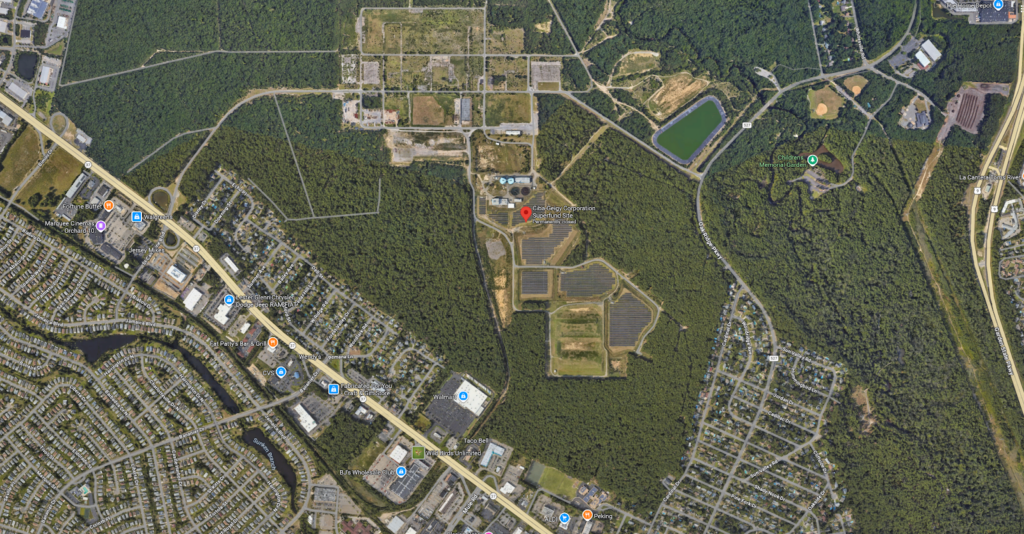
It is going to take lots of planning and research to get this much battery power online. One strategy under consideration is siting the stations on brownfields, which are previously developed properties that may be contaminated by industrial use but can be safely redeveloped with proper cleanup. In Toms River, for example, the BASF/Ciba-Geigy Superfund Site/brownfield, is now host to the Merchant Solar PV Park, one of the largest renewable facilities in the state.
Source: Google
Brownfield sites are attractive because they avoid disturbing undeveloped land and often already have grid connections in place. However, brownfields come with their own complications, including environmental remediation requirements (which increases project costs and timelines), regulatory oversight and environmental justice concerns; will a community that hosted industrial-scale environmental pollution be willing to live with the risk? Should they be asked to?.
Perception may be the biggest hurdle of all. New Jersey’s dense population leaves little room to hide large infrastructure. Proposed sites near neighborhoods, schools, or commercial areas are bound to draw scrutiny. And as we are seeing with warehouses, datacenters, and dense housing projects throughout the state, NIMBY (Not In My BackYard) sentiment is strong and has the power to delay or cancel projects. Achieving the 2026 and 2030 energy storage targets may require some YIMBY (Yes In My BackYard) from renewable advocates.
New Jersey’s push for battery storage is rooted in real need. Battery storage would support renewable energy and help control the staggering energy costs that residents have been facing. By learning from California’s mistakes, New Jersey can build the batteries that power its future without repeating the mistakes that left a toxic legacy on the coast of Monterey County.
As policymakers and developers move forward, the lesson is not to stop building. It is to build smarter, with stronger safety systems, more transparent monitoring and a clearer understanding of what happens when things go wrong.
Electric Power Research Institute. (2025). Global grid‑scale storage deployment and failure statistics (as cited in EPA guidance). U.S. Environmental Protection Agency.
Massachusetts Executive Office of Energy and Environmental Affairs. (2026). Battery energy storage systems: Frequently asked questions on fire safety and public health.mass.gov.
Never Again Moss Landing. (2025). Community health and environmental monitoring report, Moss Landing fire aftermath. https://neveragainml.org/reports
U.S. Environmental Protection Agency. (2025, July). Moss Landing battery energy storage facility Superfund site consent decree.https://www.epa.gov/superfund
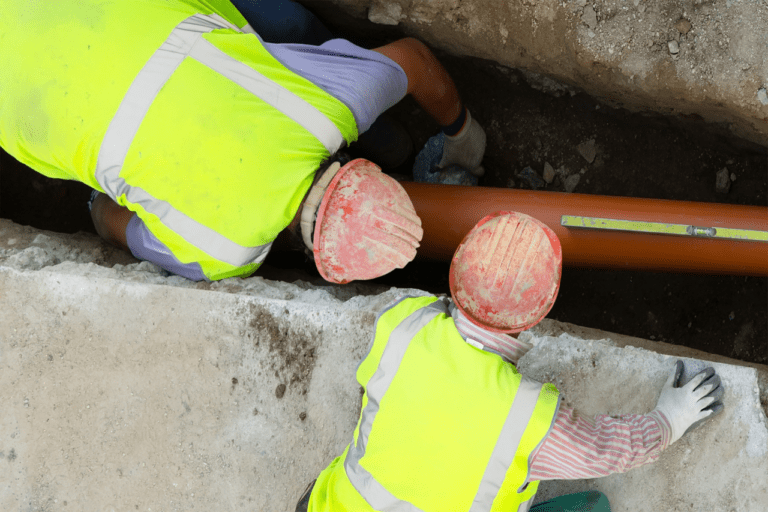
A historic building in Trenton partially collapsed, forcing officials to move forward with emergency demolition to protect public safety. City leaders said the structure had deteriorated to the point where stabilization was no longer feasible, leaving demolition as the only option. The incident highlights ongoing challenges around maintaining aging infrastructure and preserving historic properties.
New Jersey Transit (NJ TRANSIT) is the nation’s largest statewide public transportation system, providing nearly 270 million passenger trips each year across 263 bus routes, 12 rail lines, and three light rail lines. The agency connects major employment centers, universities, and communities, supporting economic growth, environmental sustainability, and social equity.
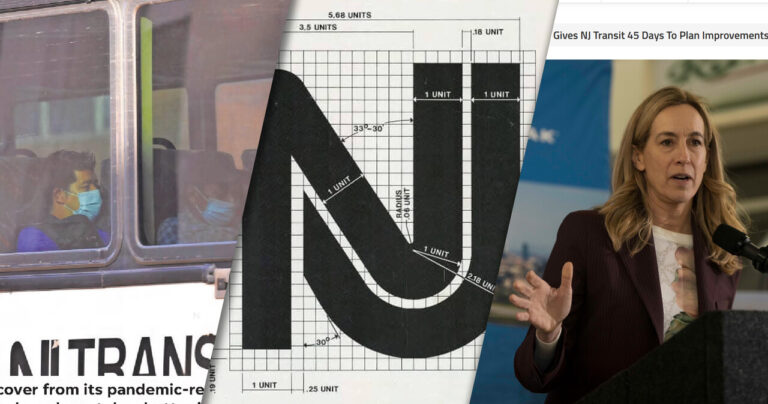
Yet, for nearly half a century, the agency has been dogged by a recurring pattern of fiscal instability—short-term fixes, capital-to-operating transfers, mounting debt, and deferred maintenance. With Governor Sherrill’s Executive Order to improve the NJ Transit rider experience, now is a good time to review the history of the agency and the funding and structural challenges that have led to this moment.
The 2020s: Pandemic Shock, Federal Aid, and Renewed Crises
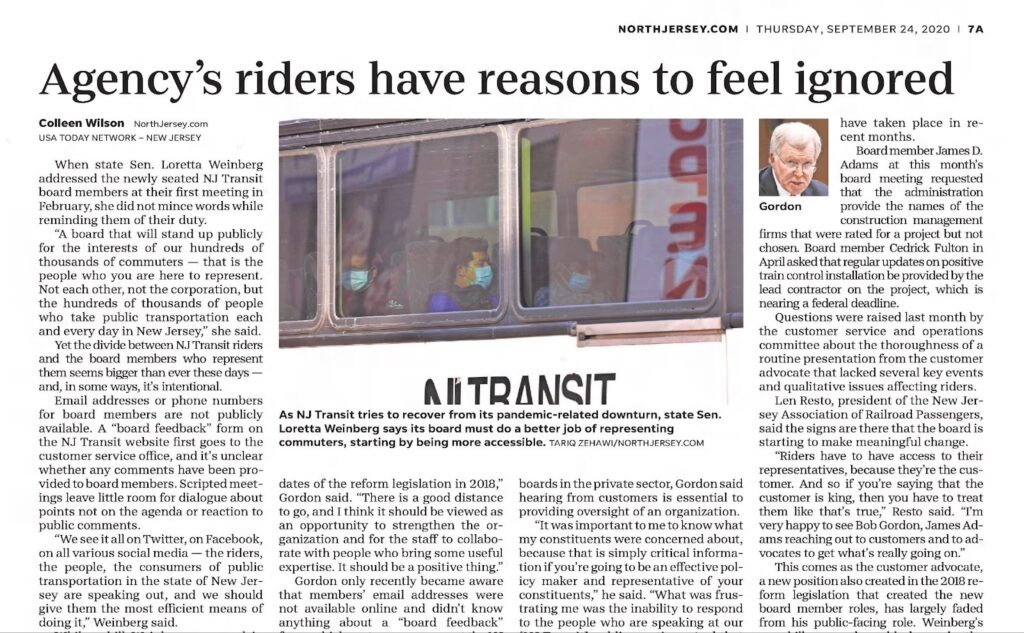
The COVID-19 pandemic delivered an unprecedented shock. Ridership collapsed by 85% in early 2020, and fare revenue plummeted from $978 million in FY 2019 to $301 million in FY 2021. The operating gap ballooned by $940 million (71%) over the period, threatening mass layoffs and service cuts.
Federal relief funds provided a temporary lifeline. NJ TRANSIT received $1.2 billion from the CARES Act (2020–2021), $1.1 billion from the CRRSAA, and nearly $1.9 billion from the American Rescue Plan (2022–2024), allowing the agency to maintain service and avoid drastic fare hikes. However, these funds were always intended as a stopgap, and by FY 2025, they were nearly exhausted.
As the pandemic receded, ridership began to recover, reaching 219.6 million passenger trips in FY 2024 and generating $758 million in fare revenue. But the recovery was uneven: bus ridership rebounded to 92% of 2019 levels, while rail ridership—more dependent on office commuters—reached only 67%. The rise of hybrid and remote work, along with persistent safety and reliability concerns, limited the pace of recovery.
With federal aid running out and fare revenue still below pre-pandemic levels, New Jersey enacted a new Corporate Transit Fee—a surtax on corporations with net income over $10 million—to fund NJ TRANSIT. For FY 2026, the fee is projected to generate $789 million, nearly 25% of the agency’s operating budget. Passenger fares are expected to contribute 31%, with 15% coming from the New Jersey Turnpike Authority and the remainder from commercial revenue and other sources.
However, the fee is not constitutionally dedicated to NJ TRANSIT, and some of the revenue has been diverted to other state priorities. Advocates and analysts warn that without a permanent, protected funding stream, the agency remains vulnerable to future budget crises and political maneuvering.
In 2024, NJ TRANSIT implemented its first fare hike in nearly a decade—a 15% increase—to help close a $107 million operating deficit. Additional 3% annual increases are planned for the foreseeable future. Labor costs, which account for 60% of the operating budget, have risen sharply, with recent contracts granting wage increases and improved benefits to bus drivers, mechanics, and engineers. A threatened rail strike in 2025 was narrowly averted, but only after tense negotiations and political intervention.
Kick the Can
Across four decades, a clear pattern emerges: NJ TRANSIT’s leaders and political overseers have repeatedly opted for temporary fixes over structural solutions. The agency has relied on capital-to-operating transfers, one-time revenue infusions, and deferred maintenance to balance its books, while accumulating debt and postponing critical investments. Each crisis has been met with a patchwork of fare hikes, toll transfers, and federal grants, but the underlying funding gap has persisted—and, in many ways, deepened.
The consequences are visible in the system’s aging fleet, service disruptions, and eroding public trust. Deferred maintenance has produced a backlog of capital needs, with billions required to bring the system to a state of good repair. The lack of a dedicated, constitutionally protected revenue source has left NJ TRANSIT at the mercy of annual budget negotiations and shifting political priorities.
Looking Forward
Despite its challenges, NJ TRANSIT remains indispensable to the state. It is the nation’s largest statewide public transportation system, providing nearly 270 million passenger trips each year across 263 bus routes, 12 rail lines, and three light rail lines. NJ Transit connects major employment centers, universities, and communities, supporting economic growth, environmental sustainability, and social equity. Public transportation in New Jersey eliminates 150 million vehicle trips annually, prevents 644,000 metric tons of greenhouse gas emissions, and saves households 24–34% on transportation costs. It generates $5 billion in economic activity each year and supports transit-oriented development that revitalizes cities and towns.
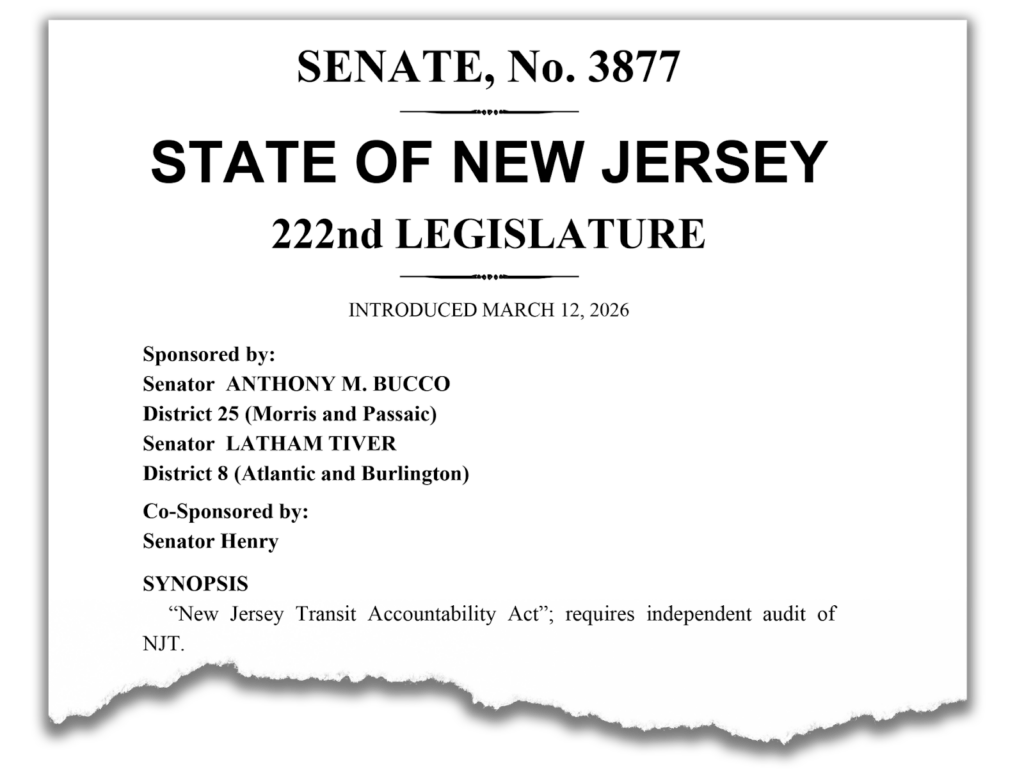
In March 2026, NJ Senate bill S3877 “The New Jersey Transit Accountability Act” was introduced in the NJ Senate, co-sponsored by Senators Bucco, Tiver, and Henry. The legislation mandates an independent audit of NJ Transit’s financial and budget practices since 2018. It aims to increase transparency regarding capital fund diversions and the pandemic’s impact on service demands.
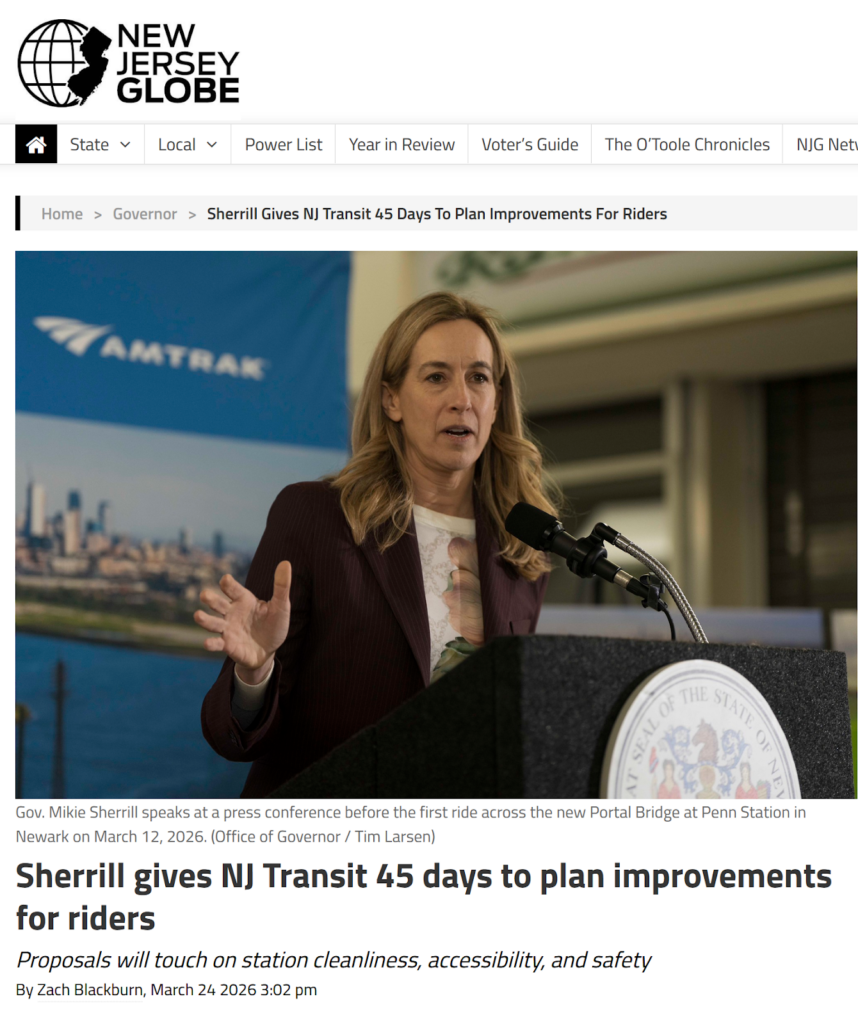
Later that month, Governor Mikie Sherrill signed an executive order requiring NJ TRANSIT to produce a comprehensive plan within 45 days to address service reliability, cleanliness, accessibility, and real-time information. The order mandates immediate improvements—such as repairing escalators and elevators, enhancing station lighting, and upgrading digital tools—while also laying the groundwork for long-term investments in fleet replacement and infrastructure modernization.
After decades of kicking the can down the tracks, this current call for fixing NJ TRANSIT is refreshing. The most urgent need is for a dedicated, recurring revenue source—protected by statute or constitutional amendment—to fund both operations and capital investments. Peer agencies like New York’s MTA and San Francisco’s BART rely on such dedicated streams, providing greater stability and predictability.
Additionally, Transit-oriented development (TOD) and joint development projects can generate lease revenue, profit-sharing, and increased property tax receipts. The agency’s 2025 Land Plan estimates that land-based developments could yield $1.9 billion over 30 years, boosting annual non-farebox revenue by 64% if fully implemented.
Recent reforms have strengthened board oversight and transparency, but further improvements are needed. Proposals include expanding the board to include more rider and regional representation, establishing independent customer advocates, and mandating regular performance audits and public reporting.
A renewed focus on asset management is essential. The agency must prioritize preventive maintenance, fleet replacement, and infrastructure upgrades to reduce breakdowns and improve reliability. Federal Transit Administration (FTA) guidance on Transit Asset Management provides a framework for achieving and maintaining a state of good repair.
While federal grants will remain important, NJ TRANSIT should work to maximize matching funds and advocate for stable, long-term federal support. Partnerships with the New Jersey Turnpike Authority, Port Authority, and local governments can also provide additional resources and coordination for major projects.
Fare policy must balance revenue needs with equity concerns. Targeted discounts for low-income riders, fare capping, and integrated payment systems can make transit more accessible while protecting vulnerable populations from the burden of repeated fare hikes.
Ultimately, sustainable transit funding requires political courage and public buy-in. Leaders must resist the temptation to defer tough choices and instead make the case for investment in a system that underpins New Jersey’s economy, environment, and quality of life. Recent executive actions and public listening sessions signal a new commitment to rider experience and accountability, but lasting change will depend on sustained advocacy and legislative action.
New Jersey Transit (NJ TRANSIT) is the nation’s largest statewide public transportation system, providing nearly 270 million passenger trips each year across 263 bus routes, 12 rail lines, and three light rail lines. The agency connects major employment centers, universities, and communities, supporting economic growth, environmental sustainability, and social equity.
Yet, for nearly half a century, the agency has been dogged by a recurring pattern of fiscal instability—short-term fixes, capital-to-operating transfers, mounting debt, and deferred maintenance. With Governor Sherrill’s Executive Order to improve the NJ Transit rider experience, now is a good time to review the history of the agency and the funding and structural challenges that have led to this moment.
The 2000s: Rising Debt and Operating Deficits
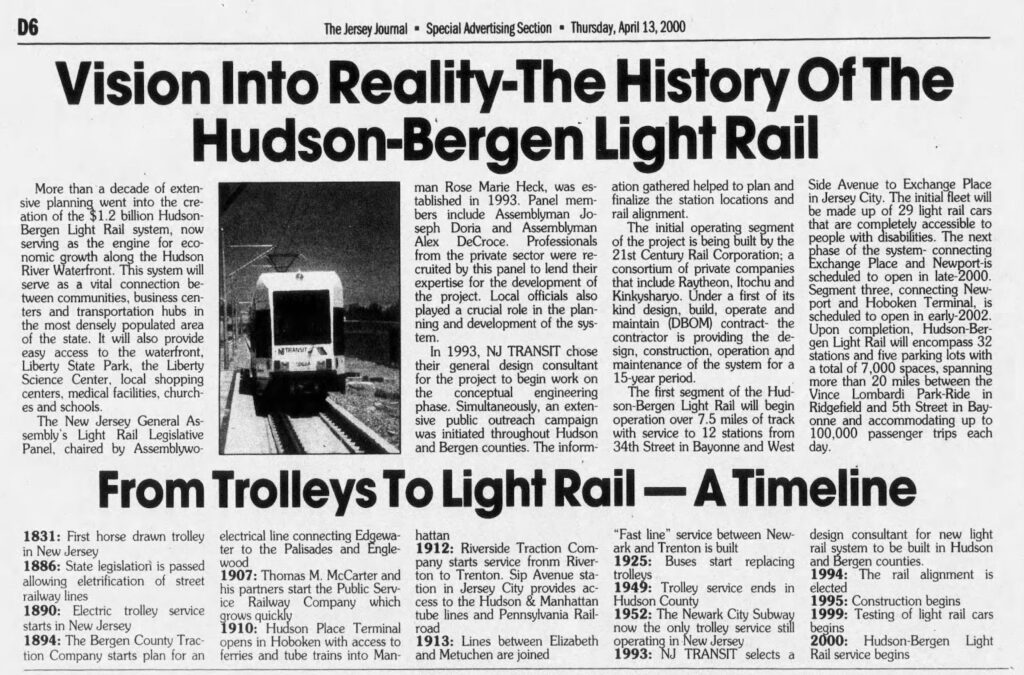
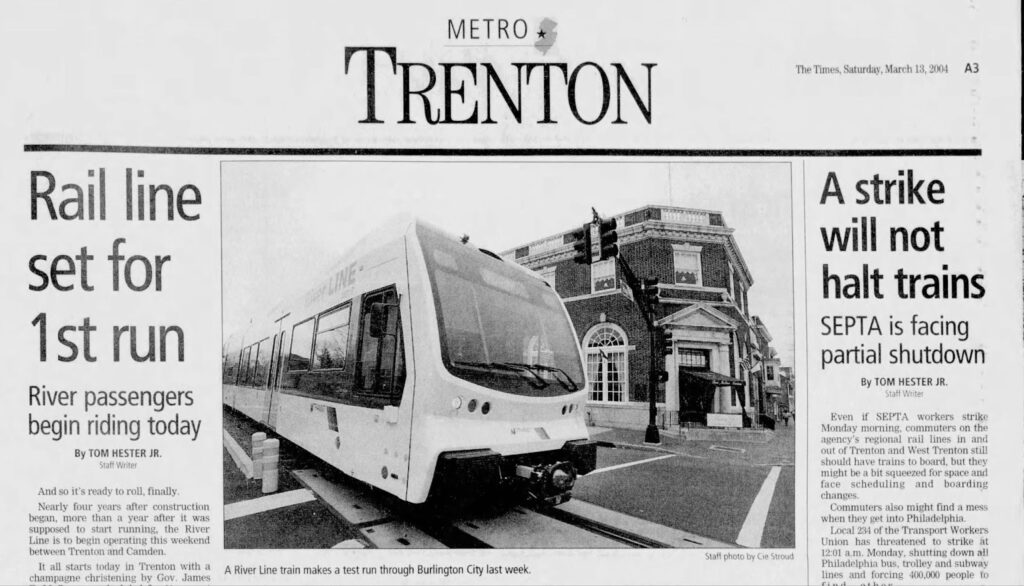
The new millennium saw NJ TRANSIT complete some of its most ambitious projects. The Hudson-Bergen Light Rail opened its first segment in 2000, with subsequent phases extending service through Hoboken, Weehawken, and Bayonne. The River LINE, a 34-mile diesel light rail between Camden and Trenton, debuted in 2004, and the Newark Light Rail Extension followed in 2006. The agency also launched Midtown Direct service, connecting the Hoboken Division to Penn Station New York and spurring a sustained rise in rail ridership.
These expansions delivered tangible benefits: new mobility options, economic development, and increased property values near stations. A 2008 Rutgers study found that development near five HBLR stations generated over $5.3 billion in economic growth, while properties within a quarter mile of stations appreciated 18.4% more than others.
But the cost of growth was steep. NJ TRANSIT’s fare revenue rose from $441 million to $828 million between FY 1999 and FY 2009, but operating expenses doubled from $903 million to $1.83 billion and the operating deficit soared by 145.7%, due to higher labor costs, rising fringe benefits, and the expense of maintaining an expanded system. Debt continued to mount, reaching $3.57 billion by FY 2009.
The agency’s reliance on fare revenue—without sufficient external support—meant that every new service expansion widened the operating gap. Even if fare revenue had kept pace with expenses, the deficit would have grown by 111%. The true benefits of these investments—economic growth, congestion relief, and environmental gains—were externalized, while the agency absorbed the financial risk.
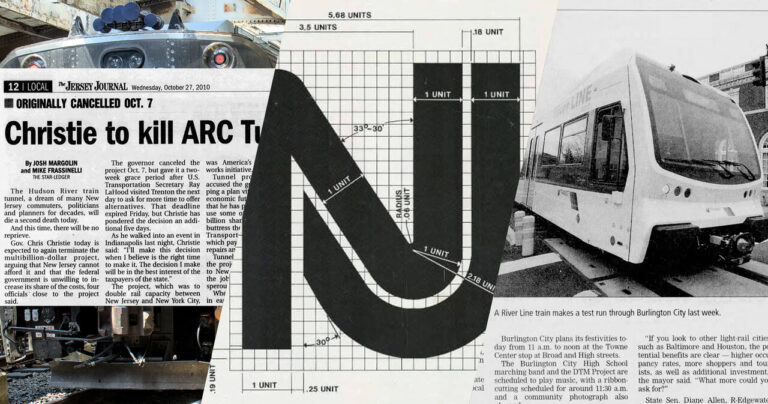
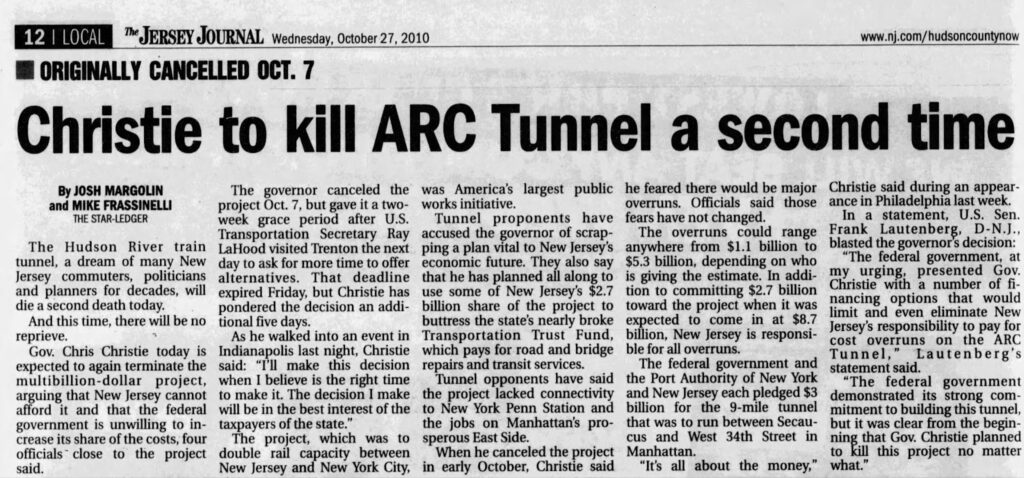
The decade’s most consequential project was the Access to the Region’s Core (ARC) tunnel, a proposed $8.7 billion commuter rail link between Secaucus Junction and Manhattan. Backed by federal, Port Authority, and state funds, ARC promised to double trans-Hudson rail capacity. Construction began in 2009, but by 2010, cost projections had risen to nearly $11 billion, and Governor Chris Christie, citing the risk of overruns and the state’s lack of funds, canceled the project. The decision forfeited federal funding, redirected Port Authority money to highway projects, and left New Jersey with a critical capacity shortfall that persists to this day.
Throughout the 2000s, political leaders continued to avoid structural solutions. The state’s Transportation Trust Fund Authority (TTFA) issued billions in bonds to finance capital projects, but as debt service consumed a growing share of available funds, less was left for new investments or maintenance. By 2010, $845 million of the $1.6 billion TTF was devoted to debt payments, leaving only $350 million for operating expenses and $405 million for capital programs.
The agency’s practice of capital-to-operating transfers became institutionalized, with federal and state capital funds routinely diverted to cover operating shortfalls. Deferred maintenance and asset deterioration accelerated, as resources were stretched thin and long-term needs were sacrificed for short-term survival.
The 2010s: Deferred Maintenance and Capital Deterioration
The 2010s marked a turning point. For the first time in its history, NJ TRANSIT experienced a decade of declining ridership—down 2.7% after decades of growth. The Great Recession, coupled with state austerity measures, forced the agency to raise fares by 25% in 2010, reduce state funding, and implement hiring and salary freezes. Operational support from the state’s General Fund fell by over 90% from FY 2009 to FY 2016.
With debt service absorbing an ever-larger share of the budget, the agency could no longer finance new rolling stock or major upgrades. NJ TRANSIT managed to reduce its debt by $2.09 billion (62%) from FY 2010 to FY 2017, but at a steep cost: capital assets declined from over $10 billion to around $7.3 billion, as $500 million in annual rolling stock depreciation went unreplaced. By FY 2017, the agency had only $60 million in active, fully funded capital contracts—a fraction of what was needed to maintain a state of good repair.
The consequences were stark. Major mechanical failures rose throughout the decade, from 200.6 per year from 2010 to 2014, to 258 per year from 2015 to 2019, a rise from 29%. By 2018 and 2019, NJ TRANSIT’s commuter rail system averaged around one mechanical failure per day, with 375 and 352 failures per year, respectively, the highest in the nation. Service disruptions, delays, and customer complaints eroded public confidence and political support.
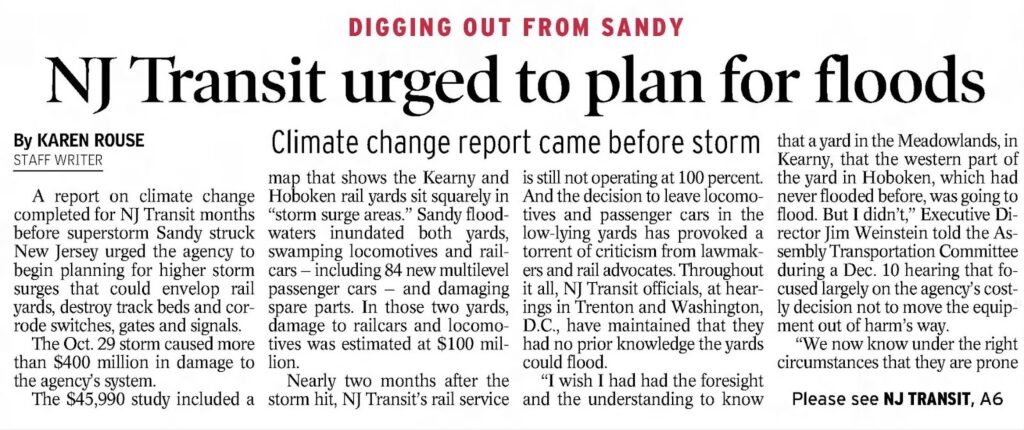
Superstorm Sandy in 2012 compounded the crisis, damaging more than 300 rail cars and locomotives, as well as critical infrastructure. The agency incurred $213 million in additional recovery costs in FY 2013 and 2014, further straining limited resources.
Source: The Herald-News, December 26, 2012
With traditional funding sources exhausted, NJ TRANSIT doubled down on capital-to-operating transfers. By the mid-2010s, the agency was diverting hundreds of millions in capital funds each year to cover operating expenses, a practice that masked the true extent of the funding gap but left the system increasingly vulnerable to breakdowns and obsolescence.
Political leaders responded with a mix of short-term fixes and governance reforms. The state increased transfers from the New Jersey Turnpike Authority and the Clean Energy Fund, but these were insufficient to close the gap. Calls for a dedicated, recurring revenue source grew louder, but legislative action remained elusive. In 2018, Governor Phil Murphy ordered an audit of NJ TRANSIT’s finances and enacted reforms to strengthen board oversight and transparency, but the agency’s structural challenges persisted.



![World Cup to close Penn Station for everyday commuters ahead of matches [nj.com]](https://tristateinfrastructurenews.com/wp-content/uploads/2026/04/image-4-1-768x588.png "World Cup to close Penn Station for everyday commuters ahead of matches [nj.com]")
![Sherrill signs nuclear reform law at Salem, positioning state for clean‑energy renaissance [BINJE]](https://tristateinfrastructurenews.com/wp-content/uploads/2026/04/55194671562_e6c3b720f1_k-768x549.jpg "Sherrill signs nuclear reform law at Salem, positioning state for clean‑energy renaissance [BINJE]")


![Historic building collapses in Trenton, demolition now unavoidable [nj.com]](https://tristateinfrastructurenews.com/wp-content/uploads/2026/04/large-image-32-768x541.png "Historic building collapses in Trenton, demolition now unavoidable [nj.com]")