


In 1969, the heavily polluted Cuyahoga River in Ohio caught fire several times, leading (some say) to Nixon establishing the Environmental Protection Agency in 1970 and the rise of the modern environmental movement. The first Earth Day was in 1970, and the decade saw the country begin to reckon with the environmental impact of decades of industrialization.
When New York enacted the State Environmental Quality Review Act (SEQRA) in 1975, the goal was to ensure that government decisions accounted for environmental consequences before construction began. Many environmental advocates say the law has worked: forcing agencies to study impacts, disclose risks, and incorporate mitigation into projects that might otherwise have proceeded unchecked. But over time, critics argue that SEQRA’s broad scope and open‑ended timelines have turned it into a procedural bottleneck that slows or derails even environmentally benign projects, including projects to address the state’s housing shortage.
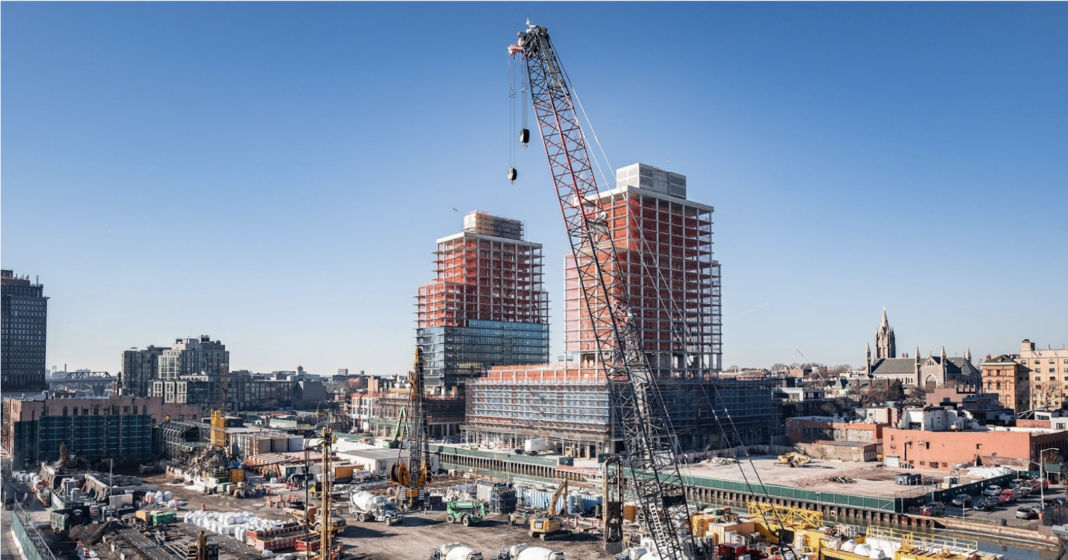
New York faces an estimated housing shortage of more than 500,000 units, while over half of renters are cost‑burdened, paying more than 30% of their income on housing, and many see SEQRA as a roadblock to address this.
The Weight of the Current Rules
SEQRA applies to any project requiring discretionary government approval, from rezonings to infrastructure upgrades to affordable housing developments. Under the current system, agencies must complete an Environmental Assessment Form (EAF) to determine whether a project may have significant environmental impacts. If so, they issue a Positive Declaration, triggering a full EIS, a process that can take years and requires extensive public comment, interagency coordination, and often litigation.
Even reaching the initial determination can be slow. Agencies may request additional studies, developers may revise plans, and community groups may raise objections. Critics argue that the process is vulnerable to delay tactics unrelated to environmental protection, while supporters say the flexibility is essential for meaningful review.
In practice, SEQRA review can take up to two years, even for modest housing projects, according to reporting from City Limits. Those delays add an estimated $82,000 per apartment, or more than $8 million for a 100‑unit building, costs that ultimately shape rents, financing, and feasibility. Developers and housing advocates note that the vast majority of SEQRA reviews end with a “Negative Declaration,” meaning no significant environmental impact was found but only after years of procedural steps.
Infrastructure projects face similar challenges. Governor Hochul’s office cites data showing that major projects take 56% longer to reach groundbreaking in New York than in comparable states, largely due to environmental review timelines. That includes clean‑water upgrades, manufacturing facilities, and renewable‑energy installations, all central to the state’s long‑term economic and climate goals.
Local officials often describe SEQRA as a barrier even on sites that are already paved or previously developed. A parking lot, for example, may require the same review as a greenfield site, despite posing far fewer environmental risks. The result is a system that many planners say is misaligned with the urgency of New York’s housing shortage and infrastructure needs.
Hochul’s Proposal
In January 2026, Governor Kathy Hochul introduced her “Let Them Build” agenda, a package of reforms aimed at modernizing SEQRA and accelerating construction. Her administration frames the effort as a way to preserve environmental protections while removing procedural barriers that slow down projects communities already support.
The proposal includes several major components:
- Clear timelines for environmental review
- Standardized procedures across agencies to reduce litigation risk
- Expedited approval for categories of projects shown not to have adverse environmental impacts
- Lower costs by shortening multi‑year review periods
- Faster delivery of infrastructure, including clean‑water systems, parks, and green infrastructure
The most debated element is a set of full SEQRA exemptions for qualifying housing projects.
Inside New York City, projects would be exempt if they:
- Are not in coastal flood zones
- Are not in industrial‑only zones
- Are mixed‑use with ≤50,000 sq ft of nonresidential space
- Contain ≤500 units in medium/high‑density zones or ≤250 units elsewhere
Outside New York City, projects would be exempt if they:
- Connect to existing water and sewer systems
- Are built on a previously disturbed site
- Are mixed‑use with ≤50,000 sq ft or ≤20% nonresidential space
- Contain ≤100 units
The definition of “previously disturbed” is narrow: the site must have been developed within the last two years, cannot be in a FEMA 100‑year floodplain, and cannot have been used for agriculture for three of the previous five years. Maintained lawns can qualify; greenfields cannot.
Supporters argue these exemptions would meaningfully accelerate construction of affordable and mixed‑income housing, especially in suburban and upstate communities where zoning and infrastructure constraints already limit supply. They also note that the exemptions apply only to projects with modest footprints and clear environmental parameters.
Public Comment and Reaction
Public reaction to the proposed reforms has been mixed, reflecting deep divisions over how to balance environmental protection with housing and infrastructure needs.
Housing advocates, municipal leaders, and some planners argue that SEQRA has become a tool for delay rather than environmental protection. They point to the high cost of review, the rarity of significant environmental findings, and the urgent need for housing. City Limits’ reporting highlights that delays directly affect families waiting for affordable homes and contribute to rising rents.
Environmental groups acknowledge the need for modernization but warn that exemptions must be tightly defined. They worry that broad exemptions could allow developers to bypass meaningful review, especially in ecologically sensitive areas or communities already burdened by pollution.
Many local officials support reforms that give them more flexibility to approve projects without years of procedural delay. Others worry that state‑level exemptions could limit local control or create pressure to approve projects without adequate community input.
Developers generally support the reforms, particularly the clarity around what qualifies for exemption. But they also note that zoning, financing, and infrastructure constraints remain major barriers.
The Road Ahead
SEQRA reform is now one of the most closely watched issues in Albany. The Legislature has signaled interest in some form of modernization but remains divided on the scope of exemptions. Budget negotiations will determine whether Hochul’s proposals move forward intact, are scaled back, or become part of a broader housing package.
What is clear is that New York’s housing and infrastructure challenges are pressing — and SEQRA, once a pioneering environmental law, is now at the center of a debate about how the state can build for the future while protecting the environment.
Sources:
Akerman LLP. (2026). Governor Hochul’s proposed SEQRA reforms: Seeking to accelerate development.https://www.akerman.com
City Limits. (2026). Opinion: The cost of delay, and why SEQRA reform matters for New Yorkers. https://www.citylimits.org
Nixon Peabody LLP. (2026). New York SEQRA reform aims to fast‑track affordable housing approvals. https://www.nixonpeabody.comOffice of Governor Kathy Hochul. (2026). Let Them Build: Landmark reforms to cut red tape and build more housing and infrastructure. https://www.governor.ny.gov