


In January 2025 a fire erupted at the world’s largest battery plant. Vistra Energy’s Moss Landing burned for days, and a year later there is still no clear culprit. Community trust remains fractured.
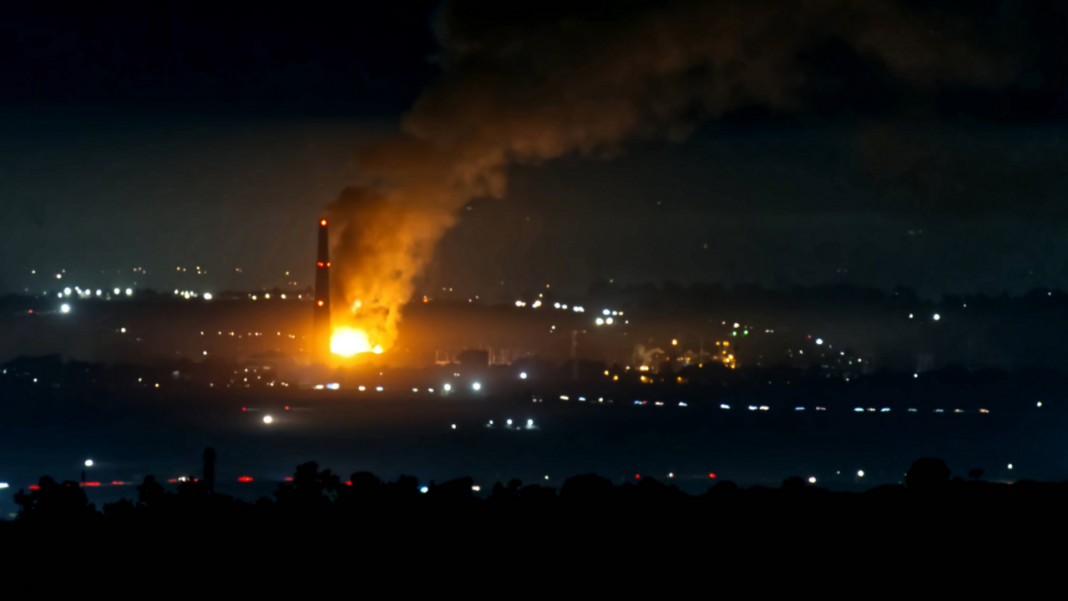
At first it was just a smell, sharp and metallic, drifting inland from the hulking battery plant at Moss Landing, situated on Monterey Bay along California’s scenic Pacific Coast Highway. Then came the headaches. The burning eyes. By nightfall, flames were tearing through what had been the largest battery energy storage system in the world.
“There are no active fire suppression efforts going on, as the best approach, according to fire staff, is to allow the building and batteries to burn,” according to a Monterey Sheriff official.
So while a county waited out the fire, Highway 1 shut down. Schools sheltered in place. Monterey County declared a state of emergency. And for many residents, a line was drawn between life before the fire, and everything that came after.
Caption: CBS News reports on the fire, “For anyone near Moss landing, make sure you keep the windows closed. Make sure you don’t run the air conditioner, because the air conditioner will pull in air from the outside.”
The immediate crisis was extinguished, the longer-term impacts were only beginning.
The blaze at Moss Landing damaged about 50,000 lithium-ion battery modules, sending ripples through both human health and surrounding ecosystems.. Following the fire, residents reported metallic tastes, headaches, rashes and respiratory irritation.
At the time of the fire, Moss Landing’s remote location seemed like a safeguard. KPIX CBS News reported, “The good news is, there’s nothing overtly flammable near it. Elkhorn Slough is a very wet landscape, and it’s not like there are homes that can go into it at this point.”
Unfortunately, this was not the blessing it seemed to be. Elkhorn Slough Estuary was contaminated with nickel, manganese and cobalt levels hundreds to thousands of times higher than pre-fire baselines. These metals, core components of lithium-ion battery cathodes, settled as a fine dust layer across the wetlands, in some areas millimeters thick.
Rain and tidal action washed much of that dust away. But “away” does not mean gone.
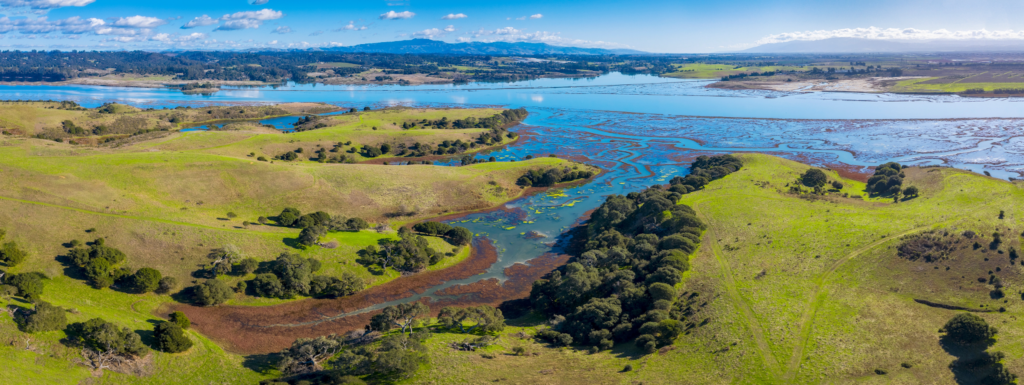
Elkhorn Slough estuary is a critical ecosystem where freshwater and saltwater meet, providing nurseries for fish and feeding grounds for migratory birds.
Scientists warn the material may have entered the food chain through microscopic organisms or migrated into surrounding farmland. Over time, these metals can move through sediments, plants and animals, accumulating in ways that are difficult to track and even harder to reverse.
There are additional concerns. Battery fires can release hydrogen fluoride and other corrosive gases. Fire suppression efforts may introduce PFAS, often called “forever chemicals,” which persist in the environment for years or decades. As explained in an editorial by Mother Jones, “With a quarter of greenhouse gas emissions coming from transportation, lithium-ion batteries will likely remain central to the energy revolution. For the moment, at least, the same may be true of PFAS…That makes it more important that chemical waste be better managed and not be released into the environment”
Picking up the pieces
In the year since the fire, the EPA classified Moss landing as a Superfund site, which placed the cleanup under federal authority. This designation means the responsible party, Vistra, is legally required to pay for and execute remediation under strict oversight.
The work has been slow, technical and expensive. As of early 2026, 23,000 batteries had been removed and sent for recycling, with thousands more still in place. Recycling these batteries requires specialized facilities and careful handling to manage toxic materials. At the same time, demolition of the facility is underway. Debris must be handled as hazardous waste. Dust suppression, water containment and continuous monitoring are required to prevent further environmental release. Cleanup is expected to stretch well beyond initial projections.
Meanwhile, community trust is still fractured. Dozens have filed lawsuits against Vistra and Pacific Gas and Electric Company, alleging lasting health impacts from exposure. Local advocacy groups like Never Again Moss Landing have pushed for expanded testing and transparency.
What this means for New Jersey
Thousands of miles away, New Jersey is moving in the opposite direction, not away from battery storage, but towards it.
Through the Garden State Energy Storage Program, the state is targeting 1,000 megawatts (MW) of storage by 2026 and 2,000 megawatts by 2030. The New Jersey Board of Public Utilities has already awarded 355 MW in initial projects and opened a second solicitation to complete the first 1,000 MW tranche.
To put that in perspective, Moss Landing’s Phase I system, the one that caught fire, was roughly 300 MW. That means New Jersey’s near-term goal is equivalent to about four Moss Landing-sized facilities. The full 2030 target would require closer to seven.
It is going to take lots of planning and research to get this much battery power online. One strategy under consideration is siting the stations on brownfields, which are previously developed properties that may be contaminated by industrial use but can be safely redeveloped with proper cleanup. In Toms River, for example, the BASF/Ciba-Geigy Superfund Site/brownfield, is now host to the Merchant Solar PV Park, one of the largest renewable facilities in the state.
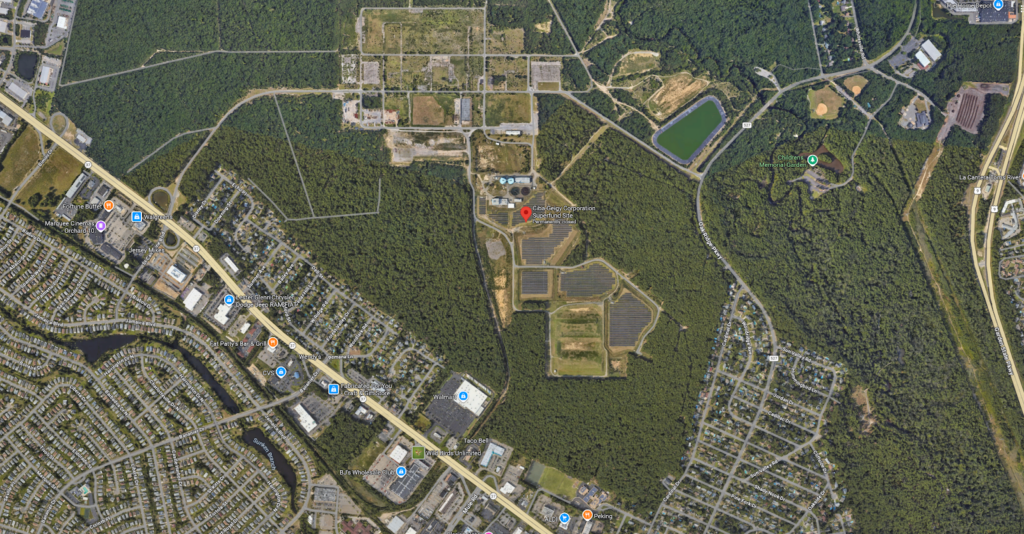
Source: Google
Brownfield sites are attractive because they avoid disturbing undeveloped land and often already have grid connections in place. However, brownfields come with their own complications, including environmental remediation requirements (which increases project costs and timelines), regulatory oversight and environmental justice concerns; will a community that hosted industrial-scale environmental pollution be willing to live with the risk? Should they be asked to?.
Perception may be the biggest hurdle of all. New Jersey’s dense population leaves little room to hide large infrastructure. Proposed sites near neighborhoods, schools, or commercial areas are bound to draw scrutiny. And as we are seeing with warehouses, datacenters, and dense housing projects throughout the state, NIMBY (Not In My BackYard) sentiment is strong and has the power to delay or cancel projects. Achieving the 2026 and 2030 energy storage targets may require some YIMBY (Yes In My BackYard) from renewable advocates.
New Jersey’s push for battery storage is rooted in real need. Battery storage would support renewable energy and help control the staggering energy costs that residents have been facing. By learning from California’s mistakes, New Jersey can build the batteries that power its future without repeating the mistakes that left a toxic legacy on the coast of Monterey County.
As policymakers and developers move forward, the lesson is not to stop building. It is to build smarter, with stronger safety systems, more transparent monitoring and a clearer understanding of what happens when things go wrong.
Related Stories
Moss Landing Battery Storage Facility Fire: Renewable Energy’s Three Mile Island?
The 10 Largest Superfund Sites in New Jersey
Report Says PJM Need Rapid Storage Growth to Ensure Reliability [UtilityDive]
Sources
California Legislature. (2025). Senate Bill 283: Battery storage safety legislation. (Safety standards updates after Moss Landing fire).
CNBC. (2025, January 17). Battery facility fire at California power plant site spurs evacuation orders.https://www.cnbc.com/2025/01/17/battery-facility-fire-at-california-power-plant-site-spurs-evacuation-orders.html
Electric Power Research Institute. (2025). Global grid‑scale storage deployment and failure statistics (as cited in EPA guidance). U.S. Environmental Protection Agency.
Massachusetts Executive Office of Energy and Environmental Affairs. (2026). Battery energy storage systems: Frequently asked questions on fire safety and public health. mass.gov.
Never Again Moss Landing. (2025). Community health and environmental monitoring report, Moss Landing fire aftermath. https://neveragainml.org/reports
U.S. Environmental Protection Agency. (2025, July). Moss Landing battery energy storage facility Superfund site consent decree.https://www.epa.gov/superfund
Welch, C., Cholakovska, J., Sarkar, P., Gitelman, A., Rosso, E., & Fieseler, C. (2024, July 10). The problematic chemicals fueling America’s EV revolution: EV lithium‑ion battery manufacturing pollution, chemical contamination, PFAS “forever chemicals,” and health risks. Mother Jones. https://www.motherjones.com/politics/2024/07/ev-lithium-ion-battery-manufacturing-pollution-chemical-contamination-pfas-forever-chemicals-health-risks/