



Public Service Enterprise Group (PSE&G) reported a strong financial year in 2025, posting net income of $2.11 billion, a 19% increase over the previous year, according to a recent ROI-NJ report.
Rising utility profits often draw public scrutiny, especially at a time when energy prices are higher than ever. But the reality behind electric bills is complex and frequently misunderstood.
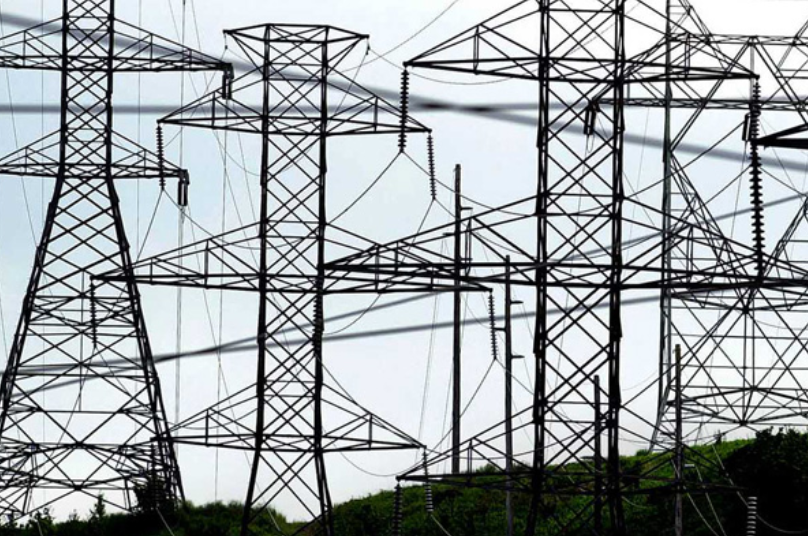
In New Jersey and across much of the country, local utilities like PSE&G are primarily responsible for transmission and distribution; the delivery of electricity to homes and businesses. That portion typically accounts for roughly 30% of a customer’s bill.
What utilities actually control
The remaining majority is tied to the wholesale cost of electricity, which is purchased through regional markets and fluctuates based on supply, demand and public policy.
That distinction matters. In PJM Interconnection, which manages the grid for New Jersey, capacity auction outcomes and tightening supply have played a significant role in recent price increases, forcing utilities to pass those costs through to customers.
Shrinking supply, rising demand
What is driving that tightening supply is a fundamental imbalance: New Jersey is producing less electricity in-state at the same time demand is rising. Over the past decade, multiple sources of reliable, around-the-clock power have been taken offline or reduced without equivalent replacement. The most notable example is the closure of Oyster Creek Nuclear Generating Station, which for decades provided steady baseload electricity before shutting down in 2018.
In addition, New Jersey and the broader PJM region have seen the retirement of coal-fired power plants and older natural gas facilities. While aging, these plants still provided consistent and dispatchable energy that could be relied on during peak demand periods.
Replacement generation has not kept pace. Former governor Phil Murphy hoped that offshore wind would offset the closure of Oyster Creek, the closure of the state’s last coal-burning plant, and several natural gas plants, but post-COVID inflation and supply chain challenges led to Danish energy company Ørsted cancelling what would have been New Jersey’s first offshore wind farms in 2023. Former New Jersey Sierra Club director Jeff Tittel said of Murphy, “He bet heavily on wind — and I’ll get some environmentalists mad at me — but the wind program got too big, too expensive, and they got too greedy, the wind companies, and it collapsed…He bet everything on wind, and he lost.”
The result has been a shrinking supply of in-state generation capacity at the exact moment when demand for electricity is rising at an unprecedented pace. In New Jersey alone, utility interconnection requests tied to data centers have jumped from roughly 400 megawatts to 4,700 megawatts in just one year, a more than tenfold increase.
The natural gas disconnect
The conversation becomes more complicated when factoring in natural gas.
There is an important difference between direct natural gas supply, used to heat homes, and electricity generated from natural gas-fired power plants. Direct gas service is typically regulated and priced more predictably, which helps explain why utilities like PSE&G have been able to keep gas rates relatively stable, even holding them flat during parts of the recent winter season.
Electricity, however, increasingly depends on natural gas as a fuel source. As policies push toward electrification, more demand is shifted onto the electric grid, even as constraints are placed on expanding natural gas infrastructure. That dynamic can drive up wholesale electricity prices, particularly during periods of peak demand.
A growing dependence on imported energy
This dynamic is a key reason why energy costs are soaring. New Jersey is producing less power locally while simultaneously needing far more of it, forcing greater reliance on imported electricity in an increasingly constrained regional market.
Rising electric bills are not solely, or even primarily, driven by utility company decisions. Instead, they reflect a combination of market forces and policy choices that shape how energy is produced, delivered and priced.
As New Jersey continues to navigate its energy future, understanding these distinctions will be critical. Policymakers face a difficult balancing act: maintaining reliability, managing costs and meeting environmental goals, all while ensuring that affordability does not become an afterthought.
Sources
ROI-NJ. (2026, February 27). PSEG posts income increase for all of 2025, says it’s focused on minimizing utility rate hikes. https://www.roi-nj.com/2026/02/27/industry/energy-utilities/pseg-posts-income-increase-for-all-of-2025-says-its-focused-on-minimizing-utility-rate-hikes/
PJM Interconnection. (n.d.). About PJM. https://www.pjm.com/
U.S. Energy Information Administration. (2018). Oyster Creek nuclear generating station closure. https://www.eia.gov/
New Jersey Department of Environmental Protection. (n.d.). Energy and sustainability in New Jersey. https://www.nj.gov/dep/
New Jersey Board of Public Utilities. (n.d.). Energy pricing and markets in New Jersey. https://www.nj.gov/bpu/New Jersey Monitor. (2025, October 15). Governor Murphy’s energy policy scrutinized as his two terms wrap up. https://newjerseymonitor.com/2025/10/15/nj-governor-phil-murphy-energy-policy/