




New Jersey’s industrial past has left behind a toxic footprint. The state has more Superfund sites than any other in the nation. These are locations so dangerously polluted that federal intervention is required. Under the EPA’s Superfund program, companies are held accountable for cleaning up hazardous waste that threatens human health and the environment.
The scale of that challenge becomes clear at sites like the Diamond Alkali facility in Newark, where waste from pesticide manufacturing once coated nearby streets and forced an emergency response in the 1980s. Stories like this are not rare, and cleaning them up is complex and costly. Below are the ten most expensive active Superfund sites in New Jersey and the dirty details behind the repairs.
10. Roebling Steel Company (Florence Township, Burlington County)

The Roebling Steel Mill. Photo courtesy of the EPA
Estimated Cleanup Cost: Over $100 million (combined across operable units).
Summary:
Roebling Steel helped build iconic structures like the Golden Gate Bridge, but in the process created a river of toxic waste on the banks of the Delaware River. Soil and groundwater across this 200-acre property are laced with industrial residues.
Contaminants:
- Lead: a neurotoxin that impairs brain function and development.
- PAHs: polycyclic aromatic hydrocarbons that can cause skin and lung cancers.
- PCBs: industrial chemicals harmful to the liver and immune system.
Remediation: The EPA has overseen demolition of contaminated buildings, removal of PCB-laden soils, riverbank stabilization, and groundwater treatment. Sediment and floodplain cleanup continue. The site is being gradually redeveloped into parkland and commercial space.
Scope & Status: Cleanup spans multiple phases. Major soil and riverbank work is complete. Groundwater and sediment remediation are ongoing with long-term monitoring in place.
9. Sherwin-Williams/Hilliards Creek (Gibbsboro, Camden County)

Site map of the Sherwin-WIlliams superfund area, courtesy of the EPA.
Estimated Cleanup Cost: ~$100 million+ (ongoing, phased work).
Summary: The former Sherwin-Williams paint factory operated here from the mid-1800s through 1977, dumping paint waste and solvents into lagoons, wetlands, and nearby Hilliards Creek. The site spans several locations, including residential yards affected by migrating contamination.
Contaminants:
- Lead: toxic to children’s neurological development.
- Arsenic: a carcinogen that damages skin, lungs, and internal organs.
- PAHs: linked to cancer and liver damage.
Remediation: Soil and sediment removal, excavation of contaminated residential yards, creek dredging, and wetland restoration. Groundwater treatment is being evaluated.
Scope & Status: Active soil removal is underway in residential areas. Future phases will address creek sediment and source areas. EPA anticipates several more years of work.
8. Horseshoe Road Complex (Sayreville, Middlesex County)

Horseshoe road site, courtesy of the EPA
Estimated Cleanup Cost: ~$125 million.
Summary: Tucked into a wooded area near the Raritan River, this 12-acre site was once home to chemical mixing and storage facilities that illegally disposed of flammable and corrosive wastes. Fires, explosions, and illicit dumping left widespread contamination.
Contaminants:
- Dioxins and furans: toxic compounds linked to cancer and reproductive damage.
- PCBs: persistent pollutants that accumulate in fat tissue and wildlife.
- VOC solvents: harmful to the nervous system and lungs.
Remediation: The cleanup has involved demolition, excavation of over 27,000 tons of contaminated soil and debris, and shoreline sediment removal. Additional work targets groundwater treatment and long-term monitoring.
Scope & Status: Primary excavation work is complete, but groundwater systems and sediment caps are being maintained and evaluated. Restoration of wetland habitat is part of the final phase.
7. Raritan Bay Slag (Old Bridge/Sayreville, Middlesex County)

The Raritan Bay. Photo courtesy of the EPA.
Estimated Cleanup Cost: ≈ $151 million.
Summary: Along the southern edge of Raritan Bay, what once looked like sturdy seawalls and fishing jetties were actually built with slag and battery debris, which are laced with lead and arsenic.
Contaminants:
- Lead: a heavy metal that attacks the nervous system and is especially harmful to children.
- Arsenic: a known carcinogen that targets organs such as the skin, lungs, and bladder.
- Antimony: an industrial byproduct that irritates the respiratory system.
Remediation: Cleanup crews are removing toxic slag from the shoreline, dredging marsh sediments, and rebuilding seawalls with clean materials. The marsh ecosystem is also being restored.
Scope & Status: The project is moving through design and permitting, with full-scale dredging expected once the legal settlement is finalized.
6. Cornell-Dubilier Electronics (South Plainfield, Middlesex County)

Map of tested areas, courtesy of the EPA
Estimated Cleanup Cost: $152 million.
Summary: From the 1930s through the ’60s, this electronics factory pumped PCB-laden oils into the soil and nearby Bound Brook. The site became a hidden reservoir of toxic waste in the heart of suburbia.
Contaminants:
- PCBs: chemical compounds that linger in the environment and are linked to cancer and reproductive harm.
- Lead: a neurotoxin that affects memory, attention, and development.
- Cadmium: a metal that builds up in the kidneys and bones, causing long-term damage.
Remediation: The EPA is excavating PCB-contaminated soil and sediment along the creek and restoring floodplains with clean soil.
Scope & Status: Active remediation is underway, backed by federal infrastructure funds, with years of dredging and restoration ahead.
5. Quanta Resources (Edgewater, Bergen County)

Site conditions in 1948, photo courtesy of the EPA.
Estimated Cleanup Cost: $163 million.
Summary: The Edgewater waterfront holds more than scenic views. It was once home to a coal tar plant and waste oil facility that soaked the land and riverbed with black, chemical sludge.
Contaminants:
- PAHs: cancer-causing compounds found in coal tar that affect lungs and skin.
- Arsenic: a toxic element with links to several forms of cancer.
- PCBs: harmful to both human health and wildlife due to their ability to bioaccumulate.
Remediation: After stabilizing contaminated soils on land, the focus has shifted to the Hudson River, where dredging and underwater caps will isolate lingering tar deposits.
Scope & Status: The sediment cleanup is in the design stage, with dredging expected to begin in the coming years.
4. American Cyanamid (Bridgewater, Somerset County)

Site map courtesy of the EPA
Estimated Cleanup Cost: ≈ $268 million.
Summary: Once a chemical giant, the American Cyanamid site left behind lagoons filled with toxic “acid tars” and solvent-laced groundwater, just steps from the Raritan River.
Contaminants:
- Benzene: a chemical linked to leukemia and other blood disorders.
- VOCs: volatile organic compounds that can damage the liver, kidneys, and nervous system.
- Phenols: industrial byproducts that harm internal organs.
- Heavy metals: toxic elements that pose serious long-term health risks.
Remediation: The cleanup involves solidifying sludge ponds with cement-like materials, treating groundwater, and removing the most toxic lagoons entirely.
Scope & Status: Major cleanup phases are in progress, with design and excavation work continuing into the next decade.
3. Ciba-Geigy (Toms River, Ocean County)
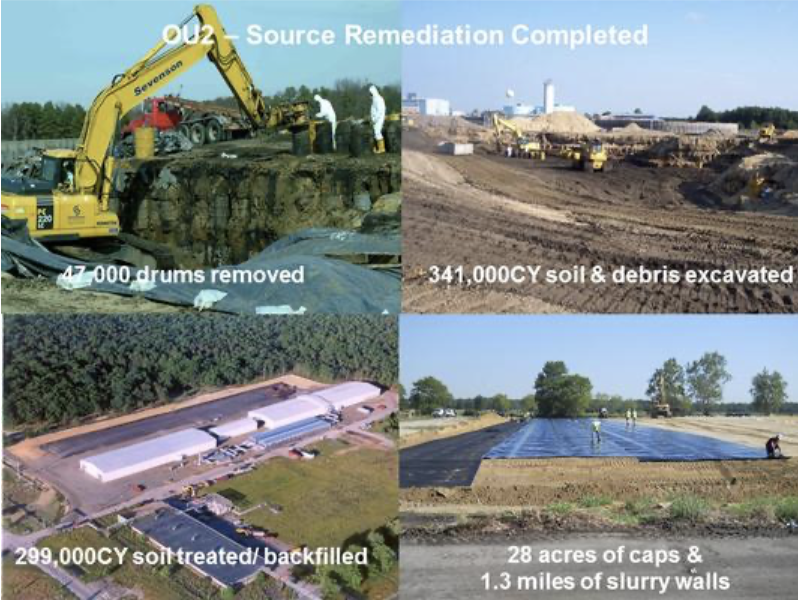
Completed Remediations, photo courtesy of the EPA.
Estimated Cleanup Cost: $300+ million (spent to date).
Summary: Synonymous with environmental scandal, this site is tied to a childhood cancer cluster and a massive underground plume of contaminated water in Toms River.
Contaminants:
- Benzene: a well-known carcinogen.
- TCE: a chemical that depresses the central nervous system and causes cancer. Chloroform: affects liver function and may damage DNA.
- Dyes: many are mutagenic and carcinogenic.
- Radionuclides: radioactive particles that increase cancer risk with prolonged exposure.
Remediation: Crews have removed contaminated soil, waste drums, and chemicals. A cap and groundwater treatment system are still active. Future plans include transforming the site into a wildlife preserve.
Scope & Status: Major construction is done, but groundwater monitoring and site restoration are ongoing.
2. Ventron/Velsicol – Berry’s Creek Study Area (Wood-Ridge/Moonachie, Bergen County)

The Ventron Velsicol site sits just outside of Metlife Stadium. It is both one of the largest and most expensive clean up efforts in New Jersey.
Estimated Cleanup Cost: $332 million.
Summary: This Meadowlands site harbors some of the highest mercury levels ever recorded in a U.S. waterway. A former mercury plant discharged waste directly into the creek, poisoning the wetlands.
Contaminants:
- Mercury: a dangerous neurotoxin that damages the brain and kidneys.
- PCBs: industrial chemicals that persist in sediment and accumulate in fish.
- Chromium: can cause lung cancer and respiratory issues.
- Lead and PAHs: add to the toxic burden of the marsh.
Remediation: Plans call for dredging and capping more than 100 acres of creek channels and marshlands.
Scope & Status: Design is in progress. The multi-year cleanup will begin soon and continue in phases.
1. Diamond Alkali (Lower Passaic River and Newark Bay, Essex/Passaic Counties)

The purple shaded area represents the Diamond Alkali site, surrounded by multiple cleanup sites within a heavily contaminated corridor.
Estimated Cleanup Cost: Over $2 billion.
Summary: The Diamond Alkali Superfund site centers on a former chemical manufacturing plant in Newark that notoriously produced Agent Orange during the Vietnam War. Operated by the Diamond Shamrock Corporation, the facility generated vast amounts of hazardous waste that were discharged directly into the Passaic River. These discharges, along with runoff from decades of heavy industry along the riverbanks, created a toxic legacy that stretched well beyond the original facility. Over time, contaminated sediment and industrial runoff migrated downstream into Newark Bay, embedding dangerous pollutants deep within the riverbed and estuarine ecosystem. Today, the site is not only one of New Jersey’s most notorious environmental disasters but also a case study in how unchecked industrial activity can devastate a watershed for generations.
Contaminants:
- Dioxins: toxic compounds linked to cancer and developmental harm.
- PCBs and pesticides: disrupt hormones and damage reproductive health.
- Mercury and lead: heavy metals with long-lasting neurological and organ effects.
Remediation: The EPA’s multi-phase cleanup spans two locations. In the lower 8 miles of the Passaic River, the plan involves dredging 3.5 million cubic yards of contaminated sediment and installing a protective cap. In Newark Bay and the upper stretches of the river, similar dredging and capping will be implemented, followed by long-term monitoring and ecosystem restoration.
Scope & Status: Cleanup efforts are advancing in stages. The lower river remedy is in its design phase, while planning and sediment studies continue for Newark Bay. Construction across the full site is expected to take more than a decade.
Summary
| Rank | Site Name | County | Estimated Cost | Status |
| 1 | Diamond Alkali | Essex/Passaic | $2B+ | In design, active |
| 2 | Ventron/Velsicol – Berry’s Creek | Bergen | $332M | Design phase |
| 3 | Ciba-Geigy | Ocean | $300M+ | Long-term monitoring |
| 4 | American Cyanamid | Somerset | $268M | In progress (multi-year) |
| 5 | Quanta Resources | Bergen | $163M | Design phase (sediment) |
| 6 | Cornell-Dubilier Electronics | Middlesex | $152M | Active remediation |
| 7 | Raritan Bay Slag | Middlesex | $151M | In permitting |
| 8 | Horseshoe Road Complex | Middlesex | $125M | Final phase restoration |
| 9 | Sherwin-Williams/Hilliards Creek | Camden | $100M+ | Ongoing soil removal |
| 10 | Roebling Steel Company | Burlington | $100M+ | Long-term monitoring |
Sources
Associated Press. Decades After Cancer Cluster, Toms River Chemical Waste Site to Become Wildlife Preserve.
EPA Region 2. American Cyanamid Superfund Site: Impoundments 1 and 2 Removal Plan and Groundwater Treatment Design.
New Jersey Department of Environmental Protection. Ciba-Geigy Site Natural Resource Damages Settlement and Restoration Plan.
NJ Department of Environmental Protection. Remedial Updates for Sherwin-Williams and Hilliards Creek Cleanup Projects, Camden County.
NorthJersey.com. Berry’s Creek Is One of the Most Polluted Waterways in the Country. The Clean-Up Will Take Decades.
NorthJersey.com. EPA Efforts Continue at High-Risk Superfund Sites Across New Jersey.
U.S. Environmental Protection Agency. American Cyanamid Superfund Site Settlement for Groundwater and Waste Impoundment Remediation.
U.S. Environmental Protection Agency. Ciba-Geigy Corporation Superfund Site, Toms River, NJ: Cleanup and Restoration Overview.
U.S. Environmental Protection Agency. Cornell-Dubilier Electronics Superfund Site, South Plainfield, NJ: Infrastructure Investment Funds Cleanup Activities.
U.S. Environmental Protection Agency. Diamond Alkali Superfund Site Cleanup Plan for the Lower Passaic River, Newark, NJ.
U.S. Environmental Protection Agency. Horseshoe Road Complex Superfund Site Cleanup Overview, Sayreville, NJ.
U.S. Environmental Protection Agency. Matteo & Sons Superfund Site: Battery Waste and Lead Contamination Cleanup Begins in West Deptford.
U.S. Environmental Protection Agency. Quanta Resources Superfund Site, Edgewater, NJ: Hudson River Sediment Cleanup Plan.
U.S. Environmental Protection Agency. Raritan Bay Slag Superfund Site Proposed Settlement with NL Industries and Other Parties.
U.S. Environmental Protection Agency. Roebling Steel Company Superfund Site Profile and Cleanup Activities, Florence Township, NJ.
U.S. Environmental Protection Agency. Sherwin-Williams/Hilliards Creek Superfund Site, Gibbsboro, NJ: Site History and Remediation Plans.
U.S. Environmental Protection Agency. Superfund Program: Records of Decision and Five-Year Reviews for New Jersey Sites.
U.S. Environmental Protection Agency. Superfund Site Documents and Five-Year Reviews for Roebling, Horseshoe Road, and Sherwin-Williams Sites in New Jersey.
U.S. Environmental Protection Agency. Ventron/Velsicol Superfund Site: EPA Finalizes Cleanup Plan for Berry’s Creek Study Area.
U.S. Environmental Protection Agency. Welsbach/General Gas Mantle Superfund Site: Final Remedy for Marine Terminal Radiation Cleanup.


