


New York’s infrastructure report card highlights progress, persistent challenges
The American Society of Civil Engineers (ASCE) infrastructure report card offers a snapshot of how well critical systems are performing across the country and at the state level. Using an A-to-F grading scale, the report evaluates infrastructure based on condition, capacity, funding, safety and future need.
ASCE evaluates infrastructure across multiple categories, including:
- Aviation
- Bridges
- Dams
- Drinking water
- Parks
- Rail
- Roads
- Transit
- Wastewater
While the most recent national report shows improvement, New York’s infrastructure continues to reflect many of the same challenges seen across the country: aging systems, funding gaps and growing demand.
Aging systems remain a concern
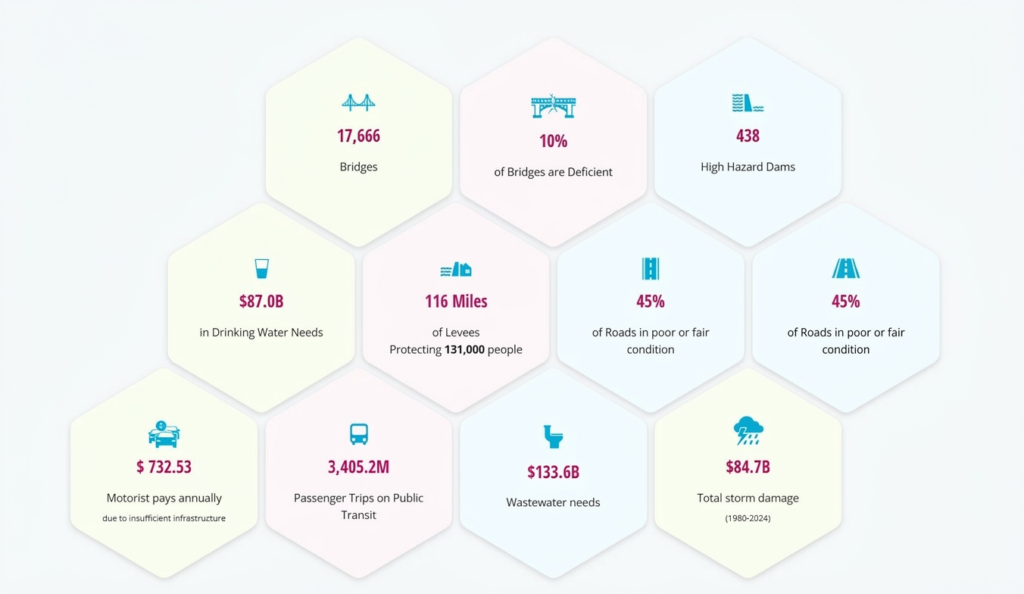
Estimates from the New York State Infrastructure Report Card
Much of New York’s infrastructure was built decades ago and continues to operate beyond its intended lifespan. Roads, bridges and water systems in particular require ongoing maintenance and modernization to remain reliable.
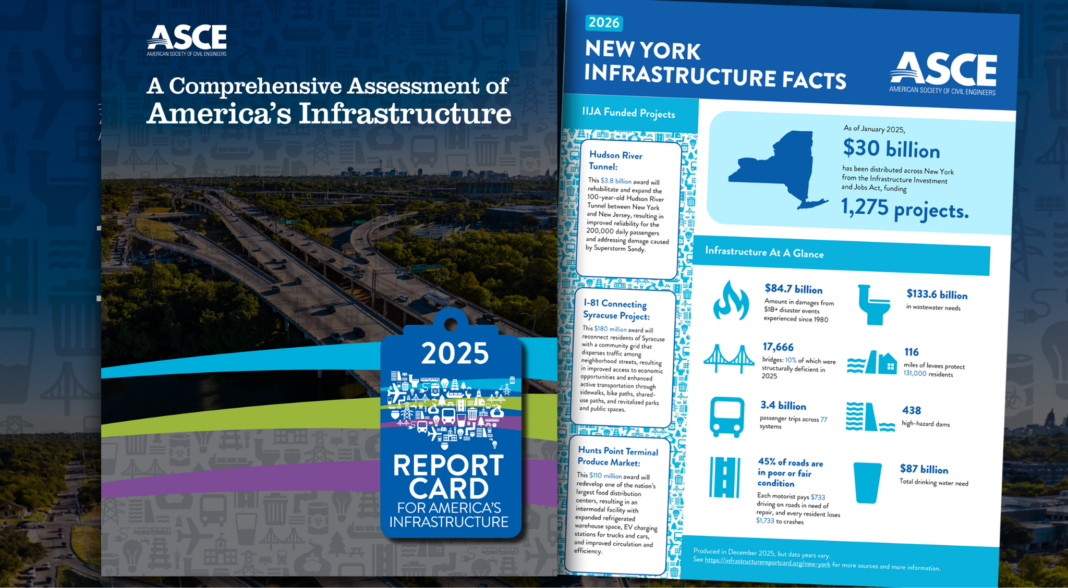
The Empire State received a D+ in roads due to rough pavement conditions, congestion and safety deficiencies, with 45% of roads rated in fair or poor condition. In addition, 637 bridges in New York are currently posted for less than legal loads.
Water infrastructure remains a key concern as well. Aging treatment and distribution systems, some more than 100 years old, are already in need of replacement. At the same time, the detection and treatment of emerging contaminants, including PFAS, are expected to require additional investment in the coming years.
Growing demand strains key infrastructure
New York is one of the busiest states in the country, with commuter traffic flowing into and out of major population centers every day. The state’s public transportation system alone completes an estimated 3.4 billion passenger trips across 77 transit systems each year. This heavily used network has earned a D+ rating as it continues to contend with significant maintenance backlogs and aging infrastructure.
Across the state, transit systems operate more than 16,000 revenue vehicles, over 1,700 miles of subway and rail track, and more than 150 miles of tunnels, along with tens of thousands of stations, bus stops and related facilities. While many agencies have made meaningful progress over the past decade in modernizing equipment and upgrading infrastructure, substantial needs remain. At the same time, rising capital costs continue to outpace or match new revenue sources, widening an already significant funding gap.
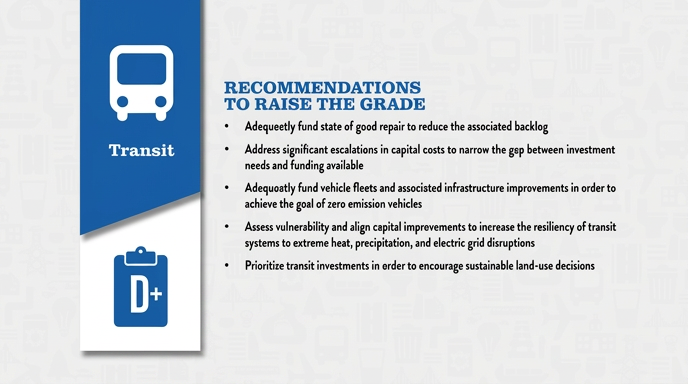
Provided by the American Society of Civil Engineers Infrastructure report card.
Major projects
Across the state, several major infrastructure projects are moving forward with federal support.
Hudson River Tunnel
A $3.8 billion investment will rehabilitate and expand the century-old tunnel connecting New York and New Jersey. The project is expected to improve reliability for approximately 200,000 daily passengers while addressing long-standing damage caused by Hurricane Sandy.
I-81 Connecting Syracuse Project
Backed by $180 million in funding, this project will replace a highway viaduct with a community grid designed to reconnect neighborhoods in Syracuse. The redesign will disperse traffic across local streets and improve access to economic opportunities, while expanding sidewalks, bike paths and public spaces.
Hunts Point Terminal Produce Market
A $110 million redevelopment will modernize one of the nation’s largest food distribution centers in New York City. The project includes expanded refrigerated warehouse space, EV charging infrastructure for trucks and passenger vehicles and upgrades to improve circulation and efficiency across the facility.
The bottom line
New York’s infrastructure reflects a broader national trend: progress is being made, but not fast enough to fully address decades of underinvestment.
While recent funding has helped move the needle, significant work remains to modernize aging systems, improve resilience and meet growing demand. Without sustained investment and long-term planning, infrastructure will continue to lag behind the needs of residents and businesses across the state.
Sources:
American Society of Civil Engineers. (n.d.). New York infrastructure report card. Infrastructure Report Card. https://infrastructurereportcard.org/state-item/new-york/