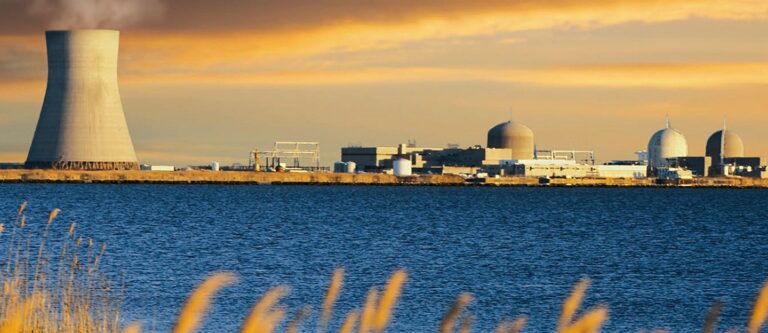
Salem generating station in Lower Alloways Creek Township. Salem produces enough electricity to power more than 700,000 homes. Photo provided by Constellation Energy.
The beginning at Oyster Creek
New Jersey’s nuclear story begins along the shores of Oyster Creek Nuclear Generating Station in Ocean County, where a bold experiment in energy quietly reshaped the state’s future. When it entered service in 1969, Oyster Creek was the largest boiling water reactor in the world.
Built in Lacey Township during a period of rapid postwar growth, Oyster Creek reflected a national optimism about atomic energy. Utilities and policymakers saw nuclear power as a near-limitless, low-cost solution to rising electricity demand.
The plant was developed by Jersey Central Power & Light (JCP&L), with engineering support from General Electric (GE). It was constructed in just four years, a pace that would be unthinkable in today’s world of oversight and protocols.
Oyster Creek would go on to operate for nearly half a century, becoming a fixture in New Jersey’s energy mix. But it would not stand alone for long.
Building a nuclear backbone
Historic images capturing the construction of the Salem Nuclear Plant during the 1960s and 1970s. Operating engineers from IUOE Local 825 were flown onto the island by helicopter to help build the infrastructure that would later provide permanent access to the site.
In the decades that followed, New Jersey expanded its nuclear fleet with the construction of three additional reactors along the Delaware River in Salem County: Salem Nuclear Power Plant Units 1 and 2, which came online in 1977 and 1981, and Hope Creek Generating Station, which began operation in 1986.
Together, these facilities formed one of the most significant nuclear generation hubs in the country. Salem’s two pressurized water reactors and Hope Creek’s boiling water reactor collectively generate thousands of megawatts of electricity, enough to power millions of homes.
Today, the Salem and Hope Creek plants supply roughly 40 percent of New Jersey’s electricity and approximately 80 percent of its carbon-free power. When all three nuclear plants were operating, they supplied roughly half of New Jersey’s electricity and more than 90 percent of its carbon-free power. The heavy reliance on nuclear energy helped keep New Jersey’s emissions relatively low compared to other states. In a state with limited land for large-scale renewable development, nuclear energy has become a cornerstone of green grid reliability.
Regulation and a 50-year pause
But even as New Jersey was building out its nuclear capacity, it was putting policies in place that would halt further expansion. The 1960s and 1970s marked the rise of the modern environmental movement. Public concern over pollution, industrial contamination and ecological damage grew sharply during this period, shaping both state and federal policy. The federal government established the United States Environmental Protection Agency in 1970, giving environmental regulation a far larger role in infrastructure and energy planning. At the same time, opposition to nuclear power expanded through the “No Nukes” movement, which raised concerns about reactor safety, radioactive waste and the long-term environmental consequences of nuclear development.
In 1973, the NJDEP enacted the Coastal Area Facility Review Act, commonly known as CAFRA. Passed in the wake of growing environmental awareness following events like the Santa Barbara oil spill, CAFRA was designed to regulate development along New Jersey’s ecologically sensitive coastline.
CAFRA required developers to demonstrate a viable long-term solution for nuclear waste disposal at the federal level, something that has remained unresolved for decades. The result was a de facto moratorium on new nuclear construction in New Jersey that lasted more than 50 years.
The closure of Oyster Creek
While policy stalled new development, Oyster Creek continued operating well beyond its original design life. By the 2000s, however, the plant faced mounting challenges.
Environmental groups raised concerns about its once-through cooling system, which drew large volumes of water from Barnegat Bay and contributed to fish mortality. Regulatory pressure increased, and in 2010, the plant’s owner agreed to close the facility rather than undertake costly cooling tower upgrades.
Oyster Creek shut down in September 2018. Since then, the site has entered a long-term decommissioning process led by Holtec International, which is overseeing the dismantling of structures and management of spent fuel. The process is expected to take decades, though much of the visible infrastructure will be removed far sooner.
What remains, for now, is the loss of roughly 600 megawatts of steady, carbon-free baseload power. While modest in scale relative to the regional grid, Oyster Creek Nuclear Generating Station’s output was reliable and available 24/7. Its retirement meant New Jersey had to replace not just electricity, but dependable capacity. Rather than adding enough replacement generation, the state retired Oyster Creek along with a number of natural gas generating stations. As a result, New Jersey shifted from being a net exporter of electricity to a net importer, relying more heavily on power generated elsewhere in the regional grid. New Jerseyans feel this in 2026 more than ever before, as utility prices continue to skyrocket.
A policy shift and a new future
Photo courtesy of the Office of Governor Mikie Sherrill via Flickr
Now, after decades of policy constraints and public debate, New Jersey is entering a new phase in its nuclear history.
In April 2026, Governor Mikie Sherrill signed legislation ending the state’s long-standing moratorium on new nuclear development. The law amends CAFRA to allow permits for nuclear waste storage facilities, provided they meet safety standards set by the U.S. Nuclear Regulatory Commission.
The legislation also established a Nuclear Task Force, bringing together stakeholders including PSE&G, nuclear technology firms, labor representatives, and environmental groups. The group will evaluate advanced nuclear technologies, grid reliability needs, and future energy planning.
In the near term, the focus remains on extending the life of existing plants. In 2024, PSEG announced plans to pursue 20-year license renewals for Salem Units 1 and 2 and Hope Creek, potentially allowing them to operate into the 2050s and 2060s.
Nuclear power evolves with safety and environmental gains
Nuclear energy occupies a unique position in today’s energy mix. Like fossil fuels, it provides reliable, around-the-clock power that is not dependent on weather conditions. Unlike fossil fuels, it produces no direct carbon emissions during operation.
That does not mean nuclear energy comes without environmental challenges. Past concerns have included altered fish migration patterns, reduced oxygen levels and disrupted aquatic ecosystems caused by the discharge of heated water used in cooling systems. Radioactive waste and long-term storage also remain part of the conversation.
However, public policy and nuclear plant design have improved over time, reducing or eliminating many of these impacts. Older plants often used once-through systems, which withdrew large volumes of water and discharged it back at higher temperatures. Newer plants rely on closed-cycle cooling systems, which reuse water and significantly limit withdrawals. By cooling water in towers before recirculating it, these systems can reduce impacts on aquatic ecosystems by as much as 95 percent. Regulations under the Clean Water Act have placed limits on water withdrawals and reduced intake velocity, helping protect aquatic life.
The emergency response systems have also improved. Earlier plants relied on active safety systems, including pumps, diesel generators and human intervention. These systems introduced potential points of failure, as seen during the Three Mile Island accident. Modern reactors, known as Generation III and III+ designs, use passive safety systems. Water stored above the reactor flows downward using gravity, allowing cooling to continue without pumps or external power. In an emergency, these reactors can shut down automatically without human intervention. As a result, they are designed to remain safe even during power outages or equipment failures.
Nuclear power in the United States also has a strong safety record. Over decades of commercial operation, the industry has produced large amounts of electricity with comparatively low rates of worker injuries and fatalities. Measured by deaths per unit of electricity generated, nuclear is widely regarded as among the safest forms of large-scale power generation, with risks generally lower than coal, oil and natural gas.
From past to future
From the early optimism of Oyster Creek Nuclear Generating Station to the regulatory roadblocks of Coastal Area Facility Review Act, and now to a renewed push for innovation, New Jersey’s nuclear history reflects broader shifts in how energy is produced and regulated. With policy changes now in place and new technologies on the horizon, the next chapter is beginning.
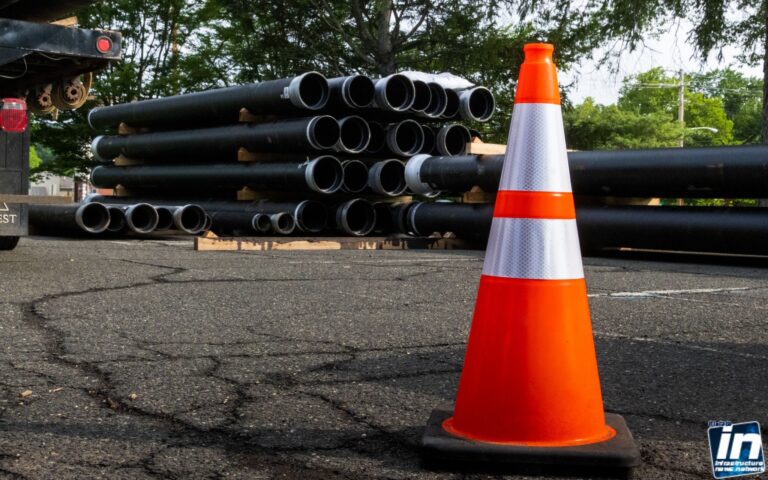
When a water main breaks, the immediate impact is easy to see: water flooding streets, crews working to contain the damage, police and detour signs re-routing traffic. What is less visible is the broader economic cost. In their 2025 scorecard, the American Society of Civil Engineers noted that NJ’s drinking water infrastructure needs $32.2 billion dollars of investment.
“According to the Passaic Valley Water Commission, 56 water main breaks were reported in January 2025, which is double the number reported in January 2024.”
Water main breaks surge across New Jersey during winter freeze, News12 New Jersey.
The hidden economic disruption
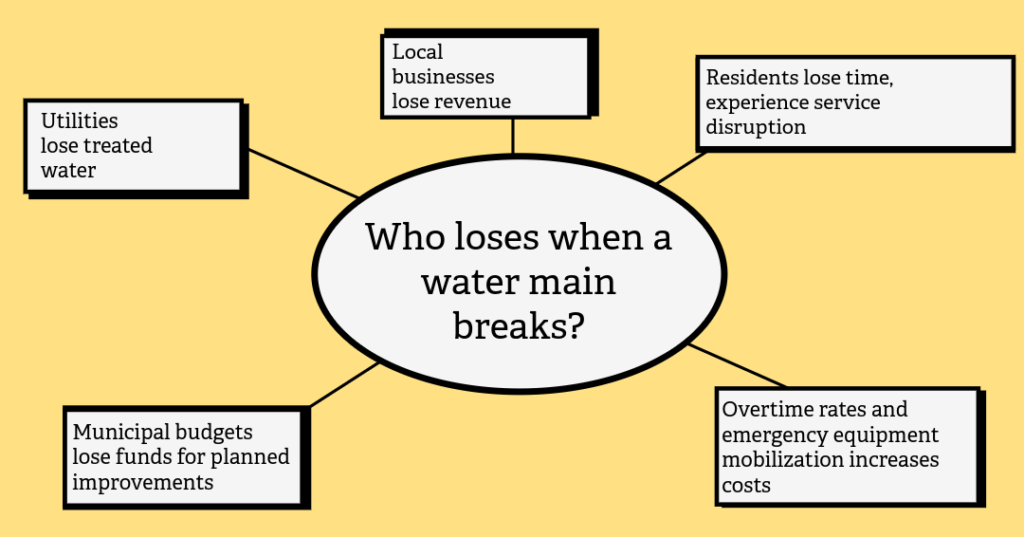
Unlike planned infrastructure projects, water main breaks happen without warning. Crews must respond immediately, whether that means working overnight or in hazardous conditions. This urgency drives up costs, with overtime labor, emergency equipment mobilization and expedited materials all contributing to higher expenses. Business disruption and long-term damage to public assets all add up, creating a ripple effect through local economies.
A repair that might cost significantly less as a planned replacement project becomes more expensive when handled as an emergency. Road closures and detours can cause disruption for local businesses, leading to lost customers, delayed deliveries and reduced revenue. If excavators are digging and police lights are flashing in front of your favorite bakery, do you maneuver through the chaos, or does the morning Dunkin’ just get skipped?
Water service interruptions can also impact business. For industries that depend on access to water, such as food service or healthcare, even a brief outage can mean lost income and additional costs to reopen safely. John Donald, who owns the restaurant Alfonso’s in Somerville, told CBS news, “It’s frustrating because this is the second time within a year that this has happened. Last time, we were closed for a day and a half. Any pizzeria that has dough has to boil the water first, chill it overnight. With today’s economy and the way food prices are and the way labor is going up every year, it’s very difficult to make money.”
There is also the cost of water itself. When a main breaks, thousands of gallons of treated water can be lost. That water has already been pumped, treated and distributed, meaning utilities have paid for it without receiving any revenue in return. This was the case twice in Patterson in 2025. In August, a 30-inch,140-year-old water main broke leaving nearly 200,000 homes and businesses with reduced service and a boil water order used by the Passaic Valley Water Commission.
On a larger scale, repeated breaks strain municipal budgets. Funds that could be used for planned improvements are instead redirected to emergency repairs. Over time, this reactive approach creates a cycle where systems fall further behind, increasing the likelihood of future failures.
The case for proactive investment
Studies and real-world examples show that proactive investment can significantly reduce these costs. Planned projects allow utilities to schedule work during normal hours, coordinate with local stakeholders and minimize disruption. Costs are less variable, timelines are clear and impacts can be managed.
Hoboken offers a clear example of what that approach looks like in practice. Over the past decade, the city has invested in a proactive water main replacement program, targeting some of its oldest and most failure-prone pipes. As part of that effort, approximately 20 percent of Hoboken’s water mains have been replaced through planned upgrades rather than reactive repairs. The results have been measurable.
In 2013, Hoboken experienced 34 water main breaks in a single year, each one requiring emergency response, road closures and unplanned spending. By 2021,that number had dropped to just 12 annual breaks. City officials estimate the program is saving roughly $100,000 per year in repair expenses alone, not including the avoided economic disruption to businesses and residents.
This is counter to the trends seen in the rest of the state, where water main breakshave steadily increased since 2023. New Jersey has one of the oldest water systems in the nation, reflecting the state’s long history of public water service. Much of its infrastructure predates modern construction standards, including lead service lines that are more prone to corrosion, leaks and structural failure over time. These older materials, combined with decades of wear, increase the likelihood of breaks and system-wide vulnerabilities, particularly during seasonal temperature swings.
Source: U.S. EPA Water Needs Survey (DWINSA), 2023
Despite this, many systems continue to rely heavily on reactive maintenance, often due to funding constraints or competing priorities. The upfront cost of replacing aging infrastructure can be difficult to justify, even when long-term savings are clear. But the economic case for action is growing stronger.
Sources:
City of Hoboken water infrastructure upgrades (Phase 1):
New Jersey American Water. (2023). Annual report to the New Jersey Board of Public Utilities.https://www.amwater.com/njaw/resources/PDF/rates/Water-Wastewater-Rates/new-jersey-amwater-annual-bpu-report.pdf
This Week in Policy, Infrastructure & Energy Markets
PJM’s Reopened Queue Shows Gas Dominating New Proposals
Utility Dive reports that PJM’s interconnection queue — frozen since 2022 — has reopened with more than 800 projects totaling 220 GW. The headline surprise: gas‑fired generation leads the queue with 106 GW of proposed capacity. Storage follows at 67 GW, nuclear at 18 GW, and solar at 15 GW.
PJM is using Google’s Tapestry AI tool to accelerate studies, but warns that interconnection approval does not guarantee construction. Since 2020, 103 GW of approved projects have stalled due to permitting delays, supply‑chain issues, or financing challenges.
For New Jersey, which relies heavily on PJM’s regional grid, the queue composition underscores a policy tension: state‑level clean‑energy mandates push toward renewables, but regional market signals still favor gas.
Gateway Tunnel Construction Moves Into a Visible Phase
PIX11 reports that the Gateway Program is preparing to begin boring the new Hudson River rail tunnel — a milestone that shifts the project from planning into physical construction. The new tunnel will eventually allow the century‑old, Sandy‑damaged North River Tunnels to be taken offline for rehabilitation.
For New Jersey commuters, this is the most consequential infrastructure development in decades. The tunnel is the backbone of the entire Gateway Program, and its progress will directly shape NJ Transit reliability and Northeast Corridor capacity for generations.
Source: PIX11 / YouTube
New Jersey Still Ranks Last in Tax Competitiveness
The Tax Foundation’s 2026 State Business Tax Climate Index again places New Jersey at the bottom — 50th out of 50. The Index evaluates structure, not revenue, and New Jersey performs poorly across nearly every category: income tax, corporate tax, sales tax, and especially property tax.
New Jersey’s income tax is among the most progressive and complex in the country, its property taxes are the highest in the nation, and its corporate tax structure includes surcharges and legacy provisions that create uncertainty for businesses.
Meanwhile, competitor states are moving in the opposite direction. Louisiana jumped six spots after adopting a flat 3% income tax and lowering corporate rates. North Carolina, Utah, and Indiana continue to climb by simplifying their codes. New Jersey’s incremental adjustments haven’t meaningfully changed its structural disadvantages.
For companies evaluating expansion or relocation, the Tax Foundation argues that tax structure matters as much as tax burden. New Jersey’s ranking reinforces a long‑standing challenge: the state has strategic advantages — workforce, location, infrastructure — but its tax code remains a drag on competitiveness.
Port Newark’s Billion‑Dollar Expansion Accelerates
NJ.com reports that a major construction project at Port Newark is underway as part of a broader billion‑dollar expansion across the Port of New York and New Jersey — now the busiest port in the United States.
The project includes modernization of berths, expanded logistics capacity, and upgrades aimed at improving throughput and reducing bottlenecks. For New Jersey, the port is a foundational economic engine, supporting more than half a million regional jobs. These upgrades position the port to compete with rapidly expanding facilities in Savannah, Charleston, and Los Angeles/Long Beach.
The Energy Transition’s Contradiction: Climate vs. Biodiversity
The Lowy Institute argues that the global energy transition contains a structural contradiction: renewable energy is both a climate solution and a form of industrial expansion — and those two goals increasingly collide.
Large‑scale wind, solar, transmission lines, and critical‑minerals mining often require land in ecologically sensitive areas. The article warns against “carbon reductionism,” where emissions become the sole metric of success while biodiversity, cultural heritage, and local stewardship are treated as secondary.
The takeaway: climate and biodiversity policy can no longer be pursued in parallel — they must be integrated.
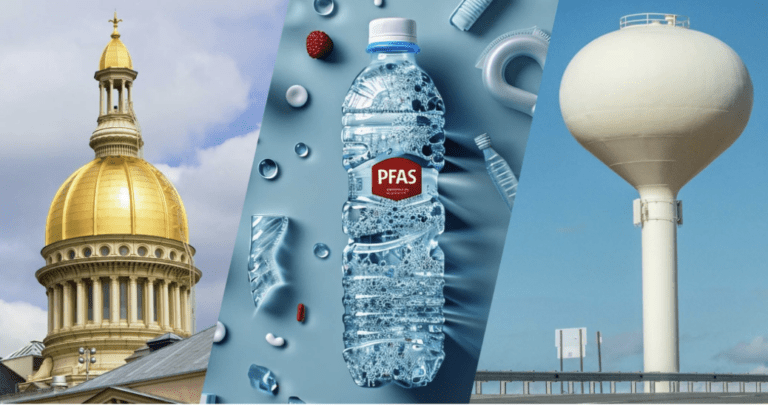
A new kind of water crisis has been quietly unfolding. Not one driven by visible pollution or aging pipes, but by microscopic chemicals that refuse to disappear.
PFAS, or per- and polyfluoroalkyl compounds have earned a troubling nickname: “forever chemicals.” For utilities, regulators and residents alike, they represent one of the most complex environmental challenges of the modern era.
What are PFAS?
PFAS are a group of thousands of synthetic chemicals developed for their ability to resist heat, water, oil, and stains and improve consumer products They quickly became embedded in everyday life, used in:
food packaging
nonstick cookware
waterproof clothing
firefighting foams
industrial manufacturing
For much of the 20th century, PFAS were viewed as a technological success story. They solved real, everyday problems in ways no other materials could. When Teflon was introduced commercially in 1938, it transformed cooking. Instead of food sticking to metal pans, surfaces became slick and easy to clean. The same chemistry quickly spread beyond the kitchen. Raincoats that actually repelled water, carpets that resisted stains, fast-food wrappers that didn’t soak through with grease. In each case, PFAS were solving a practical problem that had long frustrated consumers and industry.
Video caption: PFAS, or “forever chemicals,” are found in everyday products, raising growing concerns about long-term environmental and health impacts.
A slow discovery decades in the making
It was not until the late 1990s and early 2000s that scientists began to understand that there was a problem. PFAS were showing up in human blood samples and produce, even organically grown produce. Contamination was being detected in remote areas, far from industrial sites.
What makes PFAS useful is also what makes them dangerous. Their chemical structure, built around extremely strong carbon-fluorine bonds, means they do not naturally break down. Once released, they persist in soil and water for decades. PFAS chemicals move easily through groundwater and into drinking water supplies.
New Jersey officials began studying PFAS in 2006, before it had become a national issue or household term. There were no federal drinking water standards, limited public awareness and only emerging science around health risks.
The New Jersey Department of Environmental Protection and the New Jersey Drinking Water Quality Institute, a scientific advisory group, began statewide testing of public water systems in 2006, followed by additional rounds of monitoring in 2009 and 2010.
This early testing established three things:
PFAS contamination was present in New Jersey water systems
it was not isolated to one region or source
existing treatment systems were not removing it
Rather than waiting for federal action, New Jersey began developing its own health-based limits. The Drinking Water Quality Institute issued a series of formal recommendations for maximum contaminant levels (MCLs) from 2015-2018. In 2018, New Jersey became the first state in the nation to adopt a legally enforceable drinking water standard for a PFAS compound.
Transparency became a cornerstone of progress. Residents can now access PFAS data for their local water systems, a step that has increased public awareness and pressure for action.
In 2020, New Jersey expanded its regulatory framework by establishing enforceable limits for PFOA and PFOS, less familiar but just as persistent compounds. These were among the strictest drinking water standards anywhere in the country.
Unlike federal guidance, which was still largely advisory, these limits carried real requirements. Mandatory water quality tests followed by public notification when levels were exceeded and required treatment upgrades to bring systems into compliance. The state also expanded its regulatory reach by requiring PFAS testing for private wells during property sales and setting groundwater quality standards.
On a larger scale, PFAS were added to the state’s list of hazardous substances. This allowed for discharge limits for industrial facilities under the Spill Compensation and Control Act. Those who did not comply could now be required to clean up contaminated sites. It also tied PFAS directly into New Jersey’s long-standing “polluter pays” law.
The state expanded that authority even further in June 2025, when it updated its rules to include more than 200 PFAS compounds under the hazardous substance designation. That move significantly broadened liability beyond just a few well-known chemicals and made it easier for regulators to pursue enforcement across a wider range of contamination cases.
Are PFAS and “microplastics” the same thing?
PFAS, often called “forever chemicals,” are distinct from microplastics. Microplastics are tiny solid bits of plastic. Think broken-down bottle fragments or laundry lint under 5 millimeters. They can float in water or get eaten by fish.
PFAS are invisible chemical compounds. They are used in things like non-stick pans and waterproof clothes. They are prized for their stain resistance but notorious for never breaking down.
Understanding this difference is key to tackling them. Curb plastic waste for microplastics. Phase out PFAS in manufacturing products to eliminate forever chemicals.
Measurable progress
With legal authority in place, New Jersey began pursuing manufacturers tied to PFAS contamination. In 2025, chemical manufacturer 3M agreed to pay up to $450 million to resolve lawsuits over natural resource contamination stemming from PFAS. The company also announced it would end PFAS manufacturing by the end of 2025. “This agreement is another important step toward reducing risk and uncertainty on these legacy issues, allowing 3M to focus on its strategic priorities,” the company said.
There is evidence that these regulations are working. A recent study of New Jersey water systems found significant declines in PFAS levels following the adoption of state standards.
PFOA levels dropped by more than 50 percent
PFAS levels dropped by about 12 percent
The number of samples exceeding limits fell sharply, with models projecting continued declines
It is a rare outcome to see swift progress in environmental policy, where improvements often take decades to materialize. While the U.S. Environmental Protection Agency did not finalize national drinking water standards for PFAS until 2024, New Jersey had already completed years of testing, built a legal framework for enforcement and required treatment upgrades.
New Jersey is not known for bureaucratic efficiency. The state carries a well-earned reputation for dense regulation, long permitting timelines and a business climate that can feel constrained by layers of oversight. For contractors, developers and employers, the system can be frustrating and create a barrier to growth.
But PFAS tells a different story.
In this case, the same regulatory structure that can slow projects down became an asset. State agencies had the authority to act, the scientific backing to justify it and the legal tools to enforce it. Instead of waiting for federal direction, New Jersey moved early, set its own standards and required compliance.
The result is a clear example of regulation working as intended. Residents gained earlier protection from a widespread contaminant. Water systems were pushed to modernize. Polluters were held financially accountable.
It does not erase the broader debate around balancing regulation and economic growth. But it does show that when a risk is clearly defined and the public health stakes are high, a strong regulatory framework can deliver results and set the pace for the rest of the country.
Associated Press. (2023). 3M reaches settlement with New Jersey over PFAS contamination. https://apnews.com
Hu, X. C., Andrews, D. Q., Lindstrom, A. B., Bruton, T. A., Schaider, L. A., Grandjean, P., Lohmann, R., Carignan, C. C., Blum, A., Balan, S. A., Higgins, C. P., & Sunderland, E. M. (2016). Detection of poly- and perfluoroalkyl substances (PFASs) in U.S. drinking water linked to industrial sites, military fire training areas and wastewater treatment plants. Environmental Science & Technology Letters, 3(10), 344–350. https://doi.org/10.1021/acs.estlett.6b00260
New Jersey Department of Environmental Protection. (n.d.). PFAS: Per- and polyfluoroalkyl substances. https://dep.nj.gov/pfas/about/
New Jersey Department of Environmental Protection. (2020). New Jersey adds PFOS and PFOA to list of hazardous substances. https://dep.nj.gov
New Jersey Drinking Water Quality Institute. (2018). Maximum contaminant level recommendations for PFAS. https://www.nj.gov/dep/watersupply/dwqi/New Jersey PFAS Research and Policy Institute. (n.d.). PFAS regulation in New Jersey. https://njpfas.org/regulations-policy/pfas-regulation-in-new-jersey/
PJM’s newly released 2025 Regional Transmission Expansion Plan (RTEP) outlines accelerating electricity demand across its 13‑state footprint, with New Jersey facing some of the fastest growth. The report highlights 122 new baseline transmission projects totaling $11.8 billion and 445 network upgrades supporting new generation. PJM attributes rising load to rapid data center expansion, electrification of vehicles and buildings, and renewed manufacturing activity.
Regionwide, PJM now forecasts a 3.1% annual increase in summer peak demand—double last year’s projection. New Jersey’s winter peak is expected to grow 3.8% by 2034–35, while summer peak rises 3.1%. Existing in‑state generation totals 13,661 MW, dominated by natural gas and nuclear. PJM warns that generator retirements—6.5 GW announced in 2025—are outpacing new resources, creating near‑term reliability risks. The report details reforms to accelerate interconnection, expand capacity rights, and ensure the grid can meet rapidly tightening supply‑demand conditions.
Pipeline expansion to provide price relief and energy resiliency to NYC and Long Island residents and businesses
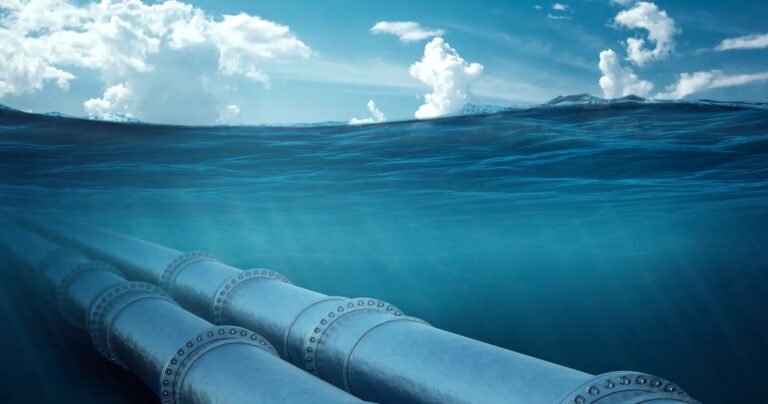
The New Jersey Tidelands Resource Council voted to approve a utility license for the Northeast Supply Enhancement (NESE) pipeline, granting Williams/Transco permission to install a second natural‑gas pipeline and associated infrastructure beneath state‑owned tidelands in Raritan Bay and several connected waterways. The vote followed a lengthy public meeting in which more than one hundred residents and environmental advocates urged the council to reject the application. Despite the volume of opposition, council members emphasized that their authority is limited to tidelands property rights, not broader questions of climate policy, energy planning, or fossil‑fuel expansion. Because the New Jersey Department of Environmental Protection (NJDEP) had already issued water‑quality permits for the project in 2025, the council treated the license as a procedural step rather than a discretionary environmental review.
Members noted that rejecting a tidelands license after NJDEP determined the project met regulatory standards could expose the state to legal challenges. The council’s role, they said, is to determine whether the applicant has met the technical requirements for occupying tidelands, not to revisit NJDEP’s environmental findings. With the vote, Williams cleared the final state‑level approval needed to move the project toward construction, though federal oversight and potential litigation remain factors that could influence the timeline.
About NESE
The NESE project is an expansion of the long‑established Transco interstate natural‑gas pipeline system, a 10,000 mile interstate pipeline system originating in Texas, and which has supplied New Jersey, New York, and the Mid‑Atlantic for decades. Portions of the system already run offshore through Raritan Bay and Lower New York Bay, connecting Pennsylvania production zones to densely populated downstate New York markets. NESE is an expansion of pipelines currently running beneath Raritan Bay. The project follows the industry trend of looping existing corridors (expanding capacity through existing rights-of-way) rather than building new greenfield routes.
Impact on Energy Costs and Resiliency
The added capacity for New York City and Long Island is intended to reduce winter price spikes that occur when constrained pipeline supply forces utilities to purchase higher‑cost LNG or interruptible gas. By increasing firm, domestic supply by an additional 400,000 dekatherms per day, the project is expected to stabilize seasonal volatility and reduce exposure to global LNG markets, which have shown significant price swings in recent years.
Utilities have argued that without additional firm capacity, they face limitations on new customer hookups and potential curtailments during extreme weather. The project’s backers say the expansion would provide a buffer against supply disruptions, improve operational flexibility, and enhance the reliability of service for millions of customers in New York City and Long Island.
Context
Environmental groups, coastal advocates, and many local residents strongly oppose the project, arguing it threatens marine ecosystems, disturbs contaminated sediments in Raritan Bay, and prolongs reliance on fossil fuels. Organizations such as the Sierra Club and Clean Ocean Action note that both New Jersey and New York previously denied the project multiple times, and they contend that the revised application does not meaningfully reduce environmental risks.
But interstate natural‑gas transmission pipelines have a generally strong safety record. Transmission operators are subject to stringent federal integrity‑management rules, including regular inspections, corrosion control, pressure monitoring, and emergency‑response planning. Federal PHMSA data shows no major ruptures or explosions in Raritan Bay, where Transco already operates offshore infrastructure.
Next Step
With the tidelands license approved, Williams must proceed through remaining federal oversight, including any required updates to FERC authorizations and NOAA marine‑construction approvals. Legal challenges from environmental groups are expected, meaning the project’s construction timeline will depend on both regulatory sequencing and the outcome of potential litigation. Until the NESE pipeline expansion is operational, residents and businesses in New York City and Long Island remain vulnerable to winter price spikes and supply disruptions.
Sources:
New Jersey Department of Environmental Protection. (2025, November 7). Transcontinental Gas Pipeline Co. – Northeast Supply Enhancement Project permits approved. NJDEP Division of Land Resource Protection. https://www.nj.gov/dep/landuse/water/wqcert-transco-nese.html
National Oceanic and Atmospheric Administration, National Marine Fisheries Service. (2025, August 7). Takes of marine mammals incidental to specified activities; Northeast Supply Enhancement Project in Raritan Bay, Lower New York Bay, and the Atlantic Ocean (Federal Register Notice No. 2025‑15014). Federal Register, 90(38104). https://www.federalregister.gov/documents/2025/08/07/2025-15014
A Morris Township ordinance banning natural gas, propane and fuel oil in new housing developments of 12 or more units is being challenged by the United States Department of Justice (DOJ). The DOJ filed a federal lawsuit against the ban on March 31 claiming it interferes with federal authority. The lawsuit seeks to declare the ban invalid and prevent the Township from enforcing it.
Welcome to the first infrastructure update, a weekly newsletter highlighting infrastructure news in New Jersey and neighboring states. This week’s summary explores a pivotal moment for the region’s infrastructure. From historic transit milestones to the regulatory friction between local climate goals and federal law, the landscape is shifting rapidly.
The Gateway Project: A $12.8 Billion Green Light
In what officials are calling a “historic turning point” for the Northeast Corridor, a massive $12.8 billion contract has been officially awarded to drill the Gateway Tunnel under the Hudson River. This phase of the project is the most critical: the construction of two new rail tubes that will eventually allow for the repair of the existing 114-year-old tunnels. With the contract finalized, heavy construction is imminent, marking the most significant step forward for the project since its inception.
The digital economy is physically manifesting across the region through the “brownfields-to-bytes” movement. Developers are increasingly targeting contaminated former industrial sites for data center development. These projects offer a unique win-win: they provide the necessary infrastructure for AI and cloud computing while funding the expensive remediation of polluted land that might otherwise sit dormant.
However, this expansion is meeting localized resistance. In Sayreville, the Borough Council recently moved to amend the Sunshine Biscuit redevelopment plan to explicitly remove “data center use” following intense resident concerns. Neighbors cited potential noise pollution and the massive energy draw as primary reasons for their opposition, highlighting the growing tension between regional tech needs and local quality of life.
Powering the Future: Grid Reliability Under Pressure
The surge in data centers and the rapid adoption of electric vehicles are putting unprecedented pressure on the state’s energy grid. Experts are now warning that New Jersey must aggressively manage surging energy demand. The challenge lies in balancing the transition to renewable energy with the immediate need for a robust, reliable power supply that can handle the “electrification of everything.”
Two major legal and procedural battles are currently shaping how—and if—infrastructure gets built.
The DOJ vs. Morris Township: The Department of Justice has filed a lawsuit against Morris Township over its ordinance banning natural gas in new construction. The federal government argues that local “gas bans” are preempted by federal energy laws, specifically the Energy Policy and Conservation Act. This case is being watched closely as it could invalidate similar climate-focused building codes across the country.
NY’s SEQRA Debate: In New York, the State Environmental Quality Review Act (SEQRA) is at a crossroads. While designed to protect the environment, critics argue that the review process has become a bottleneck that delays essential housing and infrastructure projects. The debate over SEQRA reform is intensifying as leaders look for ways to accelerate development without stripping away environmental protections.
As NJ Transit moves further away from the height of the pandemic, the agency enters a new era. The focus has shifted from mere survival to long-term fiscal health and adapting service to permanent changes in commuter behavior. Part III of its history explores how the agency is prioritizing modernization and capital improvements to remain viable in an era of hybrid work and shifting travel patterns.
“Our Infrastructure Matters” is a news program highlighting important infrastructure projects and issues throughout the region. From roads and bridges to rails and tunnels. From the energy and communications grids to drinking water, wastewater, and stormwater.
1 minuteWhen we think about New Jersey infrastructure, we usually picture highways, rail lines, ports and pipelines.
1:07
1 minute, 7 secondsBut long before route one or the Northeast Corridor Railroad, there was another transportation spine running quietly through the heart of the state.
1:15
1 minute, 15 secondsIt was hand dug. It reshaped cities, and it still matters today. This is the story of the Delaware and Raritan Canal.
1:25
1 minute, 25 secondsThe idea of cutting a canal across new Jersey is older than the United States itself.
1:30
1 minute, 30 secondsIn 1676, William Penn, founder of Pennsylvania, proposed creating a water route across what he called the narrow waist of new Jersey.
1:40
1 minute, 40 secondsHis goal was ambitious a protected inland passage connecting Philadelphia to New York Harbor, avoiding the dangerous Atlantic route.
1:48
1 minute, 48 secondsPenn even ordered a survey to see if it was possible to cut away across the country to Sandy Hook.
1:55
1 minute, 55 secondsNo record survives that the survey ever happened, but the idea never disappeared.
2:00
2 minutesFor the next hundred years, the concept slipped quietly while colonies grew, fought a revolution, and became a nation.
2:08
2 minutes, 8 secondsBut by the early 1800s, America turned its attention to internal improvements, and new Jersey found itself at the center of everything.
2:17
2 minutes, 17 secondsBy the 1820s, enthusiasm for a canal linking New York and Philadelphia reached a fever pitch.
2:24
2 minutes, 24 secondsBut there was a problem. Railroads. New Jersey lawmakers were split between canal supporters and railroad advocates.
2:32
2 minutes, 32 secondsEach side was powerful, and each side blocked the other. The stalemate ended in 1830 with a uniquely new Jersey compromise.
2:41
2 minutes, 41 secondsThe legislature chartered both and then merged them, creating a canal rail partnership known as the Joint Companies.
2:49
2 minutes, 49 secondsThe Delaware and Raritan Canal Company and the Camden and Amboy Railroad. Construction on both began the same year.
2:57
2 minutes, 57 secondsBy 1833, the railroad was running from Bordentown to South Amboy.
3:02
3 minutes, 2 secondsParts of the canal opened at the same time, but the full canal wouldn’t be completed until 1834.
3:09
3 minutes, 9 secondsOn June 25th, 1834, the canal officially opened.
3:14
3 minutes, 14 secondsGovernor Peter Dumont’s room boarded a ceremonial barge for a two day journey across the state. At every lock and bridge, crowds cheered.
3:23
3 minutes, 23 secondsIn New Brunswick, he was greeted with a 24 gun salute and a brass band parade through the city.
3:30
3 minutes, 30 secondsThe canal itself formed a giant meandering “Y” across new Jersey, 44 miles from Bordentown to New Brunswick, a 22 mile feeder canal from Raven Rock to Trenton.
3:42
3 minutes, 42 secondsThe engineering was remarkably sophisticated. The feeder canal was six feet deep and 50ft wide. The main canal was seven feet deep.
3:51
3 minutes, 51 secondsLater expanded to eight and 75ft wide. Seven locks lifted boats up to Trenton.
3:57
3 minutes, 57 secondsSeven more brought them back down to sea level at the Raritan River. Stone riprap lined the banks to prevent erosion.
4:05
4 minutes, 5 secondsSwing bridges pivoted sideways so vessels of any mast height could pass.
4:10
4 minutes, 10 secondsBy 1868, even the locks were powered by steam, and once built, the canal barely needed modification for the next century.
4:20
4 minutes, 20 secondsBut this achievement came at a price. Most of the canal was dug by hand by Irish immigrant laborers.
4:27
4 minutes, 27 secondsIn 1832, cholera swept through the work camps. Dozens, possibly hundreds, died.
4:34
4 minutes, 34 secondsThey were buried in unmarked mass graves at Bull’s Island, Ten Mile Run and Griggstown.
4:41
4 minutes, 41 secondsIn 2003, a granite monument cut from a former canal lock was dedicated to their memory.
4:48
4 minutes, 48 secondsIt stands today as a reminder that infrastructure is built not just with money and materials, but with human lives.
4:57
4 minutes, 57 secondsA canal journey from Bordentown to New Brunswick took nearly two days, but that was revolutionary.
5:03
5 minutes, 3 secondsBefore the canal, shipping goods from Philadelphia to New York by sea could take two weeks. The canal transformed cities at its ends.
5:12
5 minutes, 12 secondsTrenton’s population quadrupled. Ironworks, ceramic factories and manufacturers surged in.
5:20
5 minutes, 20 secondsBut the canal’s greatest beneficiaries were New York and Pennsylvania.
5:24
5 minutes, 24 secondsPennsylvania anthracite coal destined for New York’s furnaces and homes became the canal’s lifeblood.
5:32
5 minutes, 32 secondsAt its peak in 1871, nearly 3 million tons of freight passed through the canal, more than the Erie Canal carried That same year.
5:41
5 minutes, 41 secondsAnd it wasn’t just canal boats, sailboats, steam tugs, yachts, and even naval vessels passed through this narrow waterway.
5:50
5 minutes, 50 secondsIronically, the canal’s decline began with its own partner in 1871.
5:55
5 minutes, 55 secondsThe Pennsylvania Railroad leased the canal and its rail connection for 999 years.
6:02
6 minutes, 2 secondsFrom that moment on, canal traffic steadily fell. Railroads were faster. They ran day and night.
6:09
6 minutes, 9 secondsThey didn’t freeze in the winter. By 1893, the canal was operating at a loss and never recovered.
6:17
6 minutes, 17 secondsSome historians believe the railroad intentionally starved the canal of maintenance while favoring rail shipments with lower rates.
6:25
6 minutes, 25 secondsIn 1933, the canal closed for the winter. It never reopened. Four years later, ownership reverted to the state of new Jersey.
6:35
6 minutes, 35 secondsYet the canal wasn’t finished. As industry spread out in the 1930s and 40s. They needed water and the canal could provide it cheaper than wells.
6:46
6 minutes, 46 secondsSo the canal reinvented itself, not as a transportation corridor, but as a water supply system.
6:52
6 minutes, 52 secondsParts were filled in, including a section in Trenton that became route one.
6:57
6 minutes, 57 secondsOther sections were modernized with concrete structures, steel gates, and improved flow systems.
7:03
7 minutes, 3 secondsIn 1973, the canal was listed on the National Register of Historic Places.
7:09
7 minutes, 9 secondsOne year later, Citizen Advocacy helped create the Delaware and Raritan Canal State Park.
7:16
7 minutes, 16 secondsToday, more than a million people visit the canal each year.
7:20
7 minutes, 20 secondsIt’s a recreational corridor, a conservation link, a historic landmark, and it still supplies water to industry.
7:28
7 minutes, 28 secondsAgriculture and drinking water systems serving nearly 1 million new Jersey residents.
7:34
7 minutes, 34 secondsThis canal helped build city’s power industry and shaped the economy of an entire region.
7:41
7 minutes, 41 secondsThe Delaware and Raritan Canal reminds us that infrastructure doesn’t disappear when its original purpose ends.
7:48
7 minutes, 48 secondsWhen we preserve it, adapt it, and understand its history. It continues to serve us in ways its builders could never have imagined.
7:56
7 minutes, 56 secondsAnd that’s why our infrastructure matters. Clean water delivered straight to your home.
Chapter 2: Delivering Clean Water
8:04
8 minutes, 4 secondsIt’s something most people take for granted.
8:07
8 minutes, 7 secondsBut in new Jersey, aging, drinking water infrastructure is leaking, crumbling and in urgent need of repair.
8:14
8 minutes, 14 secondsIn some cities, like Newark. Up to 40% of the water is lost before it even reaches the tap.
8:21
8 minutes, 21 secondsAnd New Jersey’s drinking water travels through a complex network stored in dams and reservoirs, filtered through treatment plants and delivered through a labyrinth of underground pipes, many of them over a century old.
8:36
8 minutes, 36 secondsThis system serves over 9 million residents. But it wasn’t built to last forever.
8:42
8 minutes, 42 secondsIn Newark alone, 40% of the city’s drinking water is lost to leaks.
8:47
8 minutes, 47 secondsStatewide, the number is over 130 million gallons per day, enough to supply entire towns.
8:55
8 minutes, 55 secondsLead pipes still buried beneath thousands of homes pose a health risk to children and families.
9:02
9 minutes, 2 secondsOld valves and undersized mains can’t meet today’s demands or tomorrow’s emergencies.
9:09
9 minutes, 9 secondsNew Jersey also relies on more than 1600 dams to hold drinking water in reservoirs.
9:16
9 minutes, 16 secondsMany were built in the 1950s and 60s, and dozens are now considered high hazard, meaning failure would endanger lives downstream.
9:25
9 minutes, 25 secondsLike water mains.
9:27
9 minutes, 27 secondsOur dam infrastructure needs modernization before small issues become disasters. Rebuilding drinking water systems is no easy job.
9:37
9 minutes, 37 secondsOperating engineers are the men and women trained to do it.
9:41
9 minutes, 41 secondsOperating heavy machinery, laying new mains and repairing dams with pinpoint precision.
9:48
9 minutes, 48 secondsThey complete thousands of hours of training to keep water clean, safe and flowing. Thanks to the bipartisan infrastructure law.
9:56
9 minutes, 56 secondsOver $1 billion is coming to new Jersey for water system upgrades.
10:01
10 minutes, 1 secondThat means safer drinking water, stronger dams, and thousands of union jobs. But we can’t stop now.
10:09
10 minutes, 9 secondsThe future of clean water depends on steady investment and skilled workers ready to build it. What goes down the drain doesn’t just disappear.
10:19
10 minutes, 19 secondsNew Jersey’s wastewater systems are aging, overloaded, and in many places, dangerously outdated.
10:26
10 minutes, 26 secondsWastewater systems carry used water from homes and businesses to treatment plants where it’s cleaned and returned to the environment.
10:34
10 minutes, 34 secondsBut much of this system is over 75 years old, cracked, leaking and undersized.
10:41
10 minutes, 41 secondsIn older cities, stormwater and sewage share the same pipes. When it rains too much, the system overflows.
10:48
10 minutes, 48 secondsDumping raw sewage directly into rivers and streets.
10:52
10 minutes, 52 secondsThese combined sewer overflows, or CSOs, are a public health hazard, and they’re illegal under federal law.
11:01
11 minutes, 1 secondNew Jersey’s 200 plus wastewater treatment plants process billions of gallons of used water each week.
11:08
11 minutes, 8 secondsBut many plants were built decades ago and struggled to meet stricter environmental standards.
11:14
11 minutes, 14 secondsOperating engineers dig deep to install new sewer lines, operate dewatering pumps, and build the pump stations that keep everything moving.
11:23
11 minutes, 23 secondsTheir expertise is critical to protecting homes, rivers and water quality. Thanks to new infrastructure funding.
11:31
11 minutes, 31 secondsNew Jersey is tackling CSO hotspots and modernizing wastewater plants.
11:37
11 minutes, 37 secondsThese upgrades protect health, improve the environment and create family sustaining union jobs that can’t be outsourced.
11:46
11 minutes, 46 secondsStorms are growing stronger and flooding is becoming the new normal. New Jersey’s stormwater systems are outdated and overwhelmed.
11:55
11 minutes, 55 secondsStormwater systems are designed to capture rain and melting snow, then direct it safely into streams, rivers or treatment facilities.
12:04
12 minutes, 4 secondsBut most of New Jersey’s storm drains were built decades ago without climate change in mind.
12:11
12 minutes, 11 secondsExtreme storms now drop more water in less time, flooding homes, closing roads and threatening lives.
12:19
12 minutes, 19 secondsHard surfaces like roads and roofs make it worse. Preventing water from soaking into the ground.
12:26
12 minutes, 26 secondsFixing stormwater means blending traditional gray infrastructure with modern green techniques.
12:33
12 minutes, 33 secondsGreen solutions like rain gardens and bio swales soak up rain naturally, reducing the load on pipes and sewers.
12:41
12 minutes, 41 secondsTogether, they make neighborhoods more flood resistant. From digging retention basins to laying massive underground culverts.
12:50
12 minutes, 50 secondsOperating engineers make resilience projects real.
12:53
12 minutes, 53 secondsTheir skill and machinery help protect communities from flooding before the next storm hits.
13:00
13 minutesFlooding won’t stop, but we can build smarter with green infrastructure, smart investment and skilled union labor.
13:08
13 minutes, 8 secondsNew Jersey can lead the way in flood resilience and build a safer, drier, more secure future.
13:16
13 minutes, 16 secondsWhen union labor and contractors come together for one common goal, anything can be accomplished.
13:23
13 minutes, 23 secondsEven the engineers labor employer co-operative.
13:26
13 minutes, 26 secondsWe are the labor management fund for the International Union of Operating Engineers, local 825 from Kingston to Cape May and from river to river.
13:36
13 minutes, 36 secondsWe’re creating the opportunities that spawn real economic development and building the future.
13:42
13 minutes, 42 secondsAs members of the business community and chambers of commerce, we create the partnerships needed to collaborate. Success.
13:49
13 minutes, 49 secondsAs advocates, we shape the public policy and local town halls and statehouses that protect our members and generate possibilities.
13:58
13 minutes, 58 secondsWe eliminate entry barriers that ensures our members are ready on day one for whatever work our contractors require.
14:06
14 minutes, 6 secondsAnd as industry innovators, we develop grant programs to help our contractors compete in underrepresented market sectors.
14:14
14 minutes, 14 secondsThis is what the 21st century organized labor looks like. This is ELEC.
14:19
14 minutes, 19 secondsbuilding the infrastructure New York and Jersey relies on.
Chapter 3: The Truth in Your Electric Bill
14:26
14 minutes, 26 secondsLet’s dig into a question a lot of new Jersey families are asking. Why is my electric bill so high when I haven’t even used more power?
14:35
14 minutes, 35 secondsThe truth is, your bill isn’t just one number. It’s really five bills rolled into one. Ever wonder what the supply charges on your new Jersey energy bill really mean?
14:45
14 minutes, 45 secondsThat’s the part of your bill that covers the actual cost of producing the electricity you use. The generation itself, your utility doesn’t set those prices.
14:55
14 minutes, 55 secondsThey’re based on market rates for power from different sources like natural gas, nuclear and renewables.
15:01
15 minutes, 1 secondWhen fuel prices rise or state policies change, supply charges can climb even if your usage stays the same.
15:09
15 minutes, 9 secondsSo next time you look at your bill, remember supply is what it costs to make the power not deliver it.
15:16
15 minutes, 16 secondsWhen you see delivery charges on your new Jersey energy bill, that’s not the cost of making electricity. It’s the cost of getting that power safely to your home or business.
15:26
15 minutes, 26 secondsDelivery charges cover the poles, wires, maintenance, customer service, and emergency response that keep the system running 24 over seven in every kind of weather.
15:36
15 minutes, 36 secondsThese rates are regulated by the state, meaning your utility can’t raise them without approval from the state via the new Jersey Board of Public Utilities.
15:45
15 minutes, 45 secondsSo while supply is what it costs to make electricity, delivery is what it takes to keep it flowing reliably to you and your home.
15:53
15 minutes, 53 secondsPublic policy charges are the state mandated programs built into your energy bill.
15:59
15 minutes, 59 secondsThey fund a clean energy, energy efficiency, and assistance programs for low income families.
16:05
16 minutes, 5 secondsThey fund environmental initiatives that support New Jersey’s long term energy goals. These aren’t utility profits.
16:12
16 minutes, 12 secondsThey’re public programs required by state law and approved by regulators, and consumers are responsible for paying them. Taxes and fees on your New Jersey energy bill are state and local charges collected to fund government services.
16:27
16 minutes, 27 secondsThey’re separate from supply and delivery, but a part of your bill that helps fund state efforts. So let’s ask why are all of these pieces climbing at once?
16:37
16 minutes, 37 secondsStarting in 2016, new Jersey started importing electricity from the PJM grid after a series of power plant retirements.
16:45
16 minutes, 45 secondsThe state has become even more dependent upon importing electricity from other states.
16:50
16 minutes, 50 secondsThe state hoped offshore wind would increase in-state electricity, but in 2023, Orsted pulled out of what was to be the state’s first offshore wind farm.
17:00
17 minutesBlaming post-Covid supply chain problems and inflation today, new Jersey still has no credible plan for baseload power to meet
17:08
17 minutes, 8 secondsgrowing demand, and the added usage from building electrification, EVs and AI. Instead, Trenton is betting heavily on intermittent wind and solar.
17:18
17 minutes, 18 secondsThe problem is when the sun sets or the wind stalls, the grid still needs power. And right now, that means scrambling for imports and other expensive means.
17:29
17 minutes, 29 secondsThat’s why bills keep spiking. Bottom line these alternative energy sources are unproven and unreliable.
17:36
17 minutes, 36 secondsSo when we are short on supply, we pay more.
17:39
17 minutes, 39 secondsUltimately, the solution to New Jersey’s electricity shortage is building additional baseload generating capacity from sources like natural gas and nuclear.
17:49
17 minutes, 49 secondsWhen the world goes dark, nuclear power keeps the lights on.
17:53
17 minutes, 53 secondsDay or night, rain or shine, it delivers steady, reliable energy when consumers need it most. While other sources depend on the weather.
18:02
18 minutes, 2 secondsNuclear energy runs 24 hours a day, seven days a week, quietly powering homes, hospitals and entire communities.
18:11
18 minutes, 11 secondsAnd it does it without the carbon emissions. That’s because nuclear power is the energy that never sleeps. Reliable, clean and always on.
18:20
18 minutes, 20 secondsAs new Jersey plans for a stable energy future. Natural gas is emerging as a key part of the solution.
18:27
18 minutes, 27 secondsAbundant and widely available, natural gas provides reliable baseload power, keeping electricity flowing day and night, even when solar and wind aren’t producing.
18:38
18 minutes, 38 secondsBy using natural gas strategically, new Jersey can help stabilize energy prices, protecting families and businesses from spikes while we transition to cleaner sources.
18:48
18 minutes, 48 secondsNatural gas as part of a balanced, modern energy mix helps ensure a secure, affordable and reliable electricity future for everyone in the Garden State.
18:59
18 minutes, 59 secondsNuclear energy provides clean, steady power 24 over seven while natural gas is abundant and flexible, able to meet demand even when renewable sources like wind and solar fluctuate.
19:11
19 minutes, 11 secondsTogether, they form a foundation for a stable, affordable energy supply.
19:16
19 minutes, 16 secondsPolicymakers should focus on policies that encourage investment in these reliable sources, streamline regulatory approvals, and support infrastructure upgrades.
19:25
19 minutes, 25 secondsAll steps that help control costs for families and businesses. This isn’t just about energy. It’s an affordability crisis.
19:33
19 minutes, 33 secondsEnergy costs drive everything. If power is unaffordable, the state’s affordability crisis gets worse. When policy is done right.
19:42
19 minutes, 42 secondsWe see reliable, clean energy at predictable prices. Investment in innovation and reduced carbon emissions. Home stay warm in winter.
19:51
19 minutes, 51 secondsBusinesses stay productive and communities thrive. But when policy goes wrong, the consequences hit hard.
19:59
19 minutes, 59 secondsUnstable markets, skyrocketing prices and energy shortages can ripple through households and businesses alike.
20:06
20 minutes, 6 secondsThe burden falls heaviest on families already struggling to make ends meet.
20:11
20 minutes, 11 secondsAffordability becomes a real challenge for planning can turn essential energy into a costly, unpredictable expense, impacting everything from schools to hospitals.
20:22
20 minutes, 22 secondsGetting energy policy right is about more than kilowatts. It’s about security, fairness and a sustainable future we can rely on.
20:31
20 minutes, 31 secondsUntil new Jersey builds around nuclear and natural gas. Bills will keep climbing. Baseload first. Everything else. Second.
Chapter 4: Training for Operating Engineers
20:42
20 minutes, 42 secondsBulldozers, excavators and cranes.
20:45
20 minutes, 45 secondsHeavy machinery covers the lot of the operating engineers training center, local 825, in Dayton, new Jersey.
20:53
20 minutes, 53 secondsIt’s where 7800 union members across new Jersey and Lower New York train before building local infrastructure.
21:01
21 minutes, 1 secondWe have everything, almost soup to nuts that you would see in the construction industry. We teach everything here.
21:07
21 minutes, 7 secondsGreg Lullaby, a second generation crane operator, now oversees the training center’s operations.
21:13
21 minutes, 13 secondsWe invest in training every year because what we do is so, so critical. Before operating heavy equipment, pull it back to you.
21:20
21 minutes, 20 secondsNice and easy. The trainees start here. We start them out at certain, like basic skills.
21:26
21 minutes, 26 secondsIt looks like a gaming arcade using state of the art virtual reality simulators. Training is key.
21:33
21 minutes, 33 secondsDifferent weather, different lighting. Snow. When training at the center is free to a limited number of students chosen.
21:42
21 minutes, 42 secondsIt’s competitive too. Costs are covered by a union members fund. We have about 170 students now and then we retrain.
21:51
21 minutes, 51 secondsA big component of what we do is taking somebody like myself, who may have been around 40 years, but the technology changed.
21:58
21 minutes, 58 secondsAll students, both men and women, have to undergo OSHA safety training and get familiar with the heavy equipment.
22:05
22 minutes, 5 secondsThey told me practicing on the simulator gives them the confidence they need on the heavy hitters. These future operators are in high demand, with major construction ramping up.
22:16
22 minutes, 16 secondsLocal 825 is bridging tradition and technology for a brighter future. Roxann Evans, news 12.
Chapter 5: Method to the Madness: Roads in NJ
23:20
23 minutes, 20 secondsWhether you’re crawling through traffic on the turnpike, breezing through a roundabout, or dodging orange cones during a midnight paving project, new Jersey roads are anything but boring.
23:32
23 minutes, 32 secondsBut there’s a method to the madness. In this video, we’ll break down how our roads got here. Who builds them and why?
23:38
23 minutes, 38 secondsCertain intersections get roundabouts while others get lights. And why so much of it happens at night.
23:45
23 minutes, 45 secondsAfter World War Two, new Jersey was growing and fast. The traffic surge demanded new solutions.
23:52
23 minutes, 52 secondsSo in 1951, the state opened the new Jersey Turnpike, a straight shots, limited access toll road that spanned the state.
24:01
24 minutes, 1 secondIt quickly became a vital artery for goods, commuters and cross-country travelers.
24:06
24 minutes, 6 secondsHot on its heels was the Garden State Parkway, built to serve not just workers but beach bound vacationers, scenic, tree lined and more suburban.
24:16
24 minutes, 16 secondsIt was designed for a different kind of travel experience.
24:20
24 minutes, 20 secondsTogether, these two roads transformed new Jersey into a commuter state and reshaped development around them.
24:28
24 minutes, 28 secondsIn 1956, President Eisenhower signed the Federal Aid Highway Act, launching the Interstate Highway System.
24:36
24 minutes, 36 secondsNew Jersey became a crucial highway I-95, I-80, I-78, I, two, 87, and more connected the state to New York, Philadelphia, and beyond.
24:48
24 minutes, 48 secondsThey made new Jersey one of the most heavily trafficked and densely paved states in the U.S.. Traffic lights are everywhere in new Jersey.
25 minutes, 2 secondsThey help manage turning movements, pedestrian crossings, and high volumes of vehicles. They’re customizable and programable, but they’re not always efficient.
25:12
25 minutes, 12 secondsLong red lights caused delays, and when drivers lose patience, crash risks go up, especially with left turns and red light running.
25:21
25 minutes, 21 secondsThat’s why newer, safer alternatives are growing in popularity. Enter the modern roundabout, a circular intersection where traffic keeps moving.
25:32
25 minutes, 32 secondsVehicles yield as they enter and travel counterclockwise.
25:36
25 minutes, 36 secondsUnlike older traffic circles, modern roundabouts are designed for low speeds and high safety.
25:42
25 minutes, 42 secondsRoundabouts reduce injury crashes by up to 80%.
25:46
25 minutes, 46 secondsThey also improve traffic flow, eliminate the need for electricity, and are less costly to maintain over time.
25:53
25 minutes, 53 secondsNew Jersey has been quietly adding them to suburban and even rural areas. A road diets might sound like cutting back, but it’s actually about redesign.
26:04
26 minutes, 4 secondsA typical road diet reduces a four lane road to two travel lanes, adds a center turn lane, and introduces bike or pedestrian features.
26:13
26 minutes, 13 secondsIt works best where traffic volumes don’t justify four lanes and where speeding or crashes are a concern.
26:20
26 minutes, 20 secondsCities like Montclair, Hoboken and Asbury Park have adopted road diets to make streets calmer and more usable for everyone, not just drivers.
26:31
26 minutes, 31 secondsWhile the road designs may come from traffic engineers, the hard work of building and maintaining them falls to people on the ground, especially operating engineers.
26:41
26 minutes, 41 secondsThese skilled union workers operate the machinery that lays asphalt, digs trenches and builds the physical infrastructure we drive on.
26:50
26 minutes, 50 secondsIt’s complex work.
26:52
26 minutes, 52 secondsThe most densely populated state in the country has a century and more of underground water, sewer
26:58
26 minutes, 58 secondsand natural gas pipelines to deal with, along with buried electrical cables and myriad environmental and land use regulations to deal with.
27:07
27 minutes, 7 secondsA simple error can delay a project by months.
27:11
27 minutes, 11 secondsRoad paving is often done in the summer, when warm temperatures help asphalt bind properly.
27:16
27 minutes, 16 secondsCold weather can crack or crumble pavement quickly, and it often happens at night to reduce traffic disruptions and improve worker safety.
27:26
27 minutes, 26 secondsNight paving reduces the impact on commuters, businesses, and emergency services. But it’s also about safety for workers and for drivers.
27:36
27 minutes, 36 secondsLower traffic volumes at night mean fewer close calls. Crews can close more lanes, work faster and reduce their risk.
27:45
27 minutes, 45 secondsWorking at night requires additional generators to power large lighting systems and additional safety precautions to keep work crews and travelers safe.
27:54
27 minutes, 54 secondsStill, it’s dangerous work.
27:56
27 minutes, 56 secondsCrews wear reflective gear, use flaggers and cones, and operate under strict safety protocols.
28:03
28 minutes, 3 secondsIn 2023 alone, over 800 work zone crashes were reported in new Jersey.
28:09
28 minutes, 9 secondsSlowing down in work zones isn’t just a courtesy, It saves lives. So why does one town get a roundabout and another a traffic signal?
28:19
28 minutes, 19 secondsIt comes down to data engineers look at traffic counts, crash records, pedestrian usage and local input.
28:26
28 minutes, 26 secondsEvery solution is customized, and that’s part of what makes new Jersey unique. There’s no one size fits all.
28:34
28 minutes, 34 secondsUrban, suburban, coastal, and rural communities all have different needs. A smart road network adapts to serve all of them.
28:42
28 minutes, 42 secondsBut why are they always working on the roads?
28:45
28 minutes, 45 secondsAsphalt typically last 10 to 15 years before requiring resurfacing or repaving. The life span is shortened due to traffic volume.
28:55
28 minutes, 55 secondsWinter freeze and thaw cycles, and heavy truckloads. In other words, new Jersey. And just like a sore tooth.
29:02
29 minutes, 2 secondsPostponing or delaying maintenance only makes things more expensive and painful.
29:08
29 minutes, 8 secondsNew Jersey is investing in complete streets, smart traffic systems and multi-modal courts that support walking, biking, public transit and electric vehicles.
29:19
29 minutes, 19 secondsWith infrastructure funding and new technology. The state is rethinking what roads should look like in the 21st century.
29:26
29 minutes, 26 secondsSo next time you’re on the parkway, looping through a roundabout or waiting behind a paving crew, remember there’s planning history and hard work behind every inch of asphalt.
As Connecticut moves into a pivotal era for its transportation system—bridging aging assets, expanding transit options, and modernizing roadways—the state’s transportation leadership is playing a defining role. At the center of that effort is Garrett Eucalitto, Commissioner of the Connecticut Department of Transportation (CTDOT), whose vision and steady leadership are helping transform how Connecticut builds, maintains and innovates its infrastructure.
From Capitol Hill to Connecticut Roads
Confirmed as CTDOT Commissioner in January 2023, Eucalitto brings deep experience across transportation policy, planning and public service. Before arriving at CTDOT, he served as Deputy Commissioner, helping steer statewide projects and agency operations. His broader resume includes roles such as Transportation Program Director for the National Governors Association, undersecretary for comprehensive planning in Connecticut’s Office of Policy and Management, and legislative assistant on Capitol Hill—positions that shaped his understanding of the complex intersections between federal funding, state priorities, and local community needs.
Beyond Connecticut, his peers elected him President of the American Association of State Highway and Transportation Officials (AASHTO) for 2024–2025, where he championed safety, project delivery and sustainable infrastructure practices nationwide.
Leading a Department at Scale
CTDOT is one of the state’s largest agencies, overseeing highways, rail, transit systems, bridges and multimodal networks that affect the daily lives of millions. Under Eucalitto’s leadership, the department has balanced immediate operational needs with long-term strategic planning. Last year’s unveiling of a $15.7 billion five-year capital plan for roads, bridges and transit projects reflects a renewed push to leverage federal and state resources for safer, more reliable transportation.
Progress under his watch has been tangible. From major bridge rehabilitations and accelerated transit improvements to expanded safety innovations like the nation’s largest network of wrong-way driver detection systems, CTDOT’s work in 2025 strengthened infrastructure across the state and helped make travel safer and more dependable for all users.
Projects on the Ground
In communities across Connecticut, CTDOT’s influence is visible. Large-scale investments—such as the multibillion-dollar replacement of the Walk Bridge in Norwalk and critical upgrades to rail and highway corridors—are redefining regional connectivity. Federal and state collaborations now aim to accelerate project review processes, reducing delays and streamlining environmental compliance for dozens of initiatives statewide.
Eucalitto has also championed programs that empower local projects, such as grants for municipal safety and connectivity improvements, and efforts to improve everyday travel conditions in cities like New Haven and Stamford.
Facing the Next Wave of Challenges
Despite these achievements, significant challenges lie ahead. Connecticut’s transportation network includes aging bridges, complex rail assets, and congested corridors that demand sustained investment and modern engineering solutions. Delivering on long-term projects while contending with funding uncertainties, rising construction costs, and evolving climate risks will test CTDOT’s capacity and adaptability.
Safety remains a central priority as travel patterns shift and technology evolves. Ensuring infrastructure resilience in the face of extreme weather, integrating new mobility options, and upgrading systems for efficiency and equity are all on the horizon for Eucalitto and his team.
A Vision Rooted in Workforce and Results
Throughout his career, Eucalitto has emphasized that infrastructure isn’t just about concrete and steel—it’s about people. Skilled planners, engineers, technicians and tradespeople make the state’s transportation network work. Acknowledging this workforce, and nurturing its growth, has been a consistent theme in his leadership.
“Our focus is on delivering projects that improve safety, connectivity and quality of life across Connecticut,” he has said, underscoring both the mission and the human effort behind every roadway, rail line and bridge.
As Connecticut builds toward the future, Garrett Eucalitto’s role—the face behind planning, performance and progress—illustrates how strategic vision and hands-on execution can align to move a state forward.
Connecticut Department of Transportation. (2025). CTDOT delivers major infrastructure upgrades and safety innovations across state in 2025. https://portal.ct.gov/DOT/CTDOT-Press-Releases/2025/CTDOT-Delivers-Major-Infrastructure-Upgrades






![PJM publishes report detailing transmission forecasts, megawatt usage for N.J. and region [ROI-NJ]](https://tristateinfrastructurenews.com/wp-content/uploads/2026/05/electric-tower_utility_power_energy_-768x500.jpg "PJM publishes report detailing transmission forecasts, megawatt usage for N.J. and region [ROI-NJ]")
![Morris Township Sued Over Natural Gas Ban [TAPinto Morristown]](https://tristateinfrastructurenews.com/wp-content/uploads/2026/05/TINN-Lede-cooking-768x404.jpg "Morris Township Sued Over Natural Gas Ban [TAPinto Morristown]")