
Our Infrastructure Matters Ad
Home Blog Page 10

A look at NJ TRANSIT’s new Multilevel III rail cars

NJ TRANSIT is preparing to introduce a new generation of commuter rail equipment with its Multilevel III fleet, a 374-car order designed to increase capacity and improve efficiency for commuters.

A 374-car fleet built for growing demand

For decades, NJ TRANSIT commuters have dealt with the realities of an aging rail fleet, crowded trains, mechanical breakdowns, dim interiors and fogged or scratched windows that have become a familiar part of the daily ride. Much of the agency’s rail equipment dates back to the 1970s and 1980s, and reliability issues have increasingly drawn criticism from frustrated riders. NJ TRANSIT has faced this pressure to modernize while navigating funding challenges, rising operating costs and growing ridership demand across one of the busiest commuter rail networks in the country. Now, the agency is betting on its new generation of higher-capacity trains to improve performance, reliability and passenger comfort. 

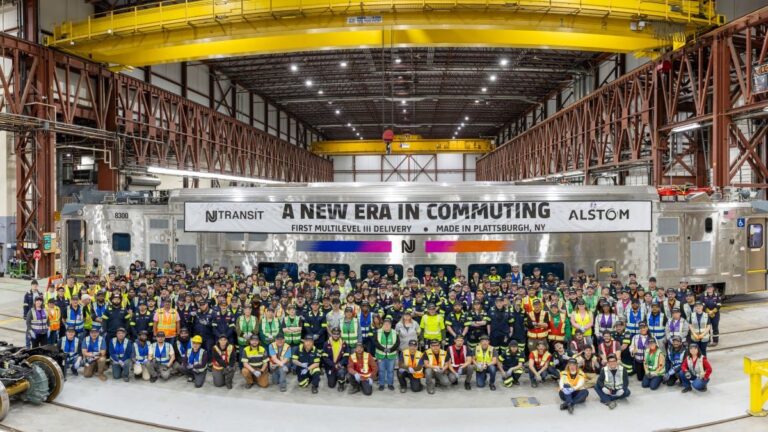
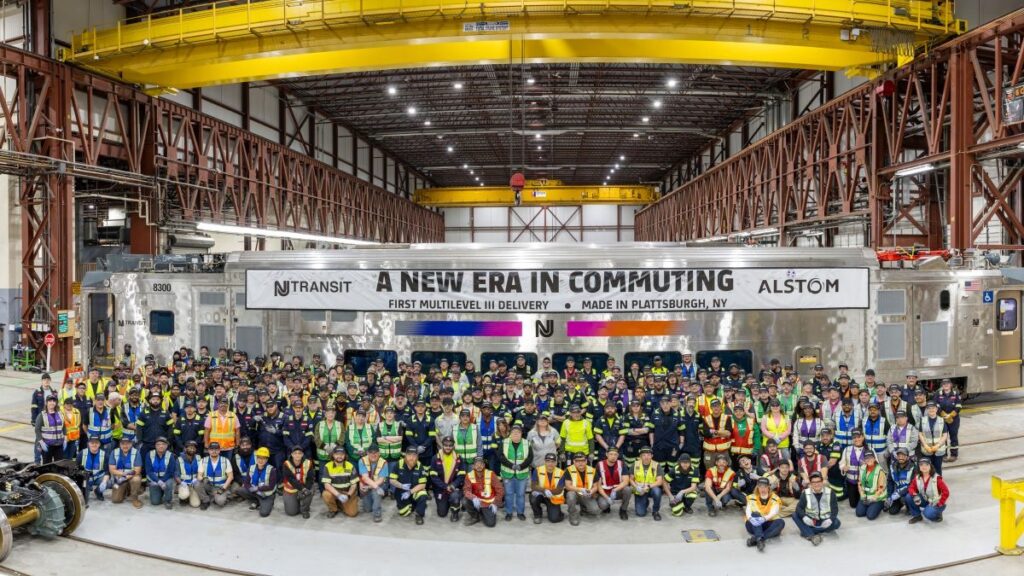
The new Multilevel III rail cars represent the next generation of NJ TRANSIT’s double-deck commuter platform and are expected to become a key part of service on some of the system’s busiest lines. Built by Alstom in Plattsburgh, New York, the fleet is designed to expand capacity and modernize commuter rail service across the region.

The Multilevel III program is one of the largest rolling stock investments in NJ TRANSIT history. The fleet will replace aging single-level equipment, including the Arrow III and Comet series cars that entered service in the 1970s and 1980s. The new cars will carry more passengers per train while remaining compatible with existing infrastructure throughout New Jersey and into New York Penn Station. The upgrade is intended to improve reliability and accommodate growing ridership demand.

Manufacturing is taking place at Alstom’s facility in Plattsburgh, continuing the company’s long-standing partnership with NJ TRANSIT and supporting skilled union labor in the United States.
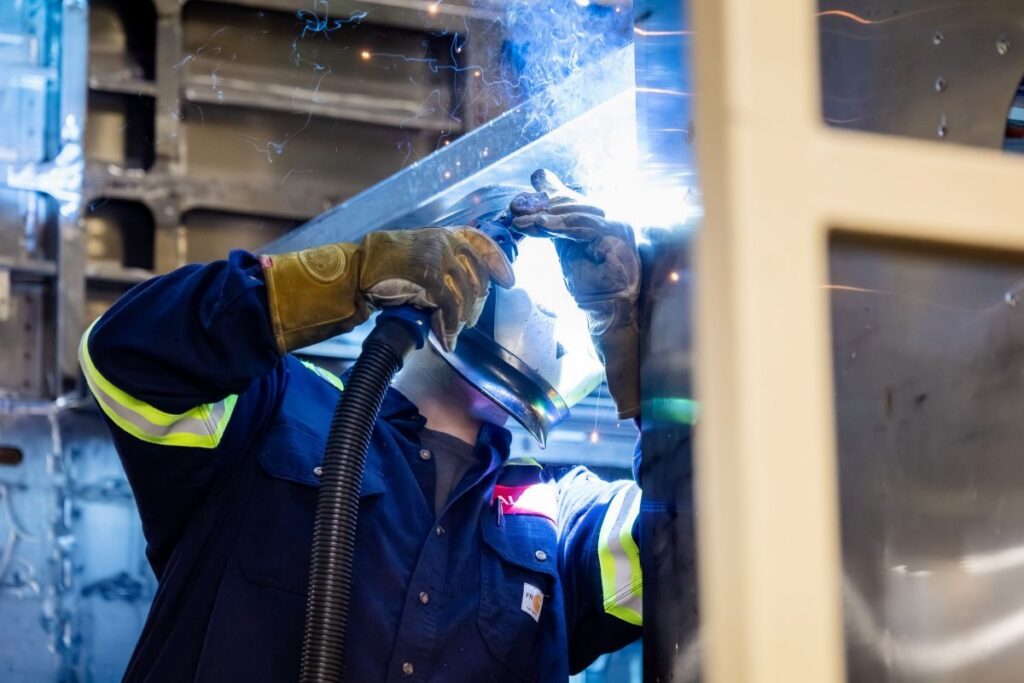
A Weldor works to assemble the train cars at Allstrom’s facility in Plattsburg, NY. Photo courtesy of NJ Transit & Alstom

“Governor Mikie Sherrill and NJ TRANSIT President and CEO Kris Kolluri have made clear that a strong, reliable rail system is the backbone of a livable, affordable New Jersey,” said Michael Keroullé, President and CEO of Alstom Americas. “The Multilevel III fleet delivers on that commitment, offering reliable vehicles with modern amenities, greater capacity and a more comfortable ride for passengers. These vehicles are built in the USA by our skilled union employees whose dedication and expertise make this transformation possible.”

Performance improvements and operational efficiency
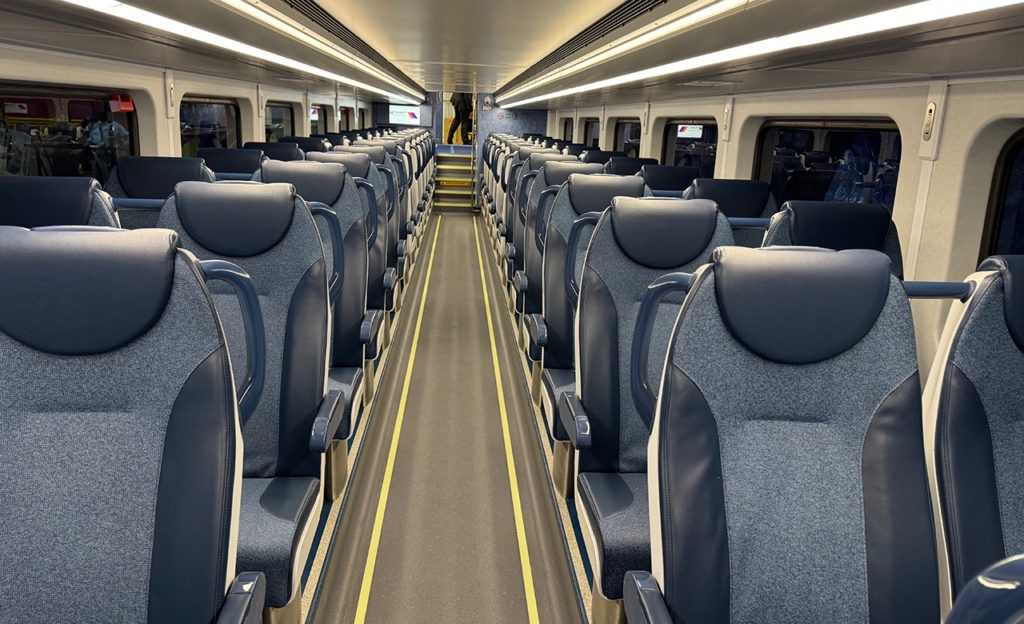
Photo Courtesy of William C. Vantuono, of the Railway Age.

The Multilevel III fleet is designed for higher performance standards than previous generations, with capabilities that include speeds up to 110 mph under suitable track conditions, an increase of 30 mph over the previous fleet. 

Beyond speed, the cars are engineered for smoother acceleration and braking performance, particularly in mixed traffic environments where commuter rail shares infrastructure with Amtrak and freight operations.

One of the most significant advancements in the Multilevel III program is the introduction of power cars. These rail cars are equipped with traction motors, allowing them to operate as part of a self-propelled trainset.

This design provides operational flexibility by reducing reliance on traditional locomotive-hauled components in certain configurations. Power cars can operate independently within trainsets or be combined to match service needs, offering a more adaptable approach to scheduling and train formation.

A more modern passenger experience
ML III passenger amenities feature USB charging ports, including USB 2.0 and USB-C connections, along with LED information displays. Photo Courtesy of William C. Vantuono, of the Railway Age.

Inside the cars, the focus shifts toward commuter comfort and connectivity. NJ TRANSIT’s Multilevel III design includes updated interiors and passenger amenities aimed at improving the daily travel experience.

Planned features include:

  • USB charging ports at each seat row
  • Digital information displays with real-time trip updates
  • Improved lighting and interior visibility
  • Enhanced audio announcement systems
  • Updated accessibility features for easier boarding and navigation

These upgrades reflect a broader trend toward treating commuter rail not just as transportation, but as a usable workspace for daily riders.

A long-term modernization step

The new Multilevel III rail cars are currently undergoing testing and commissioning, with NJ TRANSIT expecting up to 40 cars to enter passenger service by the end of 2026. While the agency has not yet announced where the new cars will be deployed, the fleet is expected to replace the oldest and least reliable Arrow III rail cars, which currently operate on the Main, Bergen County, Pascack Valley, Montclair-Boonton and Morristown lines.

In addition to the new Multilevel IIIs, NJ TRANSIT is renovating 429 existing multilevel rail cars to extend their service life and better align them with the next generation of equipment. Plans for a full overhaul by 2031 include 228 new 40-foot transit and suburban buses, the rehabilitation of River LINE light rail vehicles, new Access Link paratransit vehicles and additional ALP-45A dual-power locomotives. Together, these projects are part of a long-term fleet replacement strategy aimed at modernizing NJ TRANSIT’s system by 2031.The arrival of the Multilevel III fleet also comes as work advances on the Gateway Program, including the long-awaited new rail tunnel beneath the Hudson River and the new Portal North Bridge. While no single investment will solve every challenge facing the system, the combination of modern rail cars and major infrastructure improvements could go a long way toward addressing many of the longstanding issues that have frustrated riders for decades, from aging equipment and overcrowding to reliability concerns along one of the nation’s busiest commuter rail networks.

Sources:

Alstom. (2026, April 13). Alstom delivers first Multilevel III commuter rail car to NJ TRANSIT, marking major step in modernizing one of the country’s largest rail networks. https://www.alstom.com/press-releases-news/2026/4/alstom-delivers-first-multilevel-iii-commuter-rail-car-nj-transit-marking-major-step-modernizing-one-countrys-largest-rail-networks

NJ TRANSIT. (2026, April 13). NJ TRANSIT showcases arrival of first new multilevel rail car as fleet modernization continues. https://www.njtransit.com/press-releases/nj-transit-showcases-arrival-first-new-multilevel-rail-car-fleet-modernization

NJ TRANSIT. (n.d.). NJ TRANSIT continues modernization of bus fleet. https://www.njtransit.com/press-releases/nj-transit-continues-modernization-bus-fleetRailfanning.org. (n.d.). Arrow III. https://railfanning.org/rolling/arrowiii/


Infrastructure Update – Week of May 25, 2026

A historically hot summer is putting renewed focus on grid reliability and infrastructure investment.

Pre-Memorial Day heat spike highlights need for reliable power 

As Pennsylvania enters the summer season with rising temperatures and growing electricity demand, state officials have reached a proposed agreement to keep the Keystone and Conemaugh coal-fired power plants operating through 2032, four years beyond their planned closure date. “Pennsylvanians are worried about rising energy costs right now and they need reliable, affordable sources of power to ensure our homes and businesses can keep the lights on without breaking the bank,” said Governor Josh Shapiro. The decision reflects a broader national trend as states reconsider planned fossil-fuel plant retirements amid concerns about extreme weather, data center growth and increasing strain on the electric grid. 

Source: https://tristateinfrastructurenews.com/memorial-day-heat-spike-highlights-need-for-reliable-power/

NJ confronts a growing generation gap

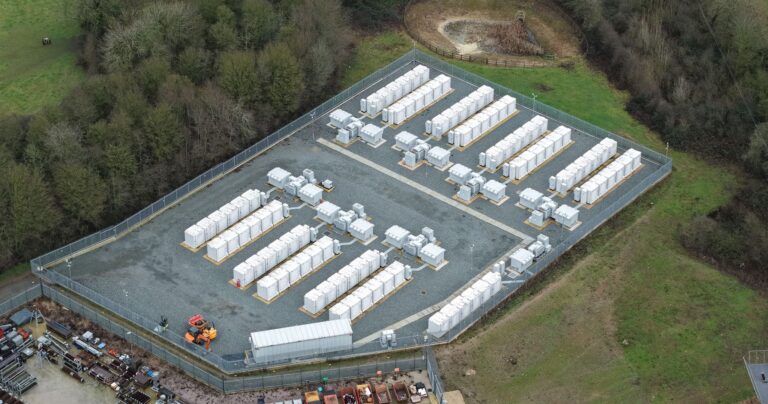
New Jersey is accelerating the buildout of battery energy storage systems, or BESS, as state officials confront a widening electricity generation gap driven by rising demand, aging infrastructure and stalled renewable projects. Through the Garden State Energy Storage Program, the New Jersey Board of Public Utilities (NJBPU) recently approved incentives for three large-scale battery storage projects totaling 355 megawatts, while opening another solicitation for 645 megawatts of additional storage capacity. State leaders say the projects will help stabilize the grid, lower wholesale electricity costs and provide backup power during periods of peak demand as PJM capacity prices continue to climb. Many of the projects are being developed on former fossil fuel plant sites, allowing developers to reuse existing transmission infrastructure while advancing the state’s goal of deploying 2,000 megawatts of energy storage by 2030. 

Source: https://tristateinfrastructurenews.com/nj-ramps-up-battery-storage-bess-build-out-begins-as-the-state-confronts-a-growing-generation-gap/

Newark Liberty Airport to expand solar energy project

The Port Authority of New York and New Jersey is moving forward with a major solar energy expansion at Newark Liberty International Airport, adding approximately 5 megawatts of new generating capacity across five airport sites as part of its broader push toward net-zero emissions. The project, developed with SunLight General Capital under a power purchase agreement, will install roughly 7,000 additional solar panels on rooftops, parking garages and rideshare facilities, including areas designed to support EV fast-charging stations. Once complete, the system is expected to generate nearly 5.9 million kilowatt-hours of electricity annually while offsetting nearly 2,000 metric tons of carbon emissions each year. The expansion will increase the Port Authority’s total solar portfolio to nearly 20 megawatts across 32,000 panels.

Source: NJBIZ– https://njbiz.com/newark-liberty-airport-solar-energy-expansion/


Inside New Jersey’s plan to replace the Newark Bay Bridge 

New Jersey is moving forward with a $6.7 billion plan to replace the aging Newark Bay Bridge, a critical transportation link connecting Newark, Jersey City and the Port Newark-Elizabeth corridor. Built in 1956, the bridge now carries far more traffic than it was originally designed to handle, raising concerns about congestion, structural deterioration and long-term safety. Early proposals called for a massive highway expansion that would have widened large portions of the corridor, but public opposition and environmental concerns led officials to scale the project back. The revised plan focuses on replacing the bridge itself while maintaining traffic flow during construction, improving safety standards and preserving one of the Northeast’s most important freight and commuter routes. 

Source:


NJ housing supply lags behind population growth 

A recent analysis found New Jersey is falling behind population growth when it comes to housing construction, making it one of only three states in the country to lose housing units per capita since 2020. Despite rising demand and continued population increases driven largely by immigration and economic growth, housing production has not kept pace, contributing to affordability challenges across the state. While officials have pushed new affordable housing initiatives and streamlined permitting efforts, debates continue over zoning, redevelopment and infrastructure needs as New Jersey struggles to balance growth with affordability.

Source: NJ Monitor– https://newjerseymonitor.com/2026/05/14/repub/nj-housing-supply-population-growth/

Pre-Memorial Day heat spike highlights need for reliable power

Pennsylvania coal plants get lifeline as state delays closures until 2032

As Memorial Day ushers in the unofficial start of summer, soaring temperatures across Pennsylvania are already putting added strain on the electric grid. With air conditioners humming and energy demand climbing earlier than expected, state officials are looking to avoid the kinds of reliability concerns that have triggered warnings across the PJM network. That concern is a major reason two of Pennsylvania’s largest coal-fired power plants, once scheduled to close in 2028, are now expected to remain operational through 2032 under a proposed agreement with state regulators.

The Keystone and Conemaugh generating stations in western Pennsylvania would stay online for four additional years under a consent decree negotiated between plant operators and the Pennsylvania Department of Environmental Protection (DEP). Together, the two facilities are among the largest coal-burning power plants in the Commonwealth and provide roughly 3,400 MW of baseload electricity.

“Pennsylvanians are worried about rising energy costs right now and they need reliable, affordable sources of power to ensure our homes and businesses can keep the lights on without breaking the bank,” said Governor Josh Shapiro. “I’m an all-of-the-above energy Governor, and by upgrading the environmental controls at the Keystone and Conemaugh Generating Stations to keep them operating for longer, we will protect energy jobs and ensure Pennsylvania generates enough energy to support the regional grid while reducing their impact on our environment.”

Under the proposed agreement, plant operators must complete upgrades to bottom ash handling systems and wastewater treatment infrastructure to reduce pollutants such as mercury, arsenic and selenium from entering nearby waterways. “This consent decree keeps electricity on the grid and ensures that these power plants reduce their impact on Pennsylvania’s waterways,” said Pennsylvania Department of Environmental Protection (DEP) Secretary Jessica Shirley. “The DEP now has an enforceable schedule for required improvements, as well as enforceable penalties if milestones are missed.”

Across the country, several coal and fossil-fuel plants previously slated for retirement have received temporary extensions because of concerns about grid reliability during extreme weather and periods of rising consumption. In Maryland, Talen Energy delayed the retirement of the Brandon Shores and H.A. Wagner coal and oil-fired plants near Baltimore after PJM warned that shutting them down could threaten grid reliability in the region. The plants are expected to remain available while transmission upgrades are completed. JH Campell in Port Sheldon Michigan followed suit, keeping the plant open nearly a year beyond its planned retirement.  

These extensions reflect a broader shift in energy policy nationwide. Utilities and grid operators are increasingly trying to balance emissions reductions with the need for dependable electricity during periods of extreme heat, cold and rapidly growing demand from data centers 

For now, Pennsylvania regulators appear focused on maintaining dependable power supplies as summer demand ramps up. With heat waves arriving earlier and electricity consumption expected to continue climbing, officials say keeping Keystone and Conemaugh online through 2032 could provide a critical buffer for the regional grid while the state continues developing future energy resources.

Sources:

ABC27 News. (2026, April 23). Pennsylvania will keep 2 coal-fired power plants open, earning praise from Shapiro and Trump. ABC27. https://www.abc27.com/pennsylvania/pennsylvania-will-keep-2-coal-fired-power-plants-open-earning-praise-from-shapiro-and-trump/

NorthcentralPA.com. (2026, April 22). Pennsylvania extends two coal plants amid rising energy demand. NorthcentralPA.com. https://www.northcentralpa.com/business/pennsylvania-extends-two-coal-plants-amid-rising-energy-demand/article_ea990af2-5b6a-4d75-908a-dc4dbf252509.html

Office of the Governor of Pennsylvania. (2026, April 22). Shapiro Administration files motion to enter consent decree on Pennsylvania coal plants. Commonwealth of Pennsylvania. https://www.pa.gov/governor/newsroom/2026-press-releases/shapiro-administration-files-motion-to-enter-consent-decree-on-pPennsylvania Department of Environmental Protection. (2026, April 22). Consent decree keeps Keystone and Conemaugh plants operating while requiring environmental upgrades. Commonwealth of Pennsylvania. https://www.pa.gov/governor/newsroom/2026-press-releases/shapiro-administration-files-motion-to-enter-consent-decree-on-p

Construction Tech: Road Roller

There’s a lot of ingenuity and technology that you can’t see when you drive by a construction site. 

How safe is your drinking water?

0

Understanding PFAS in New Jersey

PFAS, or per- and polyfluoroalkyl substances, are a large group of man-made chemicals that have been used for decades in products designed to resist heat, water, oil, and stains. They are found in everyday items such as nonstick cookware like Teflon pans, stain-resistant treatments like Scotchgard, waterproof rain jackets, and grease-resistant food packaging like takeout containers and fast-food wrappers.

Often referred to as “forever chemicals,” PFAS are known for their extreme persistence in the environment. They do not break down easily and can accumulate over time in soil, water, wildlife, and even the human body. Biochemists have detected these compounds in 97 percent of people in the United States. Researchers suggest that exposure may be linked to a range of health concerns, including disruption of the immune system, developmental and fertility problems, liver damage, and several types of cancer.

What the data shows 

New Jersey’s industrial history has led to PFAs becoming a major drinking water concern. 

New Jersey has taken a leading role in addressing PFAS contamination. The New Jersey Department of Environmental Protection (NJDEP) has established some of the strictest drinking water standards in the country, setting enforceable Maximum Contaminant Levels (MCLs) for certain PFAS compounds including PFOA, PFOS, and PFNA. The state has also added these chemicals to its list of hazardous substances, required expanded testing under the Private Well Testing Act and strengthened discharge limits through the New Jersey Pollutant Discharge Elimination System (NJPDES) permitting program. In addition, laws such as the 2022 ban on PFAS-containing firefighting foam have helped reduce new sources of contamination.

To understand where PFAS contamination may be present across the state, New Jersey has developed a public mapping and data tool that tracks testing results in drinking water systems. This interactive map compiles monitoring results from water systems and shows where PFAS have been detected, including levels of specific compounds such as PFOA and PFOS. Click Maps & Data here to check your water quality now. 

What you can do to reduce PFAS exposure

While regulation and treatment improvements continue, residents can take practical steps to reduce exposure at home:

1. Use certified water filters
Look for filters certified to reduce PFAS (such as NSF/ANSI certified reverse osmosis systems or activated carbon filters). Not all pitchers or filters remove PFAS, so certification matters.

2. Check your local water report
Use your municipal annual water quality report or the NJ PFAS mapping tool to understand what has been detected in your system.3. Avoid additional sources when possible
PFAS can also be found in nonstick cookware, stain-resistant fabrics, and certain food packaging. Reducing these where practical can lower overall exposure.

Sources:

Agency for Toxic Substances and Disease Registry. (2021). Toxicological profile for perfluoroalkyls. U.S. Department of Health and Human Services. https://www.atsdr.cdc.gov/toxprofiles/tp200.pdf

Centers for Disease Control and Prevention. (2023). Per- and polyfluoroalkyl substances (PFAS) factsheet. https://www.cdc.gov/pfas/

National Academies of Sciences, Engineering, and Medicine. (2022). Guidance on PFAS exposure, testing, and clinical follow-up. The National Academies Press. https://doi.org/10.17226/26156

PFAS in New Jersey. (n.d.). Maps & data. https://njpfas.org/maps-data/U.S. Environmental Protection Agency. (2024). PFAS explained. https://www.epa.gov/pfas

Illuminating the road ahead

How LiDAR is revolutionizing traffic monitoring for the 2026 FIFA World Cup

Recent World Cup stories have centered around NJ Transit controversies, but there’s another, less told story about how officials will manage traffic around the Meadowlands. Unlike the 1994 World Cup, the 2026 tournament will not offer spectator parking at the stadium. Fans will instead rely on mass transit, shuttle buses and designated transportation hubs to reach the matches. While the move is designed to reduce congestion around the venue, officials still expect significant traffic from buses, rideshare vehicles, deliveries, security operations and the thousands of workers required to support one of the world’s largest sporting events. 

To help manage that surge, the New Jersey Department of Transportation (NJDOT) is turning to LiDAR technology, a laser-based system poised to transform how we manage congestion. LiDAR uses  real-time 3D mapping and predictive traffic monitoring to keep vehicles and pedestrians moving safely and efficiently throughout the tournament.

From loops to lasers

Traffic monitoring has historically relied on embedded roadway sensors such as inductive loops, which detect vehicles by measuring changes in magnetic fields. These systems are mostly effective, but come with drawbacks. Installation of inductive loops requires in-ground construction, which is costly and disruptive. They also struggle to detect stopped vehicles, lane changes and objects that are not vehicles, like pedestrians and cyclists.

LiDAR, short for Light Detection and Ranging, offers a more flexible alternative. Mounted on existing poles, a single LiDAR unit can monitor more than 100 meters of roadway in real time. It can track traffic volume, vehicle speeds, lane changes and even behaviors like sudden stops or illegal turns. With accuracy rates typically exceeding 99 percent, the technology provides a far more complete picture of roadway activity.

LiDAR is a remote sensing technology that uses laser pulses to measure distances and create detailed, three-dimensional maps. The system emits millions of laser beams per second, which bounce off objects and return to the sensor. By calculating how long it takes for each pulse to return, LiDAR can determine the precise location of objects in its field of view. The pulses create a “point cloud,” a high-resolution 3D model of the environment accurate down to the centimeter. These models can capture everything from vehicles and roadway markings to pedestrians and infrastructure. Unlike traditional cameras, LiDAR does not rely on visible light, making it effective in low-light or adverse weather conditions. It also inherently anonymizes data, as it detects shapes rather than identifiable features like faces or license plates.

LiDAR systems are increasingly integrated with artificial intelligence, allowing traffic managers to move from reactive operations to predictive ones by identifying congestion before it builds and adjusting traffic signals or issuing alerts accordingly. The technology’s ability to detect pedestrians and cyclists also improves safety, particularly in high-traffic environments.

How else is LiDAR is used?

LiDAR’s uses extend far beyond the roadway. In urban planning, it is used to create detailed maps for infrastructure development and flood modeling. In construction, LiDAR supports site surveys and progress monitoring with a level of precision that traditional methods cannot match.

Autonomous vehicles rely heavily on LiDAR to navigate their surroundings, using real-time 3D mapping to detect obstacles and make driving decisions. Environmental scientists use airborne LiDAR to measure forest density, track coastal erosion, and even uncover archaeological features hidden beneath vegetation. This versatility is one reason the global LiDAR market has grown rapidly in recent years

How New Jersey will use LiDAR for the World Cup

For the 2026 World Cup, NJDOT is implementing what it describes as a “first-in-the-nation” LiDAR deployment around MetLife Stadium and its surrounding road network. The system will focus on historical bottlenecks, including the New Jersey Turnpike, Route 3, Route 120 and Interstate 95.

The goal is to create a real-time digital twin of the roadway network, a dynamic 3D model that reflects current traffic conditions as they evolve. LiDAR sensors will continuously scan the environment, feeding data into NJDOT’s traffic management systems. This will allow operators to respond to incidents almost instantly. In practice, this could mean adjusting electronic message signs to redirect drivers, adjusting signal timing, or dispatching emergency responders more quickly when issues arise. 

The system will also monitor pedestrian movement around the stadium, helping to prevent dangerous interactions between vehicles and crowds. Officials expect LiDAR to improve traffic flow by as much as 20 to 30 percent during peak periods, reducing delays and enhancing the overall fan experience.

What did it cost?

While NJDOT has not publicly detailed every line item associated with the deployment, LiDAR systems are generally considered a cost-effective alternative to traditional infrastructure upgrades. A single LiDAR unit can cost anywhere from several thousand to tens of thousands of dollars, depending on its capabilities, but it can replace multiple conventional sensors and provide more data. The broader investment likely includes hardware, software integration, data processing systems and ongoing maintenance.

Compared to the cost of roadway expansions or additional inductive loops, LiDAR offers a relatively low-cost alternative. 

The World Cup and beyond 

Perhaps the most important aspect of NJDOT’s LiDAR initiative is its long-term value. The World Cup is the immediate catalyst, but the technology is expected to remain in place long after the final match is played.

The area surrounding MetLife Stadium hosts dozens of major events each year, including NFL games, concerts, and large-scale public gatherings. Anyone who has attended one of these events is familiar with the surge of traffic as attendees make the mad dash back to the car and onto congested highways. The LiDAR technology installed for the World Cup will be poised to support the traffic flow of future events.

The data and insights generated may also inform broader transportation planning efforts across New Jersey. As NJDOT refines its use of LiDAR and integrates it with other intelligent transportation systems, the technology may be expanded to additional corridors and urban centers.

Sources:

First Look Services. (n.d.). What is LiDAR scanning? An introduction to cutting-edge surveying technology in New Jersey. firstlookservice.com

Highways Today. (2022, March 11). Velodyne Lidar provides traffic data for German city. highways.today

LiDAR Tech Pros. (n.d.). Traffic management using LiDAR drones. lidartechpros.com

National Oceanic and Atmospheric Administration. (n.d.). What is lidar?. oceanservice.noaa.gov

New Jersey Department of Transportation. (2025). Route 495 / Route 1&9 ITS improvements project documentation.Outsight. (n.d.). Next-gen traffic monitoring with LiDAR. insights.outsight.ai

The promise and peril of Artificial Intelligence (AI)

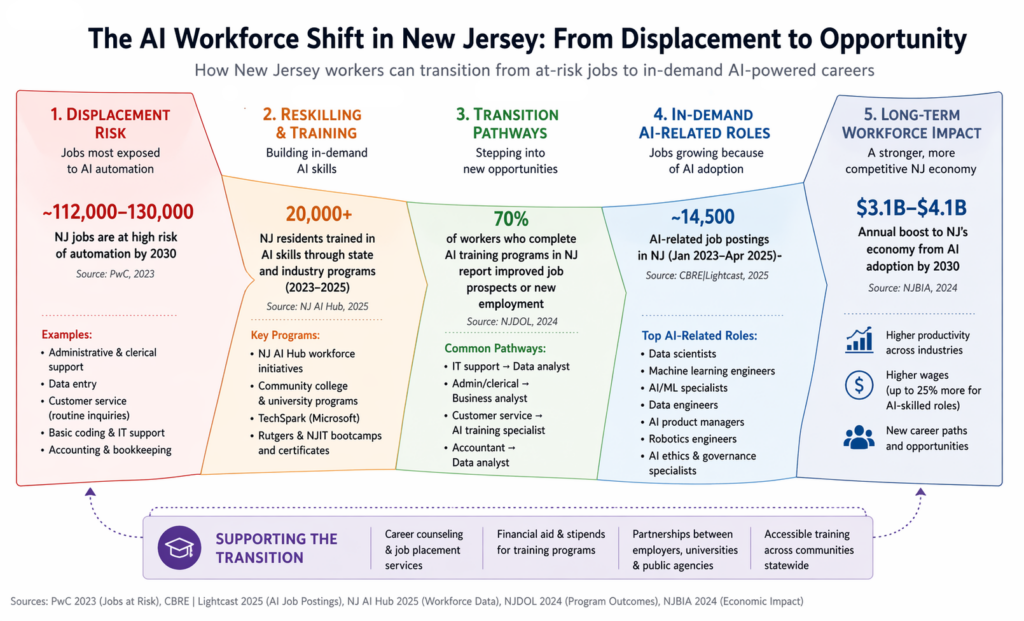
AI is coming for jobs—and creating new ones. New Jersey is in the middle of both

New Jersey is positioning itself within the expanding artificial intelligence sector as industries across the country adjust to rapid adoption of AI tools and automation. The effort reflects both an economic development strategy and an attempt to prepare the state’s workforce for structural changes expected over the next decade.

A recent Cognizant report estimates AI could unlock $4.5 trillion in U.S. labor productivity by automating or assisting up to 93% of current job tasks. While projections vary, most analyses agree that AI is likely to reshape job functions across sectors rather than eliminate them outright, with growth expected in supervisory, technical, and AI-augmented roles. In light of this expected sea of change, what is New Jersey doing to to align its workforce, education system, and industry partnerships with changes already underway?

A multi-pronged strategy

New Jersey’s AI strategy is built around several interconnected initiatives rather than a single statewide program.

At the center is the NJ AI Hub at Princeton, a nonprofit innovation center backed by the New Jersey Economic Development Authority, Princeton University, Microsoft, CoreWeave, and other partners. Located in West Windsor, the Hub has secured more than $70 million in initial funding and is intended to support research collaboration, workforce training, and early-stage company development.

Programs connected to the Hub include startup acceleration efforts such as Plug and Play AI Accelerator which connects AI start-up founders with investors and corporate partners. Microsoft’s TechSpark initiative is also operating through the Hub, focusing on workforce development and training pathways tied to emerging technology roles.

Microsoft has also brought its TechSpark initiative to the Hub, focused on aligning workers with emerging roles through training and local partnerships. “[Techspark] brings economic development programs to regions around the United States…because we believe that talent is everywhere – but opportunity is not” said Marie Pryor, community manager for Microsoft and director of workforce for the Hub. Techspark recently helped Rutgers roll out an AI certificate program.  The Hub continues to expand its offerings,  including AI Apprenticeships for community college students and Faculty futures, which is designed to help teachers integrate AI into higher education.

Colleges around the state are also expanding AI-focused programming. Rutgers University, the New Jersey Institute of Technology, Stevens Institute of Technology, Rowan University, and Kean University have all introduced or expanded AI-related degrees and certificate programs, often in coordination with industry partners.

Corporate investment and workforce disruption

New Jersey’s AI-related growth is occurring alongside broader restructuring in established industries.

Pharmaceutical companies including Johnson & Johnson and Merck & Co. are integrating AI into drug discovery, clinical trials, and supply chain optimization. In financial services, firms such as BNY Mellon and Prudential Financial are applying AI in fraud detection, risk modeling, and automation. BNY Mellon has also invested in governance-focused AI research through partnerships tied to its New Jersey operations.In financial services, firms such as BNY Mellon and Prudential Financial are applying AI in fraud detection, risk modeling, and automation. BNY Mellon has also invested in governance-focused AI research through partnerships tied to its New Jersey operations.

At the same time, workforce reductions across several legacy industries are reshaping employment patterns in the state. WARN filings between 2023 and 2025 show approximately 14,000 layoffs across New Jersey, concentrated in pharmaceuticals, biotech, and related sectors. Several major employers have announced cuts:

  • Bristol Myers Squibb reduced more than 1,100 roles
  • Novo Nordisk cut over 800 positions
  • Novartis eliminated nearly 500 jobs
  • Johnson & Johnson announced 190 of layoffs
  • Amazon has laid off over 800 employees across multiple New Jersey facilities in 2026 alone

While these layoffs are not solely attributed to AI, they reflect broader restructuring trends occurring alongside increased automation and efficiency investments.

The result is a labor market in transition, with some displaced workers moving toward roles in data infrastructure, AI systems support, and analytics. A potential upside is higher wages. New Jersey’s median annual wage across occupations is roughly $55,000, while many AI-related roles are $120,000. The shift could represent an opportunity for workers to move up the pay scale, although doing so requires access to additional training or certification, with both the time commitment and cost posing potential barriers.

The rise of data centers 

AI growth is also visible in physical infrastructure. The state is home to more than 80 data centers, with additional facilities planned as demand continues to rise.

That expansion has generated growing public pushback. Concerns have focused on environmental impacts, rising energy demand and the strain on an already tight power supply. Critics argue that data center growth will contribute to already-high energy costs and have valid questions about land use, water consumption and how these facilities will change the character of surrounding communities.

At the same time, data centers are becoming a central part of the state’s economic landscape. Companies including OpenAI, Amazon, Microsoft, Google, and Meta rely on large-scale computing infrastructure to support AI-driven products and services, many of which offer high-paying jobs. Those opportunities are more likely to grow in states that can meet the infrastructure demands required to support them. Construction of data centers also drives demand for skilled trades, along with longer-term technical and operational roles.

Still, the scale of resource use remains a challenge. Data centers require significant amounts of electricity and water, prompting discussion about how to manage that demand. Newer data centers employ closed loop cooling systems, which reduce water usage considerably but in turn require more power for cooling. In other parts of the country, some operators have begun exploring “bring your own power” (BYOP) models, which rely on dedicated energy sources such as onsite natural gas turbines or, in some cases, nuclear generation. Microsoft’s efforts tied to Three Mile Island in Pennsylvania reflect the scale of power needs associated with long-term AI growth. Still, the scale of resource use remains a challenge. Data centers require significant amounts of electricity and water, prompting discussion about how to manage that demand. In other parts of the country, some operators have begun exploring “bring your own power” (BYOP) models, which rely on dedicated energy sources such as onsite natural gas turbines or, in some cases, nuclear generation. Microsoft’s efforts tied to Three Mile Island in Pennsylvania reflect the scale of power needs associated with long-term AI growth.

Pennsylvania is positioning itself as a formidable competitor in the race for AI investment, largely because it can meet those energy demands. With abundant natural gas production from the Marcellus Shale and a strong existing nuclear fleet, the state offers a level of reliable, around-the-clock power thatNew Jersey does not match. State leaders have also moved aggressively to attract data center development, with billions of dollars in announced and proposed projects tied to AI infrastructure in recent years. As demand for high-performance computing continues to rise, Pennsylvania’s ability to deliver both power and capacity is expected to give it a significant edge in attracting AI jobs and long-term investment.

A pivotal moment for New Jersey’s workforce

New Jersey’s approach to AI is ultimately a wager on transition. The state is betting that investments in training, infrastructure, and innovation can offset job losses in legacy sectors and create a more competitive economy. The challenge is timing. Job displacement is happening now, workforce transformation takes time. Energy and water usage also remain challengesWhether New Jersey succeeds will depend on how effectively it connects those two realities: helping workers move from yesterday’s roles into tomorrow’s economy before the gap between them widens.

Sources:

Cognizant. (2024). New work, new world: Preparing for AI-driven productivity gains. Cognizant Center for the Future of Work. https://www.cognizant.com

MIT Technology Review. (2024, September 26). Three Mile Island is getting a second life as Microsoft bets on nuclear power for AI. https://techcrunch.com/2024/09/20/microsoft-taps-three-mile-island-nuclear-plant-to-power-ai

New Jersey Business & Industry Association. (2024). Economic impact of artificial intelligence in New Jersey. https://www.njbia.org

New Jersey Council of County Colleges. (2026, January 15). New Jersey’s community colleges launch state’s first USDOL-registered data scientist AI apprenticeship, advancing New Jersey’s innovation economy. https://www.njcommunitycolleges.org/news/new-jerseys-community-colleges-launch-states-first-usdol-registered-data-scientist-ai-apprenticeship-advancing-new-jerseys-innovation-economy/

New Jersey Department of Labor and Workforce Development. (2025). WARN notices and layoffs data. State of New Jersey. https://www.nj.gov/labor

New Jersey Department of Labor and Workforce Development. (2025). 2025 WARN notice archive. https://www.nj.gov/labor/assets/PDFs/WARN/2025_WARN_Notice_Archive.pdf

New Jersey Department of Labor and Workforce Development. (2026). 2026 WARN notice archive. https://www.nj.gov/labor/assets/PDFs/WARN/2026_WARN_Notice_Archive.pdf

New Jersey Economic Development Authority. (2025). Next New Jersey Program – AI. https://www.njeda.gov

New Jersey AI Hub. (2025). About the NJ AI Hub. https://njaihub.org

NJBIZ. (2026, March 20). Plug and Play AI accelerator launches at NJ AI Hub. https://njbiz.com/plug-play-ai-accelerator-launch-nj-ai-hub-princeton/

Princeton University. (2025). NJ AI Hub announcement and research initiatives. https://www.princeton.edu

Microsoft. (2025, January 31). Governor Murphy and Princeton University President Eisgruber announce Microsoft and CoreWeave as founding partners in NJ AI Hub. Microsoft News Center. https://news.microsoft.com/source/2025/01/31/governor-murphy-and-princeton-university-president-eisgruber-announce-microsoft-and-coreweave-as-founding-partners-in-nj-ai-hub/Microsoft. (2024). TechSpark: Advancing digital skills and economic opportunity. https://www.microsoft.com

NJ ramps up battery storage (BESS): Build‑out begins as the state confronts a growing generation gap


New Jersey is in a period of structural energy imbalance. Over the past decade, the state has retired several natural‑gas plants without replacing them with equivalent in‑state generation. At the same time, New Jersey’s once‑ambitious offshore wind program collapsed under a combination of post‑COVID cost inflation and federal policy shifts, including a de facto halt on new offshore wind approvals and uncertainty around federal tax‑credit timing. The result is stark: New Jersey now produces less electricity than it consumes, relying heavily on imports from PJM at a time when regional demand and capacity prices have surged. This dependence has contributed to rising electricity costs for households and businesses and has exposed the state to volatility in the wholesale market.

To stabilize prices and rebuild in‑state capacity, New Jersey is turning to battery energy storage, which regulators say can be deployed faster than new generation and is essential to meeting the state’s statutory goal of 2,000 MW of storage by 2030. In March 2026, the New Jersey Board of Public Utilities (NJBPU) approved the state’s first major tranche of storage incentives—three projects totaling 355 MW—under the Garden State Energy Storage Program (GSESP). These projects represent the first concrete step toward rebuilding New Jersey’s energy resilience.

Woods Landing Storage

  • Sayreville (Middlesex County)
  • Capacity: 200 MW
  • Developer: Woods Landing Storage LLC
  • Program: GSESP Phase 1, Tranche 1
  • Purpose: Provide flexible, on‑demand power to the PJM grid and reduce peak‑period costs.

Woods Landing Storage is proposed in Sayreville, a municipality with large tracts of industrial and former industrial land along the Garden State Parkway and Route 9 corridors. While NJBPU filings do not specify the exact parcel, Sayreville’s likely siting areas include vacant industrial land, former manufacturing parcels, and utility‑adjacent lots. These areas are typically bordered by warehouses, distribution centers, and open industrial fields, making them compatible with battery‑storage siting.

Next steps

The project has state incentive approval, but still requires:

  • Local land‑use approvals
  • DEP environmental permitting
  • PJM interconnection studies

No commercial operation date has been published.

Two Rivers Energy Storage

  • Ridgefield (Bergen County)
  • Capacity: 150 MW
  • Developer: Two Rivers Energy Storage LLC
  • Program: GSESP Phase 1, Tranche 1
  • Purpose: Support reliability in a constrained North Jersey load pocket and reduce congestion costs.

Two Rivers Energy Storage is proposed in Ridgefield, one of the most industrialized municipalities in Bergen County. Ridgefield’s landscape is dominated by logistics centers, warehouses, trucking yards, and light‑industrial facilities, especially near the New Jersey Turnpike and major transmission corridors. The project is expected to be sited on existing industrial land or a redeveloped industrial parcel, with adjacent uses likely including warehousing, commercial operations, and utility infrastructure.

Next steps

The project must still complete:

  • Municipal planning board review
  • DEP environmental permitting
  • PJM interconnection queue entry

No construction or operation timeline has been released.

North America Energy Storage Corp

  • Bordentown (Burlington County)
  • Capacity: 5 MW
  • Developer: North America Energy Storage Corp
  • Program: GSESP Phase 1, Tranche 1
  • Purpose: Provide localized grid support and contribute to the state’s initial storage build‑out.

The smallest of the three projects is located in Bordentown, a municipality with a mix of light industrial parcels, commercial corridors, and open land near the New Jersey Turnpike and Route 130. The project is expected to occupy a small industrial or commercial parcel, with adjacent land likely consisting of similar industrial uses, parking lots, or open commercial fields.

Next steps

The project must still undergo:

  • Local zoning and planning approvals
  • Environmental review
  • PJM interconnection

Given its smaller size, it may progress more quickly through development.

Why These Projects Matter

The approval of these three projects marks a strategic pivot in New Jersey’s energy strategy. With offshore wind stalled and natural‑gas retirements outpacing new generation, the state faces a widening gap between supply and demand. Storage offers a near‑term solution that can:

  • Reduce exposure to PJM capacity price spikes
  • Improve grid reliability
  • Support future renewable generation
  • Provide peak‑shaving and load‑balancing services

While battery storage facilities like this offer great promise, they are not without controversy. California’s Moss Landing grid-scale battery storage facility caught fire in January 2025 and the local community is still dealing with the aftermath. And in Staten Island, residents have voiced concerns about the BESS being built in their neighborhood.NJBPU has already launched Tranche 2, seeking an additional 645 MW of storage, and opened a 3‑GW expansion of the Community Solar Energy Program, signaling a broader shift toward distributed, flexible resources. These initial 355 MW of storage are only the beginning. Once built, they will help New Jersey rebuild its in‑state capacity, reduce dependence on imports, and lay the groundwork for a more resilient and affordable energy system.

Sources:

NJ Spotlight News. (2026, March 31). New Jersey turns to big batteries’ storage as power prices rise. https://www.njspotlightnews.org

Energy Storage Tenders. (2026, March 9). New Jersey awards 355 MW energy storage, seeks another 645 MW.https://pv-magazine-usa.com

Solar Power World. (2026, March 5). New Jersey expands state community solar program by 3 GW.https://www.solarpowerworldonline.com

Infrastructure Update – week of May 18, 2026

Energy and transportation in focus

NESE clears major state approval

The Northeast Supply Enhancement pipeline has secured approval from the New Jersey Tidelands Resource Council, clearing one of the project’s final regulatory hurdles. The proposed extension would deliver additional natural gas supplies to New York City and Long Island, strengthening regional energy reliability during peak winter demand.

Source: TINN– https://tristateinfrastructurenews.com/nese-pipeline-approved-by-tidelands-resource-council/

Drought Warning Continues

Despite widespread rain last week most of the state continues to experience moderate drought conditions and a drought warning remains in effect. While New Jersey’s drinking water supplies have improved substantially since winter, the Department of Environmental Protection strongly advises residents use water wisely and practice water conservation.

Source: njspotlightnews.com: https://www.njspotlightnews.org/2026/05/all-types-of-problems-ahead-if-nj-rainfall-scarce-climatolog… 

PJM report calls for market reforms to meet rising energy demand

PJM Interconnection’s new report, Powering Reliability Through Market Design, says the region’s wholesale electricity market may need significant changes. The landscape around PJM’s capacity market, known as the Reliability Pricing Model, has shifted as electricity demand from data centers grows faster than new generation can be built to meet it. The report is intended to serve as the foundation for discussions with stakeholders as PJM works toward permanent market reforms. 

Source: ROI-NJ– https://www.roi-nj.com/2026/05/08/industry/energy-utilities/pjms-report-rethinks-future-of-wholesale… 

What New Jersey can learn from Moss Landing 

A year after the massive battery fire at California’s Moss Landing Battery Energy Storage Facility, the environmental and public health impacts are still unfolding. The blaze damaged roughly 50,000 lithium-ion battery modules, with contamination later detected in nearby wetlands. As New Jersey expands large-scale battery storage through the Garden State Energy Storage Program, the incident offers a clear reminder that planning for emergency response, environmental safeguards and community transparency must grow alongside new energy infrastructure.

Source: TINN– https://tristateinfrastructurenews.com/moss-landing-californias-toxic-legacy-and-what-new-jersey-must-learn/

NJ Transit cuts World Cup train fares by $45

Fans heading to the 2026 FIFA World Cup 2026 matches at MetLife Stadium will pay a little less to get there. NJ Transit announced that round-trip rail fares will drop from $150 to $105, a $45 reduction made possible through sponsor support and other non-taxpayer funding. Tickets are expected to go on sale May 13, with officials saying prices could fall further if additional private funding is secured.

Source: BINJE– https://binje.com/world-cup-soccer/njtransit-fare-to-world-cup-matches-has-been-dropped-45/

Push to repeal century-old law tied to rising infrastructure costs 

A coalition of lawmakers, labor groups, and policy advocates are making a push to overturn a century-old New Jersey law they argue is driving up the cost of major infrastructure projects. The law, known as the Scaffold Law, requires contractors to take full liability for worker falls on construction sites, regardless of fault, and supporters of reform say it inflates insurance costs and adds hundreds of millions of dollars to projects like rail tunnels, transit upgrades, and other large-scale builds. Opponents of changing the statute argue it is a critical worker safety protection, setting up a high-stakes debate over how the state should balance construction costs with jobsite protections as New Jersey faces a growing pipeline of expensive infrastructure needs. Source: nj.com– https://www.nj.com/news/2026/05/inside-the-fight-to-undo-a-centuryold-law-blamed-for-soaring-infrastructure-costs.html

New York’s 2025 ASCE Infrastructure Report Card

New York’s infrastructure report card highlights progress, persistent challenges

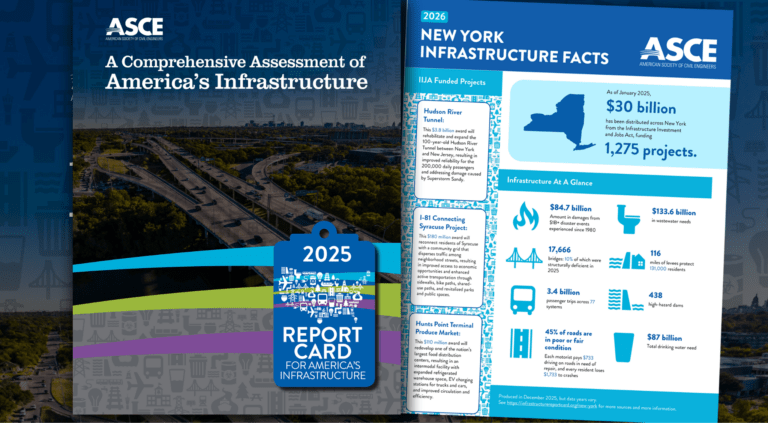
The American Society of Civil Engineers (ASCE) infrastructure report card offers a snapshot of how well critical systems are performing across the country and at the state level. Using an A-to-F grading scale, the report evaluates infrastructure based on condition, capacity, funding, safety and future need.

ASCE evaluates infrastructure across multiple categories, including:

  • Aviation
  • Bridges
  • Dams
  • Drinking water
  • Parks
  • Rail
  • Roads
  • Transit
  • Wastewater

While the most recent national report shows improvement, New York’s infrastructure continues to reflect many of the same challenges seen across the country: aging systems, funding gaps and growing demand.

Aging systems remain a concern

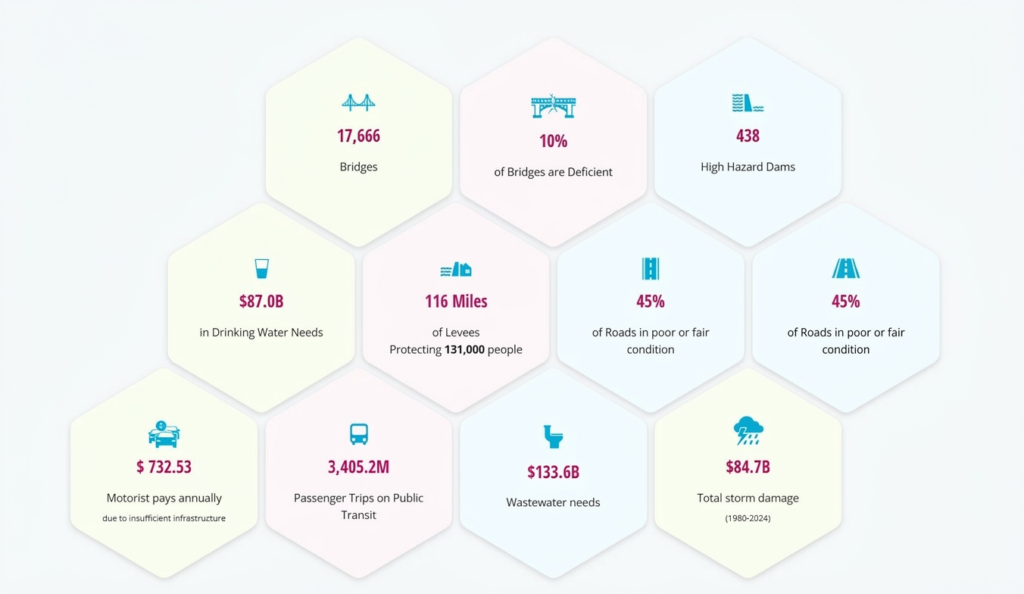
Estimates from the New York State Infrastructure Report Card

Much of New York’s infrastructure was built decades ago and continues to operate beyond its intended lifespan. Roads, bridges and water systems in particular require ongoing maintenance and modernization to remain reliable.

The Empire State received a D+ in roads due to rough pavement conditions, congestion and safety deficiencies, with 45% of roads rated in fair or poor condition. In addition, 637 bridges in New York are currently posted for less than legal loads.

Water infrastructure remains a key concern as well. Aging treatment and distribution systems, some more than 100 years old, are already in need of replacement. At the same time, the detection and treatment of emerging contaminants, including PFAS, are expected to require additional investment in the coming years.

Growing demand strains key infrastructure

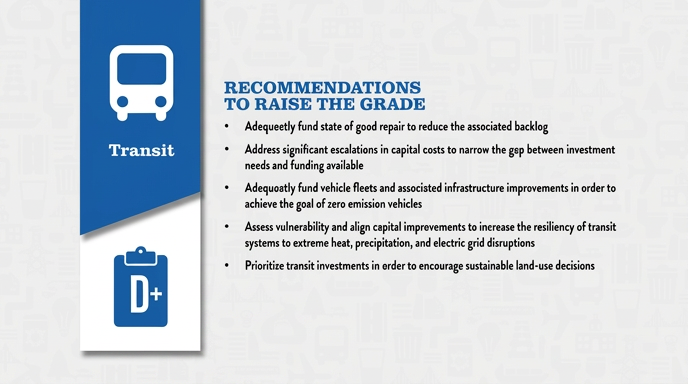
New York is one of the busiest states in the country, with commuter traffic flowing into and out of major population centers every day. The state’s public transportation system alone completes an estimated 3.4 billion passenger trips across 77 transit systems each year. This heavily used network has earned a D+ rating as it continues to contend with significant maintenance backlogs and aging infrastructure.

Across the state, transit systems operate more than 16,000 revenue vehicles, over 1,700 miles of subway and rail track, and more than 150 miles of tunnels, along with tens of thousands of stations, bus stops and related facilities. While many agencies have made meaningful progress over the past decade in modernizing equipment and upgrading infrastructure, substantial needs remain. At the same time, rising capital costs continue to outpace or match new revenue sources, widening an already significant funding gap.

Provided by the American Society of Civil Engineers Infrastructure report card.

Major projects

Across the state, several major infrastructure projects are moving forward with federal support.

Hudson River Tunnel

A $3.8 billion investment will rehabilitate and expand the century-old tunnel connecting New York and New Jersey. The project is expected to improve reliability for approximately 200,000 daily passengers while addressing long-standing damage caused by Hurricane Sandy.

I-81 Connecting Syracuse Project

Backed by $180 million in funding, this project will replace a highway viaduct with a community grid designed to reconnect neighborhoods in Syracuse. The redesign will disperse traffic across local streets and improve access to economic opportunities, while expanding sidewalks, bike paths and public spaces.

Hunts Point Terminal Produce Market

A $110 million redevelopment will modernize one of the nation’s largest food distribution centers in New York City. The project includes expanded refrigerated warehouse space, EV charging infrastructure for trucks and passenger vehicles and upgrades to improve circulation and efficiency across the facility.

The bottom line

New York’s infrastructure reflects a broader national trend: progress is being made, but not fast enough to fully address decades of underinvestment.

While recent funding has helped move the needle, significant work remains to modernize aging systems, improve resilience and meet growing demand. Without sustained investment and long-term planning, infrastructure will continue to lag behind the needs of residents and businesses across the state.

Sources:

American Society of Civil Engineers. (n.d.). New York infrastructure report card. Infrastructure Report Card. https://infrastructurereportcard.org/state-item/new-york/