
Our Infrastructure Matters Ad
Home Blog Page 8

Who pays for New Jersey’s roads?

Property taxes, gas taxes, tolls, oh my!

New Jersey’s 39,000 lane‑mile road network is one of the most intensely used and most complexly funded in the United States. Unlike many states where a single transportation department owns the majority of road mileage, New Jersey’s system is fragmented across municipalities, counties, the state, federal‑aid interstates, and toll authorities. Each layer has its own funding mechanisms, revenue sources, and fiscal pressures.

Understanding how New Jersey pays for its roads requires examining who owns the network, where the money comes from, how much each source generates, and how those dollars are distributed. At the center of this system is the Transportation Trust Fund (TTF)—a uniquely New Jersey institution that shapes nearly every major transportation investment in the state.

Who maintains New Jersey’s roads?

New Jersey’s road network is overwhelmingly local. Municipalities and counties own 86% of all roadway mileage, while the state, federal‑aid interstates, and toll authorities manage the remainder.

Road Mileage Share by Ownership

Road TypeShare of NJ Mileage
Local roads (municipal)~64%
County roads~22%
State highways (NJDOT)~9%
Interstates (federal‑aid)~2%
Toll roads (NJTA + SJTA)~3%

This distribution is crucial: the governments with the least fiscal capacity (municipalities and counties) are responsible for the largest share of the network.

Who funds New Jersey’s roads?

New Jersey’s road‑funding system relies on five major revenue streams. Each source is structured differently and supports different parts of the network.

Property Taxes (Municipal + County)

Used for: Local and county roads
Annual road‑related spending: $2.7B–$3.5B

Property taxes fund the majority of New Jersey’s road mileage. Municipalities and counties use their general funds—primarily property tax revenue—to pay for resurfacing, snow removal, drainage, signage, and local bridges.

  • Municipal road spending: $1.6B–$2.1B
  • County road spending: $1.1B–$1.4B

Most municipalities spend 5–12% of their total budget on roads.

Transportation Trust Fund (TTF)

Used for: State highways, NJDOT local aid, interstate match, NJ Transit capital
Total annual resources: $3.5B–$4.0B

How the TTF is funded

TTF Revenue SourceAnnual Amount
Gas tax (PPGRT)$1.9B–$2.1B
EV fees$25M–$40M
Bonding authorityUp to $1.76B/year
State appropriations$0–$200M

Of the total TTF resources, $2.0B–$2.4B supports state highways and local aid.

The Transportation Trust Fund (TTF) was created in 1984 after years of underinvestment left the state with deteriorating roads, structurally deficient bridges, and no stable funding source for capital projects. Before the TTF, New Jersey funded transportation through annual appropriations—an unstable, politically fraught process that led to deferred maintenance and unpredictable project pipelines. The TTF was designed to create a dedicated, reliable revenue stream, allow long‑term capital planning, reduce reliance on annual budget fights, and support both NJDOT and NJ Transit capital. The TTF’s statutory mission is to fund state highway and bridge projects, provide local aid to counties and municipalities, fund NJ Transit capital improvements, and service debt on transportation bonds.

Due to inflation, an aging road network, and increased state population, the TTF has faced chronic challenges. By 2016, every dollar of gas tax revenue was going to debt service, leaving no cash for new projects. A major gas tax increase in 2016 and a second increase in 2020 stabilized the fund. The 2024 reauthorization provides $10.37B in capital spending over five years.

Today, the TTF is stable but heavily reliant on bonding. Roughly 40–50% of its annual resources come from new debt issuance. Still, it remains the essential engine behind New Jersey’s transportation system.

Federal Highway Funds (FHWA)

Used for: Interstates, major state projects, bridges
Annual funding to NJ: $1.2B–$1.4B

Federal dollars come from the federal gas tax and flow through formula programs such as NHPP, STBGP, HSIP, and CMAQ.

  • $700M–$1.0B supports interstates
  • The remainder supports state highways and bridges

The Federal Highway Administration (FHWA), formally created in 1966, grew out of early federal‑aid road programs and became central to national transportation policy with the 1956 Federal‑Aid Highway Act, which launched the Interstate Highway System and established the Highway Trust Fund. FHWA’s mission is to provide financial and technical support to states for building, maintaining, and improving major highways, bridges, and safety infrastructure. Through formula programs like NHPP and STBGP, FHWA delivers $1.2–$1.4 billion annually to New Jersey, including $700 million to $1 billion for interstate highways. Today, FHWA remains essential but financially strained: the federal gas tax has not increased since 1993, fuel efficiency has eroded revenue, and the Highway Trust Fund requires repeated general‑fund infusions to stay solvent. Even so, FHWA continues to anchor New Jersey’s capital program, underwriting the state’s most heavily traveled corridors and enabling long‑term investment.

Tolls (NJTA + SJTA)

Used for: Turnpike, Parkway, Atlantic City Expressway
Annual toll revenue: $2.7B–$2.8B

Toll roads are financially self‑contained. They receive:

  • No gas tax revenue
  • No property tax revenue
  • No state budget dollars

The New Jersey Turnpike Authority (NJTA) and the South Jersey Transportation Authority (SJTA) operate the state’s three major toll highways—the New Jersey Turnpike, Garden State Parkway, and Atlantic City Expressway—and together form one of the most financially self‑sustaining transportation systems in the country. Created in 1948 and 1991 respectively, the two authorities are independent, revenue‑backed agencies whose operations, maintenance, and capital programs are funded almost entirely through tolls and toll‑supported bonds, not state taxes or the Transportation Trust Fund. The NJTA generates roughly $2.5 billion annually, while the SJTA brings in about $200–$250 million, with a significant share of this revenue coming from out‑of‑state drivers, especially freight carriers and long‑distance travelers using the Turnpike as a Northeast corridor through‑route. Because of this, toll roads function as a mechanism for shifting roadway costs onto non‑residents, reducing the burden on New Jersey taxpayers while supporting some of the state’s most heavily traveled infrastructure.

Other Local Sources

Used for: Local and county roads
Annual revenue: $80M–$230M

Includes developer impact fees, local capital bonds, and stormwater utility fees.

Annual Spending by Road Type

Road TypeAnnual Spending
Local roads$1.6B–$2.1B
County roads$1.1B–$1.4B
State highways$2.0B–$2.4B
Interstates$0.7B–$1.0B
Toll roads$2.7B–$2.8B
Total statewide road spending$7.2B–$10.7B

Funding Mix and Dollar Amounts by Road Type

Local Roads (64% of mileage)

Funding Source%Amount
Property taxes70–85%$1.1B–$1.7B
TTF Municipal Aid10–20%$160M–$400M
Federal grants0–10%$0–$200M
Other0–5%$0–$100M
Total annual spending$1.4B–$2.0B

County Roads (22% of mileage)

Funding Source%Amount
County property taxes60–75%$660M–$1.05B
TTF County Aid15–25%$165M–$350M
Federal bridge funds5–15%$55M–$210M
County bonds0–10%$0–$140M
Total annual spending$0.9B–$1.7B

State Highways (9% of mileage)

Funding Source%Amount
TTF55–65%$1.1B–$1.6B
Federal funds35–45%$700M–$1.0B
General fund0–5%$0–$120M
Total annual spending$1.7B–$2.7B

Interstates (2% of mileage)

Funding Source%Dollar Amount
Federal funds70–90%$490M–$900M
State match (TTF)10–30%$70M–$300M
Total annual spending$0.6B–$1.2B

Toll Roads (3% of mileage)

Funding Source%Dollar Amount
Tolls85–95%$2.3B–$2.7B
Toll‑backed bonds5–15%$135M–$420M
State/federal funds0%$0
Total annual spending$2.4B–$3.1B

Conclusion

New Jersey’s road‑funding system is a study in contrasts: a local network funded by property taxes, a state system powered by the Transportation Trust Fund, a federally supported interstate system, and a toll network that operates as a self‑contained financial ecosystem—one that shifts a significant share of costs onto out‑of‑state drivers.

Understanding these dynamics is essential for evaluating policy proposals, assessing equity, and planning long‑term infrastructure investments in one of the nation’s most heavily traveled states.

Source:

New Jersey Department of Transportation. (2024). Transportation Trust Fund Authority: FY2025–FY2029 reauthorization summary. https://www.state.nj.us/ttfa/

New Jersey Office of Legislative Services. (2024). Fiscal estimate for the Transportation Trust Fund reauthorization. https://www.njleg.state.nj.us/

New Jersey Department of Transportation. (2023). Transportation Trust Fund annual financial statements. https://www.state.nj.us/transportation/finance/

New Jersey Department of Transportation. (2024). FY2025 Capital Program. https://www.state.nj.us/transportation/capital/

New Jersey Department of Transportation. (2023). NJDOT annual capital investment strategy. https://www.state.nj.us/transportation/capital/stip/

Federal Highway Administration. (2023). Highway Statistics Series: Table HM‑10 (Road ownership by state). https://www.fhwa.dot.gov/policyinformation/statistics.cfm

Federal Highway Administration. (2023). Highway Statistics Series: State highway finance tables. https://www.fhwa.dot.gov/policyinformation/statistics.cfm

Federal Highway Administration. (2023). National Highway Performance Program (NHPP) guidance. https://www.fhwa.dot.gov/specialfunding/nhpp/

Federal Highway Administration. (2023). FAST Act and IIJA apportionment tables. https://www.fhwa.dot.gov/fastact/

New Jersey Department of Community Affairs. (2024). User‑Friendly Budget database (municipal budgets). https://www.nj.gov/dca/divisions/dlgs/resources/ufb/

New Jersey Association of Counties. (2023). County transportation infrastructure overview. https://njac.org/

Somerset County, New Jersey. (2024). Capital budget and road program. https://www.co.somerset.nj.us/

New Jersey Turnpike Authority. (2024). Annual financial report. https://www.njta.com/

South Jersey Transportation Authority. (2024). Annual report. https://www.sjta.com/

New Jersey Department of the Treasury. (2024). Petroleum Products Gross Receipts Tax rate history and revenue reports. https://www.state.nj.us/treasury/taxation/

New Jersey Motor Vehicle Commission. (2024). Electric vehicle surcharge information. https://www.state.nj.us/mvc/

New Jersey Office of Legislative Services. (1984–2024). Transportation Trust Fund Authority Act legislative history. https://www.njleg.state.nj.us/

New Jersey Department of Transportation. (2020). History of the Transportation Trust Fund. https://www.state.nj.us/transportation/finance/ttf/

Congressional Research Service. (2023). The Federal Highway Trust Fund: Structure and status. https://crsreports.congress.gov/

U.S. Department of Transportation. (2023). Highway Trust Fund fact sheets. https://www.transportation.gov/

Infrastructure Update – week of June 29, 2026

0

Water water everywhere – and let’s make it potable too! Water, nuclear, the World Cup, and coal (?!) in this week’s Infrastructure Update. Be sure to share with your associates.

EPA directs $2.1M toward drinking‑water improvements across NY, NJ, PR, and USVI

The EPA announced $2.1 million in new federal funding to help small and disadvantaged water systems upgrade aging infrastructure, improve regulatory compliance, and address contaminants such as PFAS and lead. For New Jersey, the funding will support technical assistance for small utilities, planning for PFAS treatment, and preparation for lead service line replacement. EPA framed the initiative as part of a broader effort to modernize drinking‑water systems that have historically lacked resources and engineering capacity.
Read more: https://www.epa.gov/newsreleases\

Environmental groups escalate opposition to Gov. Sherrill’s nuclear strategy

A coalition of environmental organizations—including Food & Water Watch, Sierra Club NJ, and Environment New Jersey—intensified their criticism of Rep. Mikie Sherrill’s support for advanced nuclear reactors and federal nuclear incentives. They argue her strategy risks diverting funding from renewable energy and locking New Jersey into high‑cost, high‑risk energy pathways. Sherrill’s office maintains that nuclear is essential for grid reliability and decarbonization, but the pushback highlights a widening divide between pro‑nuclear climate pragmatists and anti‑nuclear environmental groups.
Read more: https://tristateinfrastructurenews.com/environmental-groups-oppose-sherrills-nuclear-strategy/

Central Jersey counties secure major bridge‑repair grants

Somerset, Middlesex, Hunterdon, and Union counties received significant funding through NJDOT’s Local Bridge Fund, supporting structural repairs, deck replacements, and safety upgrades on aging county‑owned bridges. Many of these structures are more than 70 years old and rated “structurally deficient,” making the grants essential for preventing emergency closures and maintaining regional mobility. With construction costs rising and local budgets strained, the funding provides a critical boost to public safety and long‑term infrastructure resilience.
Read more: https://www.mycentraljersey.com/story/news/local/2026/06/22/nj-bridge-grants-central-jersey-somerset-middlesex-hunterdon-union/90605738007/

World Cup 2026 exposes stark differences in NJ vs. Philly transportation strategy

As the 2026 FIFA World Cup approaches, New Jersey and Philadelphia are taking sharply different approaches to mobility planning. New Jersey is leaning heavily on rail‑based operations, including NJ Transit’s Meadowlands event‑day service, reflecting the stadium’s isolated geography and dependence on high‑capacity shuttles. Philadelphia, by contrast, is emphasizing walkability, street closures, and urban transit integration, leveraging its dense street grid and proximity of venues to transit. The contrast underscores how legacy infrastructure and urban form shape mega‑event strategy and the public‑sector investments required to support them.
Read more: https://tristateinfrastructurenews.com/world-cup-jersey-vs-philly-a-tale-of-two-transportation-strategies/

NJDEP formally adopts PFAS cleanup standards for PFNA, PFOA, PFOS, and GenX

NJDEP finalized binding site‑remediation standards for four major PFAS compounds, replacing interim guidance and establishing enforceable cleanup thresholds for soil and groundwater. The rule will directly affect industrial sites, landfills, contaminated groundwater plumes, and any responsible party engaged in remediation. New Jersey continues to lead the nation in PFAS regulation, moving faster than federal EPA on enforceable cleanup requirements and setting a precedent for other states considering similar standards.
Read more: https://dep.nj.gov/newsrelease/2026/p032

Global coal consumption surges despite decarbonization goals

Energy analyst Robert Bryce reports that global coal demand is rising, driven by rapid electricity‑demand growth in Asia and reliability concerns in Western grids. Despite aggressive renewable‑energy targets, coal remains a stabilizing force in many power systems. Bryce argues that policymakers underestimate the scale of global electricity demand and the difficulty of replacing dispatchable fossil generation, complicating climate‑policy narratives and long‑term decarbonization planning.
Read more: https://robertbryce.substack.com/p/coal-roars-back

Is nuclear power the answer as demand rises?

0

New Nuclear Investment Could Deliver Reliable Energy, Lower Costs, and Thousands of Skilled Jobs

As electricity demand continues to rise across the United States, advocates for expanding nuclear energy say the country will need reliable, long-term power generation capable of supporting economic growth, grid stability, and energy affordability for decades to come.

A recent PricewaterhouseCoopers economic impact analysis of a hypothetical proposed two-unit AP1000 nuclear project highlights just how significant that investment could be both for America’s energy future and for its construction workforce.

According to the report, construction of a two-unit AP1000 project in the United States would generate approximately $19.1 billion in national GDP impact during construction, support more than 115,000 person-years of employment, and create roughly $11.7 billion in labor income.The report also estimates the project would generate approximately $4 billion in tax revenue while supporting an average of more than 10,000 jobs annually during the construction phase.

Industry leaders say the conversation around nuclear energy is increasingly being driven by one central reality: the country’s growing need for reliable electricity generation that can operate around the clock. Nuclear power, unlike intermittent energy sources that depend on weather conditions, provides stable baseload electricity generation 24 hours a day, 365 days a year.

Supporters argue that expanding reliable domestic energy production will be critical as the United States faces increasing power demand from manufacturing growth, data centers, artificial intelligence infrastructure, and broader electrification across the economy.

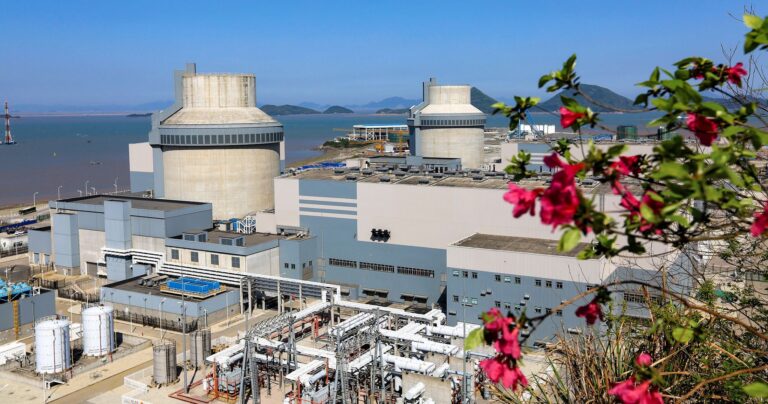
The AP1000 reactor design, developed by Westinghouse, is designed to provide carbon-free baseload electricity capable of powering more than 1.5 million homes while operating for a projected minimum lifespan of 80 years. AP1000 reactors are currently operating at Plant Vogtle in Georgia and at multiple sites in China, with the technology also being evaluated by governments and utilities pursuing new nuclear development around the world.

Major energy projects do more than generate power, they generate jobs and careers, tax revenue, and long-term economic opportunity. A two-unit AP1000 project would mean years of construction work, thousands of jobs, and the kind of reliable energy infrastructure New Jersey and the country need to stay competitive. Large-scale energy infrastructure projects also help strengthen the skilled construction workforce while creating opportunities for apprenticeship training and long-term employment across the trades.

Once operational, the report estimates the project would continue generating approximately $2.6 billion annually in GDP impact while supporting more than 4,000 long-term jobs and contributing hundreds of millions in annual labor income and tax revenue.

As policymakers continue debating the future of American energy production, nuclear power is increasingly emerging as a rare area of bipartisan agreement, bringing together advocates focused on grid reliability, economic growth, domestic energy production, carbon-free generation, and long-term infrastructure investment.

For the construction industry, supporters say the potential return of major nuclear development projects represents more than an energy discussion. 

It represents the possibility of a new era of large-scale American infrastructure construction driven by rising demand for abundant, reliable, and domestically produced power.

Source:

PricewaterhouseCoopers. (2024). The economic impact of a two-unit AP1000 project in the United States. Prepared for Westinghouse Electric Company.

https://info.westinghousenuclear.com/hubfs/The%20Economic%20Impact%20of%20a%20Two-Unit%20AP1000%20Project%20in%20the%20United%20States%20FINAL%20compressed.pdf?hsLang=en

U.S. Department of Energy. (2024). Nuclear power is the most reliable energy source and it’s not even close. Office of Nuclear Energy. https://www.energy.gov/ne/articles/nuclear-power-most-reliable-energy-source-and-its-not-even-close

Generation gap

0

Did environmental opposition to nuclear and natural gas inadvertently contribute to NJ’s high electricity prices?

New Jersey is facing an energy crisis. From sticker shock at the gas pump to electricity rates rising 20-25% over the last five years, an ever-growing percentage of the weekly paycheck is spent on keeping the lights on and getting around. While many are blaming AI data centers for rising home electricity prices, the real cause is more nuanced. Yes, datacenter demand is increasing, but New Jersey also produces less in-state electricity than it did ten years ago, making the state more reliant upon out-of-state generation (seen in increased delivery charges in utility bills) and competition in the regional PJM grid.

For more than a decade, New Jersey’s environmental movement has successfully opposed nearly every major natural‑gas and nuclear project proposed in the state. Their victories reshaped the state’s energy mix, but did they also inadvertently contribute to a widening in‑state generation gap that now collides with rising demand, stalled offshore‑wind development, and record‑high PJM capacity prices?

Murphy’s bet

When Governor Phil Murphy took office in 2018, his administration made a strategic decision: instead of expanding natural gas or nuclear, New Jersey would pursue offshore wind at unprecedented scale. The state set a target of 7.5 GW by 2035, one of the most ambitious in the nation. Offshore wind became the centerpiece of the Energy Master Plan, with the administration arguing it would deliver clean power, create jobs, and reduce reliance on fossil fuels.

Environmental groups strongly supported the strategy. Offshore wind was seen as the clean‑energy backbone that would replace gas and avoid nuclear expansion. But the plan depended on global supply chains, stable financing, and predictable construction costs. Those assumptions that collapsed between 2021 and 2024. By late 2023, the state’s flagship projects – Ocean Wind 1 and 2, developed by Ørsted – were canceled. Inflation, supply‑chain disruptions, rising interest rates, and turbine‑manufacturing challenges made the projects financially unworkable. Other projects, including Atlantic Shores, were delayed or renegotiated. The collapse left New Jersey with zero offshore‑wind megawatts built, no near‑term replacement for retiring fossil‑fuel plants, and no firm capacity to meet rising demand.

The state’s energy strategy, built on the assumption that offshore wind would arrive on schedule, now has a massive energy generation hole.

  • New Jersey consumes roughly 73–75 terawatt‑hours (TWh) of electricity annually
  • New Jersey produces only 55–58 TWh in‑state
  • That leaves a shortfall of 15–20 TWh per year, depending on weather and demand
  • In capacity terms, PJM’s 2025/2026 auction showed a 6,623 MW shortfall — the first in PJM’s history

This gap is filled by imports from Pennsylvania, New York, and other PJM states. When PJM capacity prices spiked in the 2025/2026 auction, New Jersey ratepayers were hit with some of the highest capacity charges in the region.

A decade of opposition

Beginning in the mid‑2010s, environmental and environmental‑justice groups, including Clean Water Action, Sierra Club NJ, Environment NJ, Food & Water Watch, and the New Jersey Environmental Justice Alliance, mounted coordinated campaigns against new natural‑gas infrastructure. Their argument was consistent: new gas plants and pipelines would lock in fossil‑fuel dependence, worsen pollution in overburdened communities, and undermine the state’s climate goals.

Over the next ten years, they helped stop or delay nearly every major gas proposal:

  • PennEast Pipeline – the largest new gas supply source in decades designed to deliver 1 billion cubic feet per day of Marcellus Shale natural gas to gas utilities in Central Jersey, including PSE&G and New Jersey Natural Gas, to reduce winter price spikes
    Canceled after years of litigation and organized opposition 
  • NESE Pipeline (Williams/Transco) – expansion of an existing 23-mile offshore pipeline through Raritan Bay to increase gas supply to National Grid in New York City and Long Island and provide reliability during winter peaks
    Delayed for seven years due to sustained environmental and EJ pressure
  • South Jersey Gas – Pinelands Pipeline – a 22-mile pipeline designed to convert the BL England power plant from coal/oil to natural gas and provide a secondary gas feed to Cape May County
    Canceled and BL England plant closed in 2019
  • Southern Reliability Link (SRL) – a 30-mile pipeline through Monmouth, Ocean, and Burlington counties designed to provide redundant supply to the Jersey Shore

Canceled after years of opposition and regulatory delays

  • Williams/Transco – Garden State Expansion – expanded compressor station and pipeline capacity to increase gas delivery to New Jersey Natural Gas and South Jersey Gas and support regional reliability and peak-day supply
    Partially abandoned
  • North Bergen Liberty Generating Station (1,200 MW) – a high-efficiency gas plant designed to produce and export power to New York via an underwater cable
    stalled and ultimately abandoned.  
  • Keasbey Energy Center expansion (700+ MW) – replacing two older natural-gas turbines with newer units that would have tripled power while reducing emissions per MWh
    met with intense opposition and regulatory delays
  • PVSC backup gas plant in Newark – backup power for the state’s largest wastewater treatment plant that lost power during 2012 Hurricane Sandy and released millions of gallons of untreated sewage into Newark Bay, the Passaic River, and the Hackensack River.

opposed by EJ groups, forcing redesigns and delays.  

Collectively, these decisions removed thousands of megawatts of potential in‑state capacity and prevented new pipeline redundancy into Central and North Jersey. At the same time, older gas plants retired, and no new firm capacity replaced them.

NRDC: the outlier

While nearly every New Jersey environmental and EJ group opposes the new bill in Trenton (A4882 “The Natural Gas Reliability Act”) intended to streamline upgrades to existing natural‑gas plants. The Natural Resources Defense Council (NRDC) supports it. NRDC’s stance reflects its national strategy and the Obama administration’s stance. The 2015 Clean Power Plan treated natural gas as a “bridge fuel” – a transitional step toward a cleaner grid. This framing influenced the Natural Resources Defense Council (NRDC), which supported gas‑related measures if they replaced coal or older, dirtier units.

Nuclear too

While natural gas drew the most visible protests, nuclear energy faced its own opposition. Groups including Clean Water Action, Environment NJ, and Empower NJ oppose new nuclear development, advanced‑reactor proposals, and subsidies for existing reactors. When the state approved Zero Emission Credits (ZECs) in 2019 to keep the Salem and Hope Creek plants online, environmental groups fought the measure, arguing it was an unnecessary bailout. The subsidies passed anyway, but the opposition signaled that nuclear expansion would face steep political resistance. As a result, New Jersey pursued no new nuclear development for more than a decade, even as other states explored small modular reactors (SMRs) to replace retiring fossil‑fuel plants.

There’s a new nuclear bill in Trenton – A4881 “Power NJ Act” – to create a program overseen by the NJ Board of Public Utilities (NJBPU) and Economic Development Authorit (EDA) to bring advanced nuclear energy to the state. Sierra Club NJ, Environment NJ, Clean Water Action, and Food & Water Watch oppose it. 

A turning point?

New Jersey now faces a pivotal moment. The state’s decade‑long strategy – block gas, avoid nuclear, build offshore wind – has collided with economic reality and rising demand. The result is a system increasingly dependent on imports, vulnerable to PJM price spikes, and lacking firm in‑state capacity. 

The Legislature’s new bills signal a shift toward pragmatism: modernizing existing gas plants for near‑term reliability and exploring advanced nuclear for long‑term stability.

Environmental groups argue that doubling down on fossil fuels or nuclear risks undermining climate goals. But rising electricity prices impact households unequally, with poorer households – the same households that environmental justice groups advocate for – feeling the rising prices more acutely. Supporters counter that reliability and affordability require firm power sources and that renewables alone cannot fill the gap. The debate is no longer theoretical. It is unfolding in real time, on ratepayer bills and in legislative hearings, as New Jersey confronts the consequences of a decade of energy decisions.

Sources:

U.S. Energy Information Administration. (2024). *Electric Power Monthly: Table 5.6.A—Average retail price of electricity to ultimate customers by end-use sector, by state*. U.S. Department of Energy. https://www.eia.gov/electricity/monthly/

Obama, B. (2014). State of the Union Address. The White House. https://obamawhitehouse.archives.gov/the-press-office/2014/01/28/president-barack-obamas-state-union-address

U.S. Energy Information Administration. (2024). New Jersey: State energy profile. https://www.eia.gov/state/?sid=NJ

U.S. Energy Information Administration. (2023). State CO₂ emissions: New Jersey. https://www.eia.gov/environment/emissions/state/

PJM Interconnection. (2024). 2025/2026 capacity auction results. https://www.pjm.com/markets-and-operations/rpm

Ørsted. (2023). Ocean Wind 1 & 2 cancellation announcement. https://orsted.com/en/media/newsroom

New Jersey Board of Public Utilities. (2020). New Jersey Energy Master Plan. https://nj.gov/emp/

PennEast Pipeline Company. (2021). PennEast project cancellation. https://penneastpipeline.com/news/

New York State Department of Environmental Conservation. (2020). NESE water quality permit denial. https://dec.ny.gov/

New Jersey Department of Environmental Protection. (2020). NESE permit decisions.  https://www.nj.gov/dep/newsrel/

Natural Resources Defense Council. (2015). The role of natural gas in a clean energy future. https://www.nrdc.org/

U.S. Energy Information Administration. (2024). Electric Power Monthly: Table 5.6.A—Average retail price of electricity to ultimate customers by end-use sector, by state. U.S. Department of Energy. https://www.eia.gov/electricity/monthly/

World Cup – Jersey vs. Philly: A tale of two transportation strategies

Two weeks into the 2026 FIFA World Cup, the transportation story is no longer about whether fans can get to games. For the most part, they can. The more important question is who is paying the price for moving them. A comparison between Philadelphia and the New York/New Jersey host region reveals two dramatically different approaches to managing World Cup transportation. Philadelphia largely used sponsorships, federal funding, and existing transit operations to absorb costs. New Jersey, by contrast, has pushed a larger share of the burden onto riders, commuters, and local residents. The result is that Philadelphia’s transportation plan has largely been viewed as a public benefit while New Jersey’s has increasingly become a source of public frustration.

The difference begins with funding. Philadelphia secured millions in federal transportation support ahead of the tournament and aggressively pursued private-sector partnerships. Most notably, Airbnb partnered with Philadelphia Soccer 2026 and SEPTA to provide free rides home after World Cup matches. The sponsorship transformed transportation from a cost burden into a fan amenity. The message was straightforward: use transit and we’ll make it easier and cheaper.

New Jersey’s message was very different. Officials encouraged fans to use mass transit rather than drive, but the transportation system simultaneously imposed some of the highest event-related transit costs seen anywhere in the tournament. NJ Transit round-trip rail fares approaching $100 became one of the most discussed aspects of the region’s transportation plan.

The contradiction was obvious. If public officials want fans to leave their cars at home, transit must be attractive. Instead, many visitors found themselves comparing expensive train tickets against driving, rideshare options, or informal transportation arrangements. That created a second problem that has received less attention: the impact on people who are not attending World Cup matches.

In order to accommodate tournament operations, parking lots and staging areas throughout the Meadowlands region have been repurposed, restricted, or subjected to enhanced security controls. The resulting disruptions have extended beyond ticket holders and into the daily routines of North Jersey commuters and businesses. Residents have encountered altered traffic patterns, increased congestion around transportation hubs, and reduced flexibility in areas surrounding World Cup operations. While those impacts may be temporary, they represent a real cost imposed on the broader public.

The transportation plan effectively asks local residents to absorb inconvenience while visitors pay premium prices for access. Neither group is particularly happy with the arrangement, and the rideshare situation has become another flashpoint. Unlike many major event venues where rideshare pickup and drop-off areas are located adjacent to stadium facilities, World Cup transportation planning in the Meadowlands requires Uber and Lyft users to utilize designated areas located roughly 1.3 miles from MetLife Stadium. For able-bodied visitors, that may simply be an inconvenience. But for elderly attendees, families with children, visitors unfamiliar with the area, and individuals with mobility limitations, it becomes a much more significant challenge.

Accessibility advocates have increasingly argued that transportation planning should not be judged solely on vehicle throughput and crowd management metrics. The ability of all users to safely and reasonably access an event is equally important.

That is where Philadelphia’s approach appears to have produced better results. Philadelphia’s transportation strategy was not perfect; traffic increased, transit agencies faced operational pressure, and residents experienced disruptions associated with hosting a global sporting event. But the city largely avoided creating additional barriers for the very people officials wanted to move. Transit fares remained familiar. Sponsored rides reduced costs. Event transportation was integrated into existing public transit networks rather than layered on top of them through special pricing structures and complex access arrangements. Most importantly, Philadelphia appears to have minimized the burden placed on people who were not attending matches.

Infrastructure planners increasingly evaluate mega-events based not only on how successfully they move attendees but also on how much disruption they create for everyone else. A transportation system that efficiently moves 80,000 fans while inconveniencing hundreds of thousands of commuters may be operationally successful but politically unsuccessful. That appears to be the emerging challenge facing New Jersey. The region deserves credit for handling enormous crowds and avoiding major transportation failures. Moving World Cup-scale attendance is an extraordinarily difficult task. But operational success does not eliminate questions about cost allocation, accessibility, and public impact.

The first two weeks of the tournament suggest that Philadelphia and New Jersey made fundamentally different policy choices. Philadelphia sought outside funding to reduce burdens on riders. New Jersey relied more heavily on fares, restrictions, and operational controls to manage demand. Both systems are functioning. Only one appears to have generated significant public goodwill in the process.

As the World Cup enters its most heavily attended stages, transportation officials across North America should be paying close attention. The lesson may not be about trains, buses, or stadium access at all. It may be about who bears the cost when a region hosts one of the world’s largest sporting events.

Sources:

SEPTA. (2024). Service plan for FIFA World Cup 2026. https://wwww.septa.org/news/service-plan-fifa-world-cup-2026/

Philadelphia Soccer 2026 Host Committee. (2024). Airbnb teams up with Philadelphia Soccer 2026 to get fans home with free SEPTA rides after FIFA World Cup 26 matches. https://phillyfwc26.com/press/airbnb-teams-up-with-philadelphia-soccer-2026-to-get-fans-home-with-free-septa-rides-after-fifa-world-cup-26-matches

Philadelphia Voice. (2024). SEPTA gets federal funding for World Cup transportation improvements. https://www.phillyvoice.com/septa-world-cup-transit-service-fanfest/

Fox43. (2024). Fetterman secures over $8 million for transit ahead of FIFA World Cup. https://www.fox43.com/article/news/local/fetterman-secures-over-8-million-for-transit-ahead-of-fifa-world-cup

NJ Transit. (2024). FIFA World Cup 2026™: New York New Jersey Host Committee and NJ Transit announce transportation plan. https://www.njtransit.com/press-releases/fifa-world-cup-2026tm-new-york-new-jersey-host-committee-and-nj-transit-announce

New Jersey Monitor. (2026). NJ Transit World Cup transportation costs and fares. https://newjerseymonitor.com/2026/04/17/nj-transit-world-cup-metlife/

New York Post. (2026, June 16). Soccer fans face travel headaches over World Cup matches at MetLife. https://nypost.com/2026/06/16/us-news/soccer-fans-face-more-travel-hell-over-world-cup-match-at-metlife/

New York Post. (2026, June 12). Travel plans for thousands of fans still up in the air. https://nypost.com/2026/06/12/us-news/world-cup-chaos-expected-as-travel-plans-for-50000-fans-still-up-in-the-air-for-first-new-jersey-game/

New York Post. (2026, June 22). Storms set to wallop NYC area for local World Cup match, creating ‘perfect storm’ of chaos for commuters. https://nypost.com/2026/06/22/us-news/storms-set-to-wallop-nyc-area-for-local-world-cup-match-creating-perfect-storm-of-chaos-for-commuters/

Higgs, L. (2026, June 10). World Cup 2026: NJ Transit details service plan for MetLife Stadium matches. NorthJersey.com / The Record. https://www.northjersey.com/story/news/transportation/2026/06/10/nj-transit-world-cup-2026-metlife-stadium-service-plan/74012345007

Higgs, L. (2026, June 14). Fans frustrated by long walks, delays, and confusion at first MetLife World Cup match. NorthJersey.com / The Record. https://www.northjersey.com/story/news/2026/06/14/world-cup-metlife-stadium-nj-transit-fan-complaints/74045623007/

Mooney, J. (2026, May 22). NJ Transit braces for World Cup crowds with limited rail capacity and major operational challenges. NJ Spotlight News. https://www.njspotlightnews.org/2026/05/nj-transit-world-cup-rail-capacity-challenges-metlife

Johnson, T. (2026, April 30). World Cup 2026: Transportation upgrades lag as NJ prepares for massive crowds. NJ Spotlight News. https://www.njspotlightnews.org/2026/04/world-cup-2026-nj-transportation-upgrades-delays/

New worker classification rules help protect responsible contractors and workers in New Jersey

0

NJDOL Adopts Worker Classification Rules to Strengthen Fair Competition

New Jersey has officially adopted updated worker classification regulations designed to provide greater clarity for employers while strengthening protections against worker misclassification.

The rules, adopted by the New Jersey Department of Labor and Workforce Development (NJDOL), formally clarify how the state’s longstanding ABC test is applied when determining whether a worker is classified as an employee or independent contractor under New Jersey labor law.

The regulations center on New Jersey’s longstanding ABC test, which is used to determine whether a worker should be classified as an employee or an independent contractor. Under the test, a worker is presumed to be an employee unless an employer can satisfy all three requirements established in state law. Proper classification is important because it affects eligibility for workplace protections, wage standards, unemployment benefits, and payroll tax obligations. Labor advocates have long argued that worker misclassification harms both workers and responsible employers by allowing some businesses to gain an unfair competitive advantage through reduced labor costs.

According to NJDOL, the regulations synthesize decades of case law and incorporate feedback received during an extended public comment process that included thousands of submissions from businesses, workers, and labor organizations across the state.

The final rules are intended to create clearer standards for employers, protect legitimate independent contractors, and ensure responsible businesses are not placed at a competitive disadvantage by companies that improperly classify workers.

The regulations apply to several major labor laws, including the New Jersey Unemployment Compensation Law, Wage and Hour Law, and Wage Payment Law.

For New Jersey’s union construction industry, contractors already operate within established employment frameworks and longstanding labor standards. Industry leaders say the new rules are important because they reinforce fair competition and accountability across the broader marketplace.

“Responsible contractors who follow the law should never be forced to compete against companies that cut corners by misclassifying workers,” said Mark Longo, Director of the Engineers Labor-Employer Cooperative (ELEC). “These regulations provide greater clarity and help ensure a level playing field for employers that properly classify their workforce and invest in skilled labor.”

The ABC test requires employers to satisfy all three parts of the standard in order for a worker to qualify as an independent contractor under New Jersey law.

The adopted regulations are scheduled to become operative on October 1, 2026.

Source:

New Jersey Department of Labor and Workforce Development. (2026, May 5). NJDOL adopts clear rules on worker classification to protect workers’ rights, level the playing field for businesses. State of New Jersey. https://www.nj.gov/labor/

Infrastructure Update – week of June 22, 2026

0

We scour the internet for infrastructure news affecting the region so you don’t have to! Here’s what’s happened in the past week:

When it comes to total water use, AI data centers are a drop in the bucket [Ars Technica]

A new Amazon sustainability report shows that AI‑driven data centers, while locally impactful, represent only a tiny fraction of national water consumption. Amazon withdrew 2.5 billion gallons of water globally in 2025—large in isolation but negligible compared to the 117 trillion gallons withdrawn in the U.S. in 2015. The real pressure point is local: Meta’s Georgia facility uses 10% of its county’s water, and Northern Virginia could see data centers consuming nearly a third of local supply by 2050. Companies are pursuing efficiency upgrades and replenishment projects, but communities in water‑stressed regions remain wary.
Read more: https://arstechnica.com/ai/2026/06/when-it-comes-to-total-water-use-ai-data-centers-are-a-drop-in-the-bucket/

Funding fix sought for Pinelands, Highlands school districts [NJ Spotlight News]

New Jersey lawmakers are advancing a bipartisan bill to restore funding to districts constrained by Highlands and Pinelands preservation rules. The bill is sponsored by State Sen. Latham Tiver, who represents several Pinelands communities and has been outspoken about the inequities created by the S2 school‑aid formula. Tiver argues that these towns have been penalized twice—first by strict land‑use limits that prevent tax‑base growth, and then by steep aid cuts.

As Tiver put it, “We asked these towns to preserve land for the benefit of the entire state, and then we turned around and cut their school aid as if they had the same development opportunities as everyone else.”

The “Fairness for School Districts in Development Restricted Areas Act” would provide supplemental aid based on preserved acreage, with caps tied to enrollment. Supporters say it corrects a structural inequity for environmentally restricted towns; critics warn it could reopen broader school‑aid debates.
Read more: https://www.njspotlightnews.org/2026/06/funding-fix-sought-for-pinelands-highlands-school-districts/

Here’s what replacing this busy but ailing Delaware River bridge will look like [NJ.com]

The aging Delaware River Turnpike Bridge between New Jersey and Pennsylvania is set for a full replacement supported by a $600 million federal grant. The new steel tied‑arch design will widen lanes, improve shoulders, and add modern safety features. The project follows years of deterioration concerns, including a major crack discovered in 2016 that forced an emergency shutdown. Officials say the replacement will improve safety, reduce congestion, and support long‑term freight and commuter mobility.
Read more: https://www.nj.com/news/2026/06/heres-what-replacing-this-busy-but-ailing-delaware-river-bridge.html

Navigating Nuclear: New York and New Jersey [National Law Review]

New York and New Jersey are undergoing a major pro‑nuclear policy shift after decades of resistance. New Jersey lifted its 50‑year moratorium on new nuclear plants in April 2026, and Gov. Mikie Sherrill has created a Nuclear Power Task Force to accelerate next‑generation reactor development. The state’s existing nuclear fleet—Salem Units 1 and 2 and Hope Creek, all located on Artificial Island in Salem County—remains the backbone of New Jersey’s clean‑energy system.

Salem and Hope Creek status:

  • Salem Units 1 & 2 (PWRs) began operating in 1977 and 1981.
    • Unit 1 license expires 2036
    • Unit 2 license expires 2040
    • PSEG plans to file for subsequent license renewal in 2027
  • Hope Creek (BWR) began operating in 1986.
    • Licensed through 2046
    • PSEG also plans a subsequent license renewal filing in 2027

Together, the three reactors generate over 40% of New Jersey’s electricity and more than 80% of its zero‑carbon power, making the site the fourth‑largest nuclear generating complex in the United States. New York, meanwhile, is pursuing an 8.4‑GW “Nuclear Reliability Backbone,” including solicitations for 1 GW of new advanced reactors and expanded collaboration with Ontario.
Read more: https://natlawreview.com/article/navigating-nuclear-new-york-and-new-jersey

Highway reconstruction project transforms notorious South Jersey interchange [Tri‑State Infrastructure News]

The nearly $900 million Direct Connection project—one of the largest infrastructure undertakings in South Jersey history—continues to reshape the I‑295/I‑76/Route 42 interchange. Now in Phase 3, the project is eliminating the dangerous “Al‑Jo’s Curve,” rebuilding ramps, replacing bridges, and constructing a massive new I‑295 flyover. Construction began in 2013 and is expected to continue into 2032, with major engineering redesigns required after the 2021 collapse of “Wall 22.”
Read more: https://tristateinfrastructurenews.com/highway-reconstruction-project-transforms-notorious-south-jersey-interchange/

Repauno Terminal positions South Jersey as a growing energy export hub [Tri‑State Infrastructure News]

The Repauno Port & Rail Terminal on the Delaware River is expanding into a major LPG export hub, backed by new underground storage caverns and deep‑water berths. The terminal plans to scale export capacity from 24 Mb/d to 96 Mb/d, with developers highlighting job creation, improved energy security, and South Jersey’s emerging role in global propane and butane markets.
Read more: https://tristateinfrastructurenews.com/repauno-terminal-positions-south-jersey-as-growing-energy-export-hub/

Gateway Project reaches another major milestone [Tri‑State Infrastructure News]

The Gateway Program has cleared another milestone toward constructing new Hudson River rail tunnels and rehabilitating the existing 113‑year‑old tubes. The advancement accelerates procurement and funding timelines, keeping the project on track to expand Northeast Corridor capacity and improve reliability for Amtrak and NJ Transit.
Read more: https://tristateinfrastructurenews.com/gateway-project-reaches-another-major-milestone/

Are data centers the villains in the battle over electricity? [Carnegie Endowment]

A Carnegie analysis argues that while data centers aren’t inherently “villains,” their explosive growth is straining regional grids and prompting utilities to prioritize power delivery to hyperscalers. Communities in Virginia, Nevada, and California are pushing back over rising rates, noise, and new gas‑fired generation built to serve data‑center loads. Policymakers are exploring requirements for tech companies to fund grid upgrades, invest in clean energy, and mitigate local impacts.
Read more: https://carnegieendowment.org/emissary/2026/06/data-centers-electricity-energy-climate-villains

Thanks for reading. Be sure to share with friends and associates.

The hidden engineering of Niagara Falls [Practical Engineering]

Beyond the sheer and powerful beauty of Niagara Falls, Practical Engineering details the energy and transportation challenges of this part of the Great Lakes.

Gateway project reaches another major milestone

New rail structure between Secaucus and North Bergen to begin construction

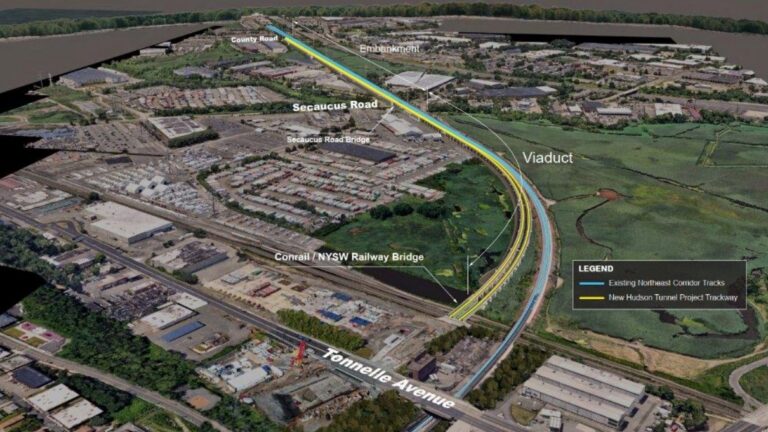
The Gateway Program took another significant step forward this spring with the award of a $711.7 million contract for the New Jersey Surface Alignment, a critical piece of the Hudson Tunnel Project that will connect the future tunnel beneath the Hudson River to the Northeast Corridor rail network in New Jersey.

The contract was awarded by the Gateway Development Commission to the Skanska-Creamer-Sanzari joint venture and covers construction of approximately 1.5 miles of rail infrastructure between Secaucus and North Bergen. The work includes embankments, retaining walls, viaducts, bridges and supporting infrastructure needed to connect the new tunnel to existing rail lines.

A substantial portion of the project will cross the Meadowlands, requiring the construction of elevated structures over environmentally sensitive wetlands while maintaining active passenger and freight rail operations. The contract also includes utility relocations, drainage improvements and bridge work spanning existing freight rail corridors.

The award marks another milestone for the $16 billion Hudson Tunnel Project, one of the largest transportation infrastructure projects currently underway in the United States. The project will construct a new rail tunnel beneath the Hudson River while allowing the existing North River Tunnel, which was damaged during Superstorm Sandy in 2012, to be fully rehabilitated. Once complete, the project will create four tracks connecting New Jersey and New York, improving reliability along the Northeast Corridor, the nation’s busiest passenger rail line.

According to the Gateway Development Commission, seven of the project’s 10 construction packages are now complete or under construction. Work on the New Jersey Surface Alignment is expected to begin later this year, with the overall Hudson Tunnel Project targeted for completion in 2035.

For the skilled trades, projects of this scale represent more than infrastructure improvements. They provide years of work opportunities while modernizing transportation systems that support millions of passengers and billions of dollars in economic activity throughout the Northeast. As construction continues on both sides of the Hudson River, the Gateway Program remains one of the most important infrastructure investments in the region’s future.

Source

Gateway Development Commission. (2026, June 1). GDC awards contract for Hudson Tunnel Project Construction Package 3: The New Jersey Surface Alignment.https://www.gatewayprogram.org/wp-content/uploads/2026/06/June-2026-Board-Meeting-Press-Release-FINAL.pdf 

Gottlieb, B. (2026, June 1). Gateway awards $712M NJ rail approach contract for Hudson River tunnel. Engineering News-Record.https://www.enr.com/articles/63083-gateway-awards-712m-nj-rail-approach-contract-for-hudson-river-tunnel

Infrastructure Update – Week of June 15, 2026

0

$19.5M Jersey Shore beach rebuild coming to popular summer destination

Ocean City will undergo a $19.5 million beach replenishment this summer as the Army Corps and local officials work to restore eroded shoreline before peak tourism season. The project will widen beaches, repair storm damage, and reinforce dunes—measures local leaders say are essential for both climate resilience and protecting the Shore economy.
https://www.nj.com/cape-may-county/2026/06/195m-jersey-shore-beach-rebuild-coming-to-popular-summer-destination.html

Developers’ new plan for cross–Long Island Sound combination bridge and tunnel

A developer has revived the long‑debated idea of a Long Island–Connecticut crossing, proposing a hybrid bridge–tunnel to ease congestion and improve freight mobility. The concept promises major transportation benefits but faces steep environmental, political, and financial challenges—echoing decades of failed attempts to span the Sound.
https://www.courant.com/2026/06/10/developers-new-plan-for-cross-long-island-sound-combination-bridge-and-tunnel/

Holtec proposes nuclear reactors at former Oyster Creek site in Lacey

Holtec is pitching small modular reactors at the retired Oyster Creek nuclear plant, saying the project could revive local jobs and deliver zero‑emissions baseload power. Community reaction is mixed: supporters see economic opportunity, while critics raise concerns about nuclear safety and waste.
https://www.app.com/story/news/local/land-environment/2026/06/10/holtec-nuclear-reactors-oyster-creek-lacey/90479462007/

U.S. natgas output, demand hit record highs in 2026, EIA says

The U.S. set new records for natural gas production and consumption this year, driven by power generation, industrial demand, and LNG exports. The trend highlights gas’s continued dominance in the energy mix even as renewables grow, raising questions about emissions and long‑term reliability.
https://www.reuters.com/business/energy/us-natgas-output-demand-hit-record-highs-2026-eia-says-2026-06-09/

The race to cool AI: how modern data centers keep from overheating

AI data centers are shifting from traditional air cooling to liquid‑based systems, immersion tanks, and direct‑to‑chip cooling as compute loads skyrocket. Cooling has become a critical constraint shaping site selection, energy use, and community impacts.
https://tristateinfrastructurenews.com/the-race-to-cool-ai-how-modern-data-centers-keep-from-overheating/

Trans Mountain oil pipeline hits full capacity as Asian demand surges

Canada’s expanded Trans Mountain pipeline is now flowing at full capacity, with Asian refiners—especially in China—driving demand for Canadian crude. Space on the line is already oversubscribed, prompting discussions about further expansion despite environmental opposition.
https://oilprice.com/Latest-Energy-News/World-News/Trans-Mountain-Oil-Pipeline-Hits-Full-Capacity-as-Asian-Demand-Surges.html

US energy regulator approves PJM’s fast‑tracked power plant interconnection plan

FERC has approved PJM’s overhaul of its interconnection process, aiming to clear a massive backlog of renewable, storage, and gas projects waiting to connect to the grid. The reforms prioritize shovel‑ready projects and are expected to accelerate development across the 13‑state region.
https://www.reuters.com/legal/litigation/us-energy-regulator-approves-pjms-fast-tracked-power-plant-interconnection-plan-2026-06-10/

New Jersey Moving Toward Creating Office of Clean Energy Equity

A proposed NJ Senate bill to create an office of clean energy equity would establish an office within the Board of Public Utilities (BPU) to oversee and promote an equitable transition to clean energy. The legislation seeks to direct clean energy investments to low-income households and establish onsite 

community solar programs to benefit 250,000 low-income households. Under the plan, no less than 10% of the annual clean energy budget would be channeled to the office. For additional details see the ROI-NJ story.

Millville Latest NJ Municipality to Ban Data Centers

Millville will not become the home of the largest data center project in New Jersey. Millville Commissioners have voted to ban data centers in the city. It is estimated the proposed project would have used 1.4 gigawatts of electricity or enough to power more than a million homes. For additional details about the ban and to learn more about how other states are reacting see the ROI NJ story.

New York State’s electricity reserves are shrinking, grid operator says

New York’s grid operator warns that reserve margins are tightening as older plants retire and demand grows, increasing the risk of reliability shortfalls during extreme weather. The report underscores the need for new capacity and transmission.
https://www.reuters.com/business/energy/new-york-states-electricity-reserves-are-shrinking-grid-operator-says-2026-06-09/

Democrats’ climate strategy shifts as oil and gas politics evolve

Democrats are recalibrating their climate strategy, balancing emissions goals with voter concerns about energy prices and security. The party remains divided over drilling, LNG exports, and permitting reform as it tries to maintain climate credibility without alienating moderates.
https://www.nytimes.com/2026/06/11/climate/democrats-climate-change-oil-gas.html

Sherrill taps Hertz‑Shargel, leading grid modernization consultant, as next BPU president

Gov. Mikie Sherrill has nominated Ben Hertz‑Shargel—an expert in grid modernization and distributed energy—to lead the BPU. The pick signals a data‑driven approach to affordability, reliability, and preparing for data‑center‑driven load growth.
https://re-nj.com/sherrill-taps-hertzshargel-leading-grid-modernization-consultant-as-next-bpu-president/