


GREENWICH TOWNSHIP, GLOUCESTER COUNTY, N.J. — Along the Delaware River in Gloucester County, the Repauno Port & Rail Terminal is transforming a former industrial site into a significant energy and logistics hub.
The 1,600-acre facility is evolving into a strategic gateway for the movement of liquefied petroleum gas, bulk commodities, project cargo and other industrial products. Operated by Delaware River Partners, a subsidiary of FTAI Infrastructure, the port combines deep-water marine access, rail connectivity and underground storage capacity in a location that provides direct access to domestic and international markets.
The terminal features a 40-foot-deep draft capable of handling large vessels, direct rail service through Conrail with connections to CSX and Norfolk Southern, and proximity to Interstate 295, Interstate 95 and the New Jersey Turnpike. According to Repauno, the site was designed to support energy products, roll-on/roll-off cargo, warehousing and large-scale logistics operations.
One of the facility’s most distinctive assets is its underground granite storage cavern system. Repauno currently operates a cavern capable of storing approximately 180,000 barrels of liquefied petroleum gas products. The storage infrastructure allows propane, butane and other LPG products to be safely stored underground before being loaded onto vessels for export.
The company is now pursuing an expansion that would significantly increase storage capacity and strengthen its position in the Northeast energy market. In late 2025, the New Jersey Department of Environmental Protection (NJDEP) approved plans for two additional underground granite caverns, each capable of storing more than 600,000 barrels of LPG products. The expansion would more than triple the terminal’s existing storage capacity and establish Repauno as one of the region’s largest LPG storage and export facilities. Company officials have said the project could generate more than 500 construction jobs while increasing regional energy storage capabilities.
Industry analysts view the expansion as a direct challenge to Energy Transfer’s Marcus Hook terminal in Pennsylvania, which has long dominated Appalachian LPG exports. Repauno’s location on the Delaware River allows producers in the Marcellus and Utica shale regions to access international markets with shorter transit times than many Gulf Coast export facilities.
Understanding LNG and LPG
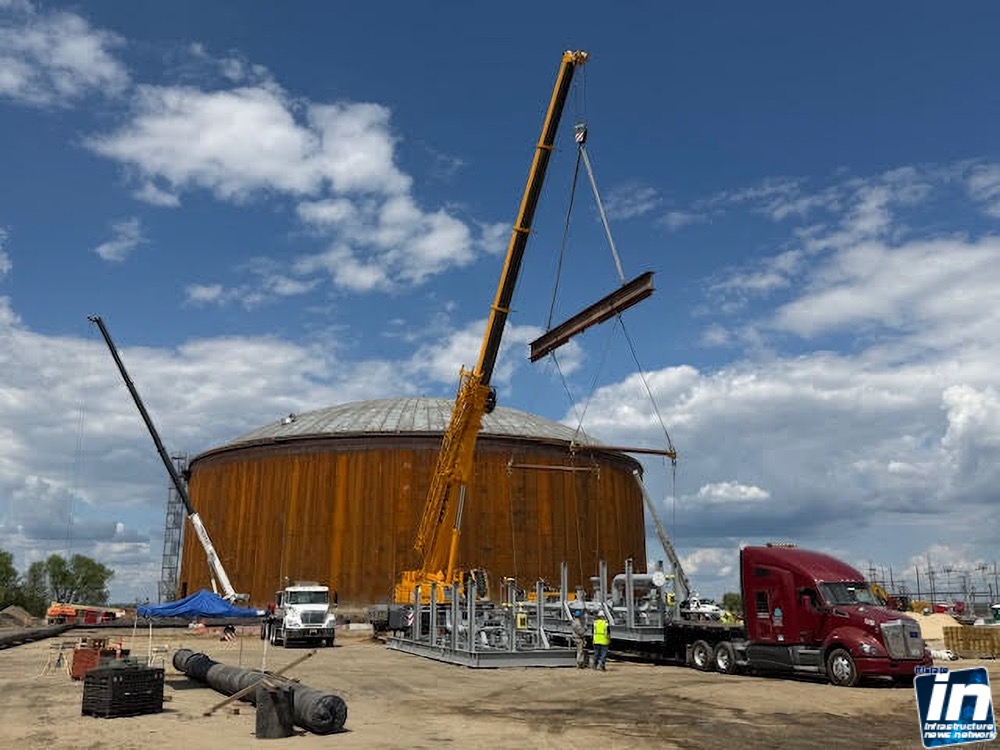
Construction of a 26-million-gallon above-ground LPG storage tank at Repauno Port in Gloucester County, New Jersey.
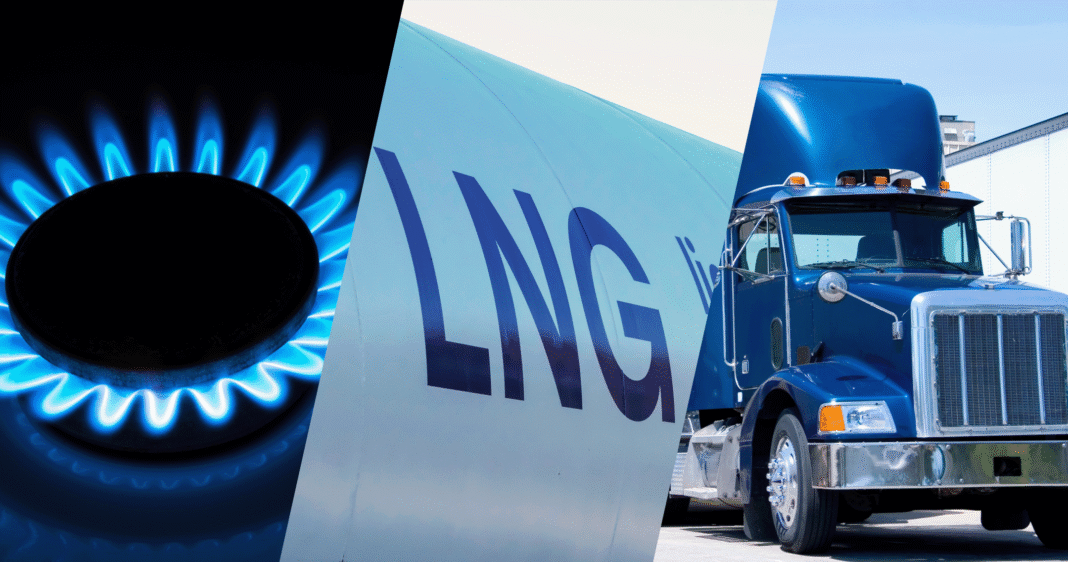
The Repauno project involves two different energy products that are often confused: liquefied natural gas (LNG) and liquefied petroleum gas (LPG).
LNG is primarily methane, the same natural gas used to heat homes and generate electricity. To become a liquid, natural gas must be cooled to approximately minus 260 degrees Fahrenheit, reducing its volume and making it economical to transport long distances.
LPG consists primarily of propane, butane or a mixture of the two. Unlike LNG, LPG can be liquefied under moderate pressure and is commonly used for residential heating, cooking, agricultural applications and industrial processes.
Repauno’s existing operations and planned cavern expansions are focused on LPG storage and exports. The proposed LNG export project is a separate initiative that would use the terminal as a transfer point for liquefied natural gas produced elsewhere in the Appalachian Basin.
LNG export plans remain under scrutiny
While Repauno’s current operations focus primarily on liquefied petroleum gas products such as propane and butane, the facility has also been at the center of a long-running proposal involving liquefied natural gas exports.
The proposed LNG project would create a supply chain linking Pennsylvania’s Marcellus Shale gas fields to international markets. Unlike traditional LNG export terminals along the Gulf Coast, which receive natural gas by pipeline and liquefy it at the waterfront, the Repauno proposal was designed around transporting already-liquefied natural gas from inland Pennsylvania to the Delaware River for export.
Under the plan, natural gas would be converted into LNG at a processing facility in northeastern Pennsylvania before being transported to South Jersey by truck or rail. Once at Repauno, the LNG would be transferred directly from transportation equipment onto ocean-going vessels at the proposed Dock 2 facility. Because New Jersey law prohibits bulk LNG storage at the site, the project relies on direct transloading operations rather than long-term storage tanks, making transportation logistics a critical component of the proposal.
Supporters view the approach as a way to connect Appalachian natural gas producers to overseas markets without constructing major new pipeline infrastructure, while opponents have focused on the safety and environmental implications of moving LNG through communities by rail and truck. Some energy advocates argue that expanded pipeline infrastructure could provide a safer, cleaner and lower-cost alternative to large-scale rail or truck transportation by reducing handling requirements and limiting fuel movement through populated areas.
The future of the LNG export project remains uncertain. A key component of the original plan involved transporting LNG by rail from northeastern Pennsylvania to South Jersey, but federal approvals governing LNG-by-rail transportation have faced legal regulatory challenges. At the same time, plans for associated liquefaction facilities in Pennsylvania are evolving, creating additional questions about how the export chain would operate.
Growing role in regional infrastructure
Despite ongoing debate surrounding LNG exports, Repauno continues to expand its role as a critical logistics and energy facility for the Delaware River region. The combination of deep-water access, rail infrastructure, highway connectivity and underground storage capacity has positioned the terminal as a major asset for energy producers seeking access to domestic and international markets.
The project also arrives as New Jersey faces growing questions about long-term energy supply. The state has become increasingly dependent on imported electricity following the retirement of several coal-fired power plants and continues to rely heavily on energy produced elsewhere in the PJM grid. At the same time, electricity demand is expected to rise as data centers, electrification initiatives and industrial development increase power consumption throughout the region.
Supporters of projects such as Repauno argue that maintaining energy affordability and reliability will require an all-of-the-above strategy that includes renewables, nuclear power, natural gas infrastructure and expanded energy transportation networks. From that perspective, facilities capable of moving domestically produced fuels to market are viewed as an important component of the region’s broader energy portfolio.
As new cavern construction moves forward and additional infrastructure investments are considered, Repauno is expected to remain one of the most closely watched energy and logistics developments on the Delaware River waterfront.
Sources:
Delaware Riverkeeper Network. (n.d.). Gibbstown Logistics Center LNG/NGL export proposal. Delaware Riverkeeper Network. https://delawareriverkeeper.org/issues/climate-change-fossil-fuels-and-energy/gibbstown-logistics-center-lng-ngl-exports-proposed/
Delaware River Partners. (n.d.). Repauno Port & Rail Terminal. Repauno Port & Rail Terminal. https://www.repauno.com/
East Daley Analytics. (2024, August 28). Repauno port challenges ET’s dominance in Northeast. East Daley Analytics. https://eastdaley.com/ngl-insider/repauno-port-challenges-ets-dominance-in-northeast-3
FTAI Infrastructure. (2025, October 9). Repauno Port & Rail Terminal receives approval for Phase 3 development. MarketScreener. https://www.marketscreener.com/news/repauno-port-rail-terminal-receives-approval-for-phase-3-development-ce7d5ad2dd89f02c
Greenwich Township. (n.d.). Proposed port development. Greenwich Township, New Jersey. https://www.greenwichtwp.com/2202/Proposed-Port-Development
Mele, C. (2025, April 21). Backers of Gibbstown LNG dock seek permit renewal from the DRBC. Delaware Currents. https://delawarecurrents.org/2025/04/21/gibbstown-lng-port/
New Jersey Department of Environmental Protection. (2025). Draft approval to construct: Repauno Port & Rail Terminal cavern expansion project (Program Interest No. 1032630). State of New Jersey. https://dep.nj.gov/wp-content/uploads/brp/caverns/usc-public-notices/final-dep-bulletin-notice-draft-approval-to-construct_1032630.pdf
New Jersey Spotlight News. (2025, September 18). Controversial Gibbstown port project wins permit extension. NJ Spotlight News.https://www.njspotlightnews.org/2025/09/controversial-gibbstown-port-project-wins-permit-extension/
Ryan, M. (2019, December 18). Controversial Gibbstown LNG export terminal gets final DRBC approval. WHYY.https://whyy.org/articles/controversial-gibbstown-lng-terminal-gets-final-drbc-approval/