Ben Hertz‑Shargel is the new President of the New Jersey Board of Public Utilities, appointed to lead the state’s regulatory agency overseeing electricity, natural gas, water, telecommunications, and clean‑energy programs. His career has centered on distributed energy resources, demand‑side management, electrification, and grid‑edge analytics – experience that shapes his approach to modernizing New Jersey’s grid as load grows and technology evolves. While his background is rooted in the demand side rather than traditional generation development, he brings deep expertise in how customer‑sited resources, electrification trends, and large loads interact with utility operations and long‑term planning.
Before joining the Board, Hertz‑Shargel served as Global Head of Grid Edge and later Global Head of Grid Transformation & Large Loads at Wood Mackenzie, where he led research on distributed flexibility, utility digitalization, and the rising electricity demand associated with data centers, transportation electrification, and building decarbonization. His work provided utilities, regulators, and policymakers with forward‑looking analysis on load growth, DER integration, and grid modernization.
Earlier in his career, he held senior roles at EnergyHub, including Vice President of Advanced Grid Services & Analytics, where he oversaw forecasting, optimization, and control strategies for large fleets of behind‑the‑meter devices such as batteries, thermostats, and distributed solar. He also served as Head of Data Science & Demand Management at Rhythm, a retail electricity provider, managing load forecasting and meter‑data analytics. His professional path began in quantitative finance at Credit Suisse, where he developed statistical models and risk‑analysis tools.
Hertz‑Shargel has advised organizations including the Atlantic Council’s Global Energy Center, the Alfred P. Sloan Foundation’s Energy & Environment Program, and the Pew Charitable Trusts’ Distributed Energy Resources Policy Initiative. Across these roles, he has contributed to national discussions on electrification, DER policy, and long‑term grid planning.
As NJBPU President, Hertz‑Shargel is responsible for regulatory oversight of utility operations, resource planning, offshore wind solicitations, solar and storage programs, and New Jersey’s interaction with PJM’s wholesale markets. He joins at a time when the state is facing an energy affordability crisis and increasing questions about energy supply and resilience.
The region may be experiencing a World Cup hangover, but questions about, “Was it worth it?” are still being asked. That and more in this issue of Infrastructure Update.
NY–NJ World Cup costs under scrutiny
New York and New Jersey are beginning to tally the real costs of hosting the 2026 World Cup, and early numbers suggest the region spent over $500 million on security, transit operations, crowd management, and event logistics. A host‑committee study projects $3.3 billion in economic impact and $432 million in tax revenue, but officials are openly questioning whether those benefits will materialize. NYC Councilmember Virginia Maloney told Politico that hotel occupancy data is mixed and that boosters often “inflate” economic projections for mega‑events. New Jersey officials are conducting their own post‑event audit, especially around overtime costs and transit strain. The broader debate now centers on whether the World Cup delivered lasting value or simply a short‑term tourism spike.
Amtrak finds a way to boost Penn Station capacity without demolition
A new Amtrak study offers a surprising conclusion: Penn Station can run more trains at rush hour—up to 32 per hour instead of 24—without demolishing a block south of 31st Street. The plan relies on longer platforms, additional stairs and escalators, improved passenger flow, and limited “through‑running” between NJ Transit and the LIRR. The study also endorses a future “super‑wide platform” to reduce crowding and speed boarding. Importantly, this is the first time Amtrak has formally backed through‑running, a concept long championed by transit advocates. A more detailed engineering study is expected in 2028, but the preliminary findings suggest the region may be able to expand rail capacity faster—and cheaper—than previously assumed.
New Jersey’s raw sewage problem: 23 billion gallons a year
A new investigation highlights one of New Jersey’s most persistent infrastructure failures: combined sewer overflows (CSOs) that spill contaminated stormwater and raw sewage into streets and waterways during heavy rain. The state has 217 CSO outfalls across 21 municipalities, including Newark, Jersey City, Hoboken, Camden, and Paterson. These century‑old systems dump an estimated 23 billion gallons of polluted water annually, carrying pathogens like E. coli and norovirus into neighborhoods and rivers such as the Lower Passaic and Newark Bay. Long‑term control plans are finally in place, but the fixes—sewer separation, storage tunnels, treatment upgrades, and green infrastructure—will cost billions and take years. Climate‑driven storms are making the problem more urgent, and communities are demanding faster timelines.
Nutley data center fight intensifies at ON3 campus
Developer Gene Diaz of Prism is pushing back against what he calls a “misinformation campaign” surrounding a proposed 250,000‑square‑foot data center at the ON3 campus in Nutley and Clifton. Diaz argues residents are conflating all data centers with massive AI hyperscale facilities, stressing that this project is far smaller and would use under 1 million gallons of water per day, compared to 14 million gallons used by a former industrial tenant. He also notes that noise must remain below 55 decibels under DEP rules and that PSE&G can support the electrical load. Crucially, Nutley itself designated the site for data‑center use in a legal settlement after rejecting warehouses, multifamily housing, and senior housing—meaning the town has limited ability to block the project now.
Atlantic City Electric proposes 500 MW battery project in Salem County
Atlantic City Electric has filed plans with the NJBPU for a 500‑MW battery energy storage project in Salem County—enough to power roughly 400,000 homes during peak demand. The utility says the project would store low‑cost power and discharge during high‑price periods, reducing customer exposure to volatile wholesale markets. ACE claims no bill impact for the first five years, with federal tax credits and PJM market revenues covering nearly 70% of project costs. The system would be built with Invenergy and targeted for completion around 2030, pending regulatory approval. If approved, it would be one of the largest battery installations on the East Coast and a major step toward grid reliability as electrification accelerates.
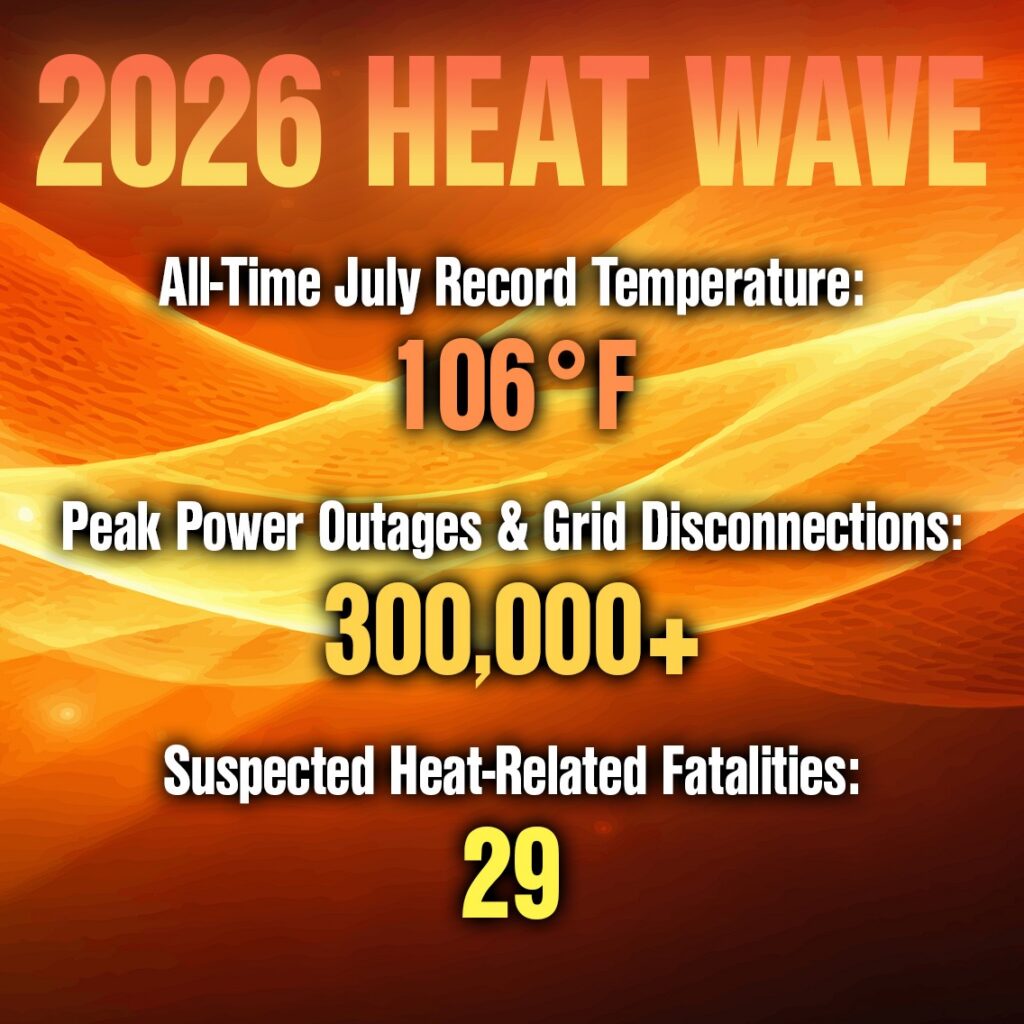
The recent heat dome and aftermath challenged NJ’s energy and transportation infrastructure PJM alerted data centers to be ready to switch to backup power extensive NJ Transit delays, cancellations breaking storms caused flooding and power loss 29 suspected heat-related fatalities
The intense heat wave that gripped New Jersey in late June and culminated over the Independence Day weekend of 2026 was more than a public health emergency; it was a brutal stress test for the state’s critical infrastructure. Breaking long-standing temperature records before dissolving into violent storms and widespread flash flooding, the multi-day event exposed deep-seated vulnerabilities in the region’s power grid, transportation systems, and structural engineering paradigms.
As Governor Mikie Sherrill noted during an emergency briefing, this historic heat dome represented the most punishing meteorological stretch the Garden State has experienced in fourteen years. With ambient temperatures skyrocketing to an all-time July record of 106°F in Atlantic City and urban heat island effects pushing the real-feel heat index to a staggering 110°F, New Jersey found itself operating at the very margin of its operational tolerances. When the heat dome finally collapsed on July 6, it unleashed severe downpours and 70 mph winds, executing a compounding double-blow to an already fatigued built environment.
Grid under siege
The primary battleground of the late June heat wave was New Jersey’s electrical distribution network. For nearly a week, overnight temperatures refused to drop below the high 70s, denying substations, transformers, and residential structures their natural nocturnal cooling cycles. This thermal saturation coincided with unprecedented cooling demands, driving regional transmission organizations to capacity thresholds.
PJM Interconnection issued escalating grid warnings to protect the Mid-Atlantic electrical network. Operations began with a Hot Weather Alert and a mandatory recall of all transmission maintenance outages. As cooling demand surged, PJM declared Maximum Generation and Emergency Load Management Alerts to maximize capacity. Crucially, they secured federal emergency 202(c) orders, bypassing emissions caps and placing massive data centers on short-notice standby to switch to backup power, successfully averting catastrophic regional blackouts.
While utility providers like PSE&G and Jersey Central Power & Light (JCP&L) had anticipated high seasonal loads, the compounding effect of the heat dome degraded equipment efficiency. Transformers, which rely on ambient air exchange to dissipate heat generated during power step-down operations, suffered accelerated thermal aging. This set the stage for systemic failures when the outer bands of the subsequent storm front collided with the superheated air mass.
The resulting violent storms uprooted weakened trees, throwing heavy canopy onto vulnerable overhead distribution lines. At its peak, over 300,000 homes and businesses across the state were plunged into darkness. This was not a simple matter of wind-snapped wires; it was an intersectional infrastructure failure where thermally stressed equipment met severe mechanical impacts from storm debris, significantly prolonging utility restoration efforts.
Mass (transit) deceleration
For commuters and travelers over the holiday weekend, the heat wave manifested as a complete logistical standstill. NJ Transit and Amtrak operations along the Northeast Corridor and commuter branches became heavily degraded. The culprit lay in the physical physics of linear infrastructure exposed to extreme thermal expansion. The aging catenary systems – the overhead wires providing electrical propulsion to trains – expanded under the relentless 105°F heat, sagging well below safe physical tolerances. When trains attempted to pass at operational speeds, the risk of tearing down these vital lines forced mandatory speed restrictions across the network. Simultaneously, rail steel temperatures reached estimated peaks well above 130°F due to direct solar radiation, elevating the threat of “sun kinks” or thermal misalignment track buckling.
When the storm front arrived on July 6, it introduced severe infrastructure damage, particularly along the Morris & Essex and North Jersey Coast lines. Seventy-mile-per-hour wind gusts threw mature timber across catenary lines and blocked tracks, forcing total cancellations. The compounding impacts revealed that New Jersey’s transit network remains brittle to rapid meteorological shifts, lacking the resilient design and automatic tensioning systems required to absorb rapid swings from extreme heat to violent convective storms.
Hydraulic shock
The finale of the heat wave brought a stark transformation from extreme drought conditions to intense hydraulic overload. The atmospheric energy trapped by the heat dome fueled torrential downpours on July 6, overwhelming municipal stormwater infrastructure across northern and central New Jersey.Systems designed for historical stormwater baselines proved entirely inadequate against the sheer volume of water deposited within compressed timeframes.
Major state highways quickly transformed into rivers, trapping motorists and forcing local emergency services to divert limited resources toward high-water vehicle rescues. The rapid accumulation of water also exerted catastrophic dead loads on large-footprint commercial rooftops. In Ocean Township (Monmouth County), a partial roof collapse occurred at a BJ’s Wholesale Club as stormwater accumulation outpaced the structural drainage capacity. While structural debris briefly trapped two shoppers, miraculous luck prevented injuries. However, the structural failure serves as an urgent indicator that commercial and industrial structural codes must adapt to account for intense, short-duration precipitation events that follow severe thermal stress.
Public health
The New Jersey Department of Health’s ongoing investigation into at least 29 suspected heat-related deaths highlights the severe consequences of modern structural shortfalls. A significant portion of these fatalities occurred indoors, where aging housing stock lacked adequate thermal insulation, ventilation, or operational air conditioning. Urban centers experienced a pronounced “urban heat island” effect, where vast expanses of asphalt and concrete absorbed heat during the day and re-radiated it at night, creating a localized ambient baseline far higher than surrounding rural environments. Emergency departments across the state reported a sharp spike in heat stroke and exhaustion cases. This healthcare surge demonstrated that the state’s medical infrastructure remains vulnerable to sudden spikes in volume driven by environmental crises, particularly when coinciding with localized power grid failures that render domestic cooling appliances useless.
The new normal?
The events of late June and early July 2026 have made one reality undeniable: the historical environmental baselines used to engineer New Jersey’s infrastructure are obsolete. If the state is to maintain operational continuity in an era characterized by volatile weather patterns, a systemic shift in capital deployment and engineering standards must occur.
For the power grid, this means accelerating the undergrounding of critical distribution circuits and deploying smart-grid technologies capable of automatically isolating damaged nodes without dropping entire sub-stations. For transit authorities, it demands the rapid replacement of fixed-tension catenary wires with modern constant-tension systems that utilize balance weights to adjust to extreme thermal fluctuations. Finally, municipal building and stormwater codes must be rewritten to mandate higher structural load capacities for flat commercial roofs and larger retention diameters for drainage networks.
Sources:
Amtrak. (2026, July 5). Service alert: Heat-related speed restrictions and infrastructure updates on the Northeast Corridor. Northeast Corridor Operations. https://www.amtrak.com/alerts
Andrews, C., Shahid, Y., & Main, J. (2026). Comparing ambient and personal measurements of exposure to urban heat stress in public housing environments. Rutgers University Institutional Repository. https://scholarship.libraries.rutgers.edu/
Jersey Central Power & Light. (2026, July 6). JCP&L restoration updates: Severe convective storm impacts following regional heat dome. FirstEnergy Corp Utility Dashboards.https://www.firstenergycorp.com/nj-outages
New Jersey Department of Health. (2026, July 6). Preliminary morbidity and mortality report: Heat-related surveillance and suspected fatalities during the late-June/July 2026 extreme heat event. Office of Population Health and Epidemiology. https://www.nj.gov/health/
NJ Transit. (2026, July 6). Travel advisory: Significant infrastructure delays and storm-related cancellations on Morris & Essex and North Jersey Coast Lines. NJ Transit Press Room. https://www.njtransit.com/press-releases
Office of the Governor. (2026, July 5). Transcript: Governor Mikie Sherrill provides emergency briefing on state-wide heat dome, grid stabilization efforts, and utility response. State of New Jersey.https://www.nj.gov/governor/news/
State Climate Office of New Jersey. (2026, July 6). Monthly meteorological summary: Record-breaking July temperatures and subsequent convective storm front. Rutgers University Department of Geography. https://climate.rutgers.edu/stateclim/
Township of Ocean Police Department. (2026, July 6). Incident report: Partial structural roof collapse at commercial venue on Route 35 due to hydraulic precipitation overload. Monmouth County Emergency Services. https://www.oceantwp.org/police
Supporters of the proposed Long Island Sound Link say a newly unveiled design could address one of the most persistent concerns surrounding the project: its impact on waterfront communities.
Developer Stephen Shapiro recently revealed plans for a revised bridge-tunnel configuration that would place portions of the roadway underground near both Connecticut and Long Island shorelines. The change is intended to minimize disruption to established neighborhoods while maintaining the project’s vision of a direct transportation connection across Long Island Sound.
Under the proposal, vehicles and trains approaching the crossing from Bridgeport and Kings Park, New York, would enter tunnels before reaching the shoreline. The route would emerge approximately one to two miles offshore and continue across the Sound as a bridge. By moving the transition point away from residential areas, supporters say the design eliminates the need for a large elevated highway structure through local communities.
“The whole idea is not to interfere with any residential neighborhoods,” Shapiro said while describing the revised concept.
For years, concerns about visual impacts, property disruption, and neighborhood intrusion have been among the most significant obstacles facing proposals for a direct Connecticut-Long Island connection. Supporters believe the tunnel approach demonstrates that those concerns can be addressed through modern engineering and thoughtful design.
The revision may also create additional advantages. Because the bridge portion would begin farther offshore, designers could potentially construct lower bridge spans than traditional high-clearance crossings. Supporters argue this could reduce both visual impacts and construction complexity while still preserving marine access along the coast.
Advocates view the redesign as evidence that the project is evolving in response to public feedback rather than remaining fixed to an earlier concept.
The Long Island Sound Link remains an ambitious proposal, but supporters say the latest design demonstrates how major infrastructure projects can balance regional transportation needs with community concerns. As lawmakers and local officials continue evaluating the concept, proponents hope the bridge-tunnel approach will encourage a broader conversation about what a modern transportation connection between Connecticut and Long Island could look like.
For supporters, the message is simple: improving regional connectivity does not have to come at the expense of the communities that call the shoreline home.
Sources:
Vigdor, N. (2026, June 10). Developer’s new plan for cross-Long Island Sound combination bridge and tunnel. Hartford Courant.
American Society of Civil Engineers. (2025). 2025 report card for America’s infrastructure. American Society of Civil Engineers. https://infrastructurereportcard.org
Federal Highway Administration. (2024). Transportation infrastructure and system resilience. U.S. Department of Transportation. https://www.fhwa.dot.gov
A bipartisan bill sponsored by Senators Latham Tiver and Bob Smith would allow certain renewable energy systems on preserved farmland to provide power or heat to adjacent properties.
The measure passed the Senate unanimously (36-0) and now awaits consideration in the Assembly Telecommunications and Utilities Committee.
Supporters say the bill gives preserved farms greater flexibility while maintaining farmland preservation protections.
A bipartisan proposal aimed at expanding renewable energy opportunities on preserved farmland is advancing through the New Jersey Legislature after receiving unanimous approval in the Senate.
Sponsored by Senators Latham Tiver and Bob Smith, the legislation would authorize certain renewable energy systems installed on preserved farmland to provide power or heat to adjacent properties, provided specific conditions established under state law are met. Specifically, the bill would authorize the energy to be used to provide power or heat to a property adjacent to the farm on which the renewable energy system is located, so long as the adjacent property is the primary residence of an owner or operator of the farm.
The bill was introduced in March, advanced unanimously through the Senate Environment and Energy Committee, and passed the full Senate on a 36-0 vote before being referred to the Assembly Telecommunications and Utilities Committee.
Current law generally permits renewable energy systems on preserved farmland when they primarily serve the agricultural operation located on the property. The legislation would expand that authority by allowing qualifying systems to also serve neighboring properties under defined circumstances while maintaining the state’s farmland preservation requirements.
Supporters say the measure provides additional flexibility for preserved farms to make productive use of renewable energy investments without undermining the purpose of farmland preservation.
The legislation reflects a broader effort to support agricultural operations while encouraging responsible renewable energy development in New Jersey. If enacted, farms meeting the bill’s requirements could help supply clean energy beyond their own operations while continuing to preserve agricultural land.
The bill now moves to the Assembly for further consideration.
Sources:
New Jersey Legislature. (2026). Senate Bill No. 3944: Authorizes renewable energy systems on preserved farmland to provide power or heat to adjacent properties, under certain conditions.
New Jersey Legislature. (2026). Bill history for S3944.
Virtual power plants are rapidly scaling nationwide as AI demand strains the grid and utilities seek fast, flexible alternatives to new infrastructure.
New Jersey and neighboring states are cautiously developing early VPP frameworks, with New York leading regional deployment and others preparing regulatory groundwork.
Distributed batteries, smart thermostats, and rooftop solar are emerging as key assets for future grid reliability.
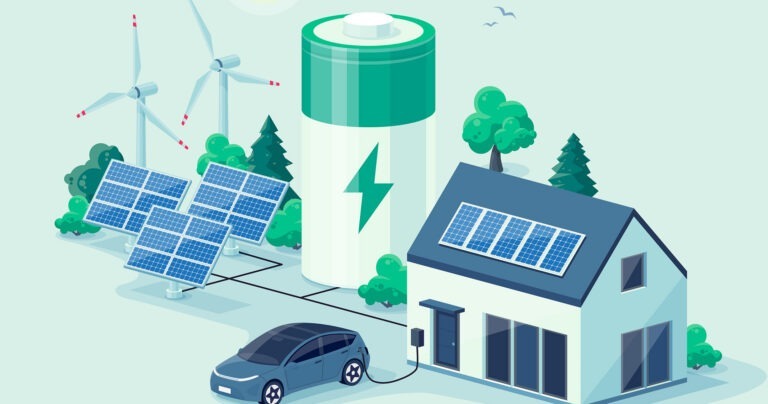
Virtual Power Plants (VPPs) – decentralized networks of home batteries, smart thermostats, EV chargers, and distributed solar – are rapidly becoming a mainstream tool for grid stability. The core idea behind VPPs is simple; during periods of peak demand, grid operators can send a digital signal to thousands of enrolled households with home batteries to increase supply to the grid. Home batteries discharge stored energy, while smart thermostats slightly reduce cooling demand. The combined effect is a real‑time drop in peak load, delivered without constructing a single new power plant. This model is scaling quickly because the hardware already exists inside millions of homes.
By mid‑2025, the U.S. VPP market reached nearly 40 GW of capacity – enough to power roughly 30 million homes under normal conditions. Historically, most of this capacity came from commercial and industrial users. But residential participation is now accelerating, driven by the rapid adoption of home batteries and smart thermostats. Sunrun, Tesla, and Renew Home recently announced a partnership to aggregate the energy‑saving potential of 9 million homes, creating a network capable of delivering 16.8 GW of flexible capacity. That figure rivals multiple traditional power plants and demonstrates how quickly decentralized resources can scale when aggregated effectively.
The rise of VPPs is directly tied to the strain created by AI data centers. Hyperscale developers are adding tens of gigawatts of new load to the grid, with more than 24 GW of demand from data‑center announcements tracked in the first half of 2025 – triple the volume from the previous year. Utilities cannot expand transmission or build new centralized generation fast enough to keep pace. As a result, Big Tech companies are increasingly bypassing the grid altogether by co‑locating solar and battery storage directly on data‑center campuses. Solar‑plus‑storage pipelines have surged to 245 GW of planned capacity, with Texas alone accounting for more than a quarter of the national total.
New Jersey and its neighboring states are beginning to map out their own VPP strategies – though each is moving at a different speed. New York is the clear regional leader, with Con Edison already running battery aggregation and thermostat‑based VPP pilots under its Reforming the Energy Vision (REV) framework. Connecticut’s ConnectedSolutions program is technically a VPP‑style model, though adoption remains modest. Pennsylvania and Maryland are exploring early pilots through PJM’s evolving DER aggregation rules. New Jersey sits in the middle: it has strong rooftop solar penetration, growing residential battery incentives, and peak‑load stress that makes VPPs attractive, but it has not yet launched a statewide VPP tariff or utility‑run aggregation program. The ingredients exist – the regulatory push has not yet arrived.
As AI accelerates load growth and centralized infrastructure lags, utilities need fast‑deploying, flexible resources that can respond instantly to demand spikes. VPPs provide exactly that. They turn everyday households into grid assets, reduce reliance on fossil peakers, and offer a scalable alternative to slow, capital‑intensive infrastructure expansion.
World Cup Delivered Thrills — But New Jersey Missed Key Opportunities
Now that the 2026 FIFA World Cup has come and gone, the region is celebrating an unforgettable, high‑energy tournament that brought global attention and massive crowds. The matches were electric, the fan experience was vibrant, and the state proved it could host one of the world’s largest events. But beneath the excitement lies a sobering reality: New Jersey crossed its fingers before each match it hosted. The state missed major opportunities to modernize its transportation systems, streamline event‑day operations, and strengthen long‑term infrastructure.
Transit agencies relied heavily on temporary fixes rather than lasting improvements. Congestion around key venues exposed gaps in planning, and coordination across agencies often lagged. While the event itself was a success, the long‑term benefits could have been far greater if the state had used the moment to accelerate overdue upgrades and build a more resilient mobility network.
TLDR: The World Cup was thrilling and successful, but New Jersey missed a chance to turn the event into lasting infrastructure progress.
The latest PJM capacity auction produced sharply higher clearing prices, driven by a reserve shortfall and tightening supply‑demand dynamics. Retirements of older fossil units, rising electrification loads, and delays in renewable and storage interconnections all contributed to the spike. Although the interconnection queue is full of clean‑energy proposals, many face multi‑year delays due to transmission constraints and permitting challenges. The results highlight a growing reliability gap at a time when AI data centers, EV charging, and industrial electrification are expanding rapidly.
TLDR: PJM’s auction prices surged due to reserve shortages, slow renewable build‑out, and rising electrification demand, signaling tightening reliability margins.
EV Battery Recycling Remains Economically Challenging
The economics of EV battery recycling remain difficult. Auto shops and salvage yards often must pay recyclers to take damaged or spent batteries because they cannot legally store them and must use certified hazmat carriers for transport. Recyclers face high labor costs, inconsistent supply, and limited recoverable material from damaged packs. While federal incentives and improved processing technologies may eventually shift the financial equation, recycling remains a cost burden rather than a profitable enterprise. Long‑term prospects are promising, but the break‑even point is still years away.
TLDR: EV battery recycling is still a money‑losing operation, with high handling costs and limited recoverable materials delaying economic viability.
New Jersey’s Business Climate Ranking Highlights Structural Challenges
New Jersey placed 31st overall in a national business‑competitiveness ranking and 50th in business friendliness. High taxes, regulatory complexity, and recent policy changes such as the Corporate Transit Fee and stricter worker‑classification rules contributed to the low score. The state continues to excel in education, workforce quality, and quality of life, but employers remain wary of cost structures and compliance burdens. The ranking underscores a persistent tension between strong human capital and a challenging regulatory environment.
TLDR: New Jersey’s strong workforce is overshadowed by high costs and regulatory burdens, driving a low national ranking in business friendliness.
Gateway Commission Approves Major Hudson River Stabilization Work
A newly approved $88 million change order will remove roughly 500 submerged wooden piles left from a long‑demolished pier along the Hudson River. These legacy structures pose risks to upcoming tunnel‑boring operations for the Hudson Tunnel Project, making their removal essential for safe and predictable construction. Officials say the broader program remains on schedule, and the stabilization work will help ensure that tunnel‑boring machines can operate without obstruction.
TLDR: Gateway officials approved major stabilization work to clear old riverbed obstructions, ensuring safe tunnel‑boring operations for the Hudson Tunnel Project.
Two Years After Funding, Gateway Construction Accelerates
Two years after securing $16 billion in federal and financing commitments, the Gateway Program is advancing across multiple fronts. Construction activity is underway on tunnel‑boring preparations, the Portal North Bridge replacement, and corridor upgrades. The program is expected to support 95,000 jobs and generate nearly $20 billion in economic activity, making it the largest transit infrastructure effort in the nation. The update emphasizes that the funding agreement continues to drive momentum and unlock long‑delayed components of the project.
TLDR: Gateway construction is accelerating across tunnels and bridges, powered by major federal funding that continues to unlock long‑delayed infrastructure work.
It’s many years away, but a new New York Penn Station is in the works.
Designs are being developed now
Construction scheduled to begin in 2027
Plans for a redesigned Penn Station moved a step closer to reality earlier this month, as Amtrak, federal officials and Penn Transformation Partners unveiled detailed renderings of the proposed project. Former New York City Transit president and current Amtrak special adviser Andy Byford joined ‘Mornings On 1,’ along with the architect behind the design, Vishaan Chakrabarti, to discuss the proposal, the challenges ahead and what the transformation could mean for rail travel in New York City.”
New satellite imagery has revealed the Great Atlantic Sargassum Belt has reached one of its largest recorded sizes, stretching nearly 5,000 miles across the Atlantic Ocean.
Rather than a newly discovered geological formation, the belt is a vast accumulation of floating sargassum seaweed extending from the west coast of Africa across the tropical Atlantic to the Caribbean and Gulf of Mexico.
Scientists estimate the belt now contains approximately 37.5 million metric tons of seaweed, making it one of the largest blooms observed since satellite monitoring began.
In the open ocean, sargassum serves an important ecological role by providing habitat for fish, sea turtles, crabs, and countless marine organisms. The floating ecosystem supports biodiversity throughout the Atlantic and serves as a nursery for many species.
However, when large quantities of the seaweed wash ashore, the impacts can be significant. Coastal communities throughout the Caribbean, Gulf Coast, and parts of Florida have experienced beach closures, declining tourism, and environmental concerns as decomposing seaweed produces unpleasant odors and reduces oxygen levels in nearshore waters.
Researchers believe several factors are contributing to the belt’s continued growth, including warmer ocean temperatures, increased nutrient runoff from major river systems such as the Amazon, and changing ocean currents.
The latest satellite imagery underscores how modern Earth observation technology is helping scientists monitor large-scale environmental changes across the globe. Researchers continue to study the long-term causes behind the expanding sargassum belt and what it could mean for marine ecosystems and coastal communities in the years ahead.
Sources:
Diario AS. (2026, June). New images from space reveal a previously unknown structure stretching almost 5,000 miles in the Atlantic Ocean. https://en.as.com/
NASA. (2023). Satellite observations of Atlantic sargassum and ocean ecosystems. NASA Earth Observatory.







![Inside the redesign of Penn Station [NY1/Spectrum News]](https://tristateinfrastructurenews.com/wp-content/uploads/2026/07/TINN-Lede-Penn-Station-768x404.jpg "Inside the redesign of Penn Station [NY1/Spectrum News]")


![New Jersey’s big fight with FIFA [Half as Interesting]](https://tristateinfrastructurenews.com/wp-content/uploads/2026/07/TINN-FIFA-v-NJ-768x404.jpg "New Jersey’s big fight with FIFA [Half as Interesting]")