Add Manasquan to the list of municipal water & sewer authorities that are dealing with upgrading aging water & sewer systems. The borough council recently approved an ordinance to amend its water & sewer regulations to include new infrastructure and conservation fees.
The ordinance changes are to support infrastructure maintenance, long-term water conservation efforts, and ongoing system operations. The changes include setting base water & sewer rates annually, a new $30 per quarter infrastructure fee, and a conservation fee for users who exceed 100,000 gallons of water usage a year.
How the Turnpike–Parkway merger streamlined New Jersey’s toll roads
In 2003, New Jersey made a major change to how two of its most important highways were managed. The state merged the New Jersey Highway Authority, which operated the Garden State Parkway, into the New Jersey Turnpike Authority, creating a single agency responsible for both of the state’s primary toll roads. The plan was developed with input from the state’s Toll Road Consolidation Commission and was brought to fruition during the McGreevey Administration. The consolidation improved efficiency and reduced duplicative administrative costs for two highways that serve as the backbone of the state’s transportation network
At the time, the decision generated debate in Trenton and among transportation observers. But more than two decades later, the consolidation is widely viewed as a practical step that improved coordination between the roadways and created operational efficiencies that benefit drivers, and tax-payers, across New Jersey.
The road to consolidation
Before the merger, the state’s toll highways were managed by two separate agencies.
The New Jersey Turnpike Authority, created in 1948, operated the New Jersey Turnpike, a critical freight and commuter corridor linking Delaware to the George Washington Bridge. The Garden State Parkway, which runs north–south along the state’s eastern corridor, was managed by the New Jersey Highway Authority, created in 1952.
For decades, the two authorities functioned independently, with separate executive and administrative staffs, maintenance operations, procurement systems, and engineering. As both highways grew busier and the complexity of maintaining them increased, policymakers began questioning whether two agencies were necessary to manage what were effectively complementary pieces of the same statewide transportation system.
In the early 2000s, a state study recommended consolidating the agencies to reduce duplication and improve coordination. The New Jersey Legislature approved legislation in 2003 dissolving the New Jersey Highway Authority and transferring its responsibilities to the New Jersey Turnpike Authority. The change took effect on July 9, 2003.
Improving efficiency and coordination
One of the primary goals of the merger was to streamline operations.
The merger also improved coordination between the highways themselves. Although the Turnpike and Parkway serve different traffic patterns, they operate within the same regional transportation network. Managing both corridors under one authority allows planning, maintenance and infrastructure improvements to be coordinated across the system.
The consolidation also made it easier to standardize equipment, procurement and operational practices. Toll collection systems were simplified and the rollout of electronic tolling technology accelerated, helping modernize operations across both highways.
Strengthening investment power
The Turnpike Authority is responsible not only for maintaining the highways but also for issuing bonds and managing capital programs to support major construction projects. By bringing the Garden State Parkway under the same authority, the state created a more financially stable organization capable of managing significant investments in infrastructure.
Since 2003, several major projects have helped New Jersey roadways keep pace with population growth. The widening New Jersey Turnpike between Interchanges 6 and 9 was one of the largest highway expansion projects in state history, which added new car and truck lanes to relieve congestion along a critical freight corridor.
On the Garden State Parkway, the authority completed a multi-year widening project between Toms River and Lakewood, expanding the roadway to accommodate more shore-goers in the summer.
Additional investments have included the reconstruction of major interchanges and the expansion of electronic tolling through E-ZPass and cashless tolling systems. The authority has also replaced aging bridges, upgraded service areas and implemented safety improvements such as new barriers, lighting and traffic management systems designed to improve reliability for millions of drivers each year.
A model of practical government reform
The Turnpike–Parkway consolidation stands out as an example of a reform that achieved its intended goals. For drivers traveling between North Jersey and the Shore, or for trucks carrying goods along the busy I-95 corridor, the benefits of that consolidation are experienced every day. What once required two separate agencies is now handled by one coordinated authority, helping keep traffic moving and infrastructure maintained across the Garden State.
At a time when Governor Mikie Sherrill has outlined a budget strategy focused on spending restraint and tax stability, the success of the Turnpike–Parkway merger raises a broader question. If streamlining these two agencies produced lasting efficiencies without sacrificing service, what other parts of state government might benefit from similar consolidation? As New Jersey looks for ways to manage costs while maintaining essential services, the 2003 toll-road merger offers a practical example of how targeted structural reforms can deliver long-term value for taxpayers and motorists alike.
Sources
New Jersey Legislature. (2003). Public Law 2003, Chapter 79: An act concerning the consolidation of the New Jersey Highway Authority and the New Jersey Turnpike Authority.
New Jersey Turnpike Authority. (n.d.). History of the New Jersey Turnpike Authority and the Garden State Parkway.
New Jersey Department of Transportation. (2003). Governor McGreevey plan for merging the Garden State Parkway and New Jersey Turnpike authorities.Wikipedia contributors. (2025). New Jersey Turnpike Authority. In Wikipedia, The Free Encyclopedia.
Small business owners across New Jersey are feeling the pressure of surging energy costs, according to new findings from the National Federation of Independent Business (NFIB). The organization’s first Small Business Energy Survey highlights how rising utility bills are affecting business operations, hiring, and long-term growth decisions in the Garden State.
The report, based on responses from 775 small business owners, found that about 80% said energy costs significantly impact their business, with many forced to absorb increases through lower profits or higher prices for customers. Electricity was cited as the most common energy concern, followed by costs tied to heating, cooling, and equipment use.
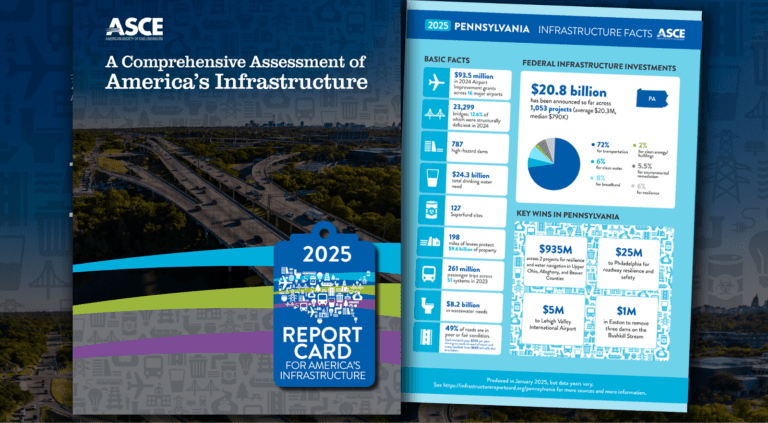
The American Society of Civil Engineers’ 2025 Infrastructure Report Card evaluates infrastructure across 18 categories, grading systems from A to F based on condition, capacity, funding, resilience, public safety, and future needs. The report highlights progress since the Infrastructure Investment and Jobs Act was passed in 2021, but it also makes clear that Pennsylvania continues to face serious infrastructure challenges, particularly in water systems and aging transportation assets.
Water Infrastructure: A System Under Pressure
Pennsylvania’s water systems received some of the lowest grades in the report.
Drinking Water — Grade: D Public water systems across the country are struggling to meet replacement goals while also complying with new regulations. Over the next 10 years, Pennsylvania faces a projected $10.2 billion funding gap. Lead service lines remain a public health concern, particularly in underserved communities, and emerging contaminants such as PFAS add new regulatory and treatment challenges.
Wastewater — Grade: D- Many sewer systems are approaching 75 years old, with some pipes more than a century old. Aging systems discharge sewage into surface waters each year. The Commonwealth faces an estimated $8.4 billion funding gap over the next decade, while expected funding is only about $900 million — roughly one-tenth of what is needed annually.
Stormwater — Grade: D Stormwater systems perform adequately during minor events but are increasingly overwhelmed by stronger and more frequent storms. An estimated $2 billion in assets have reached the end of their useful life, and total needs are projected at $6.7 billion over the next three to five years. While more than 65 utilities now provide dedicated stormwater funding, Pennsylvania lacks a comprehensive statewide asset database, and its primary stormwater design guidance is more than 15 years old.
Despite these challenges, only 6% of federal infrastructure funding in Pennsylvania is directed toward clean water.
Transportation: Heavy Use, Heavy Wear
Transportation receives the largest share of federal funding, 72% of announced infrastructure dollars, but significant needs remain.
49% of roads are in poor or fair condition, costing motorists an average of $745 per year in vehicle operating costs.
Pennsylvania has 23,299 bridges, and 12.6% are structurally deficient, among the highest totals in the country.
Residents also lose an average of $669 annually due to crashes, reflecting safety and congestion impacts.
Transportation investment is helping stabilize conditions, but aging assets and decades of deferred maintenance continue to drive costs.
Investment Needs
Caption: PENNVEST (Pennsylvania Infrastructure Investment Authority) is a state-affiliated agency providing low-interest loans and grants for water, sewer, and stormwater projects in Pennsylvania.
Pennsylvania’s water infrastructure needs are significant, but the state is already making meaningful progress.
In 2026, the state announced a historic $559 million investment through PENNVEST, funding 36 projects across 25 counties. These projects focus on replacing lead service lines, upgrading aging systems, improving treatment capacity, and reducing contaminants like PFAS.
This level of investment shows a clear shift toward long-term planning and system upgrades rather than short-term fixes.
Still, the scale of need means more work lies ahead. To build on this progress, Pennsylvania will need to continue focusing on a few key priorities:
Replacing aging infrastructure before failures occur, especially in older cities and towns
Expanding treatment upgrades to meet new health standards and emerging contaminants
Investing in stormwater systems to better handle stronger, more frequent storms
Supporting local utilities with stable funding tools so they can plan ahead instead of reacting to emergencies
Major Projects
In western Pennsylvania, nearly $935 million is being invested in upgrades to the locks and dams on the upper Ohio River near Pittsburgh, including facilities at Emsworth, Dashields, and Montgomery. These structures, some dating back nearly a century, are being modernized to handle larger commercial vessels more efficiently. The upgrades will reduce delays for barges carrying materials such as coal, petroleum, steel, and aggregates, helping protect jobs and support the region’s manufacturing and energy economy.
In Philadelphia, $25 million is being invested in roadway resilience and safety improvements. The project will strengthen vulnerable corridors, improve drainage to better manage heavy rainfall, and enhance safety measures. The goal is straightforward: reduce crash risks, prevent costly storm damage, and keep traffic moving in one of the state’s most economically vital regions.
Pennsylvania Infrastructure Investment Authority (PENNVEST). (2026, January 21). Shapiro administration announces the investment of $559.7 million in water infrastructure projects in 25 counties across the Commonwealth. Commonwealth of Pennsylvania.
“Gov. Kathy Hochul suggested on Thursday that the cost of fully complying to the state’s climate law could cost average New Yorkers up to $3,500 each. A new memo shared with City & State from the New York State Energy Research and Development Authority places the estimated cost for upstate gas and oil households even higher.”
When New Jersey cities began installing piped water systems in the early 19th century, most followed a familiar model: a private company laid the pipes, raised the capital and sold water to subscribers. But in 1859, Trenton made a decisive shift that would shape the future of public utilities in the state. It became the first city in New Jersey to fully own and operate its own piped water system under direct municipal control.
From private company to public control
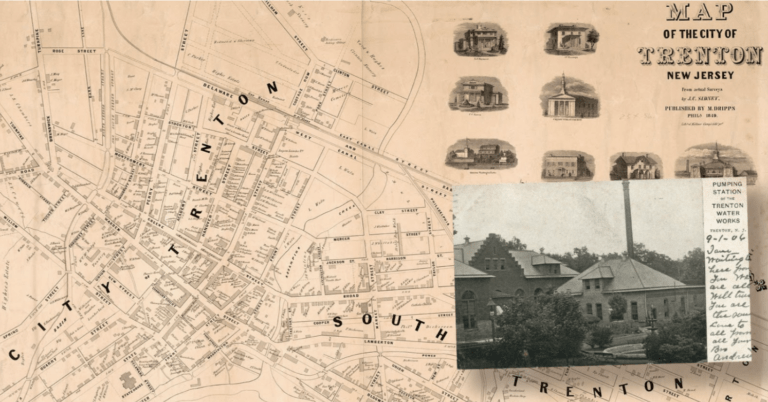
Trenton’s water story began in 1804, when the state authorized the incorporation of the “President and Directors of the Trenton Water Works.” This private corporation was empowered to lay mains beneath city streets and distribute water to residents. At the time, piped water systems were still relatively novel in the United States and they were often financed and operated by private investors.
By the 1850s, however, population growth increased demand. The original spring-fed supply was no longer sufficient, and additional infrastructure was needed to draw water from the nearby Delaware River. Expanding capacity required capital and long-term planning.
In 1858, Trenton residents voted in favor of purchasing the privately held waterworks. The following year, in 1859, state legislation authorized the transfer.
The city acquired the company’s stock and required the conveyance of all property, works, franchises and corporate rights to the municipality. Control was vested in a newly structured board of water commissioners appointed by the city’s Common Council. From that point forward, the system was municipally owned and operated.
This transition was not only financial. It marked a philosophical shift: water was no longer simply a commodity sold by investors, but a public necessity overseen by an elected government.
What the early system looked like
Setting up and expanding the system required substantial infrastructure. Land was purchased on Reservoir Street for the construction of a storage basin capable of holding more than 1.4 million gallons of water. A pumping station was built along the riverbank to lift water from the Delaware into the reservoir, from which gravity carried it into distribution pipes throughout the city.
The early distribution network consisted primarily of cast iron mains. Cast iron was the standard pipe material of the era, valued for its strength and ability to withstand internal pressure. Smaller service lines connecting individual properties were often made of lead, which was commonly used in the 19th century before its health risks were understood.
Installation required trenching city streets, laying pipe sections, sealing joints and installing hydrants. It also meant coordinating rights-of-way, managing street restoration and ensuring sufficient pressure to serve both domestic needs and fire protection.
How it was funded
The purchase price of the system in 1859 was approximately $88,000 in cash, with an additional amount remaining tied to stockholders at the time of transfer. Funding came through municipal borrowing and public finance mechanisms authorized by the state. Like many early public works projects, the system was paid for through a combination of bonds and user fees.
Ratepayers paid for water service based on usage or fixture counts. Those revenues helped support operations, maintenance and debt service. Municipal ownership allowed the city to align rates and investments with public priorities rather than shareholder returns.
Where the water went
The system supplied water to homes, businesses and public buildings. Residential customers used it for drinking, cooking and sanitation. Commercial establishments relied on it for manufacturing processes and cleaning. Public buildings, including schools and government facilities, benefited from centralized supply.
Perhaps most importantly, the system supported fire protection. Hydrants connected to pressurized mains dramatically improved firefighting capability compared to bucket brigades or hand pumps. In the 19th century, when urban fires could devastate entire neighborhoods, reliable water pressure was a major public safety advancement.
Trenton Makes, The World Takes
Reliable municipal water also helped fuel the industrial growth that would later define the city. Factories required large and dependable supplies of water for steam power, cooling, cleaning and manufacturing processes. By placing the water system under public control, Trenton ensured that infrastructure investments could keep pace with expanding industry and population. Over time, that dependable supply helped support the city’s growing network of steel mills, wire rope plants, rubber factories and pottery works. By the early 20th century, Trenton had become one of the region’s most productive manufacturing centers, a reputation immortalized by the phrase “Trenton Makes, The World Takes.”
Trenton’s 1859 municipal takeover predates similar moves in other major New Jersey cities. Newark would create its aqueduct board in 1860 to assume control from a private company, and Camden municipalized its water system in 1870.
The system’s evolution reflects the broader 19th century transformation of American cities. As industrialization accelerated and urban populations swelled, infrastructure moved from private experimentation to public institutions. Municipal water systems became foundational to public health, economic growth and fire safety.
By choosing municipal ownership in 1859, Trenton signaled that water was a civic responsibility. That decision helped establish the framework for modern public utilities in New Jersey, where most water systems today remain publicly owned and locally governed.
Cargo volume at the Port of New York and New Jersey continued to grow in 2025, even as businesses navigated tariff uncertainty and shifting global trade policies. The port handled roughly 8.9 million 20-foot shipping containers, a 2.3% increase over 2024 and its third-busiest year on record, highlighting the region’s continued strength as a logistics hub and gateway for East Coast commerce.
Senate President Scutari. Speaker Coughlin. Majority Leaders Ruiz Greenwald. Republican Leaders Bucco DiMaio. Members of the 222nd Legislature.
Chief Justice Rabner Judge Blee. Members of the Cabinet.
Former Governors Christie, McGreevey, DiFrancesco.
Former Lt. Governors Way Guadagno.
Our brothers sisters in organized labor, faith leaders, friends.
My family – Mom, Dad, Ike, Marit.
my fellow New Jerseyans.
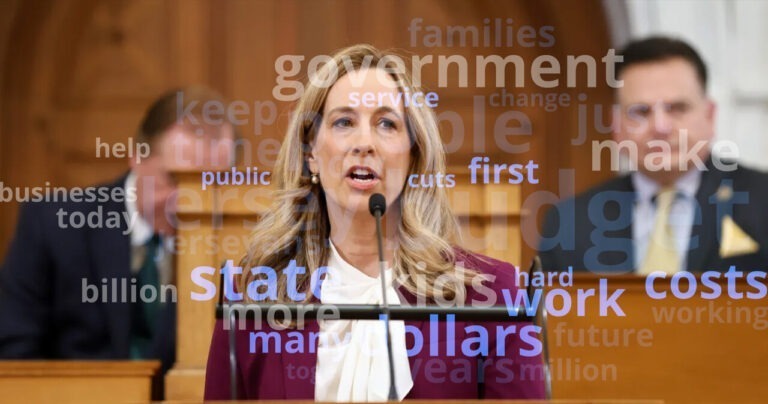
We’re here today discuss a central issue of government: our budget.
But before we begin, I think it’s important recognize the servicemembers killed or injured in the Middle East this month, their families.
Please join me in a moment of silence.
[moment of silence]
I’d like give special thanks all of our New Jersey National Guard troops their family members, including two who are here today:
Krista Romano – whose husband, Tech Sergeant Seth Schoenfeld, been with the Air National Guard 17 years.
Stefanie Garcia – who served alongside her twin sister, Sergeant First Class Darlene Gomez, since they enlisted together when they were just 17.
Both Sergeants Schoenfeld Gomez are now deployed in the Middle East.
Thank you all your service.
thanks all of you coming together in this chamber today.
Some people see government service as a job.
Some people see it as a calling.
Some are in it the prestige; sadly, others are in it simply enrich themselves.
As I st here, presenting a budget relies on the hard-earned tax dollars of over 9 million New Jerseyans – it’s fair ask why I’m in government service.
It’s because I know what well-run government can do. It’s life-changing.
I know what people can lose when government fails.
I’ve seen it in my own family.
My grandfather’s parents lost everything in the Great Depression.
Through generations of hard work – fleeing a famine, starting a farm, selling cars in the suburbs – they built our family’s American Dream, only lose it all, because of bad decisions by government crashed our nation’s economy.
But my grandfather was young; even though he started with nothing, he got drafted, became a pilot, flew in World War 2. After the war, he joined the UAW worked as a welder years.
He raised eight kids in a tiny house with only one full bathroom – a house built by FDR’s Works Progress Administration, the WPA – eligible because of his service our country.
When he my grandmother got older, Social Security, Medicare a good union pension meant my family didn’t go bankrupt caring them. They even had a little left over their kids.
In the swings of my grandfather’s life, I saw the two sides of government: what happens when it’s run poorly; the promise of a government run well.
I st before you because our country helped my grandfather succeed.
The fact our family could go from having nothing, me becoming Governor of New Jersey in just two generations, is what the promise of America is all about.
It’s why I’ve always been so proud serve this country – in the Navy, at the U.S. Attorney’s Office, in Congress, now as Governor of our state.
I’ve been thinking a lot lately about what service means, what it means lead.
I took my first oath the Constitution as a teenager, the lessons I learned then have followed me since: Focus on the mission. Find a way or make one. The only easy day was yesterday.
Public service calls us do hard things.
But dedicated public servants, working day-in day-out, are what make stories of opportunity like my family’s possible.
Unfortunately, though, today, we’re not creating enough of those opportunities.
Government hasn’t been working the way it can – the way it should.
here in New Jersey, a broken budget is at the heart of so much of that.
too long, too many in Trenton have taken the easy way out – opting a quick fix, instead of laying the foundation a solid future.
Last November, voters were clear:
They sent me here be a different kind of leader. make their lives more affordable. protect our kids. make our government more accountable change how business is done.
I take trust seriously, so I got right work.
I’ve signed 16 Executive Orders so far – freezing utility rate hikes, boosting energy supply, streamlining government, cutting red tape.
We responded two historic snowstorms – we were prepared, we communicated, we cleaned up.
Time after time, we’ve taken the Trump Administration court – we’ve won.
We’re fighting winning the Gateway tunnel its thousands of jobs.
I just announced the state’s largest infrastructure investment in decades.
that’s just my first month-and-a-half.
But the hard truth is: we’re going have make some tough choices deliver people long-term.
get affordability, we have start with responsibility.
When we started this budget process, we were staring down an estimated 3-billion-dollar structural deficit this year, or about 5 percent of state expenses, historically one of the worst budget gaps in the nation.
If we do nothing, our entire 7.2-billion-dollar surplus will be gone in less than two years – we’ll be another 750 million in the hole.
Since our Constitution requires a balanced budget, failing act now would trigger far worse in the future.
It could mean blunt cuts public services, everything from school funding pensions.
It could mean credit downgrades higher interest rates, pushing us deeper in debt.
it could mean tax hikes businesses families.
I won’t let happen.
I refuse put off tomorrow what we have fix today.
Because right now, we’re facing a perfect storm of fiscal challenges; short-term long-term, federal state.
The Trump Administration is recklessly slashing critical programs – from healthcare housing, food aid foster care, schools infrastructure.
yes, Trump’s massive cuts are blowing an immediate hole in our budget, hurting New Jerseyans.
At the same time, the covid-relief money is ending. Six years of emergency cash flooding in from Washington helped paper over our very real fiscal problems.
Meanwhile, costs everywhere keep rising. It’s hurting families’ wallets – increasing costs the state pays provide healthcare, fund schools, buy the utilities services needed serve New Jerseyans.
Those things have all collided put us in this position.
But we also have face the fact decades, previous administrations have allowed business-as-usual in Trenton, failed find any real solid fiscal footing.
There have been too many one-offs. Too many temporary fixes. Too little willingness challenge what’s always been done.
As a result, the state budget doubled in size since 2010.
Utility rates have skyrocketed, leaders were slow respond.
School funding soared, but too many 3rd graders still read below grade level, kids’ mental health keeps getting worse.
Just look how pensions have been mishandled.
This year, we’ll spend over 7 billion dollars fully fund our state pension system. New York, in comparison, spends 2 billion.
New Jersey owes nearly 6 billion A YEAR in back-payments – because 30 years, other administrations, Democratic Republican alike, simply refused pay our bills.
I give Governor Murphy many of you here a lot of credit resuming those payments.
But if others had done their jobs – if they’d honored the promises made public workers – we’d be paying 6 billion dollars LESS per year now.
Imagine what we could be doing with money, if 30 years, elected officials hadn’t mortgaged our kids’ futures.
Imagine what we could do schools, healthcare, small businesses, law enforcement.
That’s the price we all pay.
it’s what we have come together change now.
I promised a different kind of leadership. do not what’s easy me, but what’s best our state.
That’s our duty as public servants.
It’s time close the deficit the right way, structurally, so we’re not just plugging new holes every year.
It’s a simple lesson we learn as kids: You can’t spend more than you earn.
In these past weeks, my team I have reached out every member of this legislature, both Democratic Republican.
I’m grateful how many of you have committed tackling these tough choices together – so we can build a New Jersey that’s more affordable, accountable, financially sound.
*
Today, I’m submitting this legislature the most fiscally responsible budget our state seen in years.
It fully funds our pension system.
It does NOT raise taxes on individual New Jerseyans.
it includes 2.6 billion dollars in budget solutions – nearly 2 billion in tough, necessary cuts; over 700 million in new revenue from closing corporate tax loopholes.
Together, it’ll put us on the path balancing our budget structurally, in 2028 beyond.
it rewards our tough choices with savings – savings we’ll invest back in lowering costs New Jerseyans. Providing a better future our kids. Building a government that’s accountable.
This budget is the path getting our fiscal house in order.
it’s a platform from which we’ll generate jobs opportunity – the working families who sent us here fight them.
New Jersey is the 22nd largest economy in the world. We have the best entrepreneurs builders. The most scientists engineers per square mile. The most courage.
The reason I take this work so seriously is I know we have a chance build something incredibly special – if we make the effort lay foundation.
So here’s how we’ll get it done.
Our work starts by ending previous administrations’ bad habit of tacking last-minute giveaways on each budget.
These days, we simply can’t afford that.
example, in the final working days of the last Administration, New Jerseyans were stuck with nearly 3 billion dollars in extra spending – 2.5 billion in corporate tax breaks 240 million in giveaways.
can’t happen. We can’t afford process anymore. It’s not accountable; it’s not efficient; it’s not what the people of New Jersey deserve.
I’ve spoken leadership in both houses – we have chart a new way forward.
at the same time, this budget protects middle-class families, who are bearing the burden of soaring property taxes.
In fact, it provides the most property tax relief in state history: nearly 4.2 billion dollars next year.
Relief is essential. Stay NJ is a great program – it keeps seniors, so often living on a fixed income, in their homes. But it benefits households make as much as 500,000 dollars a year.
I’m changing that, safeguard Stay NJ middle class seniors. If you make 250,000 or less, your tax relief is in this budget.
That’s going save taxpayers hundreds of millions of dollars a year.
we’ll target more relief low- middle-income senior renters, through the ANCHOR program.
That’s a fairer, more efficient use of taxpayer money.
we’re also paring back some corporate tax breaks – capping the deduction our highest-earning companies can take net operating losses.
After COVID, more started claiming this deduction, write off losses seen in those years.
It’s time move on. We won’t keep shortchanging the future.
Limiting this loophole saves taxpayers almost 500 million dollars.
At the same time, some companies have been using a deduction was introduced 15 years ago, help small businesses weather the Great Recession.
It’s called the Alternative Business Calculation, the whole point was level the playing field entrepreneurs. But bigger companies started using it, too.
So our budget limits deduction the actual small businesses it was meant for, capping eligibility at business income of a million dollars a year.
The car repair shop the diner down the block are the ones who should benefit.
This fix will save another 120 million dollars a year – without taxing families a dollar more.
Altogether, the commonsense changes outlined in my budget will reduce our structural deficit by 1.2 billion dollars from its level last month.
Those savings will help plug the gap left by expired covid funding.
They’ll help protect the fundamental opportunities Trump is trying gut.
They’ll free us invest in the future New Jerseyans have asked us build.
they’ll help create a government delivers the people it’s meant serve.
People like Tracy Porter, a union worker who’s been building the Gateway tunnel project.
*
I met Tracy last month at a rally in Secaucus, fighting Gateway funding.
Tracy’s dad moved New Jersey from Georgia in the Sixties. He had a third-grade education, but he put himself through night school start his own subcontracting business.
Tracy’s dad called New Jersey “the l of opportunities.”
Like my grandfather, he raised eight kids in a tiny place with only one full bathroom, this time in Newark.
Tracy worked his first construction job alongside his dad, helping lay apartment foundations when he was just 11.
Years later, he joined a union, LiUNA Local 472. Over 30 years, he worked up down the Turnpike, building many of the roads bridges all of us use every day.
Now, Tracy is putting his own kids through college. The youngest is a freshman, on the Dean’s List, studying psychology. He pays her full tuition.
I want give Tracy a big h – he’s here with us today.
[applause]
But there’s a catch Tracy’s story – something else that’s all too common.
Even though he loves sees a future here in New Jersey, he doesn’t live here now.
He commutes from Pennsylvania, because the cost of living here is just too high.
I heard same story again again on the campaign trail as people would come up tell me: “Mikie, it’s getting too expensive. I don’t know how I’ll afford stay.”
People kept awake at night worrying about rising costs.
them, affordability isn’t just a slogan; it’s a basic measure of whether they can live a secure life.
when everyday expenses keep rising faster than paychecks, leaders don’t respond, people lose faith in the idea government can work them.
I promised change – lower costs working families st up the bad actors ripping them off.
How we respond is a key test of how well government does its job.
I started on Day One by taking action lower utility costs – in New Jersey, we have some of the nation’s highest.
Imagine you’re on a fixed income.
Imagine you’re Herb Mary Michitsch. They’ve lived in their red brick house in Kenilworth 55 years. Herb retired after 40 years as a manager AT&T.
They saved their whole lives a comfortable retirement, but now find themselves paying up 400 dollars a month on electricity bills.
They’re both almost 90, watching today on the livestream. Hi, Herb Mary!
I made a commitment fight people like them.
There’s no question New Jerseyans are facing higher electricity bills because our regional grid operator, PJM, seriously mismanaged it.
It’s failed get enough power online meet growing needs, it’s been too slow in finding a way manage new dem from data centers.
It’s left people like Herb Mary holding the bag.
So, I declared a State of Emergency freeze utility rate hikes.
I signed an executive order increase new power generation, lower costs long-term.
We’re growing solar battery capacity: in my first month-and-a-half, I’ve already approved six new projects. we’re modernizing natural gas facilities exploring the opportunities new nuclear sites bring.
Because more power means more supply lower costs.
But that’s not all that’s squeezing families.
We can’t make New Jersey more affordable until we make housing more affordable.
I’m a mom; I want my kids be able move back here – but not in my basement.
Home prices rent have soared 60 percent in some places since 2020.
We have increase supply, bring costs down.
My budget moves do by protecting the Affordable Housing Trust Fund the tune of 70 million dollars, so we can use money as it was intended: build housing that’s affordable.
It increases downpayment assistance people looking buy a first home – sometimes the first in their families do so.
It helps us brace the impact of federal cuts emergency housing programs, expanding our work end homelessness.
it supports programs get vets in permanent housing. Because this is the year we effectively end veteran homelessness in New Jersey.
As a veteran, I know what those who served have sacrificed this nation. The least we owe them is a safe place live.
At the same time, there are new challenges in the housing market.
Rent these days can be set by algorithms use your data charge the highest price they think you can bear.
The same goes groceries – where they switch prices based on things like time of day, or even your gender, or phone browsing history.
means if you have shop after work, when stores are crowded, you’ll pay more than if you’re free shop at noon.
It means if the store knows you just searched a certain product online, it might charge a higher price. That’s outrageous.
I’ll work with all of you pass legislation limiting this kind of for-profit surveillance by Big Tech.
when it comes healthcare – we’re facing one of the biggest crises of our time.
We all know the healthcare system in America is broken.
Costs in New Jersey are among the nation’s highest, affects everything: families, businesses, schools, property taxes, the state budget.
Trump’s cuts are about make everything worse.
Because Washington refused extend Affordable Care Act credits, nearly half-a-million New Jerseyans will see their premiums triple this year.
because his H.R.1 law makes people jump through hoops stay on Medicaid, 300,000 more New Jerseyans will be kicked off.
prevent that, this budget invests in new technology help people meet Trump’s burdensome paperwork requirements.
But many families will still lose coverage – the cost of insuring them directly would be billions of dollars.
Instead of asking taxpayers foot bill, this budget looks large employers.
It asks any company with 50 or more employees on Medicaid – companies like Amazon Walmart – cover their workers, which they should do anyway; or pay a fine.
helps warehouse workers, cashiers, healthcare aides – people who keep our economy running.
It’ll reduce strain on hospitals, easing the expected surge in E.R. care, the most expensive kind.
it’ll raise 145 million dollars a year, cover Trump’s extra Medicaid costs.
But that’s just the start. As devastating as federal cuts are – New Jersey hasn’t done itself any favors by letting overall healthcare costs skyrocket so long.
The bills are a burden anyone who buys insurance, themselves or their employees – includes the State, local governments.
The State Health Benefits Program been pushed the brink, putting coverage hundreds of thousands of public workers at risk.
So in the coming year, we’ll enact real reforms, with everyone at the table, fix the program, keep it solvent, bring down costs now.
We’ll also continue change the way we manage prescription drug costs.
Today, a type of shadowy middleman, called a “Pharmacy Benefit Manager,” or PBM, sits between insurers, drugmakers, pharmacies.
They drive up the cost of medications as much as 10 times, while padding their profits with secret manufacturer rebates insider tricks.
Our state Medicaid program could save 20 million dollars if PBMs weren’t allowed inflate the prices it’s forced pay.
All New Jerseyans pay the price that.
PBMs harm independent pharmacists, too – dictating copays pocketing reimbursements.
Pharmacists like Amit Sikka at Liberty Drug in Chatham, who’s here with us now.
I visited his pharmacy last year. It been a fixture in the community over 60 years, now employs 20 people, as so many great small businesses across our state do.
I promised him I’d crack down on PBMs – reducing their power, with it, the price of prescription drugs. I intend keep promise, Amit.
I know many of you in this legislature have been doing great work on this, I look forward partnering with you pass a comprehensive historic PBM reform bill.
But the pain of higher costs doesn’t come just from big-ticket items like housing healthcare. It adds up in small ways every day.
Take transportation, which costs the typical New Jersey family 14,000 dollars a year.
But as we see with New Jersey Transit, example, riders aren’t always getting what they pay for.
This budget ensures there are no cuts service. it’ll help fully modernize one of the oldest rail fleets in the nation – starting with 40 new rail cars 250 new buses this year.
shortly, we’ll be opening the br new Portal Bridge, on the line from Newark Penn Station – replacing a century-old swing bridge, finally ending the signal failures delays.
of course, I’m going keep fighting every dollar owed the Gateway Tunnel project, the biggest, most urgent infrastructure project in America.
I’ll keep standing up the thous workers, like Tracy, who are already on the job, the thousands more who will soon begin work.
A few other members of LiUNA Local 472 are here with us today – it’s been an honor standing with you all these past months!
I’ll also keep standing up the 200,000 daily commuters whom this project means finally knowing you’ll make it home in time get your kids at daycare, or have dinner with your family.
we’ll keep fighting the 20 billion dollars in economic growth it’s expected bring.
If President Trump threatens it again, we’ll keep suing him – keep beating him – in court.
I’m always going st up workers.
I’m always going st up our kids.
When I think about the work we’re doing, when I recall my family’s path the doors of opportunity America opened us – I always think about my kids.
I think about all of our kids, the future we’re building them.
I know parenting is hard. Parenting right now is even harder.
That’s why this budget invests in our children from the moment they’re born.
It expands the “Family Connects” home visitation program EVERY county – so parents of all newborns can have a specially-trained-nurse visit them at home.
It invests in our state childcare program.
it continues fund the school formula with a record investment in K-12 education – although everyone in this room knows we’re not getting the bang the buck we need.
Evidence shows the huge benefits of shared services things like special education, transportation, books, software.
So this budget invests in lays the groundwork consolidating services curricula.
It’s better students, offering continuity as they move from elementary middle high school in one unified system. it’s better districts, providing needed savings.
At the same time, we’re investing in evidence-based literacy tools high-impact tutoring programs have launched in 300 districts since covid, bring kids back up speed.
They’re working: In Camden, math scores jumped 80 percent, literacy scores doubled. In Franklin, 83 percent of students improved a full grade-level in math. In Elk Township, 74 percent improved a full grade in reading – some improved as many as five.
But the pandemic not only affected kids’ learning; it had a huge impact on their mental health, social media continues make worse.
Kids are struggling with pressures didn’t exist when we were young: the always-on online culture, fierce competition, worries about school violence, concerns about the future.
We know the current model of care not been good enough our kids.
So this budget sunsets it, brings specialized, intensive mental health support back in schools, with a new program called “SPARK,” meets students in their own environment.
work is so important, especially given the impact of social media today.
My four kids are between the ages of 14 20. I can tell you with certainty: our country is failing our children when it comes protecting them online.
It’s personal – me, millions of parents on whom Big Tech dumped an impossible responsibility.
You’ve seen the commercials: the companies masquerading as good actors; providing parents with “tools;” making us feel like whatever happens our kids online, it’s somehow our fault. We just haven’t used their “tools” right.
The truth is, a new platform or feature rolls out every day, with the most advanced algorithms designed addict us all.
Trying keep up with this would be a full-time job, the platforms know it.
Not long ago, they started studying the effect social media on young people – they suspended their research, because the early results were so bad.
Instead, we’re left hearing devastating stories from parents about the last thing their kids saw online. The last chat they had with AI as it told them how take their own lives.
All while Big Tech CEOs their companies become the biggest richest in the world.
This isn’t just the Big Tobacco of our era – it’s worse.
it’s exactly the kind of situation where government a role play keep our kids safe.
But instead, Washington walked away.
Not here. Not in New Jersey.
In my campaign last year, I outlined a full Kids Online Safety Agenda, protect our children hold Big Tech’s feet the fire.
I look forward working with you all, as you craft strong, evidence-based legislation protect our kids their future.
I also want thank my friend, Adam Renteria his mom, Robin, joining us.
In just 7th grade, Adam went through some of the worst bullying harassment a kid could face, which the apps should’ve flagged.
I met Adam last year asked him share his story.
With hard work, he went from a kid who months couldn’t even come out of his room – a star speaker at events across the state. He served on one of my transition action teams gave policy recommendations.
Thank you, Adam – I’m so proud of your leadership.
[applause]
This budget funds our new Office of Youth Online Mental Health Safety Awareness – which I launched, as promised, with an executive order on my first day as Governor.
it creates a Social Media Research Center, study the impact of digital technology on young people’s mental health.
In New Jersey, we’re not going rely on Big Tech come clean about the harm these technologies cause. We’re going lead the way, give overworked parents some relief.
*
I believe we’re at a unique moment in history, a time of enormous change.
Rather than fix what’s wrong with government, Washington is looking dismantle it.
But in wreckage, there’s opportunity.
Things are possible now would’ve been unthinkable a decade ago.
We have a chance in New Jersey do things differently. change government the better. make it work people.
we have start with the basics, which have lagged here too long.
Trenton often overlooks how critically important businesses are.
They’re key creating good jobs opportunity, boosting our economy; their success can help close this budget hole.
But I hear again again how hard it is do business here.
Permitting is too slow. Licensing is a black box. Projects fail because they simply can’t afford the uncertainty or the wait.
I promised change that, with a “Save You Time Money” Agenda. we’re already delivering.
In my first days in office, I signed Executive Orders start cutting red tape.
I said I’d review burdensome regulations – so I paused all new pending rules 90 days.
I promised streamline permitting, including with a live dashboard where businesses can track their applications – we’re building it.
I said I’d slash Business Registration Fees – this budget does that.
I promised create our state’s first Chief Operating Officer, modernize systems across departments – I named Kellie Doucette the job.
I said I’d launch an online “New Jersey Report Card” people see where their taxdollars are going – it’ll be live next month.
I said I’d exp assistance Minority, Women, Black-owned Enterprises, help them get capital contracts, start closing the disparity gap.
This budget does that, too – by investing in new training support.
It upgrades IT at state licensing boards – so professionals aren’t stuck waiting months a piece of paper do their jobs.
It invests in staff monitor state health benefit processing catch pension fraud.
we’re trusting agencies hire their own staff without the Governor’s approval, eliminating delays keep agencies from delivering New Jersey.
These investments are an important first step in building an efficient, transparent government delivers working people.
They reduce costs taxpayers.
there’s another reason do this – support the dedicated public servants who support us all.
New Jersey the finest public servants in the nation.
We just saw it again, as we went through both the storm of the decade, then the storm of a generation, in less than one month.
The reason we’re all sitting here not thinking much about that, is because of the thousands of people who worked through the night in the cold – plowing roads, clearing train tracks, fixing downed powerlines in near white-out conditions.
Some of them are here with us today from IFPTE Local 194, the Turnpike workers’ union – thank you!
[applause]
The best way we can thank them is build a government that’s worthy of their service.
*
I’ve only been in office a month-and-a-half. I know we have big things do together.
while this is the most fiscally responsible budget our state seen in years, it’s just the start.
We can’t solve every problem overnight.
But with this budget, we’ve almost halved the structural deficit, avoided raising taxes, fully funded pensions.
We’ve given notice special interest giveaways are over, moved resources help working people instead.
this is the budget we can afford.
If there are things you think we need add – come me with places we can cut.
It’s simple math: any additions require subtractions.
At the same time, this budget does make us less vulnerable Washington. Less vulnerable a President who puts himself above the country, enriching himself at everyone else’s expense.
From his illegal cuts Gateway, his illegal tariffs, his skyrocketing gas prices – whenever Donald Trump gets involved, costs go up, jobs get lost, working people suffer.
But while his Administration is demonstrating how much damage a poorly run government can do, we’ll prove how much strong state leadership can transform lives.
That’s what we’re building together here.
I know these changes aren’t easy. But that’s what public service is all about.
I was taught in the Navy leaders have a responsibility: not just tell people what do, but listen. think not of themselves, but of the mission.
They call it servant leadership.
I see it around this room – in many of you, who’ve served this state with honor, sometimes a lifetime, sacrificing time with your families, putting your communities first.
I see it in your leadership:
Speaker Coughlin President Scutari– in their commitment this institution, its members, our work together make this the session where our state finds sure footing.
I see it in members of the Budget Committee– who’ll be staying here the coming months of hearings hard work, until we see this through. Thank you!
I see it in my Republican friends – I worked with many of you when I was in Congress, I know there are plenty of things we all agree on.
I see it in the military veterans the Gold Star mom here on the floor today, serving in this legislature.
I see it in all of you – people who’ve stepped up throughout your lives, ready do hard things together, the good of this country the good of our state.
Today, reality is forcing us change not just the way we do our budget, but how we approach our work. It’s asking us make hard choices, the sake of a better future.
But one of the best things about New Jersey is when we’re called it, there’s no challenge we’ve backed away from.
I’m in this with you the long haul.
Sometimes there’s a mentality says: “Why do you care? You won’t be here in 10 years.”
Maybe it’s because when you have kids, you suddenly have a longer time horizon.
The whole reason I’m standing here, submitting this budget, even serving in this office, is because of my four kids. Because of all of our kids.
The decisions we make now, the foundations this budget builds, will have an impact decades, long after all of us have left the statehouse.
It means doing things differently – but it’s worth it.
Because it’s worth building the kind of government really does make New Jersey – as Tracy’s dad said – the l of opportunity, generations come.
This is an affordability budget, rooted in fairness hardworking families.
It answers first people around their kitchen tables, not in the boardroom or the backroom.
It lays the groundwork exp opportunity, tackle even harder problems in the years ahead.
I want build a future where working families can afford live thrive here.
Where the world’s brightest minds can innovate build here.
Where government delivers the people businesses it’s meant serve.
In life, you rarely get choose your mission; you rise it.
This is our mission. This is what we’re building. This is the time do it.
For more than a century, the Port of New York and New Jersey has been a gateway to the nation—an entry point for goods, people, and ideas. But over the last twenty‑five years, the port has evolved into a global logistics powerhouse, reshaped by the rise of online shopping, massive infrastructure investments, and the economic gravity of the Northeast Megalopolis. Today, it stands not only as the largest container port on the East Coast, but as one of the most important economic engines in the United States.
A Port on the Rise: 2000 to Today
At the turn of the millennium, the Port of New York and New Jersey handled roughly three to four million TEUs—“twenty‑foot equivalent units,” the standard measure of container volume roughly equivalent to a 20 foot long shipping container. The early 2000s brought steady growth as globalization accelerated and China’s manufacturing boom reshaped global trade. By 2007, the port was handling more than five million TEUs annually.
The Great Recession briefly interrupted that trajectory. Cargo volumes dipped in 2008 and 2009 as global trade contracted, but the rebound was swift. Between 2011 and 2019, the port expanded from roughly five million TEUs to more than seven million. Several structural changes fueled this rise. The Panama Canal expansion in 2016 opened the door for larger Asia‑to‑East‑Coast services.
The Bayonne Bridge Navigational Clearance Project—completed in 2019—raised the bridge’s air draft to allow the world’s largest container ships to reach Newark, Elizabeth, and Staten Island terminals.
And the completion of the New Jersey Widening Project from Exits 6 to 9 spurred a boom in warehouse and distribution space added along the corridor.
Then the 2020 Global Pandemic threw global shipping into chaos. Lockdowns disrupted manufacturing, blank sailings reduced capacity, and consumer behavior shifted overnight. But as Americans turned to online shopping in unprecedented numbers, the Port of New York and New Jersey became a lifeline. By late 2020, cargo volumes surged. In 2021, the port handled nearly nine million TEUs. In 2022, it reached a record 9.49 million TEUs, briefly becoming the busiest port in the United States.
After the pandemic‑era spike, the port settled into a new normal. In 2023 and 2024, volumes stabilized between 8.7 and 7.8 million TEUs—well above pre‑pandemic levels. Mid‑2024 data showed renewed growth, with cargo up 12.6% year‑over‑year. The port had not simply weathered the storm; it had emerged stronger.
The E‑Commerce Engine: How Online Shopping Reshaped the Port
The rise of online shopping is one of the most important forces behind the port’s growth. E‑commerce has fundamentally changed how goods move, how retailers manage inventory, and how supply chains operate. Online shopping increases port volumes in several ways:
More consumer goods = more containers: E‑commerce relies heavily on imported goods—electronics, apparel, home goods, toys, and seasonal items. These categories overwhelmingly arrive in containers. As online retail grew, so did containerized imports.
Faster inventory turnover: Traditional retail replenished stores on predictable cycles. E‑commerce requires rapid restocking, broader SKU variety, and constant responsiveness to demand spikes. That means more frequent shipments and higher baseline import volumes.
Warehouse expansion in New Jersey: New Jersey’s Turnpike corridor has become one of the largest e‑commerce logistics clusters in the country. Fulfillment centers, sortation hubs, and reverse‑logistics facilities (for returns) depend on the port’s steady flow of goods. As industrial space expanded, so did the port’s role as the Northeast’s primary gateway.
Holiday surges amplified: Black Friday, Cyber Monday, and back‑to‑school seasons now generate massive Q3–Q4 import spikes. Retailers front‑load inventory months in advance, pushing TEU volumes higher.
The pandemic accelerated all of these trends. With brick‑and‑mortar stores closed and consumers stuck at home, online shopping became the default. The port’s record 2021–2022 volumes were a direct reflection of this shift.
The Economic Engine of New Jersey
The Port of New York and New Jersey is not just a transportation hub—it is one of the most powerful economic engines in the state. A 2025 economic impact study by the Shipping Association of New York and New Jersey and Rutgers University’s Center for Advanced Infrastructure and Transportation quantified the port’s enormous footprint.
Jobs
In 2024, the port supported:
232,000 direct New Jersey jobs
480,000 total New Jersey jobs (direct, indirect, and induced)
These include longshore workers, truck drivers, warehouse employees, rail operators, logistics professionals, and thousands of workers in supporting industries.
Income
New Jersey residents earned:
$47 billion in personal income from port‑related activity
Business Activity
The port generated:
Nearly $130 billion in business activity within New Jersey
This includes terminal operations, trucking companies, railroads, equipment suppliers, fuel distributors, and industrial real estate.
Tax Revenue
The port contributed:
$5.2 billion in state and local tax revenue
This revenue supports schools, infrastructure, public safety, and local services across the state.
Regional Impact
Across the broader 31‑county region of New York, New Jersey, and Pennsylvania, the port supported:
580,000 jobs
$18.1 billion in tax revenue
$163.7 billion in business income
The port is not just a maritime facility—it is a regional economic ecosystem.
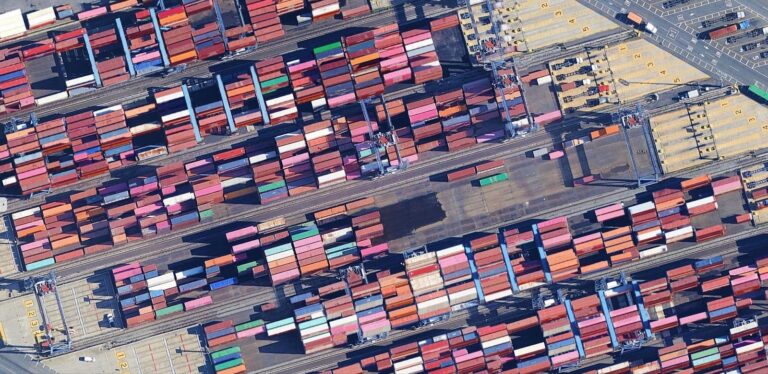
As the Port of New York and New Jersey grows from its current baseline of roughly 8.5–9 million TEUs a year toward projected volumes of 10–12 million TEUs by 2040, truck traffic over the Newark Bay Bridge is expected to rise proportionally. The bridge already carries about 36,000 port‑related trucks per day, representing roughly 30% of all drayage trips from the Elizabeth Marine Terminal. Even modest annual TEU growth of 1–3% translates into thousands of additional daily truck movements over the next decade, reinforcing the Newark Bay Bridge as one of New Jersey’s most critical—and most heavily burdened—freight corridors.
Photo: Google
Looking Ahead
The future of the Port of New York and New Jersey will be shaped by global trade patterns, infrastructure investments, and the continued evolution of e‑commerce. Most forecasts suggest the port will stabilize in the 8.5 to 10 million TEU range, with modest annual growth of 1–3%. Key drivers include continued East Coast market share gains, potential channel deepening to 55 feet, expansion of on‑dock rail capacity, and growth in e‑commerce and regional consumption
If current trends hold, the port could reach 10–12 million TEUs annually with continued investment in terminals and access roads paired with growth in warehouse and distribution capacity in New Jersey and eastern Pennsylvania.
References
New Jersey Business & Industry Association. (2025, October 3). New study assesses economic impact of Port of NY and NJ. https://njbia.org
Shipping Association of New York and New Jersey & Rutgers CAIT. (2025). Powering economic growth in a transforming world: The 2025 report on the economic value of the New York–New Jersey port industry.https://www.sanynj.org
ROI‑NJ. (2025, October 3). Report says Port of New York and New Jersey continues to be economic engine.https://www.roi-nj.com
The long-planned North Brunswick Train Station project is moving closer to construction after reaching a key milestone in the design process. NJ Transit approved the project’s 60% design phase, allowing the Middlesex County Improvement Authority to begin final engineering and design. The new station, planned along the Northeast Corridor near Route 1, is expected to relieve congestion for commuters. The project is part of Middlesex County’s broader economic development strategy and has received $50 million from the New Jersey Transportation Trust Fund.



![Municipal water systems face infrastructure cost dilemma [TapInto]](https://tristateinfrastructurenews.com/wp-content/uploads/2026/03/large-TINN-H2O-pipes-768x404.jpg "Municipal water systems face infrastructure cost dilemma [TapInto]")
![Energy expenses top concern for small business owners, NFIB reports [ROI-NJ]](https://tristateinfrastructurenews.com/wp-content/uploads/2026/03/image-3-1-768x499.png "Energy expenses top concern for small business owners, NFIB reports [ROI-NJ]")

![Climate law mandates could cost New Yorkers $4,000 in higher energy bills, state analysis shows [City & State]](https://tristateinfrastructurenews.com/wp-content/uploads/2026/03/large-TINN-Lede-meter-768x404.jpg "Climate law mandates could cost New Yorkers $4,000 in higher energy bills, state analysis shows [City & State]")


![Cargo traffic rose at Port of NY and NJ in 2025 despite tariff uncertainty [ROI-NJ]](https://tristateinfrastructurenews.com/wp-content/uploads/2026/03/large-image-29-768x501.png "Cargo traffic rose at Port of NY and NJ in 2025 despite tariff uncertainty [ROI-NJ]")



![North Brunswick Train Station plan advances to final design stage [BINJE]](https://tristateinfrastructurenews.com/wp-content/uploads/2026/03/large-image-25-768x465.png "North Brunswick Train Station plan advances to final design stage [BINJE]")