“In 2024, President Biden signed a law exempting most publicly funded semiconductor projects from federal environmental review, a move supporters said would speed construction and help the U.S. compete with China. Micron’s project nonetheless underwent federal—as well as state—scrutiny, with the federal review triggered by its impact on wetlands.”
”Community members want enforcement measures to ensure the company follows through on promised environmental safeguards and its pledge to create 9,000 jobs.”
On February 26, 2026, the Board of Monmouth County Commissioners has passed a resolution authorizing all Monmouth County departments to use Project Labor Agreements (PLAs) on public works projects whenever they advance county interests in cost control, efficiency, quality, safety, timeliness, skilled labor, and labor stability. The resolution emphasizes that PLAs—defined as pre‑hire collective bargaining agreements for specific projects—help ensure highly skilled workers, predictable project costs, and peaceful, orderly resolution of labor disputes. As the resolution states, PLAs “can provide the County of Monmouth with a guarantee that public works projects will be completed with highly skilled workers” and “can allow public agencies to predict more accurately the actual cost of a public works project.”
A key change stems from P.L. 2025, c.327, which now allows counties to use PLAs regardless of project cost, removing the previous $5 million threshold. Departments must evaluate PLA use on a project‑by‑project basis and, when appropriate, negotiate agreements directly or require contractors to do so.
Any PLA must include binding dispute‑resolution procedures, no‑strike/no‑lockout guarantees, standardized employment terms, flexible scheduling, access to skilled labor, and provisions supporting employment opportunities for minorities, women, and economically disadvantaged workers. Before adopting a PLA for a specific project, the Board must publicly justify its use. The resolution takes effect immediately and applies prospectively.
Gov. Mikie Sherrill’s first state budget proposal is beginning to take shape, outlining a plan that avoids new taxes while focusing on spending reductions to address a projected multibillion-dollar deficit. Agencies will be asked to identify savings and streamline programs as the state works to close the gap without raising costs for residents.
The proposal comes as New Jersey faces the loss of pandemic-era federal funding that helped support a range of programs in recent years. As that aid fades, the state will need to determine how to maintain funding for priorities such as education, healthcare, housing and infrastructure while balancing the budget. The administration has indicated that spending cuts and fiscal discipline will play a central role in stabilizing the state’s finances while preserving key investments.
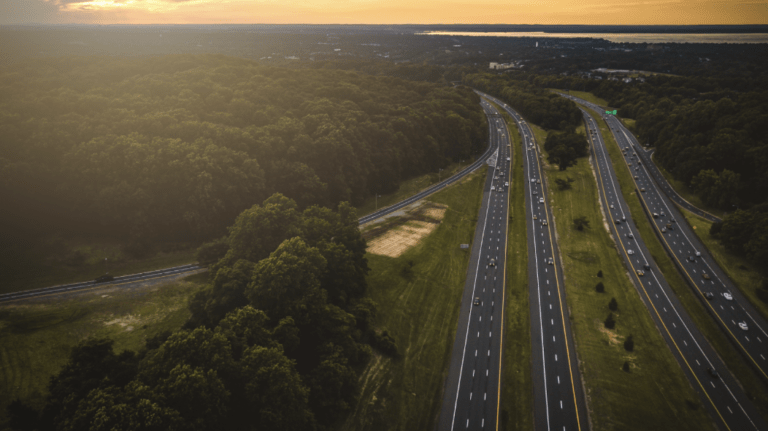
From bustling interstates to historic U.S. routes and iconic tollways, New Jersey is home to some of the most heavily traveled and expansive roadways in the country. Here’s a countdown of the 10 longest roads that traverse the Garden State, measured by total length and presence within New Jersey.
[Editor’s Note: US206 (130 miles) was left off the original story. This has been corrected as of 3/17/2026.]
11. U.S. Route 40
Source: Adobe Stock
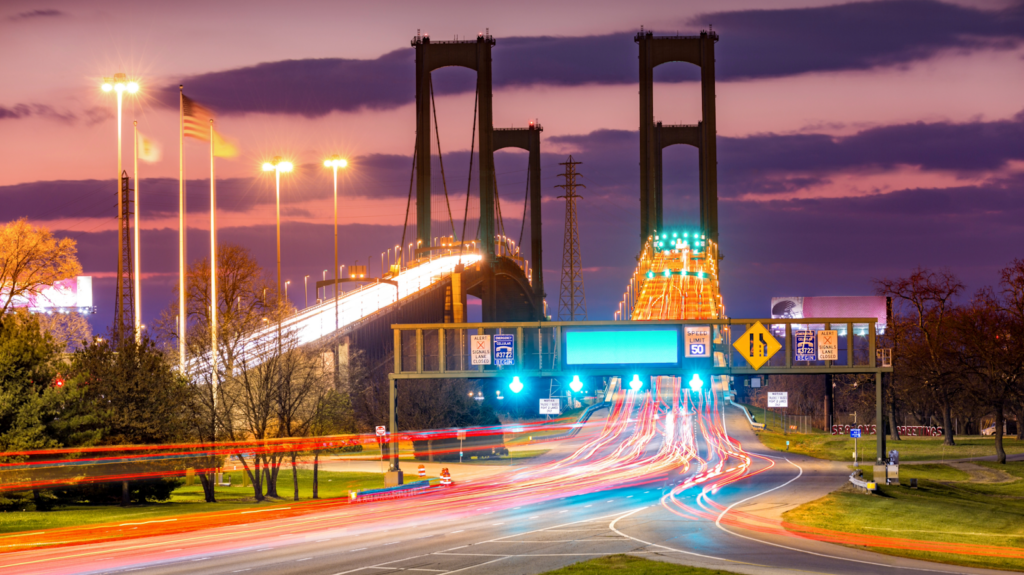
Caption: Traffic trails on Delaware Memorial Bridge at dusk. Total length: ~2,285 miles NJ segment: ~64 miles Endpoints: Delaware Memorial Bridge to Atlantic City, NJ Originally part of the Lincoln Highway, US 40 runs across southern New Jersey and connects travelers from the Delaware Memorial Bridge to the Atlantic coast.
Fun Fact: Portions of U.S. 40 have been featured in films, including Rain Man, where the highway’s long, empty desert stretches were used for key driving scenes.
10. U.S. Route 1
Source: Adobe Stock
Caption: Route 1 brings thousands of students to Rutgers University each day. Total length: ~2,370 miles NJ segment: ~66 miles Endpoints: Trenton, NJ to Fort Lee, NJ One of the country’s original highways, US 1 connects state capitals, major cities, and ports as it crosses New Jersey between Pennsylvania and New York. Fun Fact: US 1 was originally known as the Post Road in colonial times and connected key mail routes.
9. Interstate 287
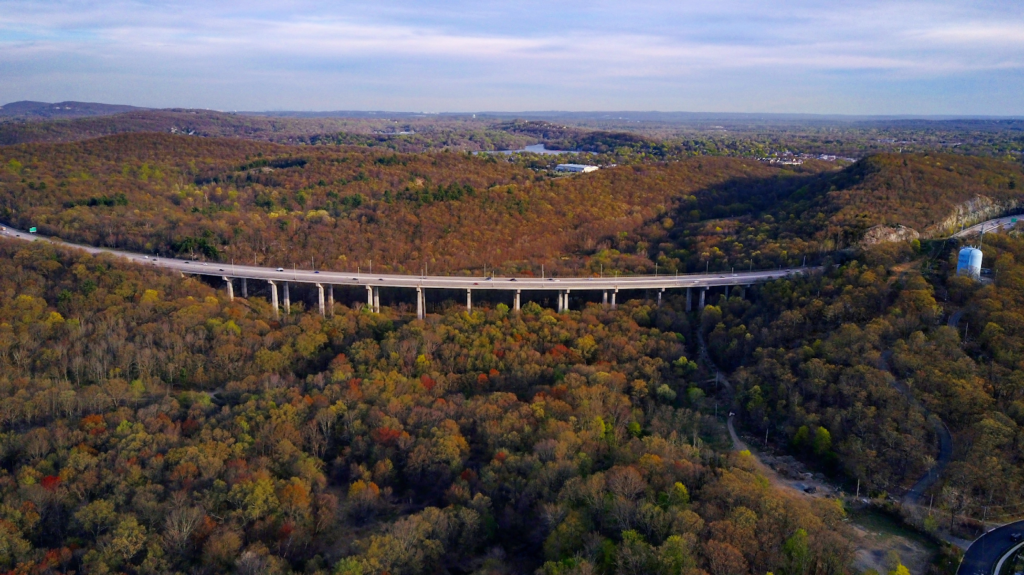
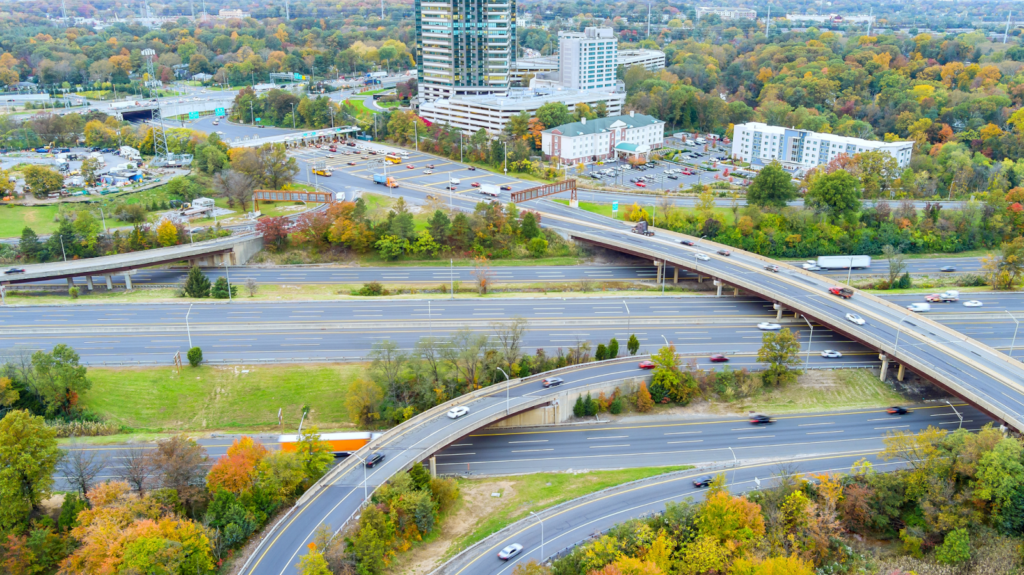
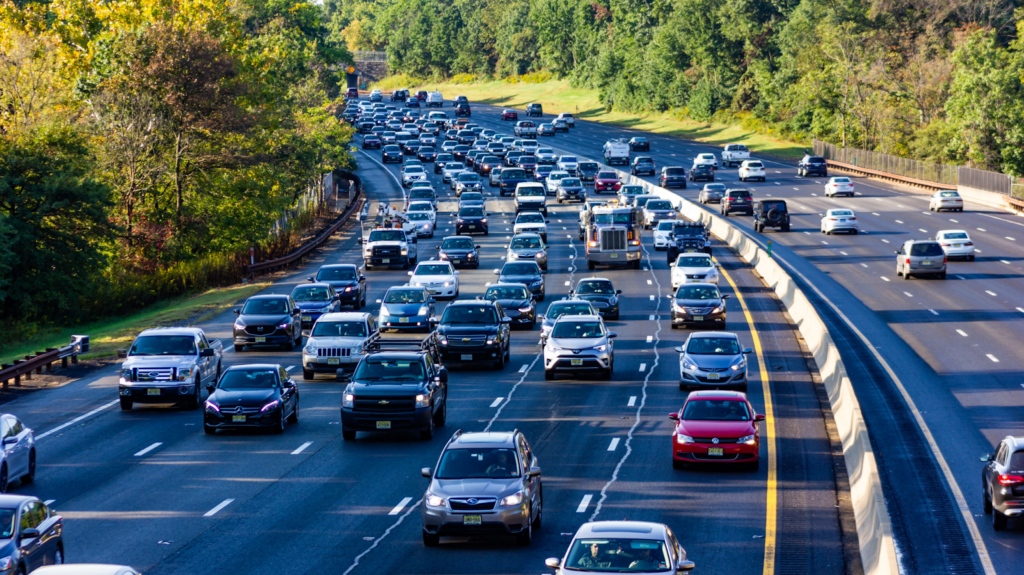
Caption: I-287 forms a vital beltway around the New York metropolitan region, carrying commuters and freight through the heart of northern New Jersey each day.
Total length: ~98 miles
NJ segment: ~67 miles
Endpoints: Edison, NJ to Mahwah, NJ
Interstate 287 serves as a major bypass around New York City, running north-south through Middlesex, Somerset, Morris, Passaic, and Bergen counties. The highway links I-95, I-78, I-80, and the New York State Thruway, making it one of the most important connector routes in the region. It passes through some of New Jersey’s largest corporate office parks, industrial centers, and commuter corridors.
Fun Fact: The northern portion of I-287 crosses the New York state line and continues as part of the I-87 corridor near the New York State Thruway, helping form a continuous loop around the metropolitan area.
8. Interstate 78
Source: Adobe Stock
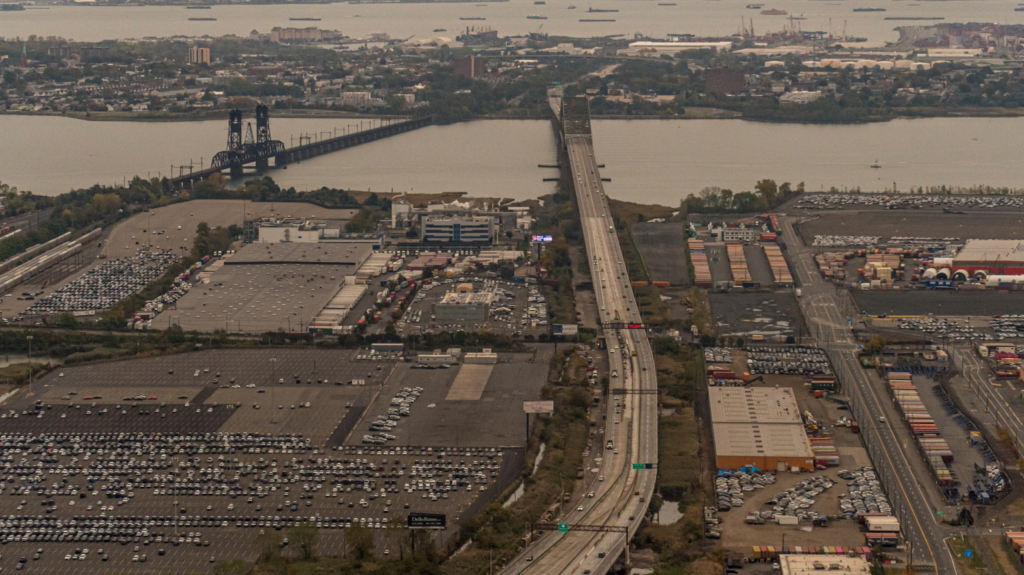
Caption: I-78 carries commuters, freight, and port traffic across northern New Jersey each day, linking urban centers with critical distribution hubs.
Total length: ~144 miles
NJ segment: 67.83 miles
Endpoints: Phillipsburg, NJ to Newark, NJ
A major east-west corridor, I-78 enters New Jersey from Pennsylvania at the Delaware River and runs across Warren, Hunterdon, Somerset, Union, and Essex counties before terminating in Newark near the Port of New York and New Jersey.
Fun Fact: I-78 serves as a key freight route, connecting distribution centers in western New Jersey to Newark Liberty International Airport and the region’s marine terminals.I-78 includes the Newark Bay Extension of the New Jersey Turnpike system and provides direct access to one of the busiest cargo ports on the East Coast, making it a critical link in the national supply chain.
7. Interstate 80
Source: Adobe Stock
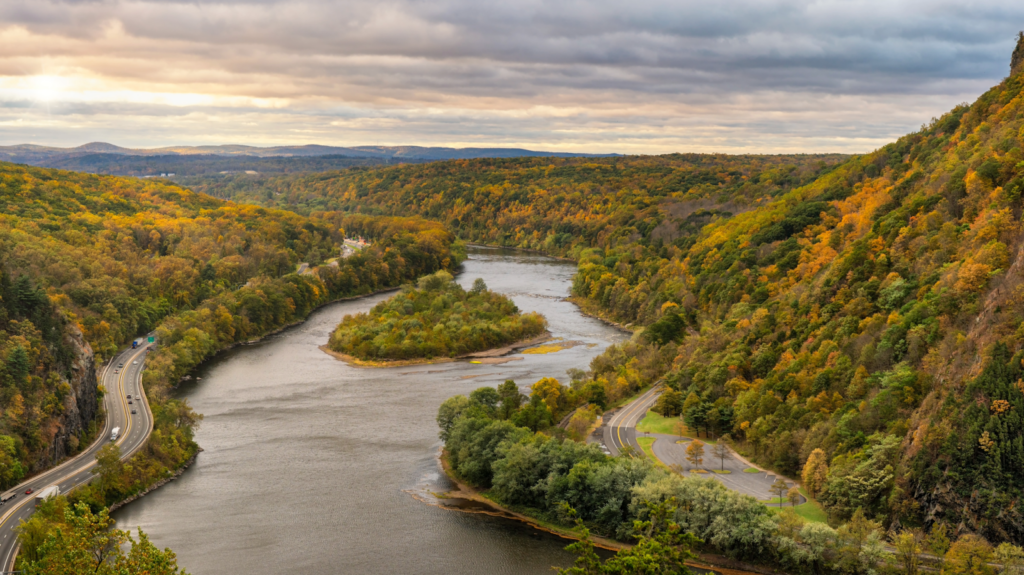
Caption: I-80 runs along the Delaware Water Gap, offering views of Mount Tammany in Worthington State Forest. Total length: ~2,901 miles NJ segment: 68.54 miles Endpoints: Delaware Water Gap to Teaneck, NJ I-80 begins in San Francisco and finishes in Teaneck, New Jersey. In the Garden State, it spans the northern corridor, linking rural towns to the NYC metro. Fun Fact: I-80 roughly parallels the route of the old Oregon Trail.
6. Interstate 95
Source: Adobe Stock
Caption: I-95 is the most traveled interstate in the US. Total length: ~1,906 miles NJ segment: ~78 miles Endpoints: Pennsville, NJ to Fort Lee, NJ (via NJ Turnpike) This east coast backbone runs north-south from Florida to Maine, with its New Jersey portion mainly following the New Jersey Turnpike. Fun Fact: I-95 is the longest north-south interstate in the U.S. and passes through 15 states.
5. U.S. Route 202
Source: Adobe Stock
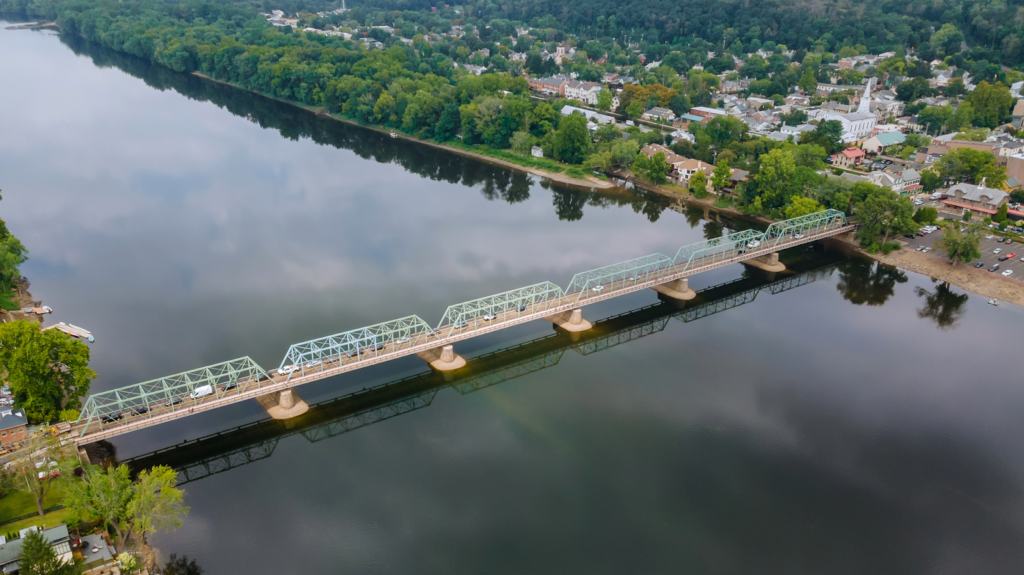
Caption: US 202 connects NJ & PA via the New Hope Lambertville Toll Bridge Total length: ~630 miles NJ segment: ~80 miles Endpoints: Lambertville, NJ to Mahwah, NJ Running diagonally through New Jersey, US 202 is a scenic and historic route connecting small towns, suburbs, and interstate crossings.
Fun fact: Most U.S. highways run north–south or east–west. U.S. 202 cuts on a northeast–southwest diagonal, weaving through eight states: DE, PA, NJ, NY, CT, MA, NH and ME.
4. New Jersey Turnpike
Source: Adobe Stock
Total length: ~117 miles (all within NJ)
Endpoints: Delaware Memorial Bridge to George Washington Bridge
The NJ Turnpike is the state’s most iconic toll road and the main freight corridor for the Northeast. It doubles as a large section of I-95.
Fun Fact: The Turnpike is famous for its themed service areas, each named after a prominent New Jerseyan like Thomas Edison, Clara Barton, and Bruce Springsteen.
3. US Route 206
Source: Google Maps
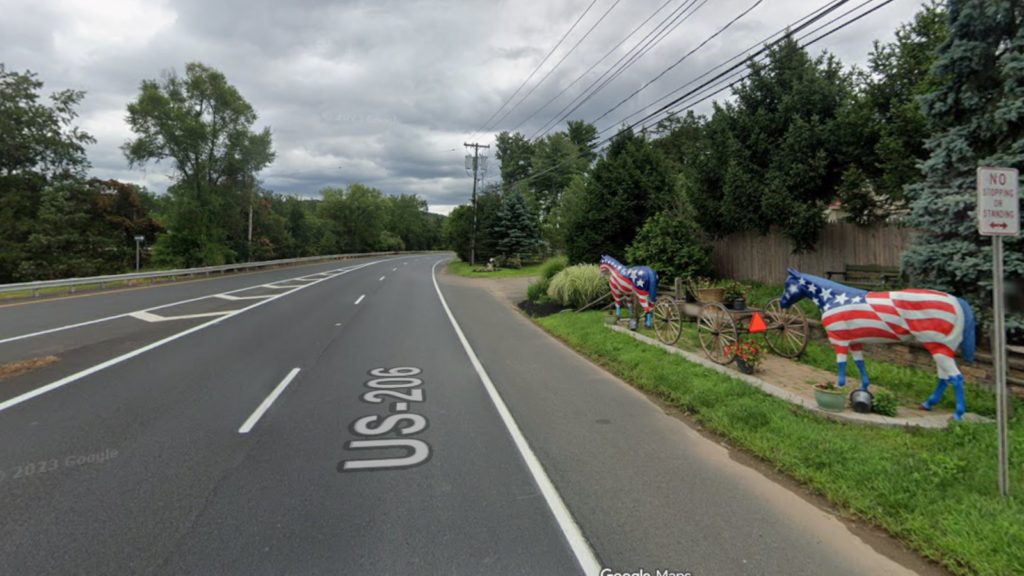
Caption: US 206 runs through the rural landscapes of central and northwestern New Jersey, connecting small towns, farms and historic communities.
Total length: ~130 miles NJ segment: ~130 miles Endpoints: Hammonton, NJ to Montague, NJ
U.S. Route 206 runs north–south through the heart of New Jersey, stretching from Hammonton in Atlantic County to the Delaware River at Montague near the New York border. The highway passes through Burlington, Mercer, Somerset, Morris and Sussex counties.
The route intersects several major highways including I-295, I-195, I-80 and U.S. 46, making it an important connector between central and northern New Jersey. In many communities, Route 206 serves as a traditional “main street” corridor lined with local businesses, restaurants and historic buildings.
Fun Fact: U.S. 206 continues into Pennsylvania for just half a mile before its terminus.
2. U.S. Route 9 (US 9)
Source: Adobe Stock
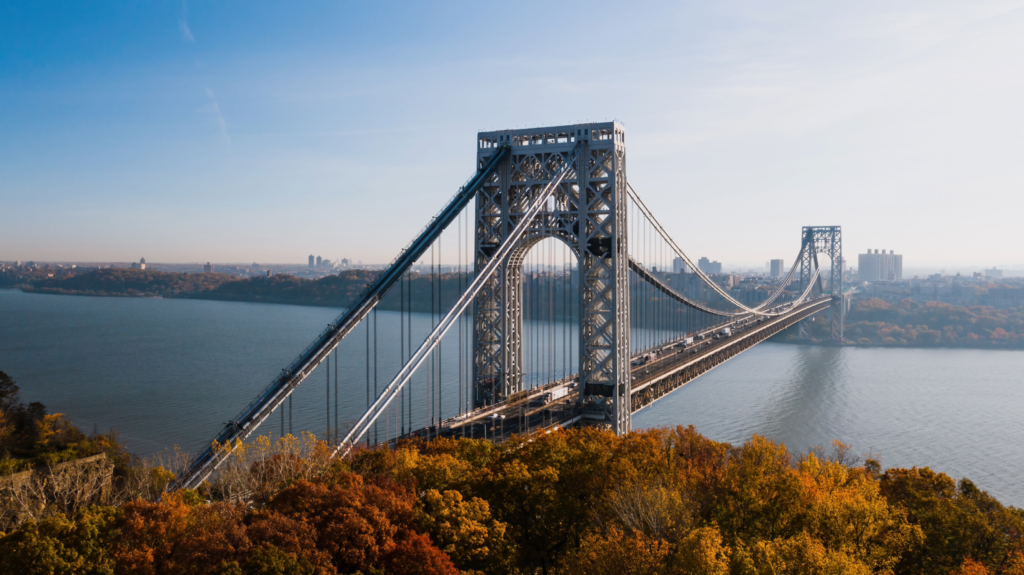
Caption: Interstate 95 and US Route 1 & 9 run across the George Washington Bridge. Total length: ~523 miles NJ segment: ~167 miles Endpoints: Cape May, NJ to Fort Lee, NJ US 9 holds the distinction of being the longest continuous route within New Jersey, spanning nearly the entire state and paralleling the Garden State Parkway for much of its run. Fun Fact: Much of US 9 follows colonial-era routes and old Native American trails.
Whether you’re commuting, road-tripping, or just exploring your own backyard, these roadways form the veins of New Jersey’s infrastructure. They link our communities and fuel commerce.
1. Garden State Parkway
Source: Adobe Stock Total length: ~172 miles (all within NJ) Endpoints: Cape May, NJ to Montvale, NJ The GSP runs nearly the full length of New Jersey from its southern shore to its northernmost border with New York, serving millions of commuters and tourists alike. Fun Fact: The Parkway was designed with aesthetics in mind, including tree-lined medians and scenic overpasses.
Sources:
Federal Highway Administration. (2021). U.S. Route Log and Finder List. U.S. Department of Transportation. https://www.fhwa.dot.gov
“New Jersey lawmakers are exploring a tectonic shift in the state’s energy policy that could phase out nearly all of its fossil fuel power plants in the coming decades and ensure they don’t return without a rewrite of the state constitution.
…
In 2022, roughly 51.3% of the energy generated in New Jersey came from natural gas plants, with nuclear power (43.5%) accounting for much of what remained, according to the U.S. Energy Information Administration.”
TL;DR: CoreWeave’s proposed Kenilworth data center will be quieter than nearby highway traffic, use a low-water closed-loop cooling system and fund a $150 million electrical substation to support both the facility and the local grid.
While construction will temporarily increase traffic and activity, the company says long-term operations will have minimal daily impact.
The project highlights the broader debate over data centers, balancing economic investment and infrastructure upgrades against concerns about noise, energy use, water consumption and community character.
KENILWORTH — Data centers have become one of the most debated forms of development across the country, with residents often raising concerns about noise, energy demand, water use and the impact large facilities can have on surrounding neighborhoods.
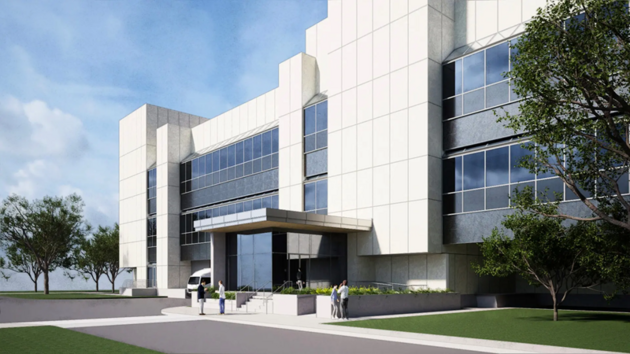
Those questions are now being asked in Kenilworth NJ, where an artificial intelligence (AI) cloud computing company headquartered in Livingston plans to redevelop the former pharmaceutical research facility at 2000 Galloping Hill Road into a data center.
The project represents a multi-billion-dollar investment in New Jersey and as plans move forward, local residents are looking for answers about how the facility could affect their community. Coreweave has just released new information about the data center to answer some of these questions.
Addressing concerns about noise
One of the most common concerns surrounding data centers is noise. Large facilities often rely on extensive cooling equipment and backup generators, leading residents to worry about a constant mechanical hum or periodic generator testing.
For the Kenilworth project, CoreWeave commissioned an independent acoustics study to evaluate potential sound levels at nearby residential property lines. According to the study, normal operations are expected to generate between 42 and 49 decibels, comparable to the sound of a household refrigerator. The report also found that existing background noise from the nearby Garden State Parkway measures at least 51 decibels during nighttime hours.
Even during a full power outage, when all backup generators would be operating simultaneously, projected noise levels would remain below New Jersey’s legal limits, according to the study.
Energy demand and electric bills
Another concern frequently raised about data centers is the strain they can place on local electrical infrastructure. Residents have worried that growing energy demand could lead to even higher costs or require significant utility upgrades.
CoreWeave says its approach in Kenilworth is intended to avoid those issues by funding approximately $150 million for a new electrical substation. The company says the upgrade will provide additional capacity not only for the data center but also for the broader Union County electric grid.
While electricity rates remain regulated by the New Jersey Board of Public Utilities (NJBPU) and local utilities, the company argues that directly funding the infrastructure reduces the likelihood that future upgrades would need to be recovered through ratepayer-funded projects.
Water use under scrutiny
Water consumption has become another flashpoint in discussions about data centers, particularly in regions where facilities rely on large amounts of water for cooling.
The Kenilworth facility is being built with a closed-loop cooling system designed to minimize ongoing water consumption. The company estimates approximately 310,000 gallons of water will be required one time during construction and startup. Afterward, the system will operate using a circulating propylene glycol solution, with day-to-day water use largely limited to normal office functions.
The company also states that the cooling fluid is non-hazardous and includes leak detection and containment systems.
Construction impacts versus long-term operations
Residents can expect some disruption during construction. Material deliveries, contractor vehicles and other site activity will increase traffic in the area while redevelopment is underway.
However, data centers generally operate with relatively small on-site workforces compared with manufacturing facilities, warehouses or office complexes. CoreWeave says daily traffic is expected to be minimal once the facility becomes operational.
Looking at the bigger picture
Supporters of the project point to the redevelopment of an existing industrial property, investment in electrical infrastructure and the possibility of attracting future technology-related development to the region.
At the same time, residents and local officials will continue to weigh those potential benefits against concerns about quality of life, environmental impacts and the changing character of the community.
As the approval and construction process continues, many of the conversations taking place in Kenilworth reflect a broader national debate over how communities should balance the growing demand for digital infrastructure with the concerns of the people who live nearby.
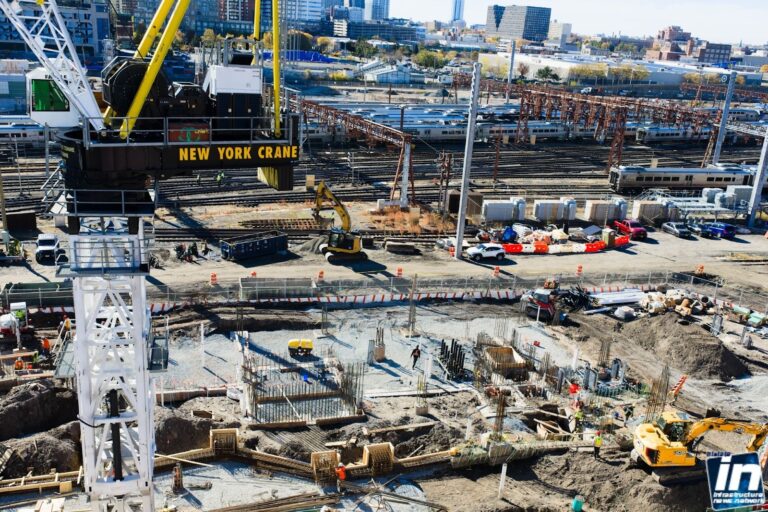
Hoboken Connect is redeveloping an underutilized rail yard in one of New Jersey’s most heavily populated cities. The new space will be a mixed-use district anchored by an upgraded port and rail terminal. The project is a public-private partnership between NJ TRANSIT, the developer, LCOR, and the City of Hoboken. It aims to modernize Hoboken Terminal while introducing new residential, office, retail and open space.
The terminal
Hoboken Terminal is a multimodal gateway, linking PATH trains, NJ TRANSIT rail and bus service, ferries and the Hudson Bergen Light Rail. A central element of the project is the restoration and reopening of Hoboken Terminal’s second floor, which has been closed to the public for decades. Once complete, the space is expected to reintroduce historic areas of the terminal to daily use, creating new circulation space and amenities for commuters and visitors.
The amenities
Next to the terminal,a new development will include more than 700,000 square feet of contemporary office space designed to attract employers seeking proximity to transit and the New York metropolitan market.
A new 27-story tower, the Charlie, will rise above the site and add urban living space to the district. At street level, new retail and dining spaces are planned to create an active pedestrian environment that serves both Hoboken residents and commuters passing through the terminal each day.
Open space is another defining feature of the project. Hoboken Connect will deliver approximately two acres of publicly accessible open space, an important addition in one of the most densely populated cities in the state. These areas are intended to function as gathering places while also playing a role in stormwater management and flood resilience.
A long-term investment in Hoboken
Digital rendering of the Hoboken Connect Project provided by LCOR
When complete, Hoboken Connect will represent a rare integration of historic preservation, modern transit infrastructure, private development and climate adaptation. The project reflects a broader shift in how transportation hubs are viewed, not only as places to pass through, but as anchors for resilient, mixed-use districts that support economic activity and community life.
More than $23.8 million in federal funding is coming to Monmouth County and neighboring areas for environmental and public safety projects as part of the recently approved federal budget. The funds will support upgrades in water quality and stormwater management, enhance emergency response communications, improve major road safety and invest in environmental resilience.
Key allocations include funding for Silver Lake water quality improvements in Belmar, restoration of Shadow Lake flood mitigation infrastructure in Middletown and Red Bank, roadway and drainage upgrades in Lakewood Township, and advanced communications equipment for the Monmouth County Sheriff’s Office.
Northern and central New Jersey’s commercial real estate market recorded roughly $1.5 billion in sales transactions during the latter half of 2025, according to a Winter Capital Markets Report from NAI DiLeo-Bram & Co.
Activity was strongest in Middlesex and Morris counties, which led the region in total deal volume. Sales were spread across industrial, office, and retail properties.
While overall commercial real estate activity has not returned to peak levels seen earlier in the decade, the late-2025 sales total points to a market that remains active and resilient despite ongoing economic uncertainty.
South Jersey’s transportation infrastructure is undergoing a major transformation after years of deferred maintenance and growing congestion. Recent investments include the long-awaited completion of the Direct Connection project linking I-295 and Route 42. Additionally, expanded NJ Transit bus service and modernization of freight rail corridors have helped to improve the regional economy and connectivity.
With continued growth in logistics and warehousing, industry leaders stress the need for sustained investment so infrastructure can keep pace with demand and support businesses and residents across the region.



![Micron’s $100 billion New York semiconductor manufacturing project is facing local pushback [MSN]](https://tristateinfrastructurenews.com/wp-content/uploads/2026/03/large-image-26-768x432.png "Micron’s $100 billion New York semiconductor manufacturing project is facing local pushback [MSN]")
![Sherrill unveils budget plan centered on spending cuts and tax stability [BINJE]](https://tristateinfrastructurenews.com/wp-content/uploads/2026/03/large-image-27-768x467.png "Sherrill unveils budget plan centered on spending cuts and tax stability [BINJE]")
![New Jersey explores sunset of fossil fuel power plants [New Jersey Monitor]](https://tristateinfrastructurenews.com/wp-content/uploads/2026/03/TINN-Lede-natgas-768x404.jpg "New Jersey explores sunset of fossil fuel power plants [New Jersey Monitor]")

![Federal earmarks bring $23.8 M for roads, water quality and storm resilience in Monmouth County [TAPinto]](https://tristateinfrastructurenews.com/wp-content/uploads/2026/03/large-image-24-768x464.png "Federal earmarks bring $23.8 M for roads, water quality and storm resilience in Monmouth County [TAPinto]")
![New Jersey commercial real estate sales reach $1.5B, led by Middlesex and Morris [BINJE]](https://tristateinfrastructurenews.com/wp-content/uploads/2026/02/image-2-1-768x464.png "New Jersey commercial real estate sales reach $1.5B, led by Middlesex and Morris [BINJE]")
![Critical transit upgrades unlocking South Jersey’s potential [New Jersey Business Magazine]](https://tristateinfrastructurenews.com/wp-content/uploads/2026/02/large-image-26-768x494.png "Critical transit upgrades unlocking South Jersey’s potential [New Jersey Business Magazine]")