From nuclear policy shifts to transportation refinancing and new international routes, this week’s updates include big changes across energy, mobility and the public‑sector.
Longo warns that New Jersey’s Climate Superfund Act needs to be reevaluated
After a federal judge set precedent and struck down New York’s Climate Superfund Act as exceeding the limits of state authority (See “Federal judge strikes down New York’s climate superfund law”, below), Mark Longo of Engineers Labor-Employer Cooperative warns that New Jersey’s version is similarly flawed and could face similar legal challenges.
New Jersey’s energy landscape is undergoing a dramatic shift. After decades of political resistance to nuclear power, the state is now embracing new nuclear development as part of its broader affordability and reliability strategy. The opinion piece outlines how rising energy costs, grid strain, and the limitations of legacy policies pushed leaders toward reconsidering nuclear as a stable, carbon‑free resource. It also highlights the administration’s recent moves to lift the long‑standing moratorium and explore advanced reactor technologies as part of a diversified energy mix.
Transportation Trust Fund gains $120 million through refinancing
A major refinancing move will inject up to $120 million into New Jersey’s Transportation Trust Fund, strengthening the state’s ability to maintain and upgrade roads, bridges, and transit infrastructure. Legislators approved refunding up to $2 billion in bonds, capitalizing on favorable market conditions to reduce debt service and redirect savings into critical projects. The decision is framed as a fiscally responsible step that supports long‑term infrastructure needs without burdening the general fund.
Federal judge strikes down New York’s climate superfund law
A federal judge has invalidated New York’s Climate Superfund Act, ruling that the state overstepped its authority by attempting to impose billions in liability on fossil fuel companies for climate‑related damages. The decision emphasizes federal preemption under the Clean Air Act and foreign affairs doctrine, concluding that climate‑related cost recovery must be governed at the national level. The ruling carries implications for similar legislation in other states and marks a significant setback for state‑level “polluter pays” initiatives.
Gov. Mikie Sherrill has appointed David Rible, CEO of the Utility and Transportation Contractors Association, to the New Jersey Infrastructure Bank Board of Directors. Rible will serve through January 2028, replacing longtime advocate Bob Briant Jr. The appointment underscores the administration’s focus on strengthening financing pathways for transportation and water infrastructure, with Rible expected to play a key role in advancing major capital projects statewide.
Debate intensifies over using clean energy funds for utility bill relief
New Jersey may tap a substantial portion of its clean‑energy fund to provide short‑term relief on electric bills, a move critics warn could undermine long‑term affordability. The proposal would allow up to $500 million from the Regional Greenhouse Gas Initiative fund to offset rising electricity costs. Analysts argue that diverting funds away from clean‑energy investments—such as efficiency, storage, and renewable deployment—could prolong structural cost pressures and delay needed modernization of the grid.
Port Authority invests in real‑time railcar monitoring
The Port Authority of New York and New Jersey has awarded a $10 million contract to Wi‑Tronix to deploy real‑time monitoring technology across the PATH railcar fleet. The system will help technicians diagnose mechanical issues remotely, reduce delays, and improve compliance with federal recording requirements. The investment builds on the PATH Forward modernization program and reflects a broader push toward connected, data‑driven transit operations.
United adds eight new nonstop routes from Newark Liberty
United Airlines is launching its largest international expansion yet, adding eight new nonstop routes from Newark Liberty International Airport beginning in 2027. Destinations include Luxembourg, Marseille, Ibiza, Valencia, Terceira, Ljubljana, Olbia, and Catania. Many of these routes will be exclusive to United among U.S. carriers, strengthening Newark’s role as a major transatlantic gateway and expanding travel options for New Jersey residents and businesses.
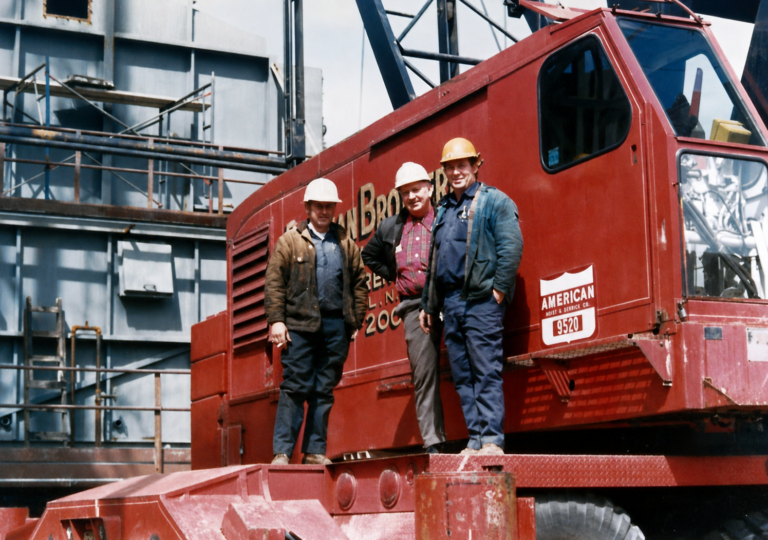
Once a bridge is completed or a building opens, the workers who built them pack up their tools and equipment and move on. Construction work is temporary by nature, and this temporary nature is sometimes used to dismiss construction jobs as unstable or less valuable than permanent positions. It overlooks the reality that hundreds of thousands of New Jersey residents build lifelong careers and support families by moving from one temporary project to the next.
In July 2026, New Jersey supported approximately 161,300 construction jobs, according to preliminary data from the U.S. Bureau of Labor Statistics. That is more than 161,000 workers whose livelihoods depend on a continuing pipeline of temporary projects.
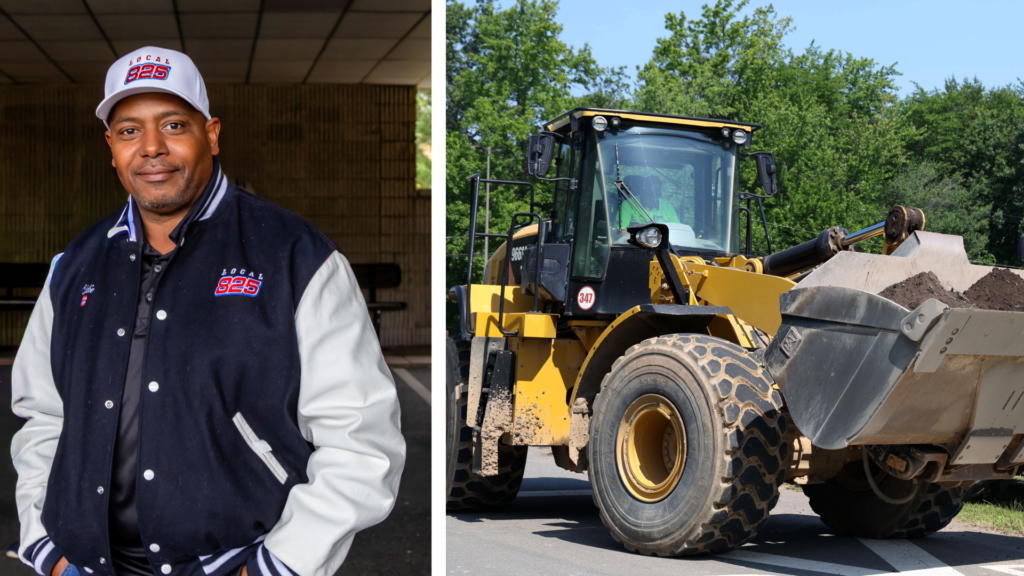
For IUOE Local 825 Business Manager Greg Lalevee, the uncertainty of construction work was part of growing up in a union household.
“When I was a kid, St. Patrick’s Day was more than an Irish holiday,” Lalevee said. “It meant the weather would begin to turn and my father would be going back to work soon.”
During the slower months, his father drove a taxi to continue providing for the family. It was an experience shared by generations of construction families, particularly when winter weather or a downturned economy brought work to a halt.
“Construction workers have always done what was necessary to take care of their families,” Lalevee said. “My father knew that one job would end and another would eventually begin. In between, he found a way to keep moving forward.”
Today, all three of Lalevee’s sons are operating engineers. They entered an industry that is more technologically advanced and, in many ways, more consistent than the one their father knew. The basic reality, however, remains the same: every project has an end date.
“We are fortunate to have more consistent work for our members today, but that consistency depends on infrastructure investment, responsible development and strong relationships that can connect operating engineers with the next opportunity. Every job matters because every job represents another paycheck, another contribution toward retirement and another family being supported.”
The equipment has also changed dramatically from one generation to the next. Adapting to those changes has been essential to keeping operating engineers working.
“When Local 825 began, the equipment ran on steam. Then the industry moved to hydraulics, and today more machines are being guided by GPS,” Lalevee said. “Instead of fighting technology, operating engineers have always rolled with it. We mastered it, learned how to operate it and learned how to fix it. That willingness to keep learning is one of the reasons we have remained successful.”
The temporary nature of the projects makes adaptability even more important. An operator may move from a highway job to a hospital project, a pipeline or an environmental cleanup; each assignment can require different equipment, technology and safety training. The union provides the continuity that allows workers to carry those skills from one employer and project to the next.
Nationwide, union members working in construction and extraction occupations earned a median of $1,561 per week in 2025, compared with $1,004 for nonunion workers. The difference amounts to nearly $29,000 over a full year, although actual annual earnings depend on how consistently a worker is employed. Union members also carry their training, health coverage and retirement contributions from one participating employer to the next.
A one-day assignment
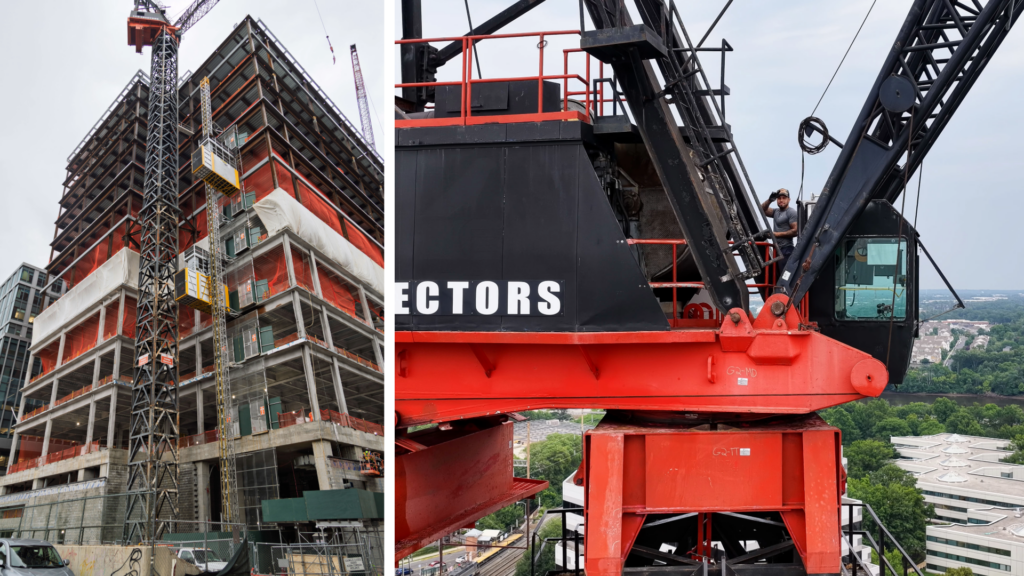
Tower crane operator Johnny Ahedo understands how quickly a temporary assignment can become an important chapter in a career. Ahedo has spent the past several years working at the HELIX development in New Brunswick, where a new innovation district is taking shape.
His time on the project began much more modestly, with a request to work one Saturday. “I thought I was going in for one day,” Ahedo said. “I showed up, did the job and expected that to be it. That Saturday turned into another day, then another week and eventually a few years.”
From high above New Brunswick, Ahedo has watched the project rise piece by piece. Like the building itself, his role has depended on hundreds of daily assignments completed safely and correctly.
“You never know how long an opportunity will last, so you treat every day like it matters,” he said. “You show up prepared, you do good work and you look out for the people around you.”
Even a multiyear project must eventually be completed. When that happens, Ahedo will climb down from the crane, leave the site and prepare for whatever comes next. The building, however, will remain a part of New Brunswick’s skyline, creating space for research, health care, education and innovation jobs that may be far more permanent than the construction work that made them possible.
Providing for a family
For TOMCO lead engineer Eddie Vazquez, the next assignment is never just about work. Vazquez has raised four children, and the jobs he accepts are how he provides for them. His work shirts reflect two of the commitments that define him: his union and his country. He makes sure both are represented in the embroidery he wears to work.
“I love my country, and I love my union because both have given my family opportunities,” Vazquez said. “Every time I go to work, I know what that day means at home. It means food on the table; a roof over our heads.”
As a lead engineer, Vazquez is responsible for helping a job run safely and efficiently. The project may be temporary, but the standards he brings to it cannot be. “You can’t treat a temporary job like it is disposable,” he said. “The work has to last, and the people beside you have to go home safely. Whether we are there for a few weeks or a few years, we owe the job our best.”
For many construction families, the results of temporary jobs extend well beyond the next paycheck. They pay mortgages, support communities and help parents send their children to college.
The Local 825 Scholarship Fund reflects the generational impact. Each year, scholarships help the children and grandchildren of members pursue college degrees. The recipient may be studying engineering, health care, business or another field far removed from a construction site, but the opportunity was created in part by a parent or grandparent who built a career on a slew of jobsites.
“Our members do this work because they want to provide opportunities for their families,” Lalevee said. “A parent may spend a career going from jobsite to jobsite, never knowing exactly where the next assignment will take them. Then one day, that work helps send a son, daughter or grandchild to college. There is nothing temporary about the impact that has on a family.”
That sense of responsibility is one reason unions remain so important in a project-based industry. In 2025, New Jersey had approximately 612,000 union members, representing 14.7 percent of the state’s wage and salary workforce. Contractors and locations may change, but union membership provides continuity. Training follows workers throughout their careers. Health benefits continue as members move between participating employers and pension benefits help them build long-term financial security. Together, those protections help turn a series of temporary jobs into a viable lifelong career.
The work ends; the career continues
New Jersey’s construction workers build permanent structures: roads used for generations, bridges crossed by millions, hospitals where lives are saved and schools where children learn. The irony is that the people creating those lasting structures often do so through a series of temporary assignments. No single project provides an entire career. A career is built by showing up for all of them, learning from each one and being ready when the next opportunity arrives.
“This Labor Day, we should remember that there is nothing insignificant about a temporary construction job,” Lalevee said. “It may be one stop in a worker’s career, but it helps provide for a family, send a child to college and leave something lasting behind. The project may be temporary; the life built through that work is not.”
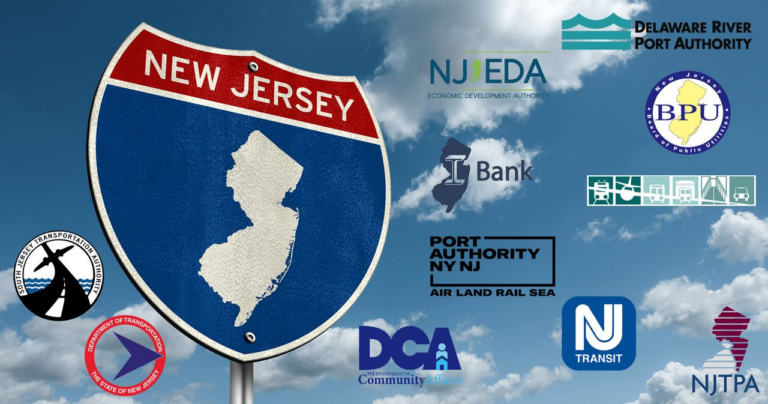
The agencies/authorities responsible for New Jersey’s physical and digital infrastructure
New Jersey’s trains, airports, roads, bridges, electrical grid, drinking and wastewater, and digital infrastructure is managed, protected, and administered by a host of state, regional and federal agencies and authorities.
New Jersey Turnpike Authority
New Jersey Turnpike and Garden State Parkway, tolls, bridges, highway construction, traffic, and capital projects
SJTA South Jersey Transportation Authority
Atlantic City Expressway, Atlantic City International Airport, regional transportation, toll operations, and South Jersey infrastructure
NJDEP New Jersey Department of Environmental Protection
Climate change, flooding, stormwater, wetlands, water quality, contaminated sites, air pollution, coastal protection, waste, renewable-energy permitting, and radiation protection
NJBPU New Jersey Board of Public Utilities
Electric and gas utilities, utility rates, renewable energy, solar, community solar, offshore wind, energy efficiency, storage, grid reliability, telecommunications, and ratepayer protection
NJEDA New Jersey Economic Development Authority
Economic-development incentives, infrastructure financing, clean-energy investment, data centers, redevelopment, business expansion, and public-private projects
NJIB New Jersey Infrastructure Bank
Low-cost financing for drinking-water, wastewater, stormwater, transportation, flood-mitigation, and resilience projects
New Jersey Department of the Treasury
State capital planning, bond financing, infrastructure appropriations, public contracting, and state financial oversight
NJDOE New Jersey Department of Education
School facilities policy, school-district capital planning, school construction standards, and public-school infrastructure
NJDOH New Jersey Department of Health
Public-health effects of drinking-water contamination, environmental hazards, extreme heat, and emergency preparedness
PANYNJ Port Authority of New York and New Jersey
PATH, George Washington Bridge, Bayonne Bridge, Goethals Bridge, Outerbridge Crossing, Lincoln Tunnel, Holland Tunnel, Port Authority Bus Terminal, Journal Square, JFK, LaGuardia, Newark Liberty, Stewart, and Teterboro airports, Port Newark, Howland Hook Marine Terminal (State Island), Port Jersey-Port Authority Marine Terminal
JCP&L is seeking a $253 million base-rate increase to support electric distribution investments.
Temporary offsets would protect residential customers from the higher delivery rates through 2027.
The rate request would support an additional $2.1 billion in base distribution investments as part of JCP&L’s broader five-year, $6.9 billion capital plan.
Jersey Central Power & Light has asked New Jersey regulators to approve a $253 million increase in base distribution rates, but residential customers would not feel the impact until January 2028. The proposal uses temporary offsets to cover the higher delivery rates through 2027 while allowing infrastructure investments to move forward.
If approved by the New Jersey Board of Public Utilities (NJBPU), the new base rates would technically take effect in May 2027. Credits would offset the increase for residential customers through the end of that year, aligning the proposal with the state’s effort to limit near-term increases in utility bills.
The structure is unusual because the costs would not simply be deferred and added to future customer balances. JCP&L said existing credits and other offsets would cover the difference until the new rates and a separate storm-recovery charge take effect in January 2028.
What customers could pay
Once the changes are fully implemented in January 2028, the average JCP&L customer would see an estimated total bill increase of 8.5 percent. Residential customers would see an increase of approximately 8.8 percent, or $14.23 per month for a typical household using 767 kilowatt-hours and currently paying $162.30.
The $253 million base-rate request accounts for roughly 7 percent of the projected increase. JCP&L is also seeking to recover $476 million in previously deferred storm-restoration costs through a separate charge beginning in 2028.
Those storm costs would be collected over 10 years rather than through a shorter recovery schedule. Spreading the expense over a longer period would reduce the immediate monthly impact, although customers would ultimately remain responsible for the approved costs.
The proposal applies to the delivery portion of an electric bill, which supports poles, wires, vegetation management, storm restoration and other distribution-system needs. Electricity supply, transmission and other charges are determined through separate processes and would not be frozen by the filing.
Investing in the electric grid
The rate request would support an additional $2.1 billion in base distribution investments as part of JCP&L’s broader five-year, $6.9 billion capital plan. Planned work includes modernizing high-priority circuits, expanding remote monitoring and control capabilities through EnergizeNJ, upgrading transmission infrastructure and continuing energy-efficiency programs.
Vegetation management is another focus of the proposal. Trees remain a leading cause of outages across JCP&L’s 3,200-square-mile service territory, particularly as dead and diseased ash trees threaten overhead electrical equipment.
According to the utility, ash trees damaged by the emerald ash borer have caused 60 percent of its tree-related outages since 2020. JCP&L has removed more than 74,000 dead or diseased ash trees since 2017 and is seeking additional funding to identify and remove hazardous trees before they interrupt service.
Affordability and reliability
The filing comes as residents and businesses face growing concerns about both utility costs and power reliability. JCP&L invested $1.5 billion in capital improvements during the past three years and reported a 15 percent reliability improvement in 2025 compared with 2024, followed by a 38 percent improvement during the first part of 2026 compared with the same period a year earlier.
Those gains have not eliminated the effects of severe weather. Storm restoration expenses reached $476 million before the damaging storms of early July, when crews repaired or replaced approximately 1,700 poles in some of the hardest-hit communities.
The BPU will review the filing under Docket No. ER26080420, with public hearings and other opportunities for stakeholder input expected as the case proceeds. Its decision will shape not only what JCP&L customers pay beginning in 2028, but also how quickly the utility can modernize a system facing stronger storms and growing demand.
NJ’s similar legislative proposal relies on the same central mechanism a NY federal court rejected on August 31.
A federal judge struck down New York’s $75 billion Climate Change Superfund Act, finding that federal law preempted the state program.
New Jersey’s proposed $50 billion climate superfund proposal uses a similar emissions formula, although lawmakers included language intended to distinguish it from the New York law.
The ruling does not bind New Jersey courts, but it provides a road map for a legal challenge and raises questions about how the state can reliably fund needed climate-resilience infrastructure.
The immediate effect is limited. The August 31 ruling applies only to New York’s enacted law; New Jersey’s proposal has advanced through legislative committees but has not yet become law. Because New Jersey falls within the federal Third Circuit while New York is part of the Second Circuit, the ruling does not bind federal courts in New Jersey.
However, the decision provides opponents with a detailed legal roadmap for challenging the New Jersey proposal. Both programs would require large fossil fuel companies to pay for emissions linked to products extracted and used around the world over several decades. The global and retrospective reach was central to the New York court’s decision to rule against the law.
Inside the court case
Chief U.S. District Judge Brenda Sannes ruled that New York could not enforce its law because it intruded into an area governed by federal law and national policy.
New York’s program sought to collect $75 billion from fuel producers, refiners and energy companies over 25 years. Each company’s share would have been calculated using greenhouse gas emissions associated with fossil fuels it produced or refined between 2000 and 2018.
New York argued that the program was a cost-recovery system, not a regulation of emissions. The state said it was seeking compensation for climate-related infrastructure costs rather than ordering companies to reduce production or change their behavior.
Sannes rejected that distinction. Relying heavily on the Second Circuit’s 2021 decision in City of New York v. Chevron, she concluded that a state cannot impose liability for the cumulative effects of worldwide greenhouse gas emissions simply by describing the payment as compensation rather than regulation.
The U.S. Department of Justice participated in the hearing in support of the challengers. Following the decision, DOJ said the court had agreed with its position that the Clean Air Act and the federal foreign-affairs power preempted New York’s program. The department has also filed a separate lawsuit against New York’s law and is challenging Vermont’s climate superfund program.
New York Gov. Kathy Hochul’s administration said it was reviewing the ruling and considering its next steps. An appeal would go to the Second Circuit, the same court whose 2021 climate decision formed much of the basis for Sannes’ ruling.
New Jersey’s proposal follows the same model
New Jersey’s pending “Polluters Pay to Make New Jersey More Affordable Act,” introduced as A3735 and S2338, would establish a Climate Adaptation, Resiliency, and Affordability Program within the Department of Environmental Protection.
The proposal would hold fossil fuel extraction companies responsible for a combined $50 billion. Liability would be divided according to emissions associated with fossil fuels extracted between 1995 and 2024; only companies connected to more than 1 billion metric tons of carbon dioxide-equivalent emissions would be covered. However, advocates have also publicly reported they would seek to also target major New Jersey utility providers like PSE&G and New Jersey Natural Gas.
The bill identifies billions of dollars in unmet adaptation needs. Its stated purpose is to shift part of the cost of flood protection, stormwater upgrades and other resilience projects from taxpayers to fossil fuel companies whose products contributed to climate change. At least 51 percent of the grant funding would be directed toward projects benefiting overburdened communities.
New Jersey’s proposed legislation is very similar to that rejected in New York, but it contains several provisions designed to address challenges already facing New York and Vermont. The bill expressly states that its program would be remedial rather than punitive and would not authorize the state to regulate greenhouse gas emissions, fossil fuel production or energy policy. It describes New Jersey as exercising a proprietary interest as a market participant by recovering costs and setting conditions for the use of state-administered funds. It remains to be seen whether those distinctions would be enough for a court to reach a different conclusion.
The New Jersey Business & Industry Association (NJBIA) warns that the assessments could return to residents and employers through higher energy prices, reduced investment and job losses. NJBIA has called the proposal one of the most anti-business bills in state history, particularly as New Jersey faces broader affordability and energy-cost concerns.
“The court today sent a clear message: New York cannot extract billions of dollars from energy companies for their lawful operations over the past 25 years,” US Chamber of Commerce Chief Policy Officer Neil Bradley said in a statement.
NJBIA Deputy Chief Government Affairs Officer Ray Cantor said New York’s law is “legally indistinguishable from New Jersey’s proposed legislation.” He described the New Jersey bill as “unfair, punitive to consumers” and damaging to jobs, while urging lawmakers to pursue other approaches to climate resilience.
The NY ruling could prove influential nationally
The ruling creates both legal and practical questions. A federal court decision in New York is not binding precedent in New Jersey. A federal judge hearing a challenge to the New Jersey program could reach a different conclusion, particularly if the final legislation contains meaningful distinctions or if Third Circuit precedent permits a different analysis.
Still, the New York decision will almost certainly be cited by fossil fuel companies, trade organizations, other states and the federal government in any lawsuit against New Jersey. It provides a clear road map for a legal challenge to the legislation. The New York decision would carry considerably more weight if the Second Circuit upholds Sannes’ ruling.
New Jersey could spend considerable public resources defending a program built around the same worldwide emissions formula rejected in New York.The issue may ultimately be influenced by the U.S. Supreme Court. The justices are scheduled to hear arguments in October in Suncor Energy v. Boulder County, a case asking whether federal law prevents state-law claims seeking compensation for injuries attributed to global greenhouse gas emissions. Although that case involves litigation rather than a legislatively created fund, its treatment of federal preemption could affect climate-superfund programs nationwide.
New Jersey now has a choice
The New York ruling does not automatically end New Jersey’s proposal, but it changes the environment in which lawmakers will consider it. Advancing substantially similar legislation without further revisions would invite an immediate and potentially lengthy federal challenge.
Lawmakers could pause while the New York appeal and Supreme Court case proceed. They could also revise the proposal to establish a clearer connection between the companies being charged, conduct occurring in New Jersey and specific costs incurred by the state.
Narrowing the program could reduce the amount of money available for resilience work. Leaving its worldwide emissions formula intact, however, would preserve the feature most vulnerable under the New York court’s reasoning.
Meanwhile, New Jersey’s infrastructure needs remain regardless of how the litigation develops. The proposal identifies more than $15.3 billion in climate-adaptation projects in only 11 municipalities, more than $3 billion in prioritized transportation-resilience projects and hundreds of thousands of properties facing flood exposure.
Court says law is ‘simply ‘beyond the limits of state law’
A federal judge has blocked New York from enforcing its controversial Climate Change Superfund Act, which sought to collect $75 billion in legal damages from major energy, utility and fuel companies over the 25 years.
The court found the state program was beyond the limits of state law, dealing a significant setback to one of the nation’s most ambitious efforts to make energy companies pay for climate-related costs.
A federal judge has blocked New York from enforcing its controversial Climate Change Superfund Act, which sought to collect $75 billion in legal damages from major energy, utility and fuel companies over the 25 years.
The court found the state program was ‘simply beyond the limits of state law,’ dealing a significant setback to one of the nation’s most ambitious efforts to make energy companies pay for climate-related costs.
Chief U.S. District Judge Brenda Sannes of the Northern District of New York ruled Aug. 31 that the state law is preempted by federal law and cannot be enforced.
Enacted in 2024, the Climate Change Superfund Act sought to collect approximately $3 billion annually from fossil-fuel companies over a 25-year period. Companies would have been assessed based on their share of covered greenhouse gas emissions attributed to fossil fuels between 2000 and 2018.
The resulting fund was intended to help New York pay for projects responding to the effects of climate change, including investments in infrastructure and community resilience.
The law faced legal challenges from a coalition of 22 Republican-led states and business and energy groups, which argued that New York was attempting to regulate global greenhouse gas emissions beyond the state’s authority.
Sannes agreed that the program conflicted with federal law, finding that the federal Clean Air Act does not permit individual states to establish their own compensation systems based on greenhouse gas emissions.
The court also concluded that the law was preempted by the federal government’s foreign affairs authority, an important issue because the New York program could have imposed liability on companies for fossil fuels produced or refined outside the United States.
The ruling represents a major setback for New York officials who argued that companies responsible for producing fossil fuels should contribute toward the growing public cost of preparing infrastructure and communities for climate-related impacts.
Supporters of the law contend that without the program, taxpayers will shoulder a greater share of those costs. Opponents have argued that illegally imposing billions of dollars in retroactive liability on energy producers would dramatically increase energy costs and interfere with national energy policy.
The decision could also have implications beyond New York.
Vermont enacted a similar climate superfund law, which is facing its own legal challenges, while lawmakers and policymakers elsewhere have considered similar approaches to making fossil-fuel producers contribute toward climate resilience costs.
New York officials are reviewing the decision and could appeal the ruling to the U.S. Court of Appeals for the Second Circuit.
Source:
Reuters. (2026, August 31). New York cannot enforce $75 billion climate ‘superfund’ law, U.S. judge rules.
U.S. Department of Justice. (2026, August 31). New York judge blocks State of New York’s Climate Superfund Act.
Bloomberg Law. (2026, August 31). Judge rules against New York over state’s climate superfund law.
An August storm dropped 2.71 inches of rain on the low-lying city, but pumps, underground storage tanks and green infrastructure cleared flooded streets in less than three hours
Hoboken’s flood protection system faced one of its biggest tests in years on Aug. 20, when a fast-moving storm dropped 2.71 inches of rain on the low-lying city. Rainfall peaked at 2.68 inches per hour, more than three times the rate that can overwhelm its aging combined sewer system.
A video published by the Hoboken Public Safety Department showed the difference at Second and Grand streets. At 8:45 p.m., the intersection was covered in water. A short time later, the water had receded and traffic had resumed. The city’s three North Hudson Sewerage Authority pump stations removed more than 36 million gallons of stormwater, helping clear Hoboken’s flooded streets in less than three hours.
Hoboken is particularly vulnerable to flooding because much of the city was built on former marshland and stormwater must ultimately be moved toward the Hudson River. The city also operates a combined sewer system that carries stormwater and sewage through many of the same pipes.
The quick recovery is significant for a city where heavy rainfall has historically left streets flooded for hours or, in some cases, much of the following day. It also shows how infrastructure can reduce the duration and severity of flooding when rainfall exceeds what a traditional sewer system can immediately handle.
Newark operates New Jersey’s largest public school district, enrolling nearly 44,000 students across more than 60 schools.
The state’s largest districts range from dense urban systems such as Union City to regional districts covering more than 50 square miles.
Their size creates major infrastructure demands involving school construction, maintenance, transportation, technology and classroom capacity.
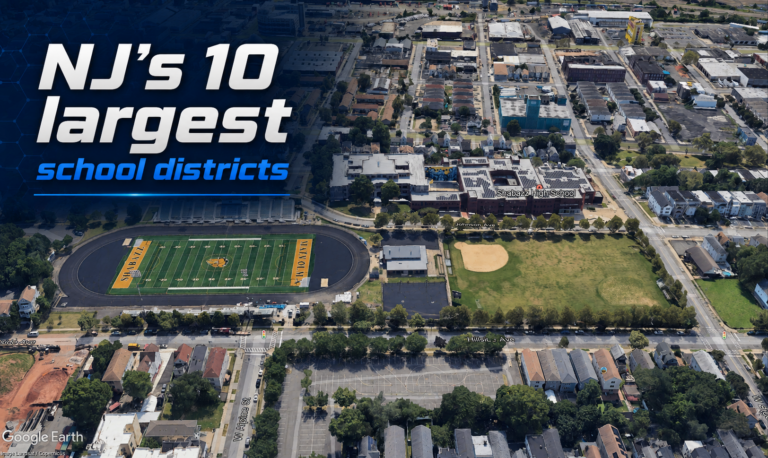
From dense urban systems to sprawling suburban networks, New Jersey’s largest school districts serve hundreds of thousands of students across a diverse collection of classrooms and communities. New Jersey has more than 1.3 million public school students spread across more than 600 school districts. Some cover compact cities where space is at a premium; others operate dozens of buildings across large suburban communities.
Using New Jersey Department of Education enrollment data for the 2023–2024 school year, these are the 10 largest public school districts in the state.
Link to google map here: https://www.google.com/maps/d/edit?mid=1OmhQ7RoAN7hwNHcas8uZPcKFw_z24yU&usp=sharing
Embed code:
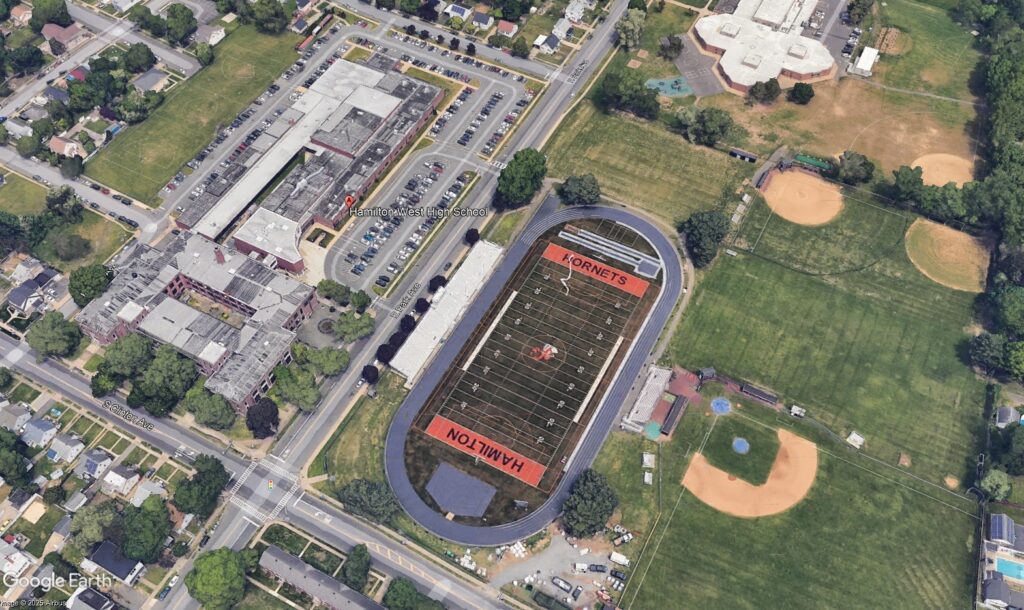
10. Hamilton Township School District (Mercer County)
Hamilton West is one of three high schools in this sprawling district. Google Earch
Enrollment: 12,377 students, pre-K through grade 12
Setting: Suburban
Geography: 40 square miles in Mercer County
Communities served: Hamilton Township
Located just outside Trenton, Hamilton Township operates one of New Jersey’s largest suburban school systems. Its 23 schools include three comprehensive high schools, each serving a different part of the township.
The district’s size gives students access to a broad range of academic, athletic and arts programs. Partnerships with Mercer County Community College and other local organizations also provide pathways into college, technical training and careers.
9. Union City School District
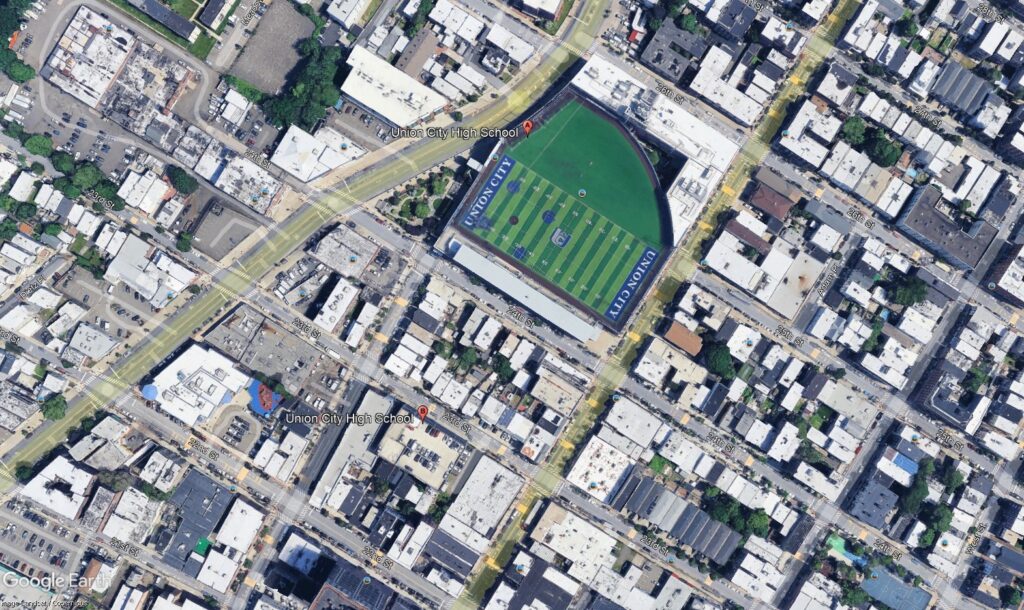
Union City High school spans two buildings and features a rooftop athletic field designed to make the most of limited urban space. Google Earth.
Enrollment: 12,797 students, pre-K through grade 12 Setting: Urban Geography: 1.3 square miles in Hudson County Communities served: Union City
Union City serves nearly 13,000 students within just 1.3 square miles, making it the most geographically compact district on this list. That density requires the school system to make creative use of limited land.
Union City High School provides perhaps the most visible example. The campus includes a full-sized athletic field constructed on its roof, allowing the district to provide modern recreational facilities in one of the most densely developed communities in the country. The district a
8. Woodbridge Township School District
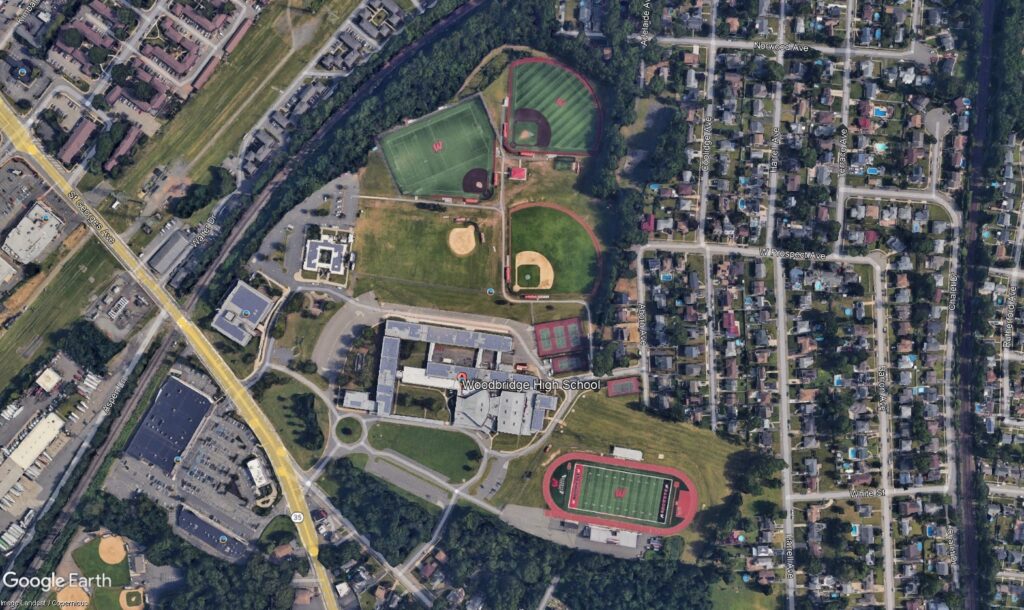
Woodbridge High School is one of three public high schools serving the township. Google Earth.
Enrollment: 14,044 students, pre-K through grade 12 Setting: Suburban Geography: 24.2 square miles in Middlesex County Communities served: Woodbridge Township
Woodbridge Township operates 24 schools across one of New Jersey’s largest and most populous municipalities. Its three public high schools serve different sections of the township, giving each campus a distinct identity while remaining part of a single district.
The system reflects the challenge facing many large suburban communities: maintaining neighborhood schools and local traditions while providing consistent programs and services across a township of more than 100,000 residents.
7. Toms River Regional Schools
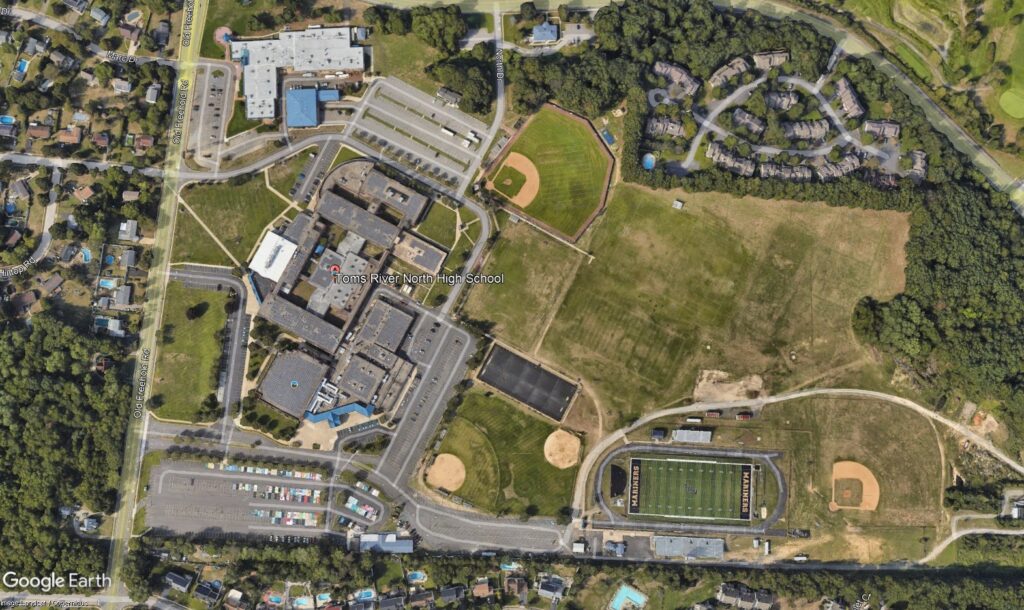
Toms River High School North is the largest of the district’s three public high schools. Google Earth.
Enrollment: 14,594 students, pre-K through grade 12 Setting: Suburban Geography: 53 square miles in Ocean County Communities served: Toms River Township, Beachwood, Pine Beach and South Toms River
Toms River Regional Schools is the largest suburban regional district in New Jersey. Its 18 schools, including three high schools, serve students across four Ocean County municipalities.
The district’s size and regional structure require it to operate an extensive network of classrooms, transportation routes, athletic facilities and support services. Toms River has also faced significant reductions in state aid, forcing district leaders to make difficult decisions about staffing, programs and building operations.
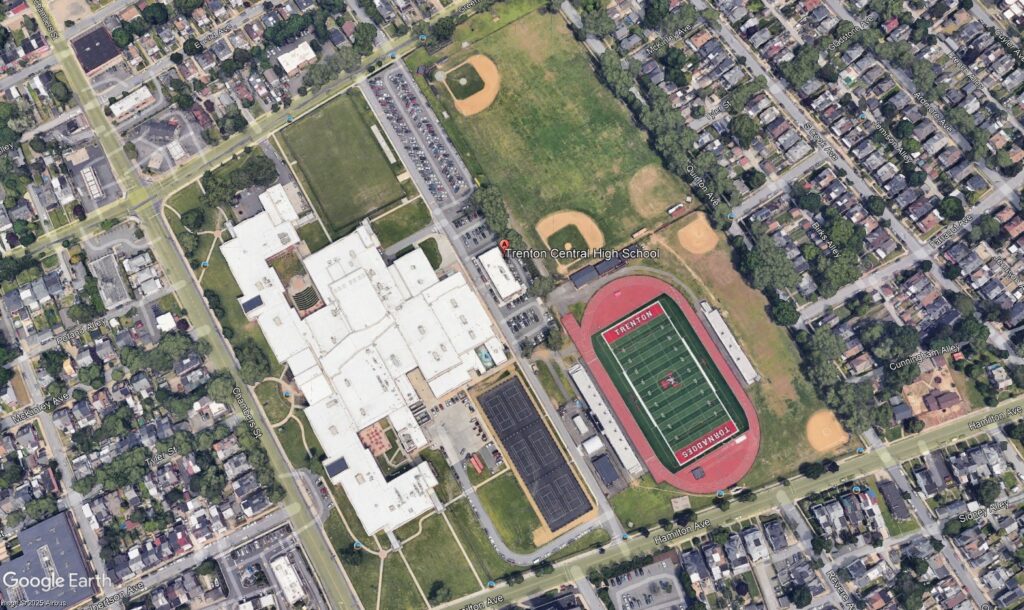
6. Trenton Public Schools
Caption: Trenton Central High School is a $155 million campus housing five specialized academic programs.
Enrollment: 15,459 students, pre-K through grade 12 Setting: Urban Geography: 7.6 square miles in Mercer County Communities served: Trenton
New Jersey’s capital city operates a school system serving more than 15,000 students. One of its most significant recent infrastructure investments is the $155 million Trenton Central High School, which opened in 2019.
The modern campus houses five specialized academies focused on subjects including science, technology, engineering, mathematics and the arts. Trenton continues to contend with poverty and student mobility; its newer facilities and career-oriented programs are intended to provide students with stronger connections to college and employment.
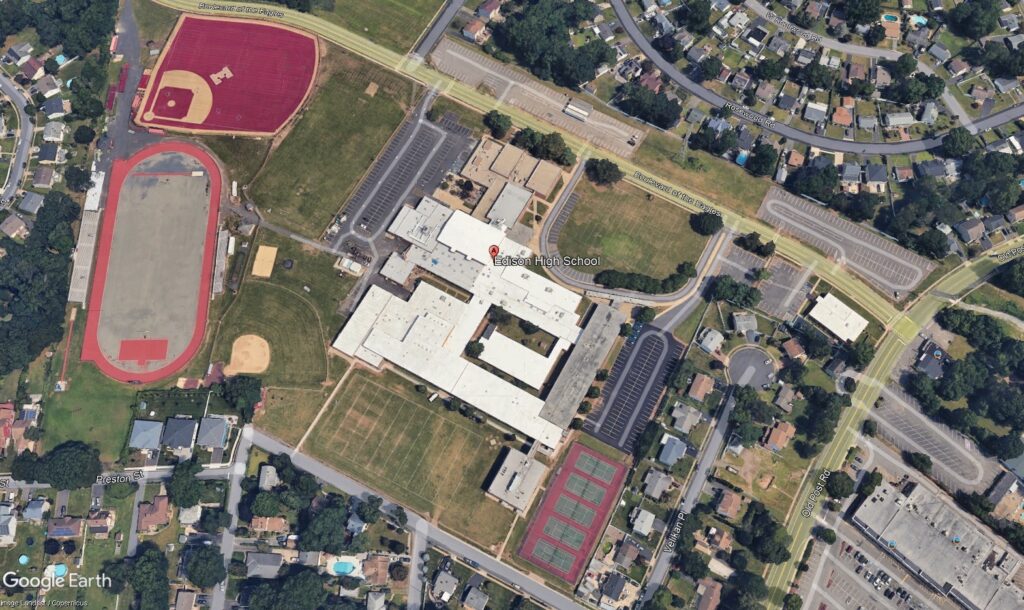
5. Edison Township Public Schools
Edison High School is one of two public high schools in Edison, NJ.
Enrollment: 17,005 students, pre-K through grade 12 Setting: Suburban Geography: 30.7 square miles in Middlesex County Communities served: Edison Township
Edison operates New Jersey’s largest suburban school district. Its buildings include two high schools, four middle schools and 12 elementary schools serving a township with more than 100,000 residents.
The community’s growth and diversity have shaped the district’s academic programs and facility needs. Edison places a strong emphasis on science and technology, a fitting connection to the township’s namesake, Thomas Edison, whose laboratory helped make the community an early center of American innovation.
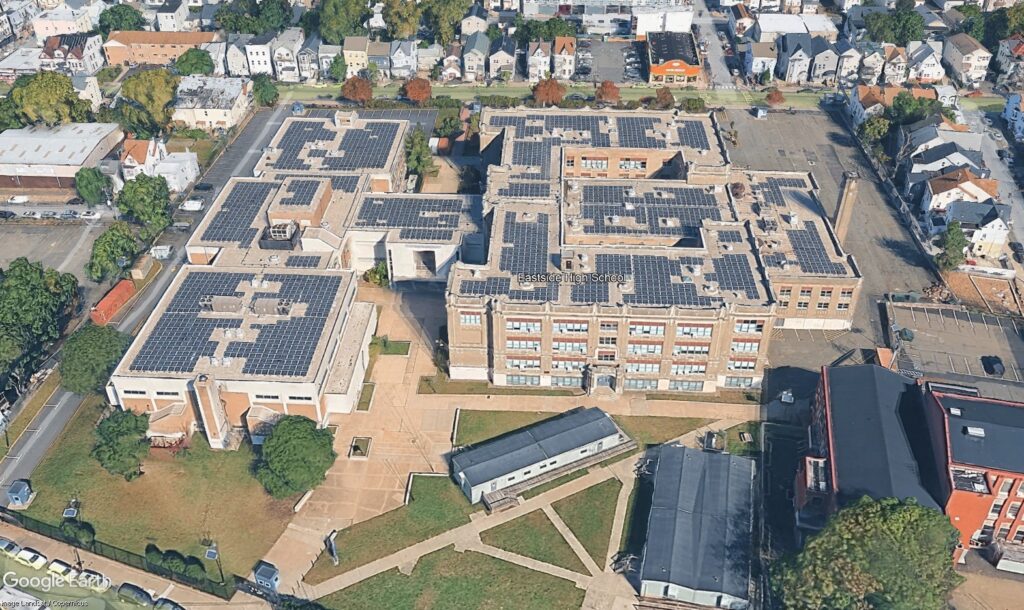
4. Paterson Public Schools
Eastside High School is one of 11 public high schools serving Paterson. Google Earth.
Enrollment: 24,692 students, pre-K through grade 12 Setting: Urban Geography: 8.7 square miles in Passaic County Communities served: Paterson
Paterson Public Schools enrolls nearly 25,000 students across 43 schools. The district spent decades under state intervention before regaining full local control in 2021.
Its schools offer programs ranging from STEM and technical education to performing arts and bilingual instruction. Eastside High School remains one of the district’s best-known buildings, in part because of its portrayal in the 1989 film Lean on Me. Today, Paterson continues to expand early childhood education and specialized programs for a largely Hispanic and immigrant student population.
3. Jersey City Public Schools
Caption: William L. Dickinson High School is one of six public high schools serving Jersey City.
Enrollment: 26,293 students, pre-K through grade 12
Setting: Urban
Geography: 21.1 square miles in Hudson County
Communities served: Jersey City
Jersey City Public Schools serves the state’s second-largest city and one of its fastest-changing communities. In 1989, it became the first New Jersey district placed under state control; local governance was fully restored nearly three decades later.
The district operates neighborhood schools alongside specialized and selective programs. McNair Academic High School is regularly recognized among the state’s highest-performing public schools, while other campuses prepare students for careers in technology, the arts and public service.
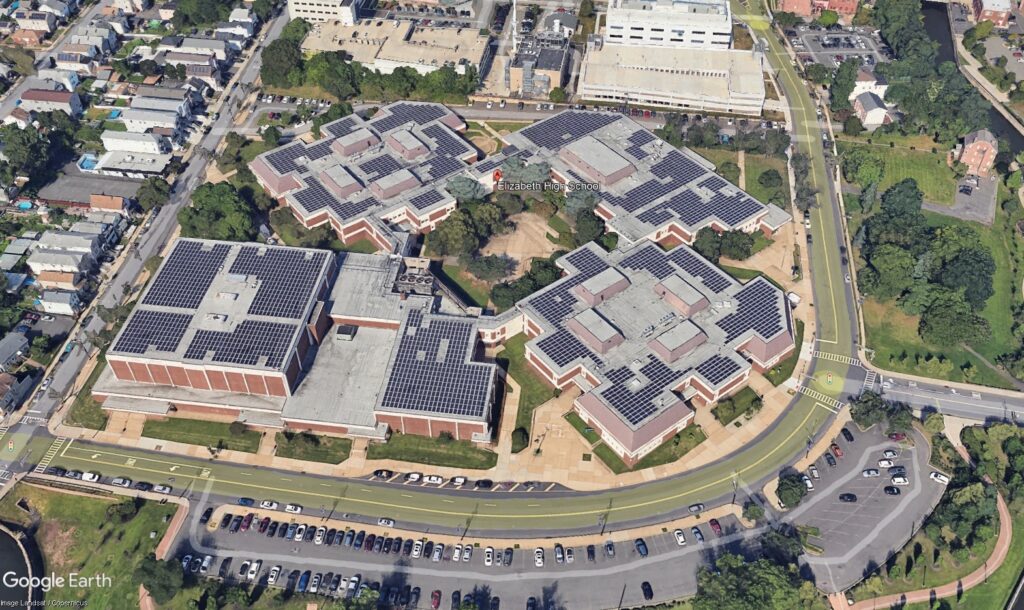
2.Elizabeth Public Schools
Elizabeth has eight public high schools and numerous charter and trade schools. Google Earth
Enrollment: 28,334 students, pre-K through grade 12 Setting: Urban Geography: 13.7 square miles in Union County Communities served: Elizabeth
Elizabeth operates New Jersey’s second-largest public school district and serves one of its most diverse student populations. Students come from more than 50 countries and speak dozens of languages at home.
As a former Abbott district, Elizabeth has received substantial state support for school construction, preschool and other educational programs. Its schools offer International Baccalaureate coursework, specialized academies and other programs intended to provide students with multiple paths toward college and careers.
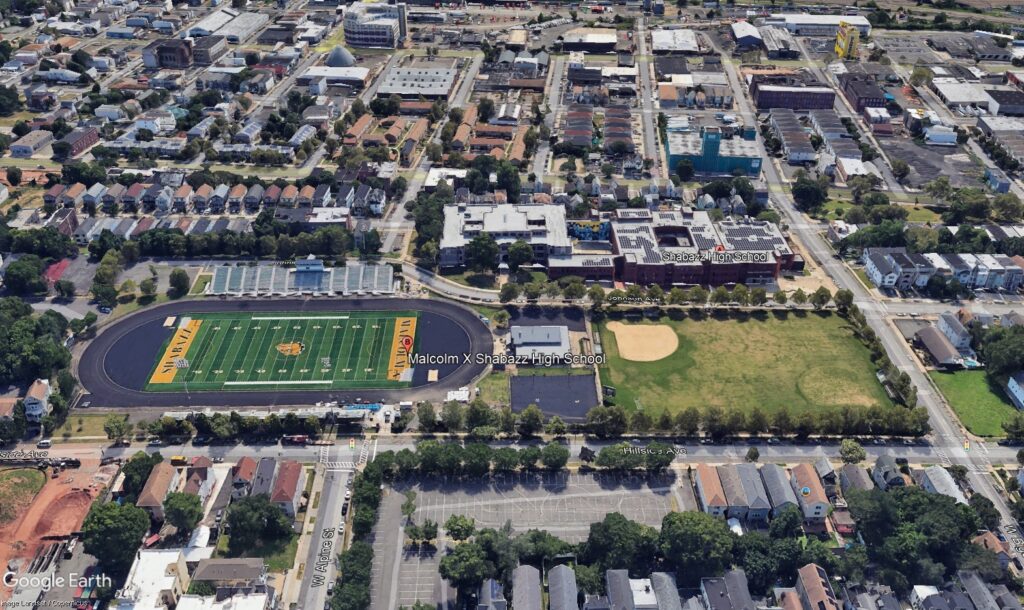
1. Newark Public School District
Caption: In Newark, charter and vocational schools outnumber traditional public high schools. Malcolm X Shabazz High School, shown here, stands within New Jersey’s largest district yet serves just over 350 students. Google Earth
Enrollment: 43,810 students, pre-K through grade 12 Setting: Urban Geography: 25.9 square miles in Essex County Communities served: Newark
With nearly 44,000 students enrolled across more than 60 schools, Newark operates the largest public school district in New Jersey. It is also one of the oldest school systems in the country, with roots extending to the 17th century.
Newark spent more than two decades under state control before regaining local governance in 2018. The district now operates neighborhood schools alongside specialized campuses such as Science Park High School and Arts High School. It has also expanded services for students with disabilities, including a school created specifically for children on the autism spectrum.
Running a system of this scale requires far more than classroom instruction. Newark must maintain an extensive network of aging and modern school buildings, transportation services, athletic facilities, technology systems and student-support programs across the state’s largest city.
Largest Charter School
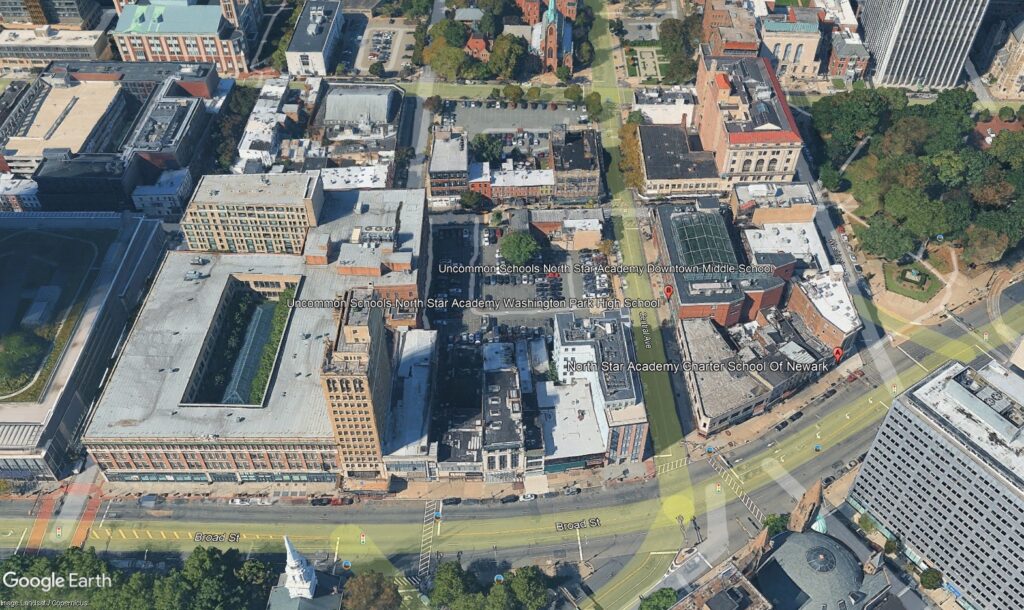
North Star Academy Charter School of Newark
North Star Academy operates neighborhood campuses throughout Newark rather than concentrating students at one location. Google Earth.
Enrollment: Approximately 6,476 students Setting: Urban Structure: 13 elementary, middle and high school campuses
North Star Academy, part of the Uncommon Schools network, was among the first charter schools established in New Jersey. Instead of concentrating students on one large campus, the network operates smaller schools in neighborhoods throughout Newark.
North Star emphasizes college preparation, structured academic support and high expectations. Its distributed campus model also illustrates how charter networks can grow within a city without developing a single district-sized facility.
Largest Private School
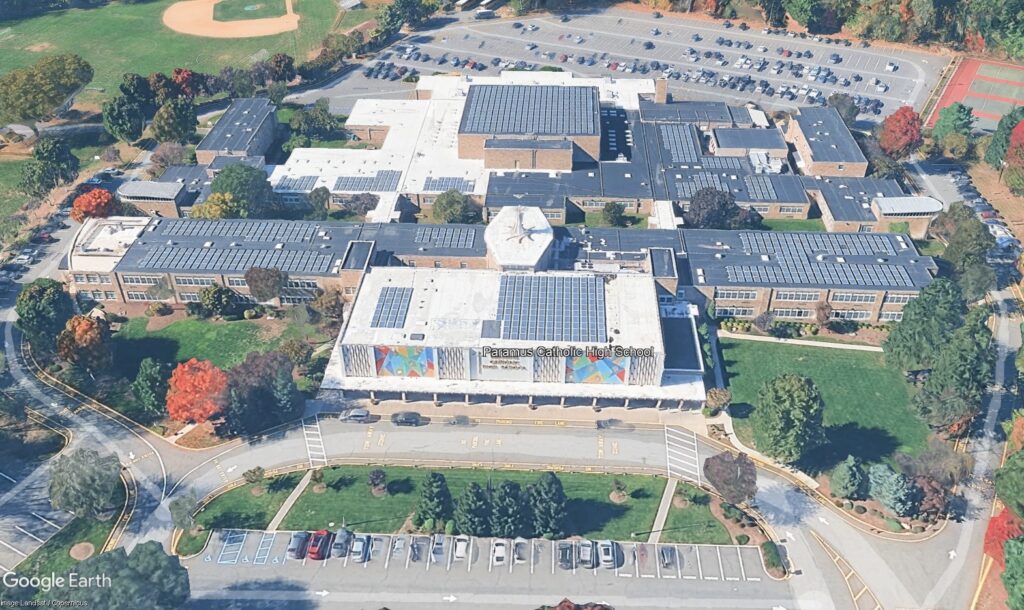
Paramus Catholic High School
Google Earth.
Enrollment: Approximately 1,570 students in grades nine through 12 Setting: Suburban Structure: 27-acre campus
Paramus Catholic operates one of the largest private high schools in New Jersey. Its 27-acre campus includes a music conservatory, amphitheater, athletic fields, tennis courts, track and a 1,500-seat football stadium.
The school offers 141 courses, including 33 honors courses and 21 Advanced Placement courses. According to the school, 99 percent of its graduates continue to four-year colleges.
Summary Table: 10 Biggest School Districts in New Jersey
Rank
District
Enrollment
Setting
Structure (Sq. Miles, Type)
Key Notes
10
Hamilton Township School District (Mercer)
12,377
Suburban
40 sq mi, single municipality (Mercer County)
23 schools, including 3 high schools; strong athletic & arts traditions; college partnerships
9
Union City School District
12,797
Urban
1.3 sq mi, single municipality (Hudson County)
One of the densest U.S. districts; bilingual & preschool focus; rooftop stadium at Union City HS
8
Woodbridge Township School District
14,044
Suburban
24.2 sq mi, single municipality (Middlesex County)
NJ’s oldest township; 24 schools, 3 rival high schools; strong STEM and arts
7
Toms River Regional Schools
14,594
Suburban
53 sq mi, multi-municipality regional district (Ocean County)
Largest suburban regional; 18 schools, 3 high schools; state aid cuts have challenged funding
6
Trenton Public Schools
15,459
Urban
7.6 sq mi, single municipality (Mercer County)
NJ capital’s district; new $155M Trenton Central HS; career-focused academies
5
Edison Township Public Schools
17,005
Suburban
30.7 sq mi, single municipality (Middlesex County)
Largest suburban district; diverse population; strong STEM and tech focus
4
Paterson Public Schools
24,692
Urban
8.7 sq mi, single municipality (Passaic County)
Returned to local control in 2021; wide range of magnet programs; Eastside HS in Lean on Me
3
Jersey City Public Schools
26,293
Urban
21.1 sq mi, single municipality (Hudson County)
First NJ district under state takeover (1989–2018); home to McNair Academic HS
2
Elizabeth Public Schools
28,334
Urban
13.7 sq mi, single municipality (Union County)
Highly diverse; former Abbott district; IB program and Blue Ribbon schools
1
Newark Public Schools
43,810
Urban
25.9 sq mi, single municipality (Essex County)
NJ’s largest district; one of the oldest in U.S.; regained local control in 2018; notable magnet & autism programs
Largest Charter and Private Schools in New Jersey
Type
School
Enrollment
Setting
Structure / Notes
Charter
North Star Academy (Newark)
~6,476
Urban
Multiple campuses (K–12); part of Uncommon Schools; college-prep focus; nationally recognized
A week dominated by water‑system upgrades, data‑center tensions, labor policy debates, clean‑energy affordability, and early scorecards on statewide energy leadership. Here’s your curated roundup.
NJ American Water begins $1.6M upgrade in Springfield
Upgrades of sections of the water system in Springfield are scheduled to begin this week. New Jersey American water announced that it will begin work to enhance service reliability and improve water flow. Crews are scheduled to replace older water main with new ductile iron pipe serving 74 customers and three fire hydrants. The company will work with property owners to remove any galvanized pipe and replace the service line from the curb to the home. Construction is expected to continue through October. For additional details and to learn about the areas where the work will take place, see the TAPinto story.
Holmdel’s iconic Bell Works may host a data center despite local ban
Bell Works could become home to a large data center even though the town recently voted to ban such facilities. Developers argue the proposal predates the ban and should be grandfathered in, while residents worry about noise, energy demand and environmental impacts. The conflict highlights growing statewide tension as AI‑driven electricity loads collide with local land‑use rules and community expectations.
Building trades remain opposed to climate superfund proposal
New Jersey’s building‑trade unions continue to oppose the proposed Climate Superfund Act, which would impose fees on major polluters to fund climate‑related infrastructure. Labor leaders say the bill could slow development, jeopardize construction jobs and create uncertainty for large‑scale projects. Supporters counter that polluters should bear the cost of climate damages rather than ratepayers or taxpayers. The debate underscores the complex intersection of climate policy, labor priorities and economic development.
Study highlights project labor agreements as a tool for public construction
A new study finds that project labor agreements (PLAs) can improve efficiency, safety and workforce stability on New Jersey public‑construction projects. Researchers highlight benefits such as standardized training, predictable labor costs and reduced delays, especially on large or complex infrastructure work. The findings arrive as state agencies weigh how PLAs could support upcoming transportation, water and energy‑grid upgrades.
Sherrill’s first six months energy scorecard shows aggressive policy shift
A new scorecard reviewing Gov. Mikie Sherrill’s first six months in office highlights major shifts in energy policy, including proposed data‑center regulations, expanded grid‑planning requirements and early steps toward statewide electrification goals. The analysis notes that the administration is pushing utilities to modernize faster while also emphasizing affordability protections for ratepayers. The report frames the period as unusually active for a new governor, with more energy‑sector directives expected this fall.
Data centers spark labor debate over electricians and energy demand
A New York Times opinion piece explores how the rapid expansion of data centers is reshaping labor markets, especially for electricians. High‑density computing requires enormous amounts of power, specialized wiring and round‑the‑clock maintenance, creating new opportunities but also raising concerns about burnout, safety and workforce shortages. The article argues that the AI‑era energy boom is transforming the electrical trade faster than unions and regulators can adapt.
The first major I-80 sinkhole in Wharton opened on Dec. 26, 2024, after an abandoned mine shaft collapsed beneath the highway. An emergency repair allowed the highway to reopen within days, but additional sinkholes and underground voids discovered in 2025 revealed a much larger problem.
NJDOT ultimately conducted extensive subsurface testing, drilling, grouting and reconstruction before fully reopening I-80 in June 2025.
New Jersey lawmakers are now considering legislation that would establish permanent abandoned-mine reclamation programs within NJDOT and NJDEP to identify, prioritize and stabilize dangerous mines before they cause another infrastructure emergency.
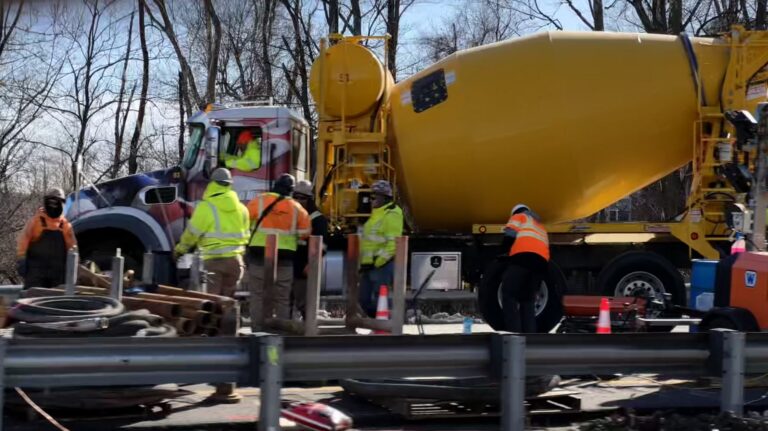
What began as an emergency highway repair in Morris County ultimately exposed a much larger infrastructure challenge beneath parts of New Jersey. On Dec. 26, 2024, a roughly 40-by-40-foot sinkhole opened along Interstate 80 eastbound in Wharton after the collapse of an abandoned mine shaft beneath the highway. NJDOT crews worked around the clock to stabilize the area, excavate the damaged roadway and complete emergency repairs.
The highway reopened within days, but the problem beneath I-80 was far from over. On Feb. 10, 2025, NJDOT observed another depression approximately 75 feet from the December collapse. While crews conducted soil testing that evening, the roadway collapsed, creating an approximately 11-by-11-foot sinkhole.
NJDOT began extensive geotechnical testing on both sides of I-80, including subsurface scanning, drilling, and grouting designed to identify and stabilize underground voids. The work identified approximately 150 locations requiring drilling and grouting and revealed areas where more substantial reconstruction was necessary.
The situation escalated again on March 19, when another approximately 15-by-15-foot sinkhole opened in the median. NJDOT closed I-80 westbound as a precaution, and subsequent testing identified a significant void beneath the westbound roadway.
By then, the response had evolved from repairing individual sinkholes into a major subsurface stabilization project. Crews drilled and grouted underground cavities, excavated compromised areas and constructed a new roadway foundation supported by micropiles extending into bedrock. NJDOT also incorporated quality-assurance testing and monitoring systems intended to verify the stability of the reconstructed highway.
Governor Phil Murphy declared a State of Emergency in Morris County on March 8, citing the geophysical hazards beneath I-80 and the severe transportation disruptions caused by the closure. Two eastbound lanes reopened May 21, followed by two westbound lanes on May 30. All westbound lanes reopened June 14, and the highway was fully reopened later that month. The state lifted its emergency declaration on June 21.
State budget documents estimated repairs associated with the I-80 and I-287 sinkholes at approximately $25 million at that stage of the response, with NJDOT initially using Transportation Trust Fund resources while discussing potential federal assistance.
The I-80 crisis also raised a larger question: how should New Jersey address abandoned mines before another underground collapse threatens a highway, utility or community? Lawmakers have since introduced proposals aimed at creating a more systematic answer.
In May 2026, Senators Paul Sarlo and Anthony Bucco introduced legislation that would establish separate abandoned-mine reclamation programs within NJDOT and the Department of Environmental Protection.
Rather than waiting for a collapse, the proposed framework would direct the state to identify abandoned mines, determine which pose the greatest threats to people, property, transportation and utility infrastructure, rank reclamation projects and develop plans to backfill, stabilize or otherwise make dangerous mine voids safe. The legislation would also establish dedicated reclamation funds within both departments and give state officials authority to conduct exploratory work necessary to evaluate potentially dangerous abandoned mines.
The proposal builds on legislative efforts that began following the I-80 emergency. A previous Senate bill establishing an abandoned-mine reclamation program within NJDOT passed the Senate unanimously in December 2025 before being referred to the Assembly. Separate legislation has also proposed allowing counties and municipalities to use open-space trust funds to remediate collapsed mine shafts and sinkholes on publicly owned property.
The shift is significant. For a state whose modern transportation network was built in some places above mining activity dating back generations, the lesson from I-80 may ultimately extend well beyond one stretch of highway in Wharton.