


Once a bridge is completed or a building opens, the workers who built them pack up their tools and equipment and move on. Construction work is temporary by nature, and this temporary nature is sometimes used to dismiss construction jobs as unstable or less valuable than permanent positions. It overlooks the reality that hundreds of thousands of New Jersey residents build lifelong careers and support families by moving from one temporary project to the next.
In July 2026, New Jersey supported approximately 161,300 construction jobs, according to preliminary data from the U.S. Bureau of Labor Statistics. That is more than 161,000 workers whose livelihoods depend on a continuing pipeline of temporary projects.
For IUOE Local 825 Business Manager Greg Lalevee, the uncertainty of construction work was part of growing up in a union household.
“When I was a kid, St. Patrick’s Day was more than an Irish holiday,” Lalevee said. “It meant the weather would begin to turn and my father would be going back to work soon.”
During the slower months, his father drove a taxi to continue providing for the family. It was an experience shared by generations of construction families, particularly when winter weather or a downturned economy brought work to a halt.
“Construction workers have always done what was necessary to take care of their families,” Lalevee said. “My father knew that one job would end and another would eventually begin. In between, he found a way to keep moving forward.”
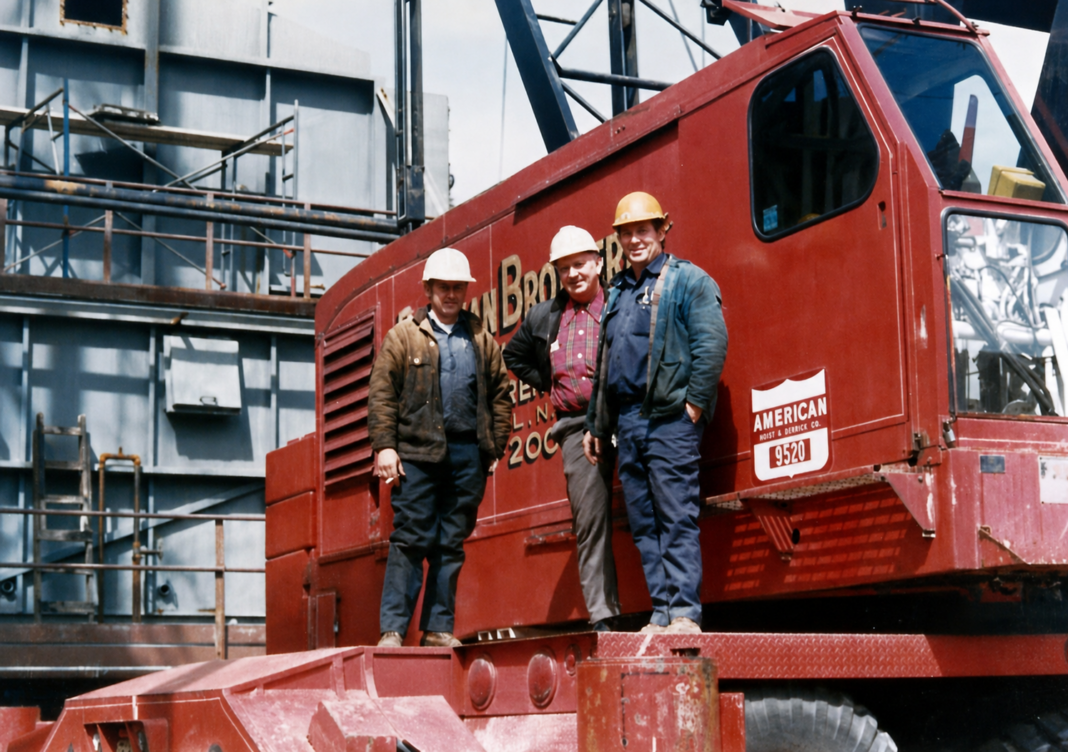
Today, all three of Lalevee’s sons are operating engineers. They entered an industry that is more technologically advanced and, in many ways, more consistent than the one their father knew. The basic reality, however, remains the same: every project has an end date.
“We are fortunate to have more consistent work for our members today, but that consistency depends on infrastructure investment, responsible development and strong relationships that can connect operating engineers with the next opportunity. Every job matters because every job represents another paycheck, another contribution toward retirement and another family being supported.”
The equipment has also changed dramatically from one generation to the next. Adapting to those changes has been essential to keeping operating engineers working.
“When Local 825 began, the equipment ran on steam. Then the industry moved to hydraulics, and today more machines are being guided by GPS,” Lalevee said. “Instead of fighting technology, operating engineers have always rolled with it. We mastered it, learned how to operate it and learned how to fix it. That willingness to keep learning is one of the reasons we have remained successful.”
The temporary nature of the projects makes adaptability even more important. An operator may move from a highway job to a hospital project, a pipeline or an environmental cleanup; each assignment can require different equipment, technology and safety training. The union provides the continuity that allows workers to carry those skills from one employer and project to the next.
Nationwide, union members working in construction and extraction occupations earned a median of $1,561 per week in 2025, compared with $1,004 for nonunion workers. The difference amounts to nearly $29,000 over a full year, although actual annual earnings depend on how consistently a worker is employed. Union members also carry their training, health coverage and retirement contributions from one participating employer to the next.
A one-day assignment
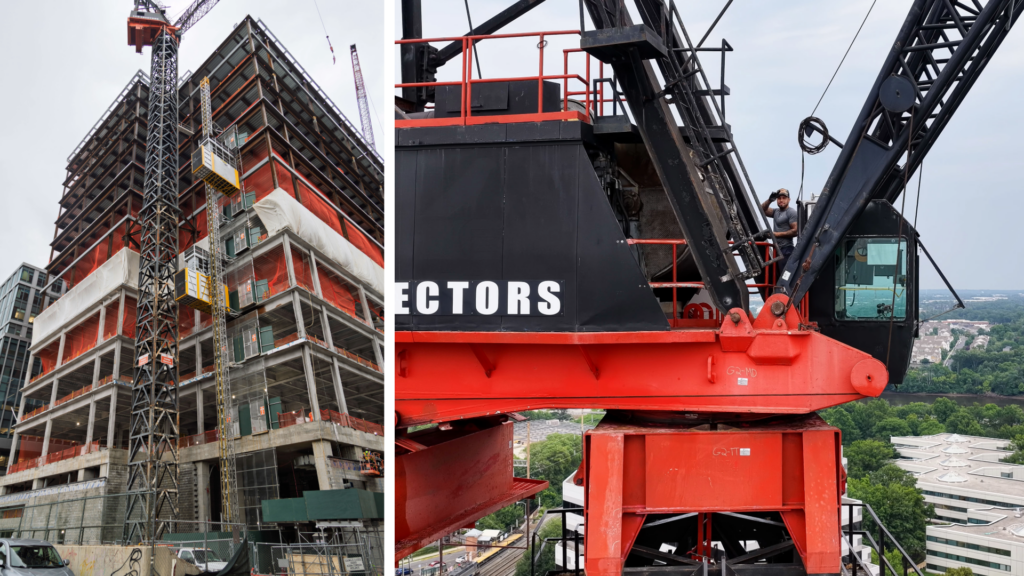
Tower crane operator Johnny Ahedo understands how quickly a temporary assignment can become an important chapter in a career. Ahedo has spent the past several years working at the HELIX development in New Brunswick, where a new innovation district is taking shape.
His time on the project began much more modestly, with a request to work one Saturday. “I thought I was going in for one day,” Ahedo said. “I showed up, did the job and expected that to be it. That Saturday turned into another day, then another week and eventually a few years.”
From high above New Brunswick, Ahedo has watched the project rise piece by piece. Like the building itself, his role has depended on hundreds of daily assignments completed safely and correctly.
“You never know how long an opportunity will last, so you treat every day like it matters,” he said. “You show up prepared, you do good work and you look out for the people around you.”
Even a multiyear project must eventually be completed. When that happens, Ahedo will climb down from the crane, leave the site and prepare for whatever comes next. The building, however, will remain a part of New Brunswick’s skyline, creating space for research, health care, education and innovation jobs that may be far more permanent than the construction work that made them possible.
Providing for a family
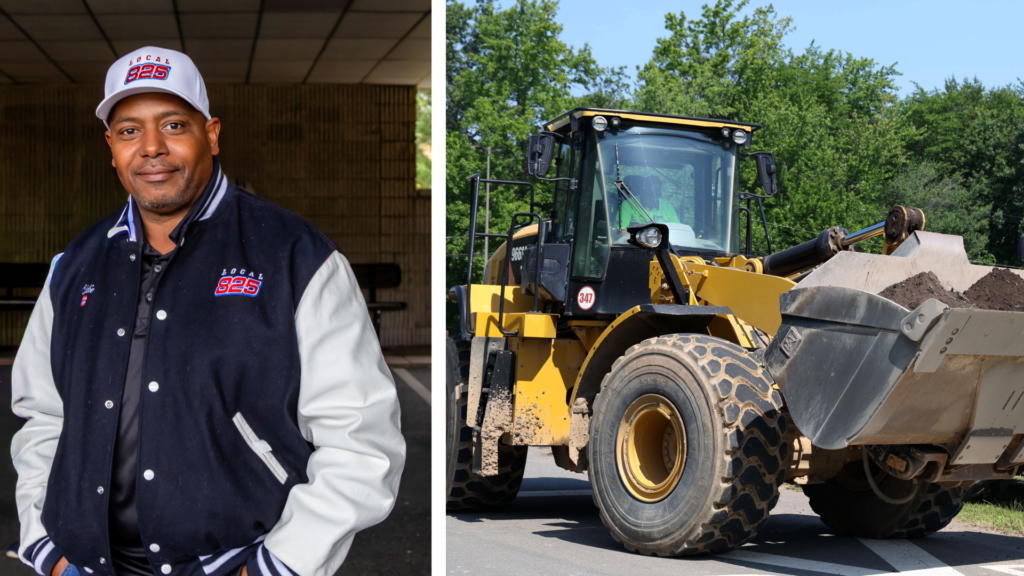
For TOMCO lead engineer Eddie Vazquez, the next assignment is never just about work. Vazquez has raised four children, and the jobs he accepts are how he provides for them. His work shirts reflect two of the commitments that define him: his union and his country. He makes sure both are represented in the embroidery he wears to work.
“I love my country, and I love my union because both have given my family opportunities,” Vazquez said. “Every time I go to work, I know what that day means at home. It means food on the table; a roof over our heads.”
As a lead engineer, Vazquez is responsible for helping a job run safely and efficiently. The project may be temporary, but the standards he brings to it cannot be. “You can’t treat a temporary job like it is disposable,” he said. “The work has to last, and the people beside you have to go home safely. Whether we are there for a few weeks or a few years, we owe the job our best.”
For many construction families, the results of temporary jobs extend well beyond the next paycheck. They pay mortgages, support communities and help parents send their children to college.
The Local 825 Scholarship Fund reflects the generational impact. Each year, scholarships help the children and grandchildren of members pursue college degrees. The recipient may be studying engineering, health care, business or another field far removed from a construction site, but the opportunity was created in part by a parent or grandparent who built a career on a slew of jobsites.
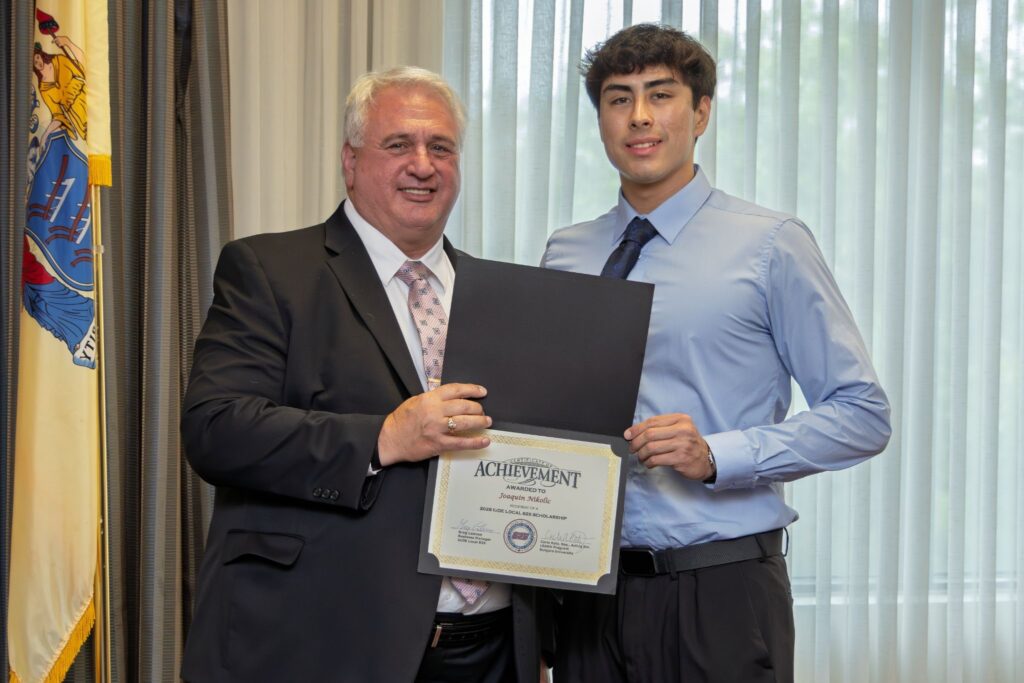
“Our members do this work because they want to provide opportunities for their families,” Lalevee said. “A parent may spend a career going from jobsite to jobsite, never knowing exactly where the next assignment will take them. Then one day, that work helps send a son, daughter or grandchild to college. There is nothing temporary about the impact that has on a family.”
That sense of responsibility is one reason unions remain so important in a project-based industry. In 2025, New Jersey had approximately 612,000 union members, representing 14.7 percent of the state’s wage and salary workforce. Contractors and locations may change, but union membership provides continuity. Training follows workers throughout their careers. Health benefits continue as members move between participating employers and pension benefits help them build long-term financial security. Together, those protections help turn a series of temporary jobs into a viable lifelong career.
The work ends; the career continues
New Jersey’s construction workers build permanent structures: roads used for generations, bridges crossed by millions, hospitals where lives are saved and schools where children learn. The irony is that the people creating those lasting structures often do so through a series of temporary assignments. No single project provides an entire career. A career is built by showing up for all of them, learning from each one and being ready when the next opportunity arrives.
“This Labor Day, we should remember that there is nothing insignificant about a temporary construction job,” Lalevee said. “It may be one stop in a worker’s career, but it helps provide for a family, send a child to college and leave something lasting behind. The project may be temporary; the life built through that work is not.”