
Our Infrastructure Matters Ad
Home Blog Page 23

100 Years of coastal defense: From bulkheads to beaches to new tools 


New Jersey’s iconic shoreline – a source of pride for the state – has long been vulnerable to erosion, storm surge, and sea-level rise. In the early 20th century, the state relied on hard structures like timber bulkheads, groins, and concrete seawalls to stabilize beaches and protect infrastructure. These methods, while initially effective, often worsened erosion in adjacent areas by disrupting natural sediment flow.

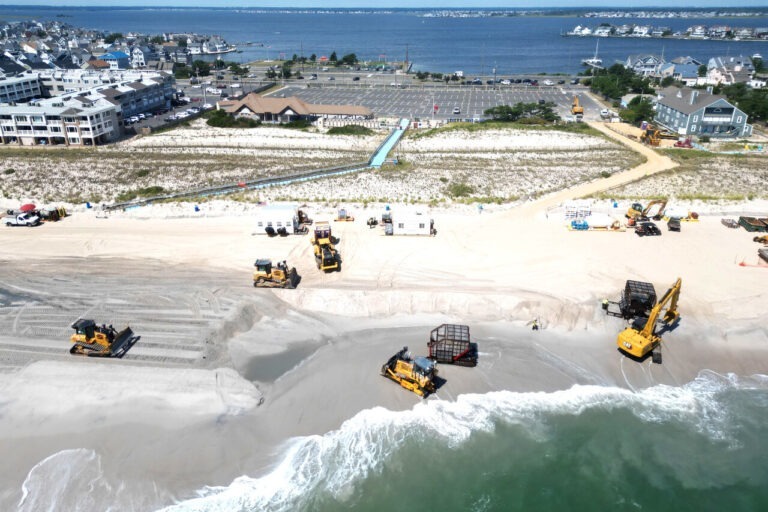
By the 1980s, scientific consensus and environmental impacts prompted a shift toward beach replenishment, the process of dredging sand from offshore sources and depositing it on eroded beaches. This approach gained traction through partnerships with the U.S. Army Corps of Engineers, especially after severe storms in the early 1990s devastated Ocean City and Cape May.

Beach replenishment is not just about erosion control and preserving a way of life; the Jersey Shore is a cornerstone of New Jersey’s economy. In 2022, tourism generated $45.4 billion in revenue, supported 310,450 jobs, and contributed $5 billion in state and local taxes. Coastal counties like Monmouth and Ocean alone attracted 20 million visitors and $8.9 billion in spending in 2024.

Between 2023 and 2025, federal, state, and local governments spent $887 million on beach replenishment in New Jersey. The projects are justified through cost-benefit analyses showing that every dollar spent protects at least $2 in public infrastructure, including roads, utilities, and boardwalks.

Despite its benefits, beach replenishment faces criticism, namely that the sand eventually washes away, requiring repeated investment. The task seems Sisyphean, and a losing battle. But this “losing battle” has protected Jersey Shore communities for decades now.

The Future: New Tools

New Jersey is increasingly embracing nature-based solutions (NBS) to complement beach replenishment. These include:

  • Living shorelines: Using native vegetation, oyster reefs, and dunes to buffer wave energy.
  • Wetland restoration: Enhancing marshes to absorb floodwaters and provide habitat.
  • Hybrid infrastructure: Combining green and grey systems for resilience and cost-effectiveness.

The New Jersey Climate Change Resource Center and The Nature Conservancy have developed planning guides and tools like the Restoration Explorer, helping communities identify suitable NBS projects. Pilot programs in towns like Brigantine, Atlantic City, and Spring Lake are already underway. These new methods will help communities identify the tactics that best serve their specific needs and risks.

“Beach renourishment is one of many tools the state plans to employ in the coming years.  In some areas resilience is provided by a beach and dune system.  In other cases, it is elevations, flood walls, and tide gates.  It is critical that each system is evaluated based on its unique nature and the community needs.  Community education and planning plays a critical role in the selection of mitigation measures.”

New Jersey Department of Environmental Protection

Conclusion: Adapting to a Changing Coast

New Jersey’s century-long journey from hard structures to replenishment and now nature-based solutions reflects a growing understanding of coastal dynamics. As sea levels rise and storms intensify, the state must continue to innovate—balancing ecological integrity, economic vitality, and community resilience.

Sources

New Jersey Department of Environmental Protection. (n.d.). Beach Replenishment. https://dep.nj.gov/dsr/environmental-trends/beach-replenishment/

Stockton University Coastal Research Center. (n.d.). NJ Shoreline Protection and Vulnerability. https://stockton.edu/coastal-research-center/njbpn/protection-vulnerability.html

Oglesby, A., & Radel, D. (2025, August 5). Beach replenishment projects cost billions along the Jersey Shore. Asbury Park Press. https://www.southernkitchen.com/story/news/local/land-environment/2025/08/05/beach-replenishment-projects-costs-billions-jersey-shore-ocean-high-tide/83652756007/

Spector, A., Barr, J., Duca, M., & Irving, W. (2025). New Jersey Nature-Based Solutions. Rutgers University. https://njclimateresourcecenter.rutgers.edu/wp-content/uploads/2025/07/Nature-Based-Solutions-071525.pdf

NJDEP Office of Coastal and Land Use Planning. (n.d.). Living Shorelines Projects. https://www.nj.gov/dep/oclup/case-studies-projects/living-shorelines-projects.html

The Nature Conservancy. (n.d.). New Jersey Coastal Resilience. https://coastalresilience.org/project/new-jersey/

Data centers turn to commercial aircraft jet engines bolted onto trailers as AI power crunch bites — cast-off turbines generate up to 48 MW of electricity apiece [Tom’s Hardware]


Faced with long delays in securing grid power, U.S. data centers are turning to aeroderivative gas turbines—retired commercial jet engines repurposed as mobile generators—to meet surging energy demands driven by AI expansion. These trailer-mounted units, derived from aircraft like the Boeing 767 and Airbus A310, can deliver up to 48 megawatts each and spin up in minutes. Vendors such as ProEnergy and Mitsubishi Power offer fast-deploying models like the LM6000 and FT8 MOBILEPAC. Though less efficient than combined-cycle plants and reliant on diesel or gas, they provide a critical stopgap as utilities struggle to keep pace. OpenAI’s parent company is deploying nearly 30 LM2500XPRESS units in Texas for its Stargate project, underscoring the urgency. While noisy and fuel-intensive, these turbines offer rapid deployment and cold-start capability, helping data centers stay online amid a nationwide AI-driven power crunch.

Read more at Tom’s Hardware 
www.tomshardware.com/tech-industry/data-centers-turn-to-ex-airliner-engines-as-ai-power-crunch-bites

Report Says PJM Need Rapid Storage Growth to Ensure Reliability [UtilityDive]

0


According to a report commissioned by the United States Energy Storage Coalition, grid operator PJM needs 45 GW of energy storage by 2043 to ensure reliability. The report prepared by the Brattle Group says PJM needs 16 GW of energy storage by 2023, 23 GW by 2040 and 43 GW by 2045 to meet state clean energy goals. Brattle said adequate energy storage could help PJM avoid up to 15 GW of load shed during extreme cold and other conditions and if PJM adds new gas generation slowly, without adequate energy storage reserves customer costs could increase 30 percent.

See the full story at Utilitydive. https://www.utilitydive.com/news/pjm-interconnection-needs-43-gw-of-energy-storage-by-2045-brattle-group/802748/

Unintended consequences: How warehouse pushback could choke roads and pollute the environment


New Jersey, a state synonymous with bustling highways and dense populations, is grappling with a growing wave of “Not In My Backyard” (NIMBY) sentiment directed at warehouse development. As suburban communities increasingly resist the construction of these vital logistics hubs, the ripple effects extend far beyond local aesthetics, threatening to exacerbate the state’s already formidable challenges with traffic congestion and vehicle emissions. This resistance could inadvertently lead to a less efficient supply chain, forcing delivery vehicles to travel greater distances and, in turn, escalating not only fuel consumption and exhaust emissions but also the often-overlooked environmental impact of tire wear.

The explosion of e-commerce, accelerated by the pandemic, has transformed the retail landscape, making rapid delivery a consumer expectation. To meet this demand, a robust network of distribution and fulfillment centers is essential, particularly “last-mile” warehouses strategically located near residents receiving packages. 

However, this development boom has been met with significant community pushback. Residents and local officials voice concerns about increased truck traffic on residential roads, noise and light pollution, environmental impacts on sensitive lands, and the perceived alteration of suburban character. This opposition has manifested in various forms, including protracted battles at planning board meetings, the implementation of local moratoriums on warehouse construction, and even state-level legislative efforts to restrict development.

The long-term logistical consequences of pushing warehouses further from the communities they serve could be detrimental. The efficiency of modern supply chains, particularly for e-commerce, hinges on the proximity of distribution centers to their final destinations. When last mile warehouses are located in suburban communities, delivery vehicles can execute shorter, more direct routes, optimizing fuel efficiency and minimizing vehicle miles traveled (VMT). This localized distribution model is inherently more sustainable, leading to reduced fuel consumption and a smaller carbon footprint.

Conversely, forcing last mile warehouses further from the communities they serve will inevitably stretch the “last mile” into “many miles.” This means that a greater number of delivery vans and trucks will be required to travel significantly longer distances to reach residential neighborhoods. The compounding effects on traffic and air quality are profound:

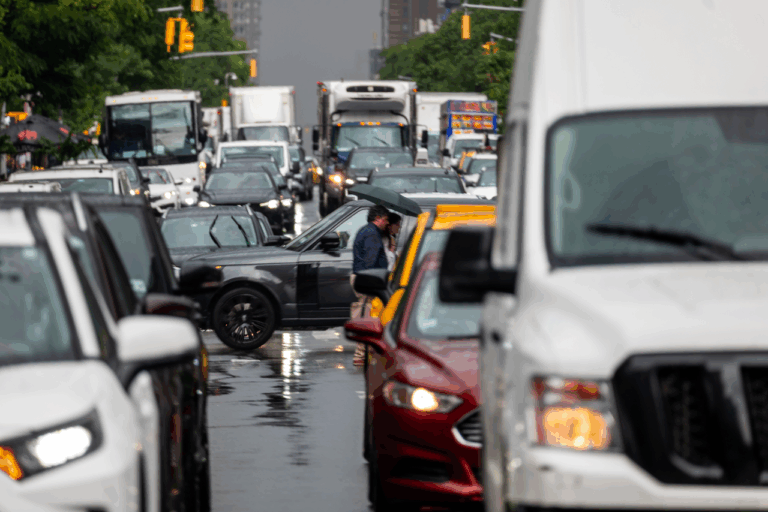
Exacerbated Traffic Congestion: Longer routes mean more time spent on the road for delivery vehicles. This increase in VMT will directly contribute to existing traffic congestion on major arteries as well as local roads not designed for heavy commercial traffic. More vehicles on the road, especially during peak hours, translate to slower speeds, more stop-and-go driving, and ultimately, greater frustration for all motorists. The sheer volume of additional commercial vehicles navigating longer routes will put immense pressure on an already strained infrastructure, leading to increased travel times and reduced roadway efficiency.

Heightened Exhaust Emissions: The most immediate and widely recognized environmental consequence of increased VMT is the surge in exhaust emissions. Longer trips require more fuel, leading to a direct increase in greenhouse gases (GHGs) like carbon dioxide (CO2), a primary driver of climate change. Beyond CO2, internal combustion engines also emit nitrogen oxides (NOx), volatile organic compounds (VOCs), and particulate matter (PM2.5). Even as vehicle technologies improve, a significant increase in the total miles driven can easily offset these gains.

The Overlooked Impact of Tire Wear: Often overshadowed by exhaust emissions, tire wear is a significant and growing source of environmental pollution. As tires roll and brake, tiny particles of rubber, synthetic polymers, and various chemical additives abrade from their surface, forming what is known as Tire Wear Particles (TWP). These microplastic particles are released directly into the atmosphere, onto road surfaces, and eventually wash into waterways. Longer driving distances, combined with the stop-and-go nature of delivery routes, accelerate tire wear. The increased friction and stress placed on tires during extended journeys mean more TWP are generated, polluting the air, soil, and aquatic ecosystems. Studies have increasingly highlighted TWP as a major source of microplastic pollution, with potential risks to human health and wildlife. An increase in delivery truck traffic, especially heavier vehicles, will disproportionately contribute to this problem due.

There is an environmental justice angle at play here as well; NIMBY campaigns are more successful in affluent communities where residents have greater resources and political clout than in minority and low-income communities with fewer resources and clout. As a result, minority and low-income communities are seen as the “path of least resistance” towards getting projects built. This unjust pattern, seen in the siting of hazardous waste facilities, is being repeated in the siting of warehouses.

The NIMBY phenomenon, while born from legitimate local concerns, presents a complex challenge with far-reaching implications for New Jersey. Balancing the demands of a modern economy and consumer expectations with community character and environmental protection requires a holistic approach. Without a strategic plan that integrates warehouse development into regional planning, the state risks creating a less efficient, more polluting, and ultimately, more congested future for its residents. 

Sources:

CBRE. (2023). U.S. Logistics & Industrial Market Outlook Q1 2023. https://www.cbre.com/insights/briefs/us-logistics-industrial-market-outlook-q1-2023

New Jersey Department of Environmental Protection. (2022). New Jersey’s Climate Change Strategy: Executive Summary. https://nj.gov/dep/climatechange/docs/nj-climate-change-strategy-executive-summary.pdf 

Texas A&M Transportation Institute. (2021). 2021 Urban Mobility Report. https://mobility.tamu.edu/umr/ 

Kole, P. J., Lohr, A. J., Vanhalewyn, R., & Van der Oost, R. (2017). Microplastic and Tire Wear Particles in the Environment: A Literature Review. Environmental Science & Technology, 51(20), 11527-11538. https://pubs.acs.org/doi/10.1021/acs.est.7b03673

Wagner, S., & Reifenhäuser, B. (2021). Tire wear particle emissions: a review of the current state of knowledge. Environmental Sciences Europe, 33(1), 1-27. https://enveurope.springeropen.com/articles/10.1186/s12302-021-00511-9

Mohai, Paul, & Saha, Robin (2016). Targeting minority, low-income neighborhoods for hazardous waste sites. Environmental Research Letters. https://news.umich.edu/targeting-minority-low-income-neighborhoods-for-hazardous-waste-sites/.

FDU Poll Finds Voters Back New Natural Gas Plants

0


A Fairleigh Dickinson University poll from October 2025 found New Jersey voters support building new natural gas power plants by a 3-to-1 margin (64% support vs. 22% oppose) as a temporary “bridge” until other power sources are online. Support is highly partisan, with 89% of Republicans in favor, while Democrats are more ambivalent (46% support, 33% oppose, 21% unsure). Men (75%) were significantly more likely than women (55%) to back the new plants. The poll suggests the desire for quicker action and lower energy prices is driving this support.

Read the FDU news release here: https://www.fdu.edu/news/fdu-poll-finds-voters-back-new-natural-gas-plants

Release Tables

In recent years, New Jersey has favored the development of renewable energy over energy from sources like natural gas. However, because they can generally be opened faster than other types of power plants, both candidates running for governor in New Jersey this year have said that they support building new natural gas plants, at least as a bridge to lower prices until other power sources can be brought online. What do you think?
 OverallDemIndpRep
Build New Natural Gas Plants64%46%67%89%
Wait for Other Options21%33%22%5%
Don’t Know14%21%11%6%
In recent years, New Jersey has favored the development of renewable energy over energy from sources like natural gas. However, because they can generally be opened faster than other types of power plants, both candidates running for governor in New Jersey this year have said that they support building new natural gas plants, at least as a bridge to lower prices until other power sources can be brought online. What do you think?
 OverallDef. SherrillProb. SherrillProb. CiattarelliDef. Ciattarelli
Build New Natural Gas Plants64%45%67%78%90%
Wait for Other Options21%34%26%11%3%
Don’t Know14%21%8%11%6%
In recent years, New Jersey has favored the development of renewable energy over energy from sources like natural gas. However, because they can generally be opened faster than other types of power plants, both candidates running for governor in New Jersey this year have said that they support building new natural gas plants, at least as a bridge to lower prices until other power sources can be brought online. What do you think?
 Overall30 and Under31-4445-6465+
Build New Natural Gas Plants64%52%61%68%68%
Wait for Other Options21%33%25%19%16%
Don’t Know14%15%15%13%15%
In recent years, New Jersey has favored the development of renewable energy over energy from sources like natural gas. However, because they can generally be opened faster than other types of power plants, both candidates running for governor in New Jersey this year have said that they support building new natural gas plants, at least as a bridge to lower prices until other power sources can be brought online. What do you think?
 No 4yr Degree4 yr DegreeMenWomen
Build New Natural Gas Plants66%63%75%55%
Wait for Other Options22%21%17%25%
Don’t Know13%17%8%20%

Op-Ed: Powering the Advanced Industrial Revolution

0


New Jersey’s Time to Build, Lead, and Leave a Legacy

America and New Jersey are standing at the threshold of what can best be described as the Advanced Industrial Revolution—a convergence of advanced manufacturing, artificial intelligence, data infrastructure, massive job creation, and large-scale reinvestment in America’s industrial base. At the center of it all is energy: abundant, reliable, and built with purpose.

The New Jersey Energy Policy Coalition (NJEPC)- www.njepc.org  – was created to address that realization – to ensure that New Jersey is not just watching as the Advanced Industrial Revolution unfold but that New Jersey is participating in this new era and shaping it. Our mission is clear: support energy and economic development by expanding generation, strengthening infrastructure, and building a workforce capable of delivering real results.

I recently had the opportunity to speak across the nation, where I emphasized a critical truth: no energy project can exist without skilled labor. By 2030, America will need 500,000 newly trained electricians. That number is staggering—but also inspiring. These aren’t theoretical jobs. They are real, hands-on, American careers. That’s why we must work hand-in-hand with energy companies, utilities, labor unions, trade associations, technical schools, and economic development leaders to build and train the workforce we’ll need—not just for today, but for the decades ahead.

Here in New Jersey, the need to build is especially urgent.

Over the last several years, our state has seen more power generation retire than come online. At the same time, our demand for electricity is growing rapidly—from data centers to electrified transit, advanced manufacturing, and heating and cooling. New Jersey needs to build new generation and grid infrastructure now, and we need to do it right here at home.

And let’s be clear: while we debate and delay, China and India are building coal-fired power plants at the pace of nearly one per week—every week—for the next decade. That is the scale of global industrial momentum. We cannot afford to fall behind—not technologically, not economically, and certainly not strategically.

This is not about ideology—it’s about capacity, reliability, national security, and economic survival.

To meet our growing needs, we must pursue a balanced, technology-neutral approach to energy development and delivery, leveraging every viable in-state resource:

  • Advanced nuclear energy, for long-term, carbon-free baseload power.
  • Fuel cells for efficient, distributed generation in commercial, industrial, and municipal applications.
  • Energy storage systems to manage peak load, enhance local grid resilience and reliability, and support intermittent assets.
  • Solar power in appropriate locations, paired with firm generation or storage.
  • Combined cycle natural gas plants, which have proven to be flexible, fast-start, and reliable.
  • Sustained investment in infrastructure for electric and gas will not only carry critical fuel to the power plants, but it will also distribute the fuel for heating and cooking, and wires will deliver the electrons from generators to homes and businesses. 
  • Renewable Natural Gas (RNG) can be sourced from in-state landfills and wastewater treatment plants, converting waste into usable, local natural gas that can fuel clean electric generation and heat homes.

But electric generation alone is only the first part of the equation. We must also build the transmission and distribution systems to deliver power where and when it’s needed. That means modern substations, upgraded lines, hardened infrastructure, modernized pipelines, and advanced control systems—a full grid that supports the next generation of industrial growth. 

And when we talk about New Jersey—from Cape May to Sussex, Salem to Jersey City, Vineland to Newark, from the Taylor Ham diners to the Pork Roll diners, and from the Monmouth Battlefield to the Red Bank Battlefield — we are talking about a state uniquely equipped to answer this generation’s call.

This is our moonshot moment. Just as a prior generation put a man on the moon, we have the opportunity—and the responsibility—to build the energy backbone that will support our economy, our national competitiveness, and our way of life for generations to come.

This is the work of the NJEPC. We are building a coalition not around slogans or mandates, but around reality—around shovels in the ground, engineers in the field, and electricians, carpenters, operating engineers, and laborers on the job. We are laying the foundation for a future built on reliability, affordability, and American grit.

But this is also about something deeper.

We must leave behind more than megawatts and therms—we must leave a legacy. A legacy our children, and their children, can look back on with pride and say: They built the power. They trained the workers. They answered the call. They gave us the chance to dream bigger and better.

The Advanced Industrial Revolution is already underway—and New Jersey must decide whether to lead or be left behind.

At the NJEPC, we choose to lead. We welcome all who believe in building — not just talking — to join us. 

Erick Ford is the president of the New Jersey Energy Policy Coalition (NJEPC), www.njepc.org

Paterson pipe collapse exposes Passaic Valley Water Commission’s aging infrastructure [Yahoo News]

0

A massive water main failure in North Jersey cut service to nearly 200,000 residents and put a spotlight on the state’s crumbling water infrastructure. Many of the region’s pipes are more than a century old, and the system is showing its age. 

“Their infrastructure wasn’t in the shape that it should have been in,” George said of the PVWC, adding that ratepayers don’t want to pay higher fees to upgrade the system. “How do you bring it up to shape?” George asked rhetorically. “The way you do it is with state and federal funds.”

Read more at Yahoo news: https://www.yahoo.com/news/articles/decrepit-north-jersey-water-pipe-082649046.html

Report – Fossil fuels to remain a large part of energy mix well past 2050 [McKinsey]

A new Global Energy Perspective Report issued by McKinsey and Company says fossil fuels, especially natural gas, are expected to remain a large part of the country’s energy mix well past 2050. The report also says alternative fuels are not likely to see wide adoption until 2040.

”This year marks the tenth anniversary of McKinsey’s Global Energy Perspective, offering a chance to reflect on the lessons learned over the past decade and to look ahead to the next one.

Two overarching themes emerge from this year’s outlook. First, cost competitiveness and an economically pragmatic energy transition remain paramount. Energy affordability, reliability (including energy security at the national or regional level), and emission reduction continue to form a trio of priorities that drive energy decision-making. However, without affordability—along with bankability—widespread adoption of new low-carbon technologies will not happen.

Second, there is no silver bullet for decarbonization. Countries and regions will follow distinct trajectories based on local economic conditions, resource endowment, and the realities facing particular industries.”

Read the full report on McKinsey.com: https://www.mckinsey.com/industries/energy-and-materials/our-insights/global-energy-perspective

Is your daily commute over one of N.J.’s ‘deficient’ bridges? Here’s what you should know. [NJ.com]

New Jersey commuters travel daily over hundreds of structurally deficient bridges, many of them decades old and still carrying heavy traffic. A new state report highlights urgent repair needs, safety risks, and funding challenges. Officials warn delays could worsen congestion and hazards, underscoring the importance of infrastructure investment and modernization statewide.

Read the full story on NJ.com: 

www.nj.com/news/2025/10/is-your-daily-commute-over-one-of-njs-deficient-bridges-heres-what-you-should-know.html

As California’s Emissions Rules Faces Court Battles, States Scramble To Save Their Climate Goals


California’s authority to enforce stricter vehicle emissions standards is being challenged in federal court. This threatens the waiver that has allowed 17 states, including New York and New Jersey, to adopt tougher rules of their own. While these court battles continue to play out, several states are pursuing low-carbon fuel options like biofuels and renewable diesel as an alternative way to control emissions. The outcome of these legal and policy efforts could shape how states across the country define and achieve their climate goals.

Read more at Inside Climate News: https://www.insideclimatenews.org/news/07072025/california-emissions-rules-court-battles-affect-other-states-climate-goals/