
Our Infrastructure Matters Ad
Home Blog Page 30

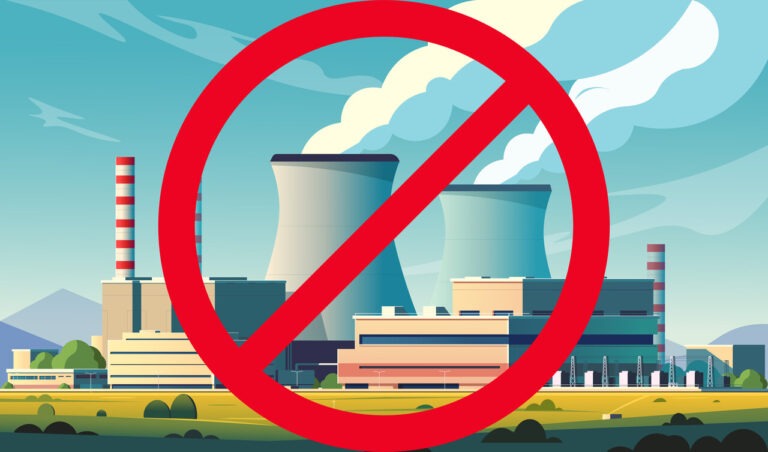
Critics Push Back on New York’s New Nuclear Power Plans

0

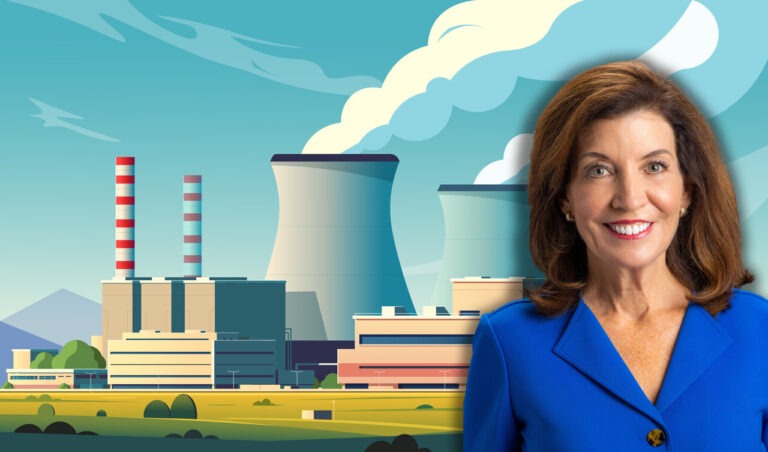
New York’s announcement in June 2025 to pursue construction of a new nuclear power plant has been met with immediate and vocal opposition from leading environmental organizations, public power advocates, and some lawmakers. Critics argue the plan is costly, risky, and diverts resources from renewables and grid modernization.

Environmental Groups: “A Step Backward”

Food & Water Watch, one of the state’s most prominent environmental groups, sharply criticized the proposal. 

“Governor Hochul’s nuclear gamble is a reckless distraction from the clean, affordable energy New Yorkers actually need. Nuclear power is dirty, dangerous, and wildly expensive — and this project will leave New Yorkers footing the bill while delaying urgently needed progress on renewables. Hochul needs to stop chasing false solutions and start delivering real climate action.”

Alex Beauchamp, Food & Water Watch Northeast Region Director

The group further warned that nuclear projects are “one of the most expensive and slowest forms of energy to build, with recent projects across the country plagued by decade-long delays and massive cost overruns.” Food & Water Watch urged the state to focus on “affordable, job-creating renewable energy — like wind, solar, and energy efficiency — that can deliver results now, not years or decades down the line.”

The Public Power NY Coalition, representing a broad alliance of climate and energy justice organizations, released a statement calling the governor’s proposal “a distraction from the urgent need to build out renewables.” The coalition said, “NYPA should be laser focused on rapidly scaling up their buildout of affordable solar and wind which is the only way to meet the state’s science-based climate goals and lower energy bills.” The coalition also emphasized that the nuclear plan would “divert public resources and attention away from proven, safe, and job-creating clean energy solutions.”

“Expanding nuclear energy in New York would be an ‘extremely expensive’ pursuit that also poses ‘real, serious environmental (and) health risks.’ It’s a horrifically irresponsible pursuit of a technology that creates long-lived deadly radioactive waste.”

Anne Rabe, Coordinator, Don’t Waste New York and former senior advisor, New York Public Interest Research Group

The Debate Continues

While Governor Hochul and supporters argue that nuclear energy is essential for grid reliability and decarbonization, critics remain unconvinced. The debate over the role of nuclear power in New York’s climate strategy is expected to intensify as the state moves forward with feasibility studies and planning.

Sources

  1. “Environmentalists are not on board with Hochul’s new nuclear plant,” City & State NY, June 24, 2025, https://www.cityandstateny.com/policy/2025/06/environmentalists-are-not-board-hochuls-new-nuclear-plant/406257/
  2. “Hochul’s Nuclear Announcement Is a Costly, Misguided Mistake,” Food & Water Watch, June 23, 2025, https://www.foodandwaterwatch.org/2025/06/23/hochuls-nuclear-announcement-is-a-costly-misguided-mistake/
  3. “Public Power NY Responds to Hochul’s Order for New York Power Authority to Build Nuclear Energy,” Public Power NY, June 23, 2025, https://publicpowerny.org/press-releases/public-power-ny-responds-to-hochuls-order-for-new-york-power-authority-to-build-nuclear-energy/
  4. “Upstate New York eyed for first new nuclear power plant in a generation,” WXXI News, June 23, 2025, https://www.wxxinews.org/local-news/2025-06-23/first-new-nuclear-plant-in-a-generation-to-be-built-in-upstate-new-york
  5. “New York Again Embraces Nuclear Power With Plans to Build New Plant,” The New York Times, June 23, 2025, https://www.nytimes.com/2025/06/23/nyregion/new-york-nuclear-power-plant.html

A 117-year-old N.J. bridge that survived a superstorm is finally being replaced [NJ.com]

“The current bridge, built in 1908, carries North Jersey Coast Line trains across the Raritan River between Perth Amboy and South Amboy. Due to damage caused by Superstorm Sandy, trains have been traveling across the bridge at 30 mph since 2012, instead of the normal speed of 60 mph.”

Read the full story on https://www.nj.com/news/2025/06/a-117-year-old-nj-bridge-that-survived-a-superstorm-is-finally-being-replaced.html

Big Beautiful Bill Provides An Energy Overhaul: Nuclear, Hydro, and Geothermal Take Center Stage in America’s Power Future

0

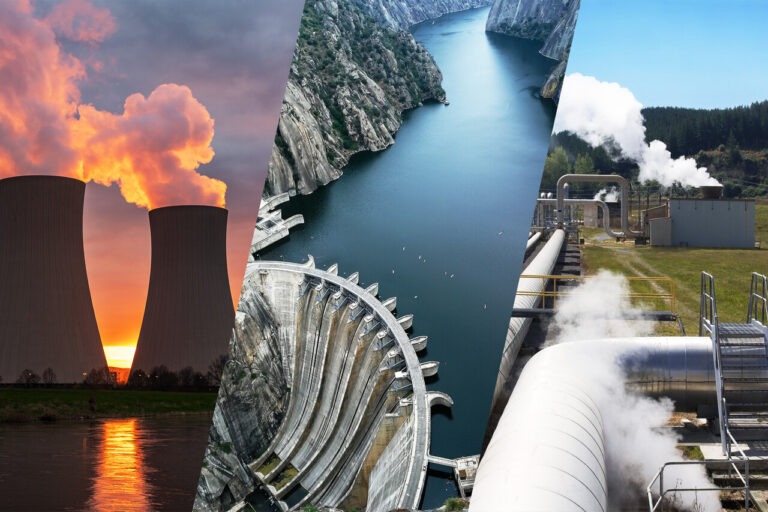
Washington, D.C. — In one of the most significant overhauls of American energy policy in recent decades, President Donald Trump has signed the American Energy Independence and Stability Act of 2025 into law. The legislation charts a new course for the nation’s power grid, emphasizing reliable base load energy generation through nuclear, hydroelectric, and geothermal power, while scaling back reliance on intermittent sources like wind and solar.

This landmark policy marks a major shift in the U.S. energy strategy, centered on reducing emissions without compromising grid reliability or national energy independence. The legislation sets aggressive targets to triple the country’s nuclear capacity by 2040, double hydroelectric output, and rapidly deploy new geothermal infrastructure.

A New Emphasis on Base Load Reliability

At the core of the law is the prioritization of base load energy—power sources that can run continuously regardless of weather or time of day. The plan seeks to ensure grid reliability by focusing investment on technologies that offer consistent, around-the-clock generation.

Nuclear energy leads the push. The bill authorizes over $850 billion for the development and deployment of next-generation nuclear reactors, particularly small modular reactors (SMRs), which are designed to be more efficient, cost-effective, and easier to site than traditional large-scale nuclear plants. Twelve SMR facilities are already in the planning stages, with the first wave of construction expected to begin in 2026 across the Midwest and Southeastern U.S.

Geothermal Power Gains Federal Momentum

Geothermal energy, long a niche player in the national energy portfolio, is gaining new prominence under the policy. A newly established federal agency, the Geothermal Innovation and Deployment Agency (GIDA), will be tasked with identifying geothermal resources, funding drilling research, and coordinating large-scale deployment.

Advanced geothermal technologies, such as enhanced geothermal systems (EGS), are being prioritized for their ability to provide steady, emissions-free electricity from the Earth’s natural heat. Early-stage projects in the western U.S. aim to demonstrate that geothermal can be rapidly scaled to supply a significant portion of the national grid.

Hydropower Modernization and Expansion

Hydroelectric power, one of the country’s oldest renewable sources, is also getting renewed attention. The new law includes funding for upgrades to existing hydro infrastructure, retrofitting older dams with modern turbines, and converting non-powered dams into energy-producing facilities.

In addition to increasing capacity, the plan introduces updated environmental guidelines designed to balance energy generation with aquatic ecosystem protection. While hydro does not face the same intermittency problems as solar and wind, it has often been overlooked due to environmental impact concerns and regulatory complexity. The new legislation aims to resolve those tensions through targeted investment and modernization.

Reduced Emphasis on Wind and Solar

Although wind and solar technologies have received substantial investment and media attention in recent years, their role under the new plan is notably diminished. While these sources remain part of the broader energy mix, the law frames them as supplementary rather than foundational.

The key limitation is intermittency. Solar power drops sharply during nighttime and cloudy conditions, while wind energy production can fluctuate hourly depending on local weather patterns. Despite improvements in battery storage and grid management, these sources still require consistent backup—often from fossil fuels or base load generation—raising concerns about overall system stability and emissions.

The recent stress on electric grids in states like California and Texas has underscored the vulnerability of systems that rely too heavily on weather-dependent sources. Policymakers behind the bill argue that a stable, resilient grid must be built on sources that can provide continuous output regardless of external conditions.

Public and Industry Reaction

The energy sector has responded with cautious optimism. Nuclear and geothermal firms are already announcing new partnerships and facility expansions, buoyed by the certainty of long-term federal support. Hydropower operators, many of whom manage aging infrastructure, are expected to benefit from both modernization grants and streamlined regulatory pathways.

Public opinion appears to support the direction of the policy. Recent polling indicates growing interest in reliable, clean energy sources that do not depend on favorable weather. While wind and solar still enjoy general approval, there is increasing recognition of their limitations as primary power sources.

Environmental groups remain divided. Some applaud the reduced emissions and expansion of non-fossil fuel base load power, while others express concern about the ecological footprint of hydro and the long-term waste management issues associated with nuclear power.

Looking Forward

The American Energy Independence and Stability Act represents a bold attempt to realign national priorities around reliability, sustainability, and independence. By shifting the focus toward base load power—nuclear, geothermal, and hydro—the policy lays the foundation for a grid that can withstand both environmental and geopolitical shocks.

Much will depend on execution. Federal and state agencies must overcome permitting delays, supply chain bottlenecks, and public resistance in some areas. Workforce development will also be crucial, as the new energy strategy requires a broad range of skilled professionals in nuclear engineering, geothermal drilling, and hydroelectric maintenance.

Still, the legislation marks a decisive turn in U.S. energy policy. It reflects a growing recognition that technological reliability, not just carbon reduction, must be central to the energy transition. If successful, the policy could redefine what a sustainable and secure power system looks like for the 21st century.

New Jersey Turnpike Interchange 1 to 4 Capacity Enhancements – A Strategic Infrastructure Investment

The New Jersey Turnpike is a foundational element of the state’s transportation infrastructure and a vital artery within the broader I-95 corridor, connecting major economic centers across the Northeast United States. The Turnpike facilitates the movement of over 375 million tons of goods annually with direct connections to significant logistics hubs like the Port of Newark/Elizabeth and Newark Liberty International Airport. The Turnpike directly supports commerce, fosters job creation, and enhances the overall quality of life within the state.3 

Addressing Decades of Growth and Congestion

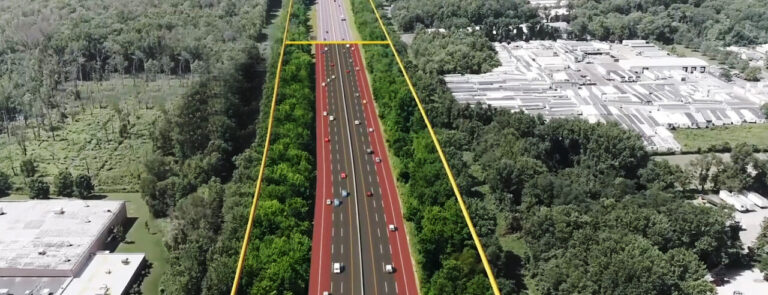
The 36.5-mile segment of the New Jersey Turnpike between Interchanges 1 and 4 remains in its original four-lane configuration (two lanes in each direction) since its construction in 1951.4 This contrasts sharply with other sections of the Turnpike, which have undergone extensive capacity enhancements, expanding to six, twelve, or even fourteen lanes in certain areas, to meet evolving traffic demands.5

A comprehensive Traffic Operational Study of New Jersey Turnpike Interchanges 1 to 6 identified critical safety, mobility, and operational deficiencies within this corridor. The study’s projections are stark: without significant improvements, this section of the Turnpike is anticipated to reach “gridlock by the year 2030”.7 This severe forecast is driven by substantial population growth and, notably, a surge in warehouse development across the region, which has dramatically increased truck traffic and overall vehicle volumes, pushing the existing two-lane roadway beyond its operational limits.8

Beyond capacity, a significant driver for the project is the aging infrastructure. Many of the 66 bridges traversing or running alongside the Turnpike in this section are original to its 1951 construction, making them over 70 years old.5 These structures require modernization to meet current highway engineering and design standards. The project aims to reduce crash rates, improve the geometry of on- and off-ramps (which helps avoid rollovers), and enhance overall safety for both passenger vehicles and heavy truck traffic.5 

The Interchanges 1 to 4 Capacity Enhancements Program

The project is officially designated as the “Interchanges 1 to 4 Capacity Enhancements Program.” It encompasses the southern 36.5 miles of the New Jersey Turnpike, traversing four counties—Salem, Gloucester, Camden, and Burlington—and impacting 18 municipalities within this corridor.4

The central feature of the program is the addition of a third lane in each direction, effectively transforming this section from a four-lane to a six-lane highway. This comprehensive upgrade also includes geometric and capacity improvements at Interchanges 1, 2, 3, and 4 to enhance traffic flow and maneuverability. Solutions are also targeted to alleviate congestion on local roadway networks at ramp termini, improving connections to surrounding communities. A significant undertaking involves the replacement or substantial rehabilitation of 56 out of the 66 bridges over or along the Turnpike, with new structures designed to allow for mainline expansion and feature increased vertical clearance to meet modern standards. Upgrades to shoulder widths and improved interchange lighting are also planned, alongside the expansion of express E-ZPass lanes at the Interchange 1 plaza to streamline toll collection.4

The program explicitly integrates environmental considerations, including the incorporation of green infrastructure elements aimed at improving water quality. Furthermore, the design process includes planning for both the current and future needs of electric and autonomous vehicles, signaling a forward-looking approach to transportation infrastructure.4 The integration of green infrastructure and planning for electric and autonomous vehicles demonstrates a conscious effort to future-proof the infrastructure and align it with evolving environmental standards and technological advancements. This suggests a more holistic approach to highway development that extends beyond simply increasing lane miles, potentially mitigating some long-term environmental concerns.

Table: Interchanges 1 to 4 Capacity Enhancements Program – Project Scope at a Glance

CategoryDescription / Key Feature
LocationSouthern 36.5 miles (Salem, Gloucester, Camden, Burlington Counties, 18 municipalities) 4
Lane AdditionThird lane in each direction (from 2 to 3 lanes) 5
Bridge ImprovementsReplacement/rehabilitation of 56 of 66 bridges (many 70+ years old) 4
Interchange UpgradesGeometric & capacity improvements at Exits 1, 2, 3, 4 4
Ramp TerminiCongestion alleviation on local roadway networks at ramp termini 7
Environmental FeaturesGreen infrastructure for water quality, planning for EV charging/AVs 4
Technological ReadinessNew structures with increased vertical clearance, modern design standards 9

IV. Anticipated Benefits of the Expansion

The program’s core objective is to significantly improve traffic flow and ease congestion, particularly at key interchanges that currently experience severe bottlenecks. 

For a driver traversing the full length between Interchanges 1 and 4, official projections indicate a potential time savings of over 23 minutes one way during congested hours on an average day. For individuals who commute this section five days a week, this translates to an impressive annual savings of nearly 100 hours.9 

The enhanced infrastructure is poised to act as a significant catalyst for economic growth across the South Jersey region. This improved transportation corridor is expected to make South Jersey a more attractive location for commercial investment, fostering new business activity, supporting existing industries, and ultimately benefiting the entire state’s economy.1 The project’s economic benefits extend beyond direct transportation efficiencies to broader regional development. By improving accessibility for commerce and freight, it reinforces New Jersey’s strategic position as a “crossroads of commerce” and a gateway for global trade. 

V. Project Timeline and Public Engagement

The Interchanges 1 to 4 Capacity Enhancements Program initiated its Concept Development Phase in May 2021. Following this, preliminary design and environmental studies were successfully completed. Currently, the project is in the crucial phase of final design, engineering, and environmental permitting.4 Construction activities for the program are anticipated to commence in 2026, with the entire project scheduled for completion in 2032.4

The program is mandated to comply with New Jersey’s Executive Order No. 215, which necessitates the preparation of an Environmental Impact Statement (EIS) to thoroughly assess and mitigate any potential adverse environmental effects.7 The New Jersey Turnpike Authority (NJTA) has undertaken extensive public outreach efforts since 2021, engaging in multiple rounds of meetings with local, county, state, and federal officials. Looking ahead, Public Information Centers are slated for the summer and fall of 2025, providing further opportunities for the public to review the program’s progress and submit comments.4 The detailed timeline, coupled with explicit adherence to environmental compliance and extensive public outreach, underscores the project’s commitment to regulatory processes and transparency. This demonstrates the institutional dedication to a structured and publicly accountable development process.

SOURCES:

  1. NJTA 2025 Budget in Brief – NJ Turnpike Authority, https://www.njta.com/media/8675/njta-2025-budget-in-brief-final.pdf
  2. New Jersey Turnpike Authority – 2024 Annual Budget-in-Brief, https://www.njta.com/media/8015/njta-2024-budget-in-brief-final.pdf
  3. The Value of Freight to the State of New Jersey – NJ.gov, https://www.nj.gov/transportation/freight/plan/pdf/vfnj.pdf
  4. Capital Projects | NJTA, https://www.njta.com/capitalprojects
  5. Program Fact Sheet – July 2022 (Rev 1) – NJ Turnpike Authority, 2025, https://www.njta.com/media/6837/1-to-4-fact-sheet.pdf
  6. PROGRAM FACT SHEET | 2024 – NJ Turnpike Authority, accessed June 12, 2025, https://www.njta.com/media/8327/njta_program-fact_sheet-32024.pdf
  7. FREQUENTLY ASKED QUESTIONS | 202 5, https://aecomviz.com/NJTA1-4CEP-2022/pdf/NJTA_Program%20FAQ%201.3.25.pdf
  8. NEWSLETTER – NJ Turnpike Authority, https://www.njta.com/media/8129/1-to-4-newsletter-spring.pdf
  9. NEWSLETTER – NJ Turnpike Authority, https://www.njta.com/media/8894/1-to-4-newsletter-spring-2025.pdf
  10. INTERCHANGES 1 to 4 CAPACITY ENHANCEMENTS PROGRAM, https://aecomviz.com/NJTA1-4CEP-2022/pdf/NJ1to4%20Stakeholder%20Engagement%20for%20VCR.pdf
  11. PROGRAM FACT SHEET | 202 5 – NJ Turnpike Authority, accessed June 12, 2025, https://www.njta.com/media/8712/njta-1-to-4-program-fact-sheet-january-2025.pdf
  12. Interchange 1 to 4 – NJ Turnpike Authority, https://www.njta.com/capitalprojects/interchange-1-to-4
  13. eo215.pdf – NJDEP – NJ.gov, https://dep.nj.gov/wp-content/uploads/oppn/eo215.pdf
  14. Stop the Turnpike expansion boondoggle, put money towards public transit : r/newjersey, https://www.reddit.com/r/newjersey/comments/1kbecsf/stop_the_turnpike_expansion_boondoggle_put_money/
  15. Most NJ Gov. Candidates Have No Problem With ‘Boondoggle’ Turnpike Widening – Streetsblog New York City, https://nyc.streetsblog.org/2025/06/04/most-nj-gov-candidates-have-no-problem-with-boondoggle-turnpike-widening
  16. Activists protest New Jersey Turnpike expansion – Phase one of the project would replace the Bridge with two new spans and replace 16 other bridges that make up the four-mile highway between Exit 14 in Newark and Exit 14A in Bayonne. – Reddit, https://www.reddit.com/r/Newark/comments/1d3c7i1/activists_protest_new_jersey_turnpike_expansion/
  17. What is the controversy with the Turnpike expansion? : r/newjersey – Reddit, https://www.reddit.com/r/newjersey/comments/1kllitt/what_is_the_controversy_with_the_turnpike/
  18. Opponents dispute new NJ turnpike expansion analysis – YouTube, https://www.youtube.com/watch?v=8N6YjTJ6fOo
  19. RPA Submitted Comments on the Draft Environmental Assessment Regarding the Proposed Newark Bay-Hudson County Extension (NB-HCE) Improvements Program – Regional Plan Association, https://rpa.org/news/testimony/rpa-testimony-on-the-draft-environmental-assessment-regarding-the-proposed-newark-bay-hudson-county-extension-nb-hce-improvements-program

Transportation Engineer Tries To Solve America’s Worst Bottleneck [Wall Street Journal]tra

Truckers call the intersection of Interstate 95 and SR 4 in Fort Lee, N.J., leading to the George Washington Bridge the most congested bottleneck in America. How could traffic be alleviated here to help the trucking industry become more efficient?

Climate Advocates and Legislative Leaders Rally at Statehouse to Call for 100% Clean Energy by 2035 Legislation

Climate Advocates and Legislative Leaders Convene Rally at Statehouse to Call for Legislation That Achieves 100% Clean Energy by 2035

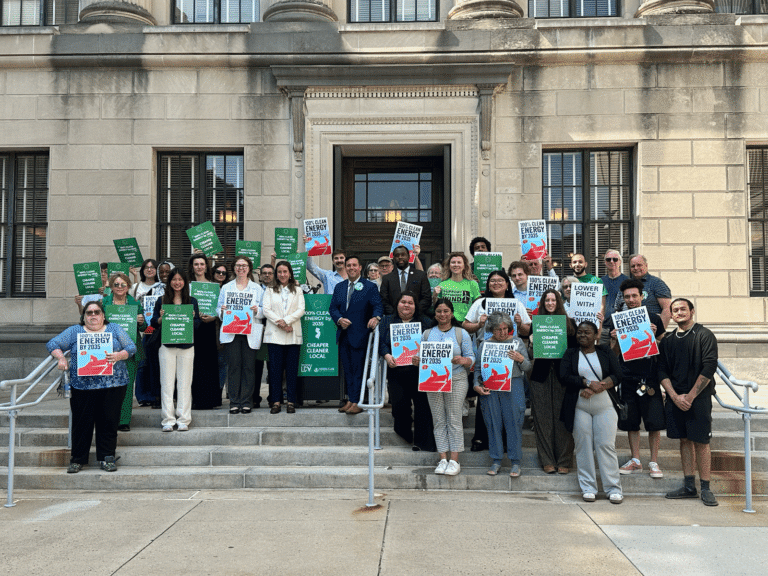
Trenton, New Jersey – A coalition of environmental advocates, legislative leaders, and community organizations met on the Capitol Steps to call for Governor Murphy and the state Legislature to support legislation that would ensure New Jersey moves to 100% clean energy by 2035 to fight climate change and lower energy costs for working families and local businesses.

As Donald Trump trolls to roll back federal clean energy investments to reward his friends in the oil and gas industries, advocates called for our state’s elected officials to take a strong stance and make New Jersey a national leader in clean energy and the fight against climate change.

A 100% clean energy bill will create good-paying local union jobs while lowering energy costs for New Jersey’s working families and local businesses because renewable energy is the cheapest form of energy.

With Trump pursuing a radical fossil fuel agenda in Washington that would drive up costs for consumers, it’s more important than ever for Trenton to stand up for residents by taking control of our own energy future and doubling down on clean energy that will lower costs for the long term.

“100% clean energy by 2035 is New Jersey’s opportunity to codify the transition to more clean energy generation into law, embedding it into the fabric of our state’s long-term energy and grid planning moving forward,” said Anjuli Ramos-Busot, Director of the New Jersey Sierra Club. “This goal paves the way for scaling up much needed cheaper energy generation like solar and battery storage, in a time where our ratepayers are facing the consequences of PJM, our grid operator, relying on expensive, inefficient, and dirty fossil fuels. 100% clean energy by 2035 is our solution for our energy affordability crisis, for grid reform, for good green jobs, and for clean air. We urge the NJ legislature to get this goal across the finish line as soon as possible for the sake of energy affordability, public health, the environment, and communities across the state.”

“We are at a critical moment in our state and our nation’s history,” said Ed Potosnak, Executive Director of the New Jersey League of Conservation Voters. “With Trump launching an all-out assault on our environment, it’s more important than ever that our elected leaders in Trenton double down on a clean energy future that delivers cheaper energy for working families, while ensuring that the air our children and seniors breathe is cleaner. New Jersey has a historic moment to become a national leader in the fight for clean energy. Let’s get it done.”

“As the prime sponsor of the Clean Energy legislation, I am proud to be working with NJ LCV to urge its passage,” said Senator Bob Smith (D-Middlesex/Somerset). “We need more cards and letters of support to the Senate President and Assembly Speaker to get the bill over the finish line.”

“This is a defining moment for our state. Climate change is not some far-off threat—we already feel its effects as it devastates our communities with more frequent storms, extreme heat, and rising sea levels,” said Senator Linda Greenstein (D-Middlesex/Mercer). “Governor Murphy’s vision for 100% clean energy by 2035 is an ambitious, yet necessary goal for New Jersey to mitigate these negative effects and help create a more sustainable planet. I commend the New Jersey LCV and Sierra Club for leading the charge on this front.”

“New Jersey has the opportunity to lead the nation in building a clean energy future,” said Assemblywoman Rosy Bagolie (D-Essex/Passaic). “As a proud sponsor of this legislation, I know that promoting 100% clean energy isn’t just about protecting our environment. It’s about protecting our communities, our economy, and the generations to come.”

“The fight for clean energy is a fight for environmental, economic, and generational justice,” said Assemblywoman Alixon Collazos-Gill (D-Essex/Passaic). “I’m proud to stand with a movement that’s pushing New Jersey to lead boldly, with policies that protect our communities, lower energy costs, and build a healthier, more equitable future. Codifying 100% clean energy by 2035 isn’t optional—it’s essential.”

“A full transition to clean energy is our best weapon in the fight against rising utility costs, worsening climate change, and harmful air pollution,” said Senator Andrew Zwicker (D-Hunterdon/Mercer/Middlesex/Somerset). “The capacity to build and operate wind, solar, and battery storage technology is already here, but what we need is the political will to get that energy out of the legislative process and into households across our state. A clean energy transition by 2035 is good for working families, good for our economy, and good for our planet.”

“Across the country, 1000’s of medical professionals have been speaking out about the unprecedented health threats that burning dirty fossil for electricity poses to all Americans. Our patients are increasingly getting slammed by health impacts that scientists have told us would happen – from accelerating severe asthma in our pediatric patients to elders who die in heat waves, and much more,” said Dan Quinlan, Co-Leader, Clinicians for Climate Action New Jersey. “The medical and public health community in New Jersey stands behind leaders like Governor Phil Murphy, Senator Smith and their fight for 100% clean, healthy energy.” 

“Make no mistake about this, we are in a climate crisis,” said David Temple, NJ Working Group Lead for Third Act. “As the co-facilitator of Third Act New Jersey, I look forward to working with NJ Sierra Club and New Jersey LCV to achieve 100% Clean Energy by 2035.”

“It’s no secret that health-impacting and environmental-polluting facilities have historically been placed in the Black, Brown and poor communities,” said Marcus Sibley, Chair of the NJ Progressive Equitable Energy Coalition (NJPEEC). “It then should be no surprise, that for many of the residents and advocates fighting for these communities, that the urgent need for clean energy, is a justice issue.” 

“We’re on the precipice of losing our right to clean air and the power to choose what energy resources serve us. As the Trump administration gears up to roll back decades of bedrock environmental protections to fuel our future with fossil fuels, New Jersey must act,” said Anna Muller, Energy Policy Manager, Climate Revolution Action Network. “We have a chance to lead–to secure a clean energy future that won’t be dictated by polluters. A transition to 100% clean energy by 2035 is not an extreme measure for future generations; it is a basic necessity, a standard we should have adopted long ago. New Jersey leaders need to stop dragging their feet and finally commit to clean energy that benefits every resident.”

“There is no denying that the health of New Jerseyans is inextricably linked to our environment,” said Molly McGroary, Class of 2026, Rutgers New Jersey Medical School. “Whether air pollution, food security, spread of infectious diseases or chronic stress, the climate affects our health every day. A step towards clean energy is really a step towards ensuring a healthy future for all New Jersey residents.”

“New Jersey needs to show its youth that it cares about their futures by transitioning to 100% clean energy by 2035. Young people across our state are worried about climate change, its resulting heat waves and disasters, as well as economic and social impacts. New Jersey needs to show that it cares about the future of my generation by making the clean energy transition. High school students of New Jersey want a chance to preserve a stable, livable climate with less pollution for their futures, and urge legislators to pass this bill.” – Elif Cam, age 17, junior from Princeton High School and Co-Chair of the NJSSC.

###

About the New Jersey Sierra Club:

The Sierra Club is America’s largest and most influential grassroots environmental organization, with millions of members and supporters. In addition to protecting every person’s right to get outdoors and access the healing power of nature, the Sierra Club works to promote clean energy, safeguard the health of our communities, protect wildlife, and preserve our remaining wild places through grassroots activism, public education, lobbying, and legal action. For more information, visit www.sierraclub.org.

Source: https://www.sierraclub.org/new-jersey/blog/2025/06/climate-advocates-and-legislative-leaders-rally-statehouse-call-100-clean

NEWS RELEASE: Report Says Summer Barbecue Prices Outpace Inflation – Average Price Increases Over 4 Percent

0

With New Jersey electric utility prices set to increase by 20 percent this summer, a report by financial services company, Rabobank, a premier global food and agribusiness bank and a leading financier of energy transition, notes the average cost of a summer barbeque will increase by 4.21 percent.

The Rabobank index predicts the average price of a summer barbeque for 10 people. The report is typically released prior to the July 4 holiday but was moved up to Memorial Day this year.

“An increase of slightly more than 4 percent might not seem too hard to absorb, but combine that with a 20 percent increase for the cost of electricity and inflation and the summer forecast looks grim for the average consumer,” said Ron Morano, Affordable Energy for New Jersey (AENJ) Executive Director. “Based on the higher costs, grills might not be the only things that get hot this summer. While summer barbeques are outdoor events, let’s not overlook the comfort residents seek from air-conditioned residences powered by electricity.

“The ongoing failure by New Jersey elected officials and regulators to enact a realistic and affordable Energy Master Pplan (EMP) and mitigate energy price increases is responsible for the significant shift. New Jersey residents deserve better.”

AENJ is a broad grassroots coalition that advocates for actionable, fact-driven energy policy that emphasizes keeping costs low for New Jersey residents and businesses and evaluates energy policies and proposals based on feasibility, reliability and cost.

ICF sees 25% load growth by 2030, up to 40% price increase [UtilityDive]

Dive Brief:

  • U.S. electricity demand could grow 25% from 2023 to 2030 and 78% by 2050, driven in the near term by artificial intelligence data centers, new manufacturing capacity and widespread electrification in the oil and gas sector, ICF said Tuesday.
  • The new forecast is significantly higher than the international consulting firm’s September projection of 9% load growth by 2028 and 18% by 2033 as new data center and industrial loads materialize faster than anticipated, the consulting firm said.
  • Residential electricity rates could rise 15% to 40% over the next five years and double by 2050, according to an ICF analysis of select U.S. utilities. Demand-side management efforts such as demand response programs, energy efficiency investments and behind-the-meter generation and storage deployments can relieve some of the expected pressure on the grid, ICF said.

Read the full story on UtilityDive: www.utilitydive.com/news/icf-sees-25-load-growth-by-2030-up-to-40-price-increase/748711

NJ Cooling Centers

A list of cooling centers throughout the state can be found here: 

https://nj211.org/nj-cooling-centers

New York Announces New Nuclear Power Plant

New York Governor Kathy Hochul announced plans to build the state’s first nuclear plant in decades, marking a significant policy shift just four years after the closure of the Indian Point nuclear facility. The new plant, to be located at an as-yet-undisclosed site in upstate New York, will be designed to generate enough electricity to power approximately one million homes, bolstering the state’s efforts to achieve a reliable, affordable, and zero-emission energy grid.

Concerns Over Energy Reliability and Affordability

Governor Hochul’s directive comes amid mounting concerns over energy reliability and affordability, as well as the need to meet ambitious climate goals. New York’s energy demand is surging due to industrial growth, building electrification, and the proliferation of electric vehicles. At the same time, the state is decommissioning aging fossil fuel plants as part of its commitment to a zero-emission electricity sector by 2040 and economy-wide carbon neutrality by mid-century.

“If we don’t increase our capacity over the next decade, we will see rolling blackouts,” Hochul warned during her announcement at the Niagara Power Plant. She emphasized that nuclear energy’s ability to provide continuous, baseload power makes it a critical complement to renewables like wind and solar, which are intermittent by nature.

The Role of Advanced Nuclear Technology

The new facility will utilize advanced, zero-emission nuclear technology, with a minimum target capacity of one gigawatt—roughly half the output of the recently retired Indian Point plant. The project will be spearheaded by the New York Power Authority (NYPA) in coordination with the Department of Public Service (DPS), and may involve partnerships with private investors or companies.

NYPA will immediately begin evaluating suitable technologies, business models, and potential locations. The selection process will weigh factors such as public safety, community support, infrastructure compatibility, and the availability of skilled labor and land. The plant is also expected to generate significant economic benefits, including thousands of construction jobs and over a thousand permanent positions once operational.

Balancing Clean Energy and Grid Reliability

New York’s renewed embrace of nuclear energy reflects a broader national and corporate trend. Major technology companies like Amazon, Google, and Microsoft are investing in nuclear power to meet the soaring electricity demands of AI data centers. Several states—including Illinois, Montana, and Wisconsin—have lifted restrictions on new nuclear plants, and Texas recently established a $350 million fund for new reactors.

Governor Hochul stressed that safety and environmental standards will be paramount in the planning and construction of the new plant, aiming to dispel public concerns rooted in past nuclear incidents. “This is not your old nuclear,” she remarked, referencing the 1979 film “The China Syndrome,” which dramatized a nuclear disaster.

Ensuring Grid Stability

While New York has made record investments in renewable energy—awarding 6.4 gigawatts of projects in 2023 alone—the intermittent nature of wind and solar power has highlighted the need for reliable, always-on sources. The advanced nuclear plant is intended to fill this gap, ensuring grid stability while supporting the state’s clean energy transition.

State officials and labor leaders have voiced strong support for the project, citing its potential to lower emissions, create union jobs, and stimulate local economies. The initiative also positions New York to collaborate with neighboring states and Ontario, strengthening regional nuclear supply chains and sharing best practices.

Looking Ahead

Although many details—including the exact site, cost, and timeline—remain to be determined, New York’s move signals a decisive step toward a more resilient and sustainable energy system. As the NYPA begins detailed feasibility studies and partnership discussions, the state’s nuclear revival is set to play a pivotal role in shaping the energy landscape for generations to come.

Sources

  1. The New York Times, “New York Again Embraces Nuclear Power With Plans to Build New Plant”, https://www.nytimes.com/2025/06/23/nyregion/new-york-nuclear-power-plant.html 
  2. ESG Today, “New York to Build New Nuclear Plant to Support Clean Energy Goals”, https://www.esgtoday.com/new-york-to-build-new-nuclear-plant-to-support-clean-energy-goals/
  3. AP News, “New York governor seeks to build the state’s first new nuclear power plant in decades”, https://apnews.com/article/nuclear-power-plant-new-york-governor-hochul-4fc42719df2efc27bf5074dd4a0bf739
  4. Gothamist, “Gov. Hochul wants to build new nuclear plant, 4 years after Indian Point closure”, https://gothamist.com/news/gov-hochul-wants-to-build-new-nuclear-plant-4-years-after-indian-point-closure
  5. New York Post, “New York planning to build first major new US nuclear power plant in over 15 years”, https://nypost.com/2025/06/23/us-news/new-york-planning-to-build-first-major-new-us-nuclear-power-plant-in-over-15-years/
  6. Office of Governor Kathy Hochul, “Governor Hochul Directs New York Power Authority to Develop a Zero-Emission Advanced Nuclear Energy Technology Power Plant”, https://www.governor.ny.gov/news/governor-hochul-directs-new-york-power-authority-develop-zero-emission-advanced-nuclear-energy