
Our Infrastructure Matters Ad
Home Blog Page 31

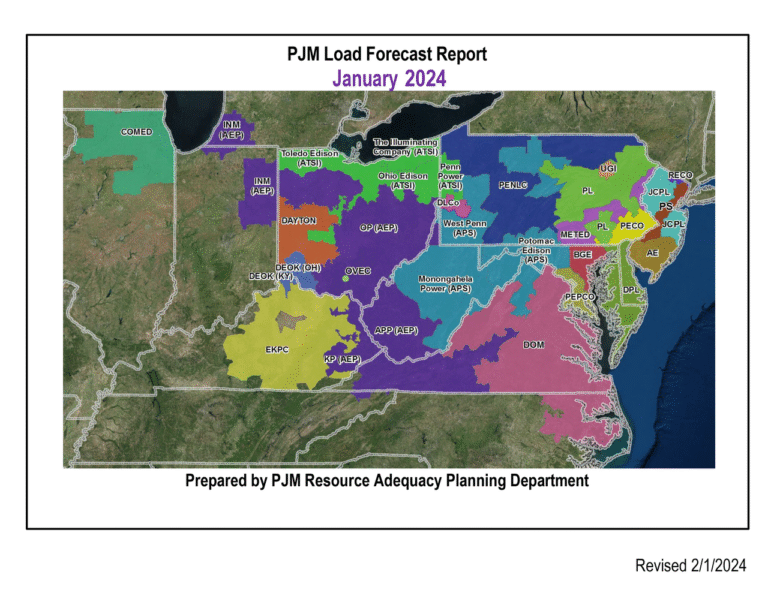
2024 PJM Load Forecast Report

0

The PJM Load Forecast Report, published in January 2024 and revised on February 1, 2024, provides a comprehensive analysis of projected electricity demand across the PJM region, including specific insights relevant to New Jersey. The report details long-term forecasts for peak loads, net energy, and the impact of evolving energy trends like distributed solar generation, battery storage, data center growth, electrification of the Port of New York & New Jersey, and plug-in electric vehicles.

The overall summer peak load growth for the PJM RTO is projected to average 1.6% per year over the next 10-year period and 1.6% over the next 15 years, with the winter peak load growth for PJM RTO projected to average 1.9% per year over the next 10-year period. 

For the Eastern Mid-Atlantic (E-MAAC) region specifically, summer peak load is projected to grow by 0.7% over the next 10 years and winter peak load by 2.6% over the next 10 years.

The report forecasts significant load growth across New Jersey’s PJM zones. 

JCP&L

JCP&L is projected to experience a summer peak load increase of 1.1% annually over the next 10 years (2024-2034), reaching 6,750 MW by 2034. Winter peak load growth for JCP&L is even more substantial, with a projected annual increase of 4.7% over the 2023/24-2033/34 period, reaching 6,040 MW by 2033/34.

PSE&G

Public Service Electric & Gas shows similar robust growth, with a forecasted summer peak load increase of 1.1% annually (2024-2034), reaching 11,193 MW by 2034. The winter peak for PSE&G is expected to rise by 3.8% annually (2023/24-2033/34), hitting 9,906 MW by 2033/34. Notably, the PSE&G zone has been specifically adjusted in this forecast to account for significant growth in data center load and port electrification, indicating a strategic shift in energy demand drivers within this area.

Rockland Electric Company

Rockland Electric Company, a smaller New Jersey zone, is projected to have a summer peak load annual growth of 0.3% (2024-2034), reaching 421 MW by 2034. Its winter peak growth is higher at 3.2% annually (2023/24-2033/34), forecasted to reach 308 MW.

Atlantic City Electric

Atlantic Electric is also expected to see growth, with a summer peak forecast to increase by 0.5% annually over the 2024-2034 period, reaching 2,715 MW by 2034, and a winter peak growing by 2.8% annually over 2023/24-2033/34 to 2,161 MW.

Load Management and Emerging Energy Trends

The report also details the role of load management programs in New Jersey, including “Capacity Performance,” “Summer Period” demand response, and Price Responsive Demand (PRD). These programs help PJM maintain grid reliability by coordinating load reductions during peak demand periods. For example, JCP&L’s total load management capacity for summer 2024 is listed at 107 MW, growing to 134 MW by 2039. PSE&G also shows substantial load management capabilities, starting at 231 MW in summer 2024 and increasing to 281 MW by 2039.

The integration of distributed energy resources is a key focus. Distributed solar generation is expected to contribute to load adjustments, with JCP&L seeing 282 MW of solar adjustment in 2024, growing to 458 MW by 2039. PSE&G has 426 MW in 2024, increasing to 695 MW by 2039. Distributed battery storage is also factored in, with smaller but growing adjustments; for instance, JCP&L’s battery storage adjustment increases from 2 MW in 2024 to 61 MW by 2039.

Plug-in electric vehicles (PEVs) are identified as a growing load component. JCP&L’s PEV adjustment for summer peak load starts at 53 MW in 2024 and is projected to reach 1,942 MW by 2039. PSE&G shows an even larger impact, with PEV adjustments rising from 60 MW in 2024 to 2,252 MW by 2039. These figures highlight the anticipated influence of transportation electrification on future electricity demand in New Jersey.

“This forecast reflects the accelerated growth that we discussed with our stakeholders throughout 2023, driven by the electrification of multiple sectors combined with consumer demands for technology…It also underscores the need to maintain and develop enough generation resources to serve that growing demand.” Kenneth S. Seiler, Sr. Vice President – Planning, PJM

SOURCE: https://insidelines.pjm.com/pjm-publishes-2024-long-term-load-forecast/
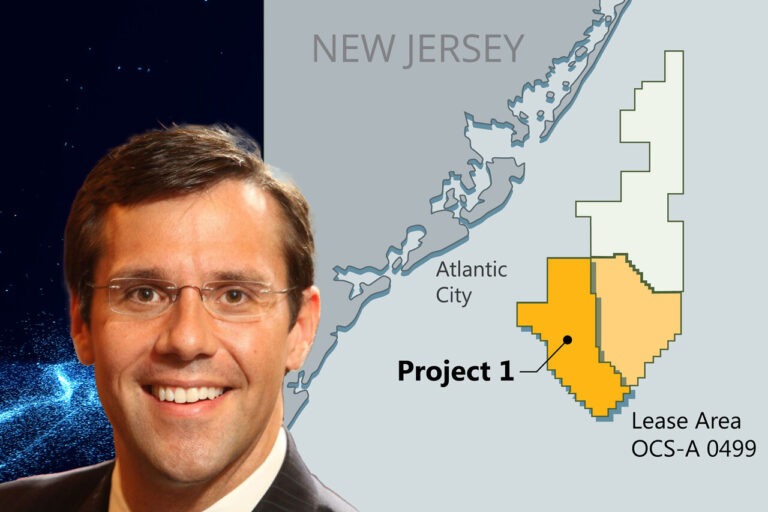
Environmental Advocates Respond to Atlantic Shores Decision to Vacate its OREC

Trenton, New Jersey – The following is a statement from Ed Potosnak, Executive Director of New Jersey LCV, regarding Atlantic Shores filing to vacate its Offshore Wind Renewable Certificate (OREC).

“It’s disappointing that the New Jersey Board of Public Utilities (BPU) didn’t move forward with life-saving offshore wind projects and the good local jobs, along with the improved air quality and climate benefits in New Jersey. Now to add insult to injury another state will likely get those benefits,” said Ed Potosnak, Executive Director, New Jersey LCV. “At a time when New Jersey families are concerned about energy affordability and rising utility prices, we need to be building clean energy to lower costs, create good jobs in the state, lessen our dependence on dirty and expensive oil and gas, and protect our communities from the dangers of climate change. In New Jersey we lead, and we’re not giving up on offshore wind due to a temporary setback. We’ll continue to fight to save lives.”

SOURCE: https://www.njlcv.org/news/new-jersey-league-conservation-voters-responds-atlantic-shores-decision-vacate-its-orec

New Jersey Voters Prioritize Affordability, Reliability Over Climate in Energy Debate, New Survey Reveals

With a gubernatorial election on the horizon, a new survey of New Jersey voters reveals that economic concerns and the cost of living are significantly shaping residents’ views on energy policy, often outweighing environmental considerations. The findings suggest a challenging landscape for politicians advocating for aggressive green energy transitions without clear assurances on affordability and reliability.

The memorandum, released  by Natural Allies for a Clean Energy Future, is based on a survey of 500 registered New Jersey voters conducted by MAD Global Strategy from May 14-18, 2025. Part of a larger regional study, the survey highlights a strong public sentiment that ties financial well-being directly to energy usage and resource preferences.

A striking 82% of New Jerseyans expressed concern about their current economic situation, with an equally high 80% feeling their electric bills are excessive.

Economic Pressure Cooker Fuels Energy Stance

These financial anxieties directly translate into energy priorities: 84% cited affordability as their primary concern regarding energy consumption, followed by reliability at 66%. Climate change, while a concern for 40% (when combining first and second priorities), falls notably behind pocketbook issues. This indicates a clear “affordability and reliability first” mindset among New Jersey households.

“All-of-the-Above” Approach Favored for Cost Savings

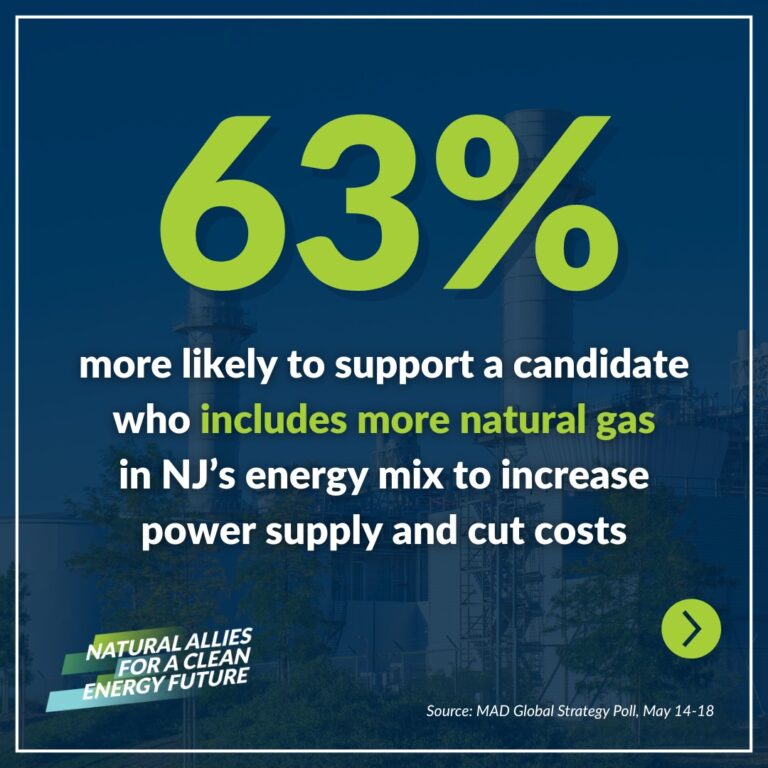
Against this economic backdrop, New Jersey voters are leaning towards political candidates who champion an “all-of-the-above” energy strategy that includes natural gas to boost power supply and reduce costs. A significant 63% of respondents would support such a candidate. This stands in stark contrast to the 26% who would back a candidate continuing Governor Phil Murphy’s zero-carbon green energy policies, like offshore wind development, if it meant higher costs. Notably, this preference for diversified energy extends into the Democratic base, with only 50% of Democrats supporting the Governor’s current approach, suggesting a bipartisan appetite for pragmatic solutions.

Freedom to Choose: Resistance to Natural Gas Mandates

The survey also unearthed strong opposition to state-mandated shifts away from natural gas. A substantial 72% of New Jersey voters believe residents, businesses, and consumers should retain the freedom to choose their energy sources, rather than being compelled to move towards electric-only buildings and homes (a policy supported by only 16%). This desire for energy choice transcends political lines; even among those who approve of Governor Murphy’s job performance, 51% uphold the right to choose, with a commanding 92% of those who disapprove of the Governor agreeing.

Balanced Energy Portfolio Gains Traction

When presented with various proposals to meet the state’s electricity demands, New Jersey residents showed a strong preference for a balanced approach. The most popular proposal (66%) involved building more renewables like wind and solar, while simultaneously balancing them with natural gas as a foundational energy source to reduce carbon emissions without sacrificing reliability and affordability. Support for new zero-carbon nuclear plants also registered high at 65%, and new natural gas pipelines from Pennsylvania garnered 62% support. Conversely, revitalizing coal (36%) and halting new natural gas pipelines (19%) received considerably less backing.

Protecting Low-Income Communities a Priority

The survey also highlighted a significant concern for the financial impact of energy transitions on vulnerable populations. A strong majority (67%) of New Jerseyans believe state officials should prioritize policies that actively reduce cost burdens on low-income communities. Only 11% supported advancing a zero-carbon future if it meant higher costs for those least able to afford them, underscoring a strong demand for energy equity.

Heat Pumps Unpopular, Officials’ Performance Questioned

Among specific energy resources, solar (66% positive) and natural gas (60% positive) received the most favorable opinions. Nuclear (47% positive) and offshore wind (44% positive) were viewed more positively than negatively. However, the survey found that switching to electric heat pumps is a “nonstarter” for most, with 71% having no plans to purchase one. Furthermore, a majority of residents (62%) believe their elected officials have done a fair or poor job in managing energy prices and reliability, reflecting broader dissatisfaction with current energy governance.

“New Jersey voters across the political spectrum want to return to a balanced energy policy that prioritizes affordability and reliability while also reducing emissions, and that only happens when natural gas works with nuclear and renewables to lower emissions, stabilize costs, and keep the lights on,” said Mike DuHaime, Founder and CEO, MAD Global Strategy.

These findings present a clear mandate for gubernatorial candidates and policymakers in New Jersey: address the immediate economic anxieties of residents by prioritizing energy affordability and reliability. A diversified energy approach that integrates existing reliable sources with new clean technologies appears to be the most appealing path forward for a electorate deeply concerned with their wallets.

New Jersey Invests over $350 Million in  Water Infrastructure

0

Municipal Breakdown

New Jersey has allocated over $350 million ($300M from the American Rescue Plan’s State Fiscal Recovery Fund) to support drinking water, wastewater, and stormwater infrastructure projects. The funding, distributed over FY23-FY25, targets improvements in lead pipe replacement, PFAS filtration, sewer system upgrades, and flood resilience.

This article organizes the funding breakdown by municipality, making it easier to track how the money is being spent at the local level.

Drinking Water Infrastructure: $48 Million

The New Jersey Water Bank prioritized funds for long-term drinking water resilience, focusing on contaminant removal and climate preparedness.

New Brunswick City

  • Water Treatment Plant Improvements – $11,522,720  
  • Water Treatment Plant Improvements (additional allocation) – $15,977,280

Total: $27.5 Million

Camden City  

  • PFAS Treatment Improvements at Morris-Delair Water Treatment Plant – $3,200,000  
  • PFAS Treatment Improvements at Morris-Delair Water Treatment Plant (additional allocation) – $16,800,000

Total: $20 Million

Seaside Heights Borough

  • Water System Resiliency Upgrades – $120,600  

Clean Water Infrastructure: $258 Million

A major portion of the funding supports combined sewer overflow (CSO) prevention, wastewater processing improvements, and stormwater drainage upgrades.  

Ridgefield Park Village

  • Sewer Separation Phase 1 (P&D) – $279,480
  • Sewer Separation Phase 1 (OP SEG 1) – $316,930

Total: $596,410  

Hackensack City  

  • Stormwater Infrastructure Improvements 2020 – $1,143,909  
  • Anderson Drainage Area Sewer Separation Efforts Phase I – $8,685,270  

Total: $9.8 million  

Hoboken City  

  • Southwest Resiliency Park – Acquisition & Rehabilitation – $7,265,050  

Elizabeth City  

  • South Second Street Drainage/Atlantic Street CSO Tank – $13,069,306  

Jersey City Municipal Utilities Authority (MUA)  

  • Sewer Improvements 2A (2 of 6) – $10,421,670  

North Bergen MUA  

  • NBMUA CSO Tank (Inc) – $10,492,507  
  • NBMUA CSO Tank – $17,029,702  

Total: $27.5 million

North Hudson Sewer Authority  

  • Madison Street Improvements – $4,861,161  
  • H6/H7 Phase 3 – $42,376,238  
  • H6/H7 CSO Long-Term Control Plan Phase II – $14,538,265  
  • Boulevard East Combined Sewer Improvements – $13,615,950  
  • Adams Street 84-inch Outfall – $542,880  

Total: $75.9 million

Camden County MUA  

  • Bar Screen & Grit System Upgrades (Cleaning & Disposal) – $9,437,720  
  • Bar Screen & Grit System Upgrades – $12,396,039  

Total: $21.8 million 

Passaic Valley Sewerage Commission  

  • Alternative Wet Weather Treatment Protocol Project – $92,027,924  

State Aid ARPA Fund: $33.9 Million 

These funds were awarded directly to municipalities for lead pipe replacement, sewage system stabilization, and filtration improvements.  

City of Elizabeth  

  • LSL Improvements – $5,000,000  

Township of Lyndhurst  

  • LSL Replacement – $5,000,000  

Borough of Milltown  

  • Water Distribution Line Replacement – $1,000,000  

Rahway City  

  • LSL Replacements – $3,000,000  

Berkeley Heights Township  

  • Raw Sewage Pipe Replacement – $750,000  

City of Camden  

  • Water Main Refurbishment Initiative – $8,000,000  

Camden County MUA  

  • Wastewater Treatment & Pump Station Upgrades – $4,000,000  

North Hudson Sewerage Authority  

  • Sewer Pipe Rehabilitation Project – $1,000,000  

Borough of High Bridge  

  • Water Main Line Improvements – $4,000,000  

Township of Mahwah  

  • Well Filtration Systems – $1,600,000  

Borough of Saddle River  

  • Stormwater Channel Improvements – $560,000  

Stormwater Management Funding: $20 Million 

New Jersey allocated $20 million for flood prevention and climate resilience projects, split among municipal efforts and statewide flood mapping initiatives.  

New Jersey Water Bank  

  • Principal forgiveness for stormwater projects – $11,000,000  

Formula-Based Grants  

  • Watershed Improvement Plans & Leaf Composting – $5,050,000  

Resilient NJ Flood Mitigation Programs  

  • Resilient NJ Initiatives – $2,000,000  

Rutgers Cooperative Extension  

  • Flood mitigation research & stormwater management studies – $1,600,000  

NJ Statewide Flood Mapping & Resilience Efforts  

  • Flood mapping (scoping for NJ) – $250,000  
  • State Asset Damage Control – $100,000  

Next Steps and Implementation Timeline  

With funding now distributed to municipalities, several water infrastructure improvements are already underway. Some sewer upgrades and lead pipe replacements will take several years to complete, particularly in high-cost projects like Passaic Valley and North Hudson Sewer Authority.  

Residents in New Brunswick, Camden, Jersey City, and North Bergen should see noticeable improvements in water quality and sewer reliability as the projects progress. Additional state and federal investments may be required in future years to ensure modernized infrastructure and long-term environmental resilience.  

DeGesero: US Senate Vote to Repeal EV Car and Truck Mandates a Win for NJ Consumers

In response to the US Senate voting to repeal California’s electric car and electric truck mandates, which ends New Jersey’s EV mandates, Eric DeGesero, advisor to NJ Motor Truck Association, NJ Propane Gas Association, and Fuel Merchants Association of NJ, issued the following statement:

‘The Congress of the United States has voted to repeal California’s EV mandates for electric cars and trucks. It is anticipated President Trump will sign the resolutions. In turn this will end the EV truck mandate that is crippling NJ small businesses and prevent the EV car mandate from taking effect in August 2026.

This is a huge win for affordability, reliability, dependability, and security.

It also sets up a clear choice in this fall’s election for Governor. As of today, the leading candidates for Governor provide a stark contrast regarding mandated electrification.

The leading Republican candidate Jack Ciattarelli has publicly stated he opposes the EV mandates and Governor Murphy’s attempt to force electric heat pumps and electric stoves on us through Senate Bill 249/Assembly Bill 4844. The leading Democratic candidate Congresswoman Mikie Sherrill voted to keep the EV mandates.

EV trucks cost three times more than a regular truck, there is no place to charge them, and everything we buy moves in a truck so these increased costs will be passed along to consumers, the rate of EV car purchases in NJ fell precipitously from 2023 to 2024, and the most expensive way to heat your house winter 2025 was electric heat. Consumers and businesses should have the freedom to choose how we wish to drive, heat, and cook. As it relates to continuing Governor Murphy’s ‘electrify everything’ agenda after he leaves office, the choice for Governor this fall could not be more stark nor consequential.’

Eric DeGesero is executive vice president of the Fuel Merchants Association of New Jersey

The Smart Bet: Natural Gas for AI [National Interest]

0

“Artificial intelligence is at the forefront of the United States’ new tech revolution—and the focus of a battle against China for dominance in the sector. But despite flashy bets by computing giants like Microsoft, Amazon, Google, Apple, and OpenAI—and the Trump administration all in on unleashing energy to fuel the revolution—the difficult part will be building lots of plants and getting them connected to power and pipelines: More than 1,000 terawatt hours by 2035, according to a new report by the International Energy Agency.

After many years of relatively flat demand, the U.S. power system is witnessing significant growth. There is no doubt that the AI revolution is a big part of that paradigm change and excitement, but not all energy sources are equally suited to the task and timelines.”

Read the full story on National Interest: https://nationalinterest.org/blog/energy-world/the-smart-bet-natural-gas-for-ai

How New Jersey Landed Netflix [Hollywood Reporter]

“Sarandos’ enthusiasm for the project is evident. It’s also just good business. Sarandos runs a near-$500 billion publicly-traded company; he didn’t choose New Jersey as Netflix’s home away from home just because he was born here — though he was — Sarandos chose it as a fiduciary responsibility.”

Read the full story on Hollywood Reporter: https://www.hollywoodreporter.com/business/business-news/why-netflix-is-coming-to-nj-tax-credits-1236215364/

Securing Raritan Millstone – New Jersey American Water’s Largest Water Treatment Plant

Water treatments plants are part of an invisible infrastructure that supports our modern lives. Here’s a brief history and behind the scenes look at the Raritan Millstone Water Treatment Plant in Bridgewater.

Nearly $70 million project to fix Rte. 211/17 interchange set to begin [Mid Hudson News]

“Work is getting started on a project that will complete the upgrade of the State Route 17, Exit 122 interchange in the Town of Wallkill, to meet federal interstate standards. The $67.8 million project will reconfigure the eastern portion of the interchange to create a new roadway system that will enhance safety and improve traffic flow at the junction that serves one of the fastest-growing regions in the state.”

Read the full story on Mid Hudon News: https://midhudsonnews.com/2025/03/26/nearly-70-million-project-to-fix-rte-211-17-interchange-set-to-begin/

Construction Industry Association Shines Light On Safety For Safety Day

Recognizing that in 2023, 1,075 construction professionals died while working on the job, the Associated Construction Contractors of New Jersey (ACCNJ),  and their members participated in Safety Day 2025. The goal of safety day is to refocus the attention of those workers on the key elements of staying safe while on the job.

Safety Day is held yearly to demonstrate the importance of constantly staying alert to the hazards of the jobsite and choosing the best safety practices The four leading causes of injury and fatality on construction jobsites are falls, struck-bys, electrocutions and caught-in/between. 

An important secondary goal is to make the public aware, alert, and careful, especially when driving near construction jobsites. This year, ACCNJ’s Safety Day focused on accountability, emphasizing a culture that works proactively to minimize exposure to hazards in the workplace.