


”Construction crews are building new track structures next door that will connect Penn Station with the new Hudson river tunnel.”
Watch the PIX11 News report here:
![Crews work on Hudson River tunnel structures [PIX11 News]](https://tristateinfrastructurenews.com/wp-content/uploads/2025/07/large-Vid-PIX11-GatewayTunnel-768x512.jpg "Crews work on Hudson River tunnel structures [PIX11 News]")
”Construction crews are building new track structures next door that will connect Penn Station with the new Hudson river tunnel.”
Watch the PIX11 News report here:
![The Problem with Wind Energy [Real Engineering]](https://tristateinfrastructurenews.com/wp-content/uploads/2025/07/large-The-Problem-with-Wind-Energy-768x512.jpg "The Problem with Wind Energy [Real Engineering]")
Wind energy presents a number of unique engineering and electrical challenges. Watch this video from Real Engineering and learn more:
![The Billion Dollar Plan That Won’t Fix Philly Traffic [Build Core]](https://tristateinfrastructurenews.com/wp-content/uploads/2025/07/large-VIdeo-on-phone_Philly-Build-Core-768x512.jpg "The Billion Dollar Plan That Won’t Fix Philly Traffic [Build Core]")
“Philadelphia was founded on a clean, rational grid that set the standard for American city planning. But over 300 years later, that clarity is breaking down. Traffic congestion, decaying infrastructure, and a struggling transit system have pushed the city to act. Philadelphia is testing fixes like redesigned bridges, new bus lanes, highway caps, and an ambitious overhaul of Roosevelt Boulevard. At the same time, SEPTA faces a $213 million budget shortfall, threatening massive service cuts that could ripple across the city’s economy. These efforts reflect a city caught between the simplicity of its founding layout and the complex pressures of modern urban life. The question isn’t just whether these projects will help—but whether they’re enough to keep Philly functional in the face of rising demand. We went to Philadelphia to find out: are these just band-aids, or do they signal a real plan to keep the city moving?”

The Democratic Party’s environmental platform has emphasized the rapid promotion of renewable energy sources like solar and wind, often advocating for the phasing out of fossil fuels and maintaining skepticism towards nuclear power. This stance has been central to their climate action agenda, aiming for a swift transition to a decarbonized economy.
A notable shift, however, is now occurring in several states, where Democratic governors are actively supporting or pursuing initiatives involving both nuclear power and natural gas. This pragmatic re-evaluation of energy strategies is being driven by pressing challenges related to grid stability, energy costs, and the demands of economic growth.
A significant trend among Democratic governors is the re-evaluation of nuclear power as a critical component of their states’ energy portfolios. New York Governor Kathy Hochul has announced plans to develop one gigawatt of new nuclear power capacity in New York within the next decade, directing the New York Power Authority (NYPA) to develop a zero-emission advanced nuclear power plant in Upstate New York to support a reliable and affordable electric grid while providing clean electricity for a clean energy economy.
Other Democratic governors have demonstrated a pragmatic approach by preserving existing nuclear assets. Governors Gavin Newsom of California and J.B. Pritzker of Illinois reversed earlier plans to retire their states’ nuclear plants, recognizing the immediate loss of zero-emission baseload power these facilities provide. Michigan’s Gretchen Whitmer went a step further by initiating the restart of the Palisades nuclear facility, highlighting a focus on maintaining existing reliable, carbon-free generation.
A primary driver for this shift is the need to ensure grid reliability and energy independence. Governor Hochul explicitly links nuclear investment to preventing power shortfalls and securing a reliable energy supply for businesses.
“The economy of the future: microchips fabs [fabrication plants], data centers and the supercomputers that power AI need tremendous amounts of energy. To support these industries, we’ve already started developing an advanced nuclear strategy. This is a good investment. Artificial Intelligence alone is projected to drive $320 billion of economic growth in our state by 2038.”
New York Governor Kathy Hochul
As states confront the practical realities of decarbonization, maintaining economic competitiveness, and preventing power shortfalls, an “all-of-the-above” energy portfolio that includes nuclear power is becoming a more politically acceptable approach. The emergence of an “abundance” coalition within the Democratic party signifies this evolving mindset, where the focus expands beyond just “clean” to also include “sufficient” and “reliable” energy.
Parallel to the nuclear shift, some Democratic governors are also demonstrating an openness to natural gas infrastructure, often in direct tension with their stated climate objectives.
Massachusetts Governor Maura Healey, while having previously opposed a major pipeline project as attorney general, is now under pressure to address skyrocketing heating bills – among the highest in the country. Healey played a key role in turning down the Access Northeast natural gas pipeline project in 2017, and since then the state has faced challenges with rising energy costs and energy supply during winter cold snaps, going so far as importing liquid natural gas (LNG) from Russia in 2018 and burning oil, diesel, and coal. Governor Healey has more recently indicated that future energy proposals will be reviewed through the lens of lowering costs and moving toward energy independence.
Connecticut Governor Ned Lamont, despite signing climate-focused bills aimed at achieving net-zero carbon emissions by 2050, now supports expanding pipelines carrying fracked natural gas. Governor Lamont wants to reduce the region’s reliance on aging, oil-fired power plants, which are necessary to meet demand during winter months. He indicated that a new gas source could lower “extremely high” natural gas and electricity prices in Connecticut and New England, partly attributed to scarce natural gas pipeline capacity. Lamont views natural gas as a necessary step in the energy transition, stating, “We’re taking out some things that are even more polluting”.
In New York, Governor Kathy Hochul has stated an openness to considering pipeline projects on their merits and has introduced a new process that goes beyond environmental reviews to assess whether new pipelines are needed to meet power demands. Hochul’s administration acknowledges that natural gas will likely continue to be necessary to meet the growing energy demands from large new factories in upstate New York and the increasing electrification of vehicles and buildings.
These moves are in direct contrast with the environmental groups’ demands for an immediate cessation of fossil fuel infrastructure expansion. But supporting natural gas consistently ties back to addressing high energy prices and ensuring grid reliability, particularly during peak demand in winter. A study by S&P Global found that expanded pipelines could decrease Northeast gas prices by 20% to 30%. The Department of Energy has also highlighted “inadequate natural gas pipeline capacity” as a key factor contributing to high energy costs and reliability issues in the Northeast.
Achieving energy reliability, affordability, and aggressive climate action is proving difficult. For these Democratic governors, the immediate and tangible pressures of energy costs and reliable supply for their constituents and businesses appear compelling enough to necessitate pragmatic decisions that may conflict with long-term climate goals, forcing politically sensitive trade-offs.
The decisions by Democratic governors to support nuclear and natural gas initiatives are often framed by the need to ensure affordable and reliable energy, a concern that directly impacts low-income communities and communities of color who disproportionately bear the brunt of rising electricity costs.
High energy costs create significant financial strain for many households, particularly those with lower incomes. Research by the American Council for an Energy-Efficient Economy (ACEEE) consistently shows that low-income, Black, Hispanic, and disadvantaged households face dramatically higher “energy burdens”—meaning they spend a greater portion of their income on energy bills—than the average household. Low-income households on average spend 17.8% of their income on energy bills and transportation fuel, more than three times the national average.
Nationally, 67% of low-income households experience a high energy burden (spending 6% or more of income on energy), and 60% of these face a severe energy burden (spending 10% or more). This inequity is particularly pronounced in the Northeast, where New England shows the largest gap between low-income and median energy burdens, coupled with some of the highest energy costs in the country.
Racial disparities are also evident: Black households in the largest U.S. metro areas have a 64% higher energy cost burden than white households. Renters, especially those in apartment buildings, often face energy bills that are 20% higher per square foot than single-family homes, increasing their risk of eviction and limiting access to energy efficiency improvements.
Recent Democratic governors’ support of nuclear and natural gas initiatives signify a pragmatic evolution in energy policy within the party. The emergence of an “abundance” coalition within the party, which prioritizes energy supply and economic growth alongside climate action, represents a significant ideological shift. This is met with strong opposition from traditional environmental groups who view these moves as a “reckless distraction” or a “false climate solution”. This internal tension suggests a complex and evolving debate within the party about the most effective and politically feasible pathways to a decarbonized future. The actions of these Democratic governors indicate a broadening of the definition of “clean energy” beyond wind and solar.
Nuclear power, despite its historical baggage for some environmentalists, is now being embraced as a “zero-emission baseload power”. Furthermore, natural gas is being considered pragmatically as a “less polluting” alternative to oil or a necessary component for grid stability and affordability. This indicates a strategic re-evaluation of what constitutes a viable and comprehensive path to a “green and clean” future, acknowledging the limitations and challenges of a solely renewable grid in the near to medium term. The debate is moving from a binary “fossil versus renewable” to a more complex discussion about the optimal mix of technologies to achieve deep decarbonization while ensuring energy security and economic vitality.
The balancing act between ensuring energy security, fostering economic competitiveness, and achieving ambitious climate action will continue to define Democratic energy policy in the coming years. This will likely lead to a more diverse and pragmatic energy portfolio characterized by complex trade-offs as states strive to meet both their environmental commitments and the practical energy demands of their populations and industries, particularly addressing the disproportionate burden on low-income communities.
ACT. (n.d.). Communities of Color, Low-Income Residents Face High Electricity Prices From Third-Party Suppliers. https://www.joinact.org/news/communities-of-color-low-income-residents-face-high-electricity-prices-from-third-party-suppliers
American Council for an Energy-Efficient Economy. (n.d.). Energy Burden. https://www.aceee.org/energy-burden
Azulay, J. (2025, June 26). Assembly Democrats control fate of major environmental proposals. POLITICO Pro. https://subscriber.politicopro.com/article/2025/06/assembly-democrats-control-fate-of-major-environmental-proposals-00405497
Beauchamp, A. (2025, June 26). Environmentalists are not on board with Hochul’s new nuclear plant. City & State New York. https://www.cityandstateny.com/policy/2025/06/environmentalists-are-not-board-hochuls-new-nuclear-plant/406257/
Dunlea, M. (2025, May 14). Hochul’s major nuclear power push. Green Education and Legal Fund. https://www.gp.org/hochuls_major_nuclear_power_push
French, M. J. (2025, July 2). Hochul faces pipeline test. POLITICO Pro. https://subscriber.politicopro.com/article/2025/07/hochul-faces-pipeline-test-00438021
French, M. J. (2025, July 7). Environmental groups slam gas push. POLITICO Pro. https://www.politico.com/newsletters/weekly-new-york-new-jersey-energy/2025/07/07/environmental-groups-slam-gas-push-00441064
Grossman, C. (2025, May 14). Hochul’s major nuclear power push. Counterpunch. https://www.gp.org/hochuls_major_nuclear_power_push
Hochul, K. (2025, June 24). Governor Hochul directs New York Power Authority to develop zero-emission advanced nuclear energy. Governor.NY.Gov. https://www.governor.ny.gov/news/governor-hochul-directs-new-york-power-authority-develop-zero-emission-advanced-nuclear-energy
Ingram, M. (2025, July 2). Lamont open to controversial NY pipeline as energy prices climb. WSHU. https://www.wshu.org/connecticut-news/2025-07-02/ny-pipeline-energy-prices-ct-ned-lamont
Michigan League for Public Policy. (n.d.). Report: Changes Needed To Lower Energy Costs For The Low-Income. Michigan Welfare Rights Organization. https://www.mwalliance.org/resources/report-changes-needed-lower-energy-costs-low-income
Moritz, J. (2025, July 1). Lamont signs CT climate bills — then doubles down on natural gas. CT Mirror. https://ctmirror.org/2025/07/01/ned-lamont-ct-climate-bills-natural-gas/
National Conference of State Legislatures. (n.d.). Low-Income Renter Energy Efficiency Toolkit. https://www.ncsl.org/energy/low-income-renter-energy-efficiency-toolkit
Northeast Energy Efficiency Partnerships. (n.d.). Addressing Energy Burden in the Northeast. https://neep.org/blog/addressing-energy-burden-northeast
Pentz-Gunter, L. (2025, June 28). Hochul’s nuclear pivot sparks debate over New York’s energy future. South Shore Press. https://southshorepress.com/stories/673801917-hochul-s-nuclear-pivot-sparks-debate-over-new-york-s-energy-future
Soraghan, M. (2025, July 10). New York pipeline foes allege Trump ‘shakedown’. E&E News. https://www.eenews.net/articles/new-york-pipeline-foes-allege-trump-shakedown/
Storrow, B. (2025, March 24). Why Democrats joined Trump’s pipeline push. E&E News. https://www.eenews.net/articles/why-democrats-joined-trumps-pipeline-push/
Trembath, A. (2025, June 26). Kathy Hochul’s pro-nuclear shift is good news for New York. City Journal. https://www.city-journal.org/article/kathy-hochul-new-york-nuclear-power-plant
Utility Dive. (2024, September 17). Low-income families face high energy burden, prompting calls for more government action. https://www.utilitydive.com/news/low-income-energy-burden-report-american-council-for-energy-efficient-economy/727012/
Various Elected Officials. (2024, November 12). Governor Lamont: Limit expansion of shale gas infrastructure. Third Act. https://thirdact.org/connecticut/2024/11/12/governor-lamont-limit-expansion-of-shale-gas-infrastructure/
Velazquez, E., & McCarthy, P. (2025, July 1). New York wants clean energy. Is nuclear energy the answer? Central Current. https://centralcurrent.org/new-york-wants-clean-energy-is-nuclear-energy-the-answer/
Walker, J. (2025, June 28). Hochul’s nuclear pivot sparks debate over New York’s energy future. South Shore Press. https://southshorepress.com/stories/673801917-hochul-s-nuclear-pivot-sparks-debate-over-new-york-s-energy-future
Weekly New York New Jersey Energy. (2025, June 26). Environmentalists wary as business, labor praises Hochul’s nuclear plan. POLITICO Pro. https://subscriber.politicopro.com/article/2025/06/environmentalists-wary-as-business-labor-praises-hochuls-nuclear-plan-00419230
WSHU Beacon Society. (2025, July 2). Lamont open to controversial NY pipeline as energy prices climb. WSHU. https://www.wshu.org/connecticut-news/2025-07-02/ny-pipeline-energy-prices-ct-ned-lamont
New Jersey’s offshore wind initiatives are in complete disarray. The first two offshore wind leases, the 1.1 GW Ocean Wind 1 (originally scheduled to go online this year) and 1.1 GW Ocean Wind 2, were canceled by Orsted in October 2023. The third, the 1.5 GW Atlantic Shores, was a partnership between Shell New Energies and EDF Renewables. Shell withdrew from the project in January, EDF Renewables just a couple of months later. In June, Atlantic Shores Offshore Wind formally requested the NJBPU to terminate its contract. The fourth wind lease area, the 2.4 GW Leading Light Winds project, was delayed in September 2024; its future is uncertain.
The simple truth is that the business cases for these wind projects no longer make sense in the post-COVID economy. Inflation and supply chains have made these once-lucrative projects unprofitable, even with generous tax subsidies offered by the federal government; Orsted received $1B in subsidies from the Biden administration and still canceled their projects. There is little expectation that the economic factors needed to make these projects viable (low interest rates, low/predictable inflation, mature local supply chains, favorable/supportive public policy, etc…) will return in the foreseeable future.
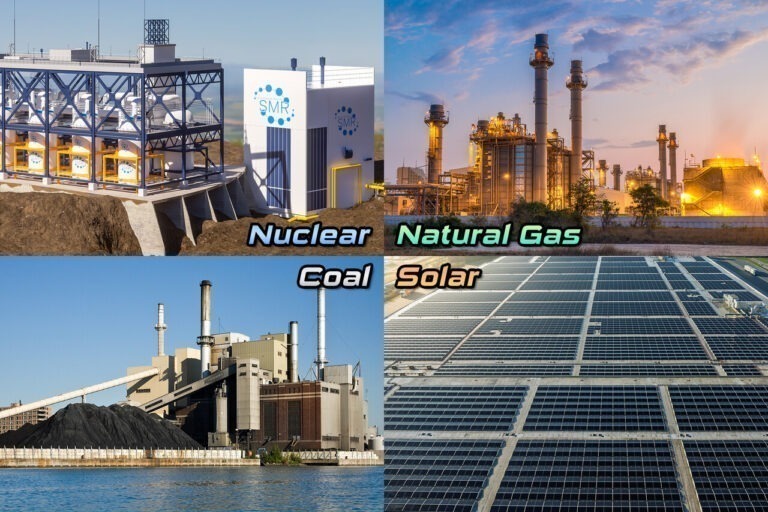
As a result, the 220-acre Paulsboro Wind Port, on the Delaware River south of Camden, sits unused. It was supposed to be the on-shore staging area for the construction of hundreds of wind turbines for these projects. With the offshore wind industry not currently viable and New Jersey facing a one-two punch of rising electricity rates and the risk of energy shortages (both due in part to the failed offshore wind projects), how can the Paulsboro Wind Port be repurposed to address these pressing needs, and how much energy can be produced there?
| Energy Source | Power Generation Potential at Paulsboro Windport (Megawatts) | Approximate number of homes powered |
| Nuclear | 1,000-2,000 | 985,000 – 1,971,000 |
| Natural Gas | 1,100 | 1,204,500 |
| Coal | 220-440 | 132,615 – 265,230 |
| Solar Farm | 22-44 | 4,800 – 9,600 |
Here are the pluses and minuses of each energy source:
Small Modular Reactors (SMRs) are next generation nuclear reactors that are much smaller than current nuclear reactors, with many of the components constructed in a factory instead of on-site, with higher quality control, and cost-savings from standardized designs.
Natural gas power plants are extremely efficient in terms of land use requirements.
New Jersey’s last coal-fired plants, the Logan Generating Plant in Swedesboro and the Chambers Cogeneration Plant in Carneys Point, both ceased operations in 2022. Could coal come back to New Jersey?
The choice among these technologies depends on balancing environmental priorities, electricity costs, and long-term energy strategies. While SMRs and natural gas plants offer pathways to cleaner energy, coal-fired plants are becoming less viable due to their environmental and economic challenges.Solar energy’s land use requirements makes it less impactful at the Paulsboro site.
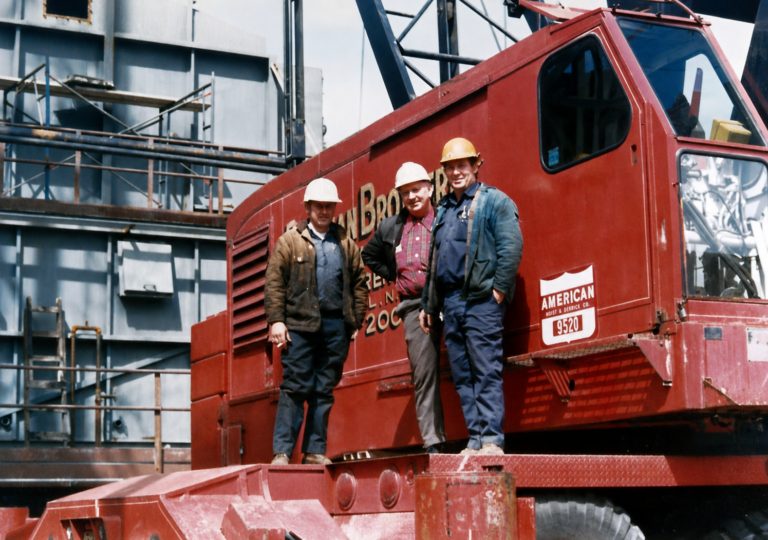
Long before rideshare apps and freelance platforms made the “gig economy” a household term, construction workers were already building careers one job at a time.
The modern gig economy is often associated with workers accepting individual assignments without the stability, training or benefits traditionally connected to full-time employment. Construction trades operate on a similar project-by-project model, but unions provide the structure that can turn those individual jobs into sustainable careers.
An operating engineer may move from a highway project to a hospital, pipeline, warehouse or environmental cleanup. Each job may involve a different contractor, location, schedule and type of equipment. Some last for years; others may last only a few days.
In July 2026, New Jersey supported approximately 161,300 construction jobs, according to preliminary data from the U.S. Bureau of Labor Statistics. That represents more than 161,000 workers whose livelihoods depend on a continuing pipeline of projects.
For IUOE Local 825 Business Manager Greg Lalevee, the uncertainty of construction work was part of growing up in a union household.
“When I was a kid, St. Patrick’s Day was more than an Irish holiday,” Lalevee said. “It meant the weather would begin to turn and my father would be going back to work soon.”
During the slower months, his father drove a taxi to continue providing for the family. It was an experience shared by generations of construction families, particularly when winter weather or an economic downturn brought work to a halt.
“Construction workers have always done what was necessary to take care of their families,” Lalevee said. “My father knew that one job would end and another would eventually begin. In between, he found a way to keep moving forward.”
Today, all three of Lalevee’s sons are operating engineers. They entered an industry that is more technologically advanced and, in many ways, more consistent than the one their grandfather knew. The basic reality, however, remains the same: every project eventually ends.
“We are fortunate to have more consistent work for our members today, but that consistency depends on infrastructure investment, responsible development and strong relationships that can connect operating engineers with the next opportunity,” Lalevee said. “Every job matters because every job represents another paycheck, another contribution toward retirement and another family being supported.”
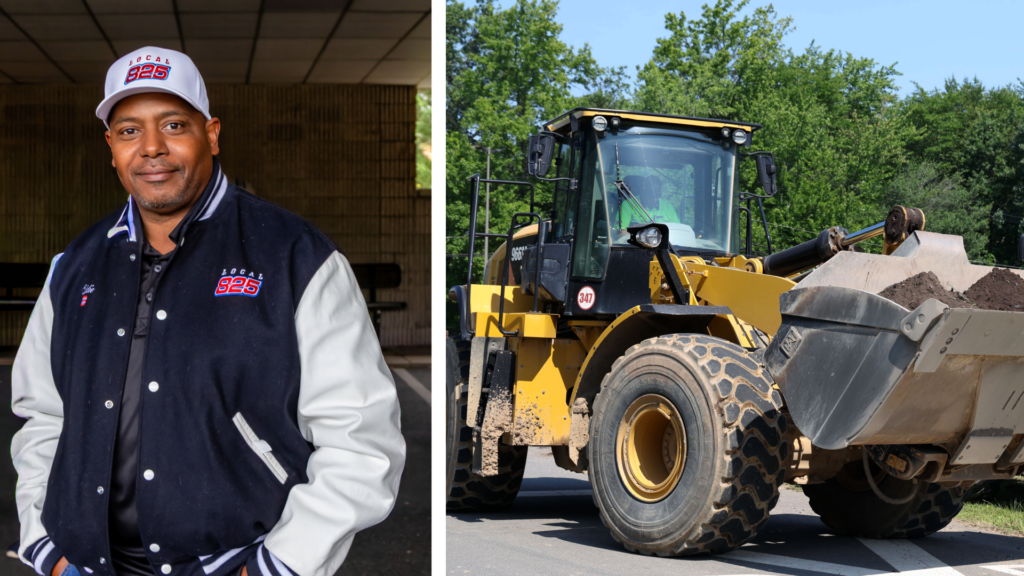
Tower crane operator Johnny Ahedo understands how quickly a temporary assignment can become an important chapter in a career. Ahedo has spent the past several years working at the HELIX development in New Brunswick, where a new innovation district is taking shape.
His time on the project began much more modestly, with a request to work one Saturday. “I thought I was going in for one day,” Ahedo said. “I showed up, did the job and expected that to be it. That Saturday turned into another day, then another week and eventually a few years.”
From high above New Brunswick, Ahedo has watched the project rise piece by piece. Like the building itself, his role has depended on hundreds of daily assignments completed safely and correctly.
“You never know how long an opportunity will last, so you treat every day like it matters,” he said. “You show up prepared, you do good work and you look out for the people around you.”
Even a multiyear project must eventually be completed. When that happens, Ahedo will climb down from the crane, leave the site and prepare for whatever comes next. The building, however, will remain a part of New Brunswick’s skyline, creating space for research, health care, education and innovation jobs that may be far more permanent than the construction work that made them possible.
For TOMCO lead engineer Eddie Vazquez, the next assignment is never just another gig. Vazquez has raised four children, and the jobs he accepts are how he provides for them. His work shirts reflect two of the commitments that define him: his union and his country. He makes sure both are represented in the embroidery he wears to work.
“I love my country, and I love my union because both have given my family opportunities,” Vazquez said. “Every time I go to work, I know what that day means at home. It means food on the table; a roof over our heads.”
As a lead engineer, Vazquez is responsible for helping a job run safely and efficiently. The project may be temporary, but the standards he brings to it cannot be. “You can’t treat a temporary job like it is disposable,” he said. “The work has to last, and the people beside you have to go home safely. Whether we are there for a few weeks or a few years, we owe the job our best.”
For many construction families, the results of temporary jobs extend well beyond the next paycheck. They pay mortgages, support communities and help parents send their children to college.
The Local 825 Scholarship Fund reflects the generational impact. Each year, scholarships help the children and grandchildren of members pursue college degrees. The recipient may be studying engineering, health care, business or another field far removed from a construction site, but the opportunity was created in part by a parent or grandparent who built a career on a slew of jobsites.

“Our members do this work because they want to provide opportunities for their families,” Lalevee said. “A parent may spend a career going from jobsite to jobsite, never knowing exactly where the next assignment will take them. Then one day, that work helps send a son, daughter or grandchild to college. There is nothing temporary about the impact that has on a family.”
That sense of responsibility is one reason unions remain so important in a project-based industry. In 2025, New Jersey had approximately 612,000 union members, representing 14.7 percent of the state’s wage and salary workforce. Contractors and locations may change, but union membership provides continuity. Training follows workers throughout their careers. Health benefits continue as members move between participating employers and pension benefits help them build long-term financial security. Together, those protections help turn a series of temporary jobs into a viable lifelong career.
New Jersey’s construction workers build permanent structures: roads used for generations, bridges crossed by millions, hospitals where lives are saved and schools where children learn. The irony is that the people creating those lasting structures often do so through a series of temporary assignments. No single project provides an entire career. A career is built by showing up for all of them, learning from each one and being ready when the next opportunity arrives.
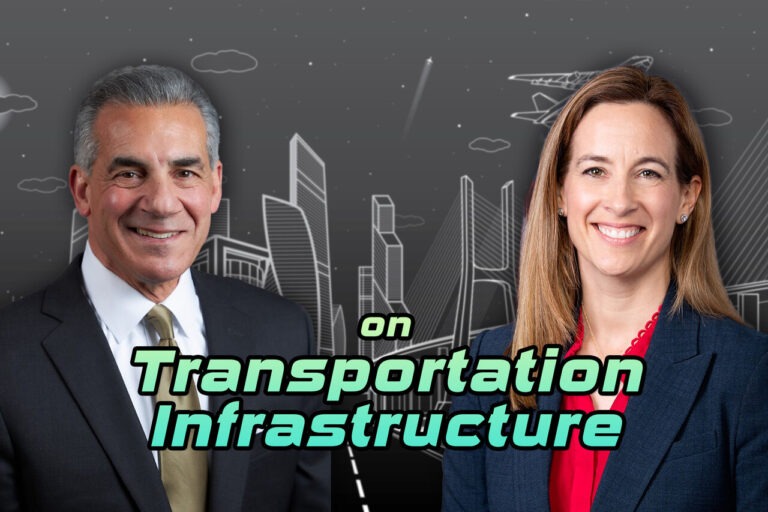
[This is first in a series of articles comparing the policy positions of the gubernatorial candidates on transportation infrastructure, water infrastructure, energy infrastructure, and economic development]
The 2025 New Jersey gubernatorial race between Democrat Mikie Sherrill and Republican Jack Ciattarelli presents a clear contrast in transportation infrastructure policy and philosophy. Both candidates recognize the state’s pressing needs—especially regarding NJ Transit and its real estate—but their approaches diverge sharply on investment, priorities, and vision for the future.
Jack Ciattarelli’s approach is defined by fiscal conservatism, skepticism toward expansive transit spending, and a focus on property tax relief and business incentives. He is critical of what he sees as overdevelopment in suburbs lacking infrastructure and mass transit, and he pledges to rein in government spending.
Key elements of his approach include:
Ciattarelli’s legislative background is marked by calls for budget cuts, lower taxes, and a more limited government role in infrastructure. He has not championed major transit funding bills and has criticized what he sees as inefficient or excessive spending on mass transit. Instead, he proposes:
Mikie Sherrill’s platform is built around robust investment in public transportation, climate resilience, and leveraging federal funding for comprehensive infrastructure upgrades. As a sitting member of Congress, she has been a vocal advocate for the Gateway Tunnel Project and a principal supporter of the Bipartisan Infrastructure Law, which has delivered billions to New Jersey for rail, road, and water projects. Sherrill frames transit investment as both an economic engine and a climate imperative, seeking to improve reliability, affordability, and sustainability across the system.
Key elements of her plan include:
Sherrill’s congressional record underscores her commitment to infrastructure:
Sherrill sees NJ Transit’s underused land as an opportunity for public-private partnerships that prioritize affordable housing and community needs, not just revenue maximization. She argues that activating these sites can drive economic growth and improve quality of life, especially in areas with strong transit access.
| Issue | Mikie Sherrill | Jack Ciattarelli |
| Transit Investment | Strong advocate for expanded federal and state funding for NJ Transit, Amtrak, and Gateway Tunnel | Skeptical of large-scale transit spending; focuses on cost containment |
| Gateway Tunnel | Principal supporter, helped secure federal funding as a congresswoman | No major advocacy for Gateway; not a campaign focus |
| NJ Transit Real Estate | Prioritizes affordable housing, transit-oriented development, and public-private partnerships | Focuses on maximizing economic returns, urban redevelopment |
| Affordable Housing | Supports building near transit hubs, leveraging NJ Transit land | Opposes state mandates for suburban affordable housing; prefers urban focus |
| Climate and Resilience | Integrates climate resilience and clean energy into infrastructure policy | Less emphasis on climate; focuses on fiscal restraint and infrastructure basics |
| Funding Approach | Seeks to leverage federal funds, supports new investment | Promises tax cuts and budget reductions, limiting new spending |
| Commuter Policy | Opposes fare hikes, fights external costs like NYC congestion pricing | No specific position on fare policy; focus is on cost control |
Mikie Sherrill and Jack Ciattarelli offer New Jerseyans a clear choice on transportation infrastructure. Sherrill’s approach is investment-driven, pro-transit, and focused on leveraging federal resources and public-private partnerships for long-term growth and climate resilience. Ciattarelli’s vision is rooted in fiscal conservatism, urban redevelopment, and skepticism toward expansive transit spending. The outcome of the election will determine whether New Jersey doubles down on transit investment and climate integration or shifts toward a more restrained, business-centric approach.

Over the past month, New Jersey has seen several significant developments in its water infrastructure, reflecting both local upgrades and statewide investment initiatives.
| Project/Issue | Location | Investment | Purpose/Impact | Date/Status |
| Riverside Water Main Replacement | Riverside, Burlington | $1.8 million | Replace 4,660 ft of aging main, improve reliability | July 2025 |
| Claridge Pump Station | Verona Township | $1.9 million | Resolve pressure issues, enhance fire protection | July 2025 |
| Statewide Infrastructure Financing | Statewide | $1+ billion | 147 projects: lead, PFAS, stormwater, wastewater | FY 2024 |
| Green Infrastructure Funding Cuts | Statewide | N/A | Concerns over reduced federal support | June 2025 |
| Water Main Upgrades | Springfield | $3 million | Replace aging mains, improve flow and reliability | April 2025 |
New Jersey American Water. (2025, July 9). New Jersey American Water starts $1.8M project replacing water mains in Riverside to boost service, replace lead lines, and improve fire protection. The Sun Newspapers. https://thesunpapers.com/2025/07/09/nj-american-water-riverside-upgrades/
New Jersey Infrastructure Bank. (2025, July 2). Verona Township Claridge Pump Station. https://www.njib.gov/news-index
New Jersey Future. (2025, June 19). Water infrastructure – New Jersey Future. https://www.njfuture.org/tag/water-infrastructure/
NJ.com. (2025, April 16). Works starts on water infrastructure upgrades in Springfield. https://www.nj.com/union/2025/04/works-starts-on-water-infrastructure-upgrades-in-springfield.html
WaterWorld. (2022, June 2). N.J. releases water infrastructure funding plans. https://www.waterworld.com/drinking-water-treatment/infrastructure-funding/press-release/14277550/nj-releases-water-infrastructure-funding-plans
NJB Magazine. (2022, January 21). NJ Launches $1B Water Infrastructure Investment Plan. https://njbmagazine.com/njb-news-now/nj-launches-1b-water-infrastructure-investment-plan/
Office of Governor Phil Murphy. (2022, January 20). Murphy Administration Launches Development of $1 Billion Water Infrastructure Investment Plan. https://www.nj.gov/governor/news/news/562022/approved/20220120c.shtml
![Lamont doubles down on natural gas after signing two climate-related bills [CT Mirror]](https://tristateinfrastructurenews.com/wp-content/uploads/2025/07/large-ENERGY-Lamont-CT-Natgas-768x512.jpg "Lamont doubles down on natural gas after signing two climate-related bills [CT Mirror]")
“…the Democratic governor hinted that he’d been engaged in talks with the Trump administration and state leaders in New York about building or expanding pipelines that could deliver more gas to Connecticut and the rest of New England.”
”…As if sensing that pushback again on Tuesday, Lamont said that a larger gas supply is necessary to wean the region off its reliance on aging, oil-fired plants that are needed to meet demand in winter months.”
Read the full article on CT Mirror: https://ctmirror.org/2025/07/01/ned-lamont-ct-climate-bills-natural-gas/
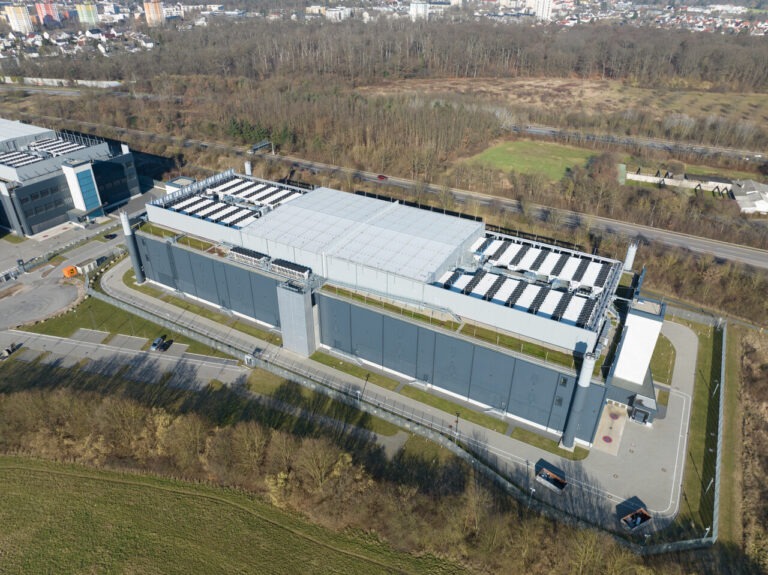
The global data center industry is experiencing a period of unprecedented expansion. Driven by the relentless growth of artificial intelligence (AI), cloud computing, and the digital transformation of virtually every sector, data centers have become the backbone of the modern economy. Their proliferation is not only reshaping the technological landscape but also generating significant economic benefits and sparking fierce competition among U.S. states. New Jersey, with its proximity to major markets and established infrastructure, is both well-positioned and challenged in this dynamic environment.
In 2024, global revenues were projected at $344 billion, growing to $452.53 billion by 2025, and as high as $1 trillion by 2027. The compound annual growth rate (CAGR) is estimated between 8% and 15% through the end of the decade, reflecting the sector’s sustained momentum. This surge is powered by the explosive adoption of AI, the expansion of cloud services, the proliferation of internet-connected devices, and the growing need for secure, reliable digital infrastructure.
In the U.S., the data center market was valued at $208.38 billion in 2024 and is expected to reach $308.83 billion by 2030, growing at a CAGR of nearly 7%. The demand for new capacity is so intense that 2025 is projected to see 10 gigawatts (GW) of new data center projects break ground globally, with another 7 GW reaching completion—a development pipeline valued at roughly $170 billion.
The economic impact of data centers is profound. Their construction and operation create thousands of jobs, from skilled trades and engineering during the build phase to ongoing roles in IT, security, and facility management. Major construction contractors and subcontractors are generating significant revenues from these complex projects, and local economies benefit from increased demand for services, utilities, and materials.
Beyond direct employment, data centers attract technology companies, spur innovation, and drive demand for renewable energy and advanced infrastructure. The shift from enterprise-owned to cloud and colocation models is accelerating, allowing businesses to reduce costs and increase operational efficiency, while also fueling investments in next-generation technologies like edge and modular data centers.
With billions of dollars and thousands of jobs at stake, U.S. states are locked in fierce competition to attract new data center investments. States offer tax incentives, expedited permitting, and—most crucially—access to affordable, reliable power. Location decisions are influenced by proximity to major urban markets, risk factors (such as natural disasters), and the availability of skilled labor.
Primary markets like Northern Virginia, Dallas/Fort Worth, and Silicon Valley have traditionally dominated, but capacity constraints and soaring demand are driving growth in secondary markets. Texas, for example, surged ahead in leasing activity in early 2025, while Las Vegas and Boston posted record growth. However, as demand outpaces supply, power constraints are becoming a critical factor shaping development strategies nationwide.
The data center boom is set to continue, with AI and digital transformation driving demand for years to come. For New Jersey, the path forward hinges on addressing its power infrastructure challenges and maintaining its competitive edge through continued investment and innovation. Success will mean not only capturing a share of this high-growth sector but also reaping the economic and jobs benefits that come with it.