Colliers’ traffic analysis findings support the addition of a third lane in each direction from Harriman to Middletown
Hudson Valley, NY — [Aug. 12, 2025] — A new traffic analysis of the New York State Route 17 corridor confirms the critical need for a third travel lane in each direction between Exits 103 (Monticello, Sullivan County) and 131 (Woodbury, Orange County). The NYS Route 17 Corridor Study by Hudson Valley-based Colliers Engineering and Design underscores the importance of upgrading the corridor to accommodate existing and future traffic volumes and support the region’s continued economic growth.
The analysis projects substantial traffic growth over the next 30 years, due both to proposed development and long-term population trends. The study notes that weekday peak-hour congestion on Route 17 stems from heavy commuter volume, while weekend backups are frequently caused by recreational traffic bound for the Catskills and other western destinations. These recurring slowdowns have also led to spillover congestion on nearby state and local roads. The report concludes that a general-use third lane in each direction would significantly improve traffic flow during both weekday peak hours and weekend travel surges.
In preparing the NYS Route 17 Corridor Study, Colliers analyzed both current and projected traffic conditions based on anticipated development and long-term regional growth. The findings clearly support the addition of a third lane in each direction from Harriman to Middletown and emphasize that previous studies by the New York State Department of Transportation (NYSDOT) have also identified this need. Unlike theoretical models, this locally informed study reflects the realities of the corridor’s growing communities and planned industrial development.
“The report does not contain any surprises and simply reiterates the findings of previous DOT studies — that there is a clear need for the highway enhancement project, as the current infrastructure does not have the capacity to handle the current traffic volume,” said Daniel Ortega, a founding member of 17-Forward-86 and the Community Affairs Chief for Engineers Labor-Employer Cooperative (ELEC) Local 825. “This report will provide additional engineering details that the DOT can use to further support the project.”
The NYS Route 17 Corridor Study was commissioned by ELEC and 17-Forward-86, a broad-based coalition advocating for improved safety and mobility on Route 17. For more than seven years, 17-Forward-86 has worked to advance long-needed mobility improvements on Route 17 to ensure the safety, sustainability, and prosperity of the Hudson Valley and Sullivan Catskills. Enhancing capacity on Route 17 has received longstanding bipartisan support, including from U.S. Senate Majority Leader Chuck Schumer, and the coalition’s efforts have contributed to the inclusion of up to $1 billion in New York State’s 2023 budget.
The study comes at a pivotal moment as NYSDOT and the Federal Highway Administration prepare to release a Draft Environmental Impact Statement in 2025. 17-Forward-86 urges that the full three-lane expansion from Harriman to Sullivan County be advanced now, calling it a “once-in-a-lifetime opportunity” to invest in a corridor vital to the region’s quality of life, economic resilience, and long-term connectivity.
The third lane is a critical variable companies are weighing as they evaluate location options in the Hudson Valley. Case in point: Garonit Pharmaceutical, a global manufacturer of antiseptic products and health care solutions, just announced it will build a 200,000-square-foot manufacturing facility in Orange County. This will be the largest antiseptic manufacturing facility in the world, and they chose to locate here.
“The data clearly show that the addition of a third travel lane in each direction is not just beneficial — it’s necessary to accommodate projected traffic volumes and ensure the long-term mobility of this vital corridor,” said Richard G. D’Andrea, P.E., PTOE, at Colliers who prepared the study. “At a minimum, we recommend that new lanes be added from Exit 131 west to Exit 119, where the highest traffic increases are expected. Extending the improvements further west to Exit 103 would provide even greater long-term benefit, supporting regional growth and allowing for a more efficient, continuous construction approach that minimizes disruption to the traveling public.”
To voice your support for enhancing the Route 17 corridor, click here.
ABOUT 17-FORWARD-86: 17-Forward-86 was established in August 2018 by representatives of economic development, construction, environmental stewardship, tourism, business, health care and energy companies who support the expansion of Route 17. The coalition of more than 100 members shares a vision of expanding the capacity of Route 17 to strengthen the economic well-being of the Hudson Valley and Sullivan Catskills.
The relentless grip of a June 2025 heatwave across the Mid-Atlantic tested the resilience of PJM Interconnection, the largest grid operator in North America. As temperatures soared into the 90s and even triple digits in parts of New Jersey, PJM issued a series of critical alerts to ensure the lights stayed on, highlighting the increasing strain on an aging grid facing surging demand. These pre-emptive measures, while common in extreme weather, underscore a growing concern about the delicate balance between electricity supply and demand, a balance that, if lost, could lead to severe consequences.
PJM’s Alerts in the June 2025 Heatwave
Throughout June 2025, PJM escalated its operational alerts as a persistent “heat dome” blanketed its vast service territory. New Jersey, in particular, experienced a grueling stretch of heat, with temperatures consistently in the mid to high 90s, and heat indices pushing well into triple digits. This intense heat directly translates to skyrocketing electricity demand, primarily driven by air conditioning usage in homes and businesses.
PJM’s initial response included Hot Weather Alerts, a routine procedure issued ahead of forecasted 90-plus-degree weather. These alerts prepare transmission and generation personnel for increased demand and signal a recall of scheduled generator maintenance to ensure maximum available capacity.
As the heat intensified and demand forecasts climbed, PJM issued Maximum Generation Alerts and Load Management Alerts, often concurrently, for multiple days, extending them through late June. For instance, on June 23, PJM forecasted a system-wide load of approximately 161,000 MW, significantly exceeding its initial summer peak forecast of 154,000 MW (PJM Inside Lines, 2025a). These alerts, which were also accompanied by a NERC Energy Emergency Alert Level 1 (EEA-1), are directed at transmission and generation owners, urging them to defer any maintenance or testing and ensure all available units operate at maximum output. The Load Management Alert serves as a pre-notification that demand response resources may be called upon. Critically, these alerts do not typically require direct action from individual customers, but rather prepare the system for potential stressors (PJM Interconnection, n.d.-a).
Not the First Time
PJM’s use of Maximum Generation and Load Management Alerts during summer heatwaves is not new. The grid operator has a long history of employing these tools as part of its emergency procedures to maintain reliability during periods of high stress. Similar alerts have been issued in previous hot summers, such as June 2024, when a heatwave also prompted warnings and saw demand rise significantly across the Eastern Interconnection (U.S. Energy Information Administration, 2024).
These alerts demonstrate PJM’s proactive approach to grid management, designed to be steps in a ladder of emergency actions, allowing grid operators to prepare resources and signal potential issues before they become critical. However, the increasing frequency and intensity of these alerts in recent years, particularly in 2025, reflect a broader trend: accelerating electricity demand (driven by data centers and electrification of the home and transportation sectors) coupled with the retirement of older power plants, leading to tighter reserve margins (Enel North America, 2025; Enverus, 2025). This shrinking cushion means that PJM is operating with less flexibility than in previous decades, making each heatwave a more significant test of the grid’s resilience.
What Happens If Load Exceeds Supply?
If, despite all pre-emptive measures and alerts, electricity load genuinely exceeds supply, a series of increasingly severe events would unfold, potentially leading to widespread power outages. The primary consequence is a drop in the grid’s frequency. The electrical grid must maintain a precise frequency (60 Hz in North America). When demand outstrips generation, the generators effectively slow down, causing the frequency to decline.
Grid operators like PJM have a multi-tiered response:
Automatic Responses: Generators have governors that automatically increase output in response to frequency drops. Synchronized reserves (online generators operating below full capacity) are quickly ramped up.
Operator Actions: If frequency continues to drop, PJM would escalate emergency procedures, moving to a NERC EEA Level 2 (EEA-2). This might involve:
Voltage Reduction: Slightly lowering the voltage on the distribution system, which subtly reduces consumption without noticeable impact to most users.12
Public Appeals for Conservation: Urging customers to voluntarily reduce non-essential electricity use.
Emergency Demand Response: Activating contracted demand response programs, where large industrial or commercial users are paid to temporarily reduce their electricity consumption (PJM Interconnection, n.d.-b).
Manual Load Dump Action (Load Shedding): This is the last resort to prevent a catastrophic, uncontrolled blackout. If all other measures fail, PJM would direct local electric distribution companies (like PSE&G, JCP&L, Atlantic City Electric in New Jersey) to implement rotating customer outages (also known as rolling blackouts). These are typically short, controlled power cuts (e.g., 30-60 minutes) to specific areas, designed to reduce demand rapidly and bring the grid back into balance (PJM Manual 13, 2025). This prevents an uncontrolled collapse of the entire system.
Blackout/Grid Collapse: If manual load shedding is not implemented quickly or effectively enough, or if there’s a sudden, severe, and widespread loss of generation, the grid frequency can fall too far. This causes power plants to automatically trip offline to protect their equipment, leading to a cascading failure and a large-scale, uncontrolled blackout. Restarting a grid after such an event is a complex and lengthy process.
While PJM regularly faces tight operating conditions and has called for load curtailment from demand response participants, a full, uncontrolled system-wide load exceeding supply resulting in widespread forced outages across its entire footprint, similar to a “blackout” scenario, has been successfully avoided through its robust emergency procedures. PJM’s design aims to prevent this exact scenario through its multi-layered reserve requirements and emergency operating procedures, including the ability to shed load proportionally if absolutely necessary.
Historically, PJM has successfully managed to prevent widespread, uncontrolled blackouts, unlike some other grids that have experienced such events (e.g., Texas’ ERCOT grid during Winter Storm Uri in 2021). PJM’s effectiveness is a testament to its operational protocols and market mechanisms, even as the challenges of resource adequacy continue to grow. While there have been localized outages due to equipment failures or severe weather, PJM has consistently maintained the overall integrity of its bulk power system, preventing a full system collapse when faced with extreme load conditions.
The June 2025 heatwave served as a stark reminder of the challenges PJM faces in balancing increasing demand with an evolving generation fleet. The alerts issued were a critical part of PJM’s strategy to maintain reliability, demonstrating the continuous vigilance required to keep the lights on for millions of customers.
“It may sound like the stuff of sci-fi movies, but diverting food waste from the landfill and converting it into electricity has become a real thing. William Brangham visited Ben & Jerry’s Vermont ice cream factory and the operations next door to find out how it works.”
Last week the electric rate hike for June 1, 2026 was announced. The good news is that it won’t be nearly as high as the June 1, 2025 rate hike. The bad news is that the June 1, 2025 rate hike was really high. Why?
Some blame PJM, others the Governor. How about both?
In January 2008 oil was $95/barrel, $145/barrel in July 2008, and closed the year at $45/barrel. The supply/demand of the commodity itself was not the reason for the dramatic swings in the course of a year. Rather it was financial interests taking advantage of an opaque market which impacted the real world prices we paid for oil. Unlike oil in 2008, the real world demand for electricity is increasing at a dramatic rate, driven in real time by data centers and artificial intelligence. And this has happened against the backdrop of the loss of in-state electric generating capacity. While the closing of Oyster Creek electric generating facility happened in 2018 on Governor Murphy’s watch, it was not as a result of his policies. The “all eggs in one basket I dropped” policy of new electric generation being off-shore wind and nothing to show for it, is his policy.
Critics of PJM cite the number of renewable electric generation projects in the queue which have not been brought on-line as the answer to our dilemma. Incorrect. The grid doesn’t care how much electricity any source can generate. The grid cares about how much electricity any source can reliably supply. Why?
The electric grid must continuously operate within very specific electrical tolerances – equilibrium – or it will crash. The lack of reliable electric supply due to the intermittence of the wind-blowing and sun-shining is the issue. This was amplified by a US Department of Energy’s report released earlier this month regarding electric grid reliability:
Retirements plus load growth increase risk of power outages 100 times in 2030. Allowing 104 GW of firm generation to retire by 2030—without timely replacement—could lead to significant outages when weather conditions do not accommodate wind and solar generation. Modeling shows annual outage hours could increase from single digits today to more than 800 hours per year. Such a surge would leave millions of households and businesses vulnerable. We must renew a focus on firm generation and continue to reverse radical green ideology in order to address this risk.
Planned supply falls short, reliability at risk. The 104 GW of plant retirements are replaced by 209 GW of new generation by 2030; however, only 22 GW comes from firm baseload generation sources. Even assuming no retirements, the model found outage risk in several regions rises more than 30-fold, proving the queue alone cannot close the dependable-capacity deficit.
And…
If you think it’s expensive staying cool with electricity, try staying warm with it. More on that soon regarding S249/A4844 “The Electric Heat Pump Mandate & Rent Increase Act of 2025”
Eric DeGesero is executive vice president of the Fuel Merchants Association of New Jersey.
New Jersey’s electricity ratepayers have faced significant financial strain, with double-digit electricity rate increases announced in February 2025, initially projected to range between 17.23% and 20.20% for June 2025 and more expected from the July 2025 PJM capacity auctions. These higher rates, combined with increased usage during heat waves, have hit hard. To say the next Governor of the State of New Jersey will have to deal with this issue would be the biggest understatement of this year’s election cycle.
Natural gas and nuclear energy provide over 90% of the state’s total electricity generation but the state faces challenges from delays in bringing new power generation projects online and the retirement of older facilities, which are tightening supply. The Murphy administration banked on an aggressive offshore wind strategy to increase in-state generation, but those efforts have failed. Now, New Jersey is importing 35% of its electricity, making the state vulnerable to regional grid constraints and wholesale auction price spikes.
New Jersey’s energy security is deeply intertwined with regional grid stability, underscoring the paramount need for robust in-state generation and efficient interconnection of new power sources.
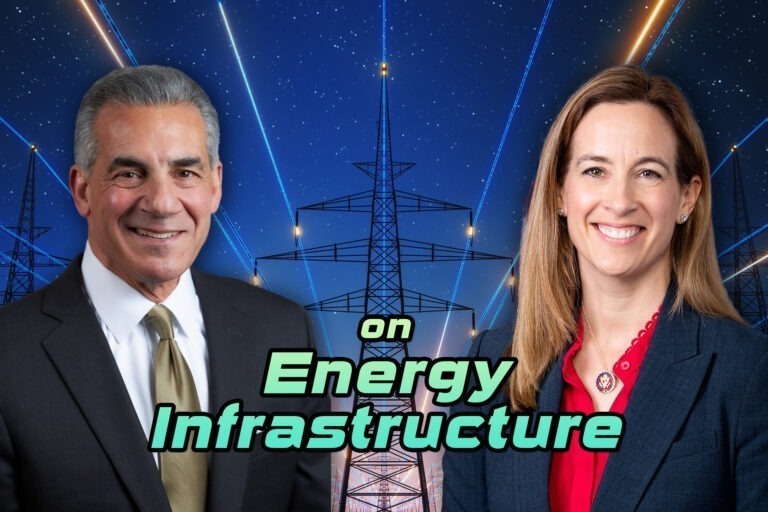
From this vulnerable energy position, the 2025 gubernatorial race between Jack Ciattarelli and Mikie Sherrill is a referendum on New Jersey’s energy future. This article analyzes the candidates’ energy policies and energy records.
Mikie Sherrill: Championing a Clean Energy Transition
Congresswoman Mikie Sherrill’s energy policies are based on the basic planks of the national Democratic platform – that climate change is an existential threat that must be faced head on with a rapid transition to renewable energy that will reduce greenhouse gas emissions and hopefully avert the worst impacts of climate change. As was reported in Politico New Jersey in June, Sherrill supports and would continue Governor Murphy’s 100% clean energy goal by 2035.
Sherrill is pledging bold action at the state level to invest in clean energy. Her campaign aligns closely with the Sierra Club’s vision for an affordable, 100% clean energy future, asserting that such a transition will protect communities from flooding and climate change while simultaneously lowering utility costs through clean, inexpensive power like solar. This framing positions climate action not as an economic burden but as a pathway to economic relief and growth. By emphasizing the affordability of certain renewable energy sources, she seeks to reframe the clean energy transition as a solution to the current energy affordability crisis, directly countering arguments that such transitions inherently raise costs.
Sherrill on Solar
Sherrill advocates for increased investment in New Jersey’s solar capacity. She introduced the “RAISE the Roof Act” in Congress to expand the solar investment tax credit (ITC) to include integrated solar roofs, aiming to make solar adoption easier and more accessible for American families. Her agenda includes investments in community solar and hosting clean energy on state properties.
Sherrill on Offshore Wind
Despite the cancellation of Orsted’s Ocean Wind 1 and 2 in 2023 and Atlantic Shores in 2024 due to economic headwinds (along with the precarious state of the other offshore wind leases), Sherrill continues to view offshore wind as a crucial step for New Jersey to realize its potential as a national and global leader in renewable energy and a key hub for East Coast wind production. Sherrill has openly criticized the state’s “failure of permitting and regulation” for delays and the collapse of offshore wind projects, stating that these issues “cost us”. She has committed to streamlining approvals to bring clean energy online.
Sherrill on Nuclear
Sherrill’s background as a Naval officer working on nuclear treaty obligations informs her stance on nuclear power. She explicitly supports its expansion, stating that “if we want to meet our economy’s long-term energy needs, we must build our nuclear energy infrastructure” and that she “will expand our nuclear energy generating capacity to take on our energy crisis”.
Sherrill on Natural Gas
Sherrill’s approach to natural gas focuses on mitigating the environmental impact of existing infrastructure. In 2021, Sherrill introduced the “Mitigate Methane Now Act” in Congress to curb climate change by encouraging the replacement of old natural gas distribution lines, a significant source of methane leakage, particularly in the Northeast. This legislation also seeks to protect lower- and fixed-income consumers from rate increases associated with these essential repairs by establishing a state grant program. It is unclear however the role any future natural gas expansion would play in a Sherrill administration as the Congresswoman has yet to mention the fuel source by name in written or public remarks since declaring her candidacy.
Sherrill on Electric Vehicles
In a June op-ed authored by the Congresswoman, she highlighted innovations that she believes are underutilized in New Jersey, specifically, she called for “More and faster electric vehicle chargers, which work with the grid, so people can feel secure making their next car purchase an electric vehicle.”
Sherrill supported the 2021 Bipartisan Infrastructure Investment and Jobs Act that allocated funding for electrical vehicle charging stations in New Jersey. She recently opposed House Joint Resolution 88, which called for overturning the California Advanced Clear Cars II – a state level rule that aims to phase out the sale of new gas-powered cars by 2035 in favor of electric vehicles.
Sherrill on Energy Affordability
Sherrill has deemed recent rate hikes “unacceptable” for households and businesses, cautioning that high utility costs could lead to businesses relocating. Her primary strategy for driving down costs involves getting “more clean power to the grid” and streamlining approvals to bring clean energy online. She has pledged to hold PJM, the regional grid operator, accountable for delays in connecting new energy sources.
Sherrill’s public statements and endorsements from environmental groups like the Sierra Club and New Jersey League of Conservation Voters, which have called her an “environmental champion,” are consistently supported by her voting record. She has consistently voted against measures that would undermine federal authority on LNG, attack oil and gas leasing reforms, roll back clean water safeguards, defund clean energy research and development, block electric vehicle tax credits, and eliminate EPA’s cleaner cars rules.
Jack Ciattarelli: A Balanced, All-of-the-Above Approach
Jack Ciattarelli advocates for a new Energy Master Plan that “promotes an all-of-the-above energy policy.” While acknowledging that “climate change is real and accelerated by human activity,” Ciattarelli has criticized Governor Murphy’s clean energy plan as “irrational,” “too much, too soon, too fast,” emphasizing the need for a “rational transition”. This “all-of-the-above” approach implies a slower, more diversified shift away from fossil fuels, emphasizing reliability and cost-effectiveness over rapid decarbonization targets, which he views as potentially disruptive and expensive. Mr. Ciattarelli has
Ciattarelli on Wind & Solar
Ciattarelli’s perspective on renewable energy is nuanced. He has stated, “We need more solar”. However, he aligns with President Trump’s budget priorities, which have been described as “attack[ing] solar energy” by cutting subsidies, viewing wind and solar as “expensive and unreliable” if federally subsidized.
His opposition to offshore wind is strong and explicit; he pledges to “ban offshore wind farms from being built off our coast and along our Jersey Shore”, considering them “bad economic policy, bad energy policy, and bad environmental policy,” citing concerns about their cost and potential adverse effects on marine life. He argues that some renewable technologies are “not yet ready for prime time” and that “we are wasting taxpayers’ dollars if we rush these technologies”. His opposition stems from a belief that large-scale renewable projects, especially offshore wind, are economically inefficient, unreliable, and potentially environmentally detrimental without significant taxpayer subsidies.
Ciattarelli on Nuclear
Ciattarelli strongly supports nuclear power, highlighting its “zero carbon emissions” contribution—over 40% of New Jersey’s electricity—and advocating for an emphasis on “micro nuclear” as “the wave of the future”. This is a shift from his earlier stance in 2017, when he opposed providing subsidies to the state’s nuclear power plants, arguing that incentives for solar and wind undermined nuclear.
Ciattarelli on Natural Gas
Ciattarelli views natural gas as “the bridge to the future”. He supports incorporating “more natural gas in the Garden State’s energy mix to increase power supply and cut costs”. He advocates for natural gas working “in partnership with renewable energy” and would invest in “safe, clean natural gas and nuclear until emerging renewable energies are more practical and affordable”. He perceives current policies as hindering sufficient in-state generation by limiting conventional sources, which he believes are necessary to stabilize costs and ensure supply until renewables are “more practical and affordable.” This is a direct philosophical counterpoint to Sherrill’s approach, which seeks to leverage clean energy investments to achieve affordability.
Ciattarelli on Electric Vehicles
In an 2023 op-ed published in the Asbury Park Press, Ciattarelli said the government incentives being used to drive the mandate forward are “insulting and unfair” to working-class people. In May of 2025 Mr. Ciattarelli posted on his social media accounts that he would eliminate the electric vehicle mandates on day one of his administration.
Ciattarelli on Energy Affordability
“Making New Jersey Affordable Again” is a central theme of Ciattarelli’s campaign, as he links rising electricity bills to “Murphy’s radical agenda”. His plan includes repealing “unrealistic and unaffordable state mandates and timelines regarding electric vehicle sales, household appliances, home renovation, and home construction,” which he argues make New Jersey more expensive and disproportionately punish working and middle-class residents. He proposes “cleaning house” at the NJBPU to reform permit and approval systems for generation, aiming to bring power online more expeditiously.
This historical pattern indicates that his “rational transition” would likely involve a slower, less mandated shift away from fossil fuels.
Side by Side Comparison
The energy policy platforms of Mikie Sherrill and Jack Ciattarelli both acknowledge the state’s rising energy costs and the need for a stable power supply, but their proposed solutions and underlying philosophies differ significantly.
Issue Area
Mikie Sherrill’s Position
Jack Ciattarelli’s Position
Overall Energy Vision
Comprehensive clean energy transition; 100% clean energy future
“All-of-the-above” energy policy; “rational transition”
Climate Change Stance
Urgent crisis requiring bold action to protect communities
Climate change is real and human-accelerated, but current plans are “too much, too soon, too fast”
Energy Affordability Strategy
Lower costs by increasing clean energy supply, streamlining approvals, holding PJM accountable
Reduce costs by repealing “unrealistic mandates,” promoting diversified supply (including natural gas), and reforming BPU
Renewable Energy (General)
Strong proponent; emphasizes investment in clean energy
Skeptical of “rushing” technologies; views some as “unreliable” if federally subsidized
Solar Energy
“Cheapest energy source”; increased investment; expanded ITC for integrated roofs; community solar
“Need more solar”, but aligns with policies cutting solar subsidies
Offshore Wind
“Crucial step” for NJ leadership; applauds federal support; blames state permitting issues for delays
Will “ban” offshore wind; calls it “bad economic, energy, and environmental policy”; cites cost and marine life concerns
Nuclear Power
Supports expansion for long-term energy needs and decarbonization
Strong support for nuclear, especially “micro nuclear,” as zero-carbon baseload
Natural Gas
Focus on mitigating methane leaks from existing infrastructure; protecting low-income consumers during repairs
“Bridge to the future”; increase supply to cut costs; partner with renewables
Coal
No explicit mention of future role; focus on reducing emissions from fossil fuel sector
Implicit critique of policies limiting fossil fuel generation by noting neighboring state’s coal use
Electric Vehicles
Supports phasing our gas power vehicles
Opposes electric vehicle mandates
Regulatory Approach
Streamline approvals for clean energy; hold PJM accountable
Reduce regulatory burdens; “clean house” at BPU; repeal mandates
The gubernatorial race between Mikie Sherrill and Jack Ciattarelli presents New Jersey voters with a stark choice regarding the state’s energy future. Sherrill champions an accelerated transition to a 100% clean energy future, advocating for significant investments in solar and offshore wind, while also supporting nuclear power as a critical baseload. Ciattarelli, on the other hand, proposes a more measured, “all-of-the-above” approach that prioritizes immediate affordability and reliability through continued reliance on natural gas and nuclear power.
The most pronounced area of disagreement is offshore wind. Sherrill strongly supports its expansion, seeing it as vital for New Jersey’s leadership in renewable energy, while Ciattarelli vows to ban it, citing concerns about cost and environmental impact. Their differing views on its economic viability and ecological effects represent a clear ideological divide.
A nuanced area of overlap exists in their positions on nuclear power. Both candidates support nuclear energy as a carbon-free source, though their emphasis and historical stances vary. Sherrill views it as essential for long-term energy needs and decarbonization, while Ciattarelli highlights its zero-carbon contribution and advocates for “micro nuclear” as a future solution. This shared ground could represent a bipartisan opportunity for maintaining baseload power, despite their broader disagreements on renewables.
Both candidates identify rising energy costs as a critical issue, but their proposed pathways to affordability differ. Sherrill proposes to lower costs by accelerating the deployment of clean energy and improving grid efficiency through regulatory streamlining and holding PJM accountable. Ciattarelli aims to reduce costs by rolling back what he perceives as expensive mandates and increasing supply through a broader energy mix that includes natural gas.
The fundamental disagreement centers on the pace and method of New Jersey’s energy transition, particularly the role of large-scale renewables versus conventional and nuclear sources.
November’s election will determine New Jersey’s strategic balance across the energy trilemma: security, affordability, and environmental sustainability. The state’s status as a net importer and its reliance on existing baseload power mean that the chosen path will have profound and immediate consequences for residents’ utility bills, business competitiveness, and the state’s environmental footprint.
“There are 6,827 bridges in New Jersey, and the state has identified that 2,563 of them need repairs.
According to the American Road & Transportation Builders Association, more than 7 million vehicles cross the state’s bridges on a given day and 410, or 6% of them, are structurally deficient.”
“Advanced small modular reactors could change the way we think about reliable, clean and affordable nuclear power.
Instead of going big, scientists and engineers went small developing mini reactors that are roughly a third of the size of a typical nuclear power plant.
That means America’s largest clean energy source could be coming to a market near you—making nuclear more scalable and flexible than ever before.
Advanced SMRs offer many advantages, such as relatively small size, reduced capital investment, ability to be sited in locations not possible for larger nuclear plants, and provisions for incremental power additions. SMRs also offer distinct safeguards, security and nonproliferation advantages.
The U.S. Department of Energy is supporting the development and deployment of advanced SMRs to help meet the nation’s economic, environmental and energy security needs.
“The investment in Pennsylvania comes less than a week after Amazon said it will invest $10 billion in North Carolina and announced plans to invest more than $5 billion in its new cloud infrastructure in Taiwan.
The investment will create 1,250 high-skilled jobs and support thousands more in the Amazon Web Services data center supply chain, the company said.”





![NJ Launches 2 GW Energy Storage Program [ReNEWS]](https://tristateinfrastructurenews.com/wp-content/uploads/2025/08/large-TINN-Lede-NJBPU-energy-storage-768x512.jpg "NJ Launches 2 GW Energy Storage Program [ReNEWS]")
![How Ben & Jerry’s is recycling food waste into energy [PBS NewsHour]](https://tristateinfrastructurenews.com/wp-content/uploads/2025/07/large-PBS-Ben-and-Jerrys-768x512.jpg "How Ben & Jerry’s is recycling food waste into energy [PBS NewsHour]")

![N.J. has thousands of bridges — around 400 of them are structurally deficient, but officials say they are not unsafe [WHYY]](https://tristateinfrastructurenews.com/wp-content/uploads/2025/07/large-TINN-Lede-TRANSPORT-WHYY-deficient-bridges-768x512.jpg "N.J. has thousands of bridges — around 400 of them are structurally deficient, but officials say they are not unsafe [WHYY]")
![Energy 101: Small Modular Reactors [Department of Energy]](https://tristateinfrastructurenews.com/wp-content/uploads/2025/07/large-DOE-SMR-explainer-768x512.jpg "Energy 101: Small Modular Reactors [Department of Energy]")
![Train Architect Designs the Perfect Commuter Train [WSJ Pro Perfected]](https://tristateinfrastructurenews.com/wp-content/uploads/2025/07/large-Vid-Train-design-768x512.jpg "Train Architect Designs the Perfect Commuter Train [WSJ Pro Perfected]")
![Amazon to invest $20 billion in Pennsylvania to expand cloud infrastructure [Reuters]](https://tristateinfrastructurenews.com/wp-content/uploads/2025/07/large-TINN-Lede-ECONOMY-Amazon-PA-768x512.jpg "Amazon to invest $20 billion in Pennsylvania to expand cloud infrastructure [Reuters]")