A bill sponsored by New Jersey State Senator John Burzichelli calls for the New Jersey Board of Public Utilities (BPU) to study the feasibility of developing advanced nuclear reactors. The Senate Environment and Energy Committee approved the bill. It would direct the BPU to conduct a study in coordination with the Department of Environmental Protection and the State Economic Development Authority and submit a report to the governor and legislature within 18 months of being enacted.
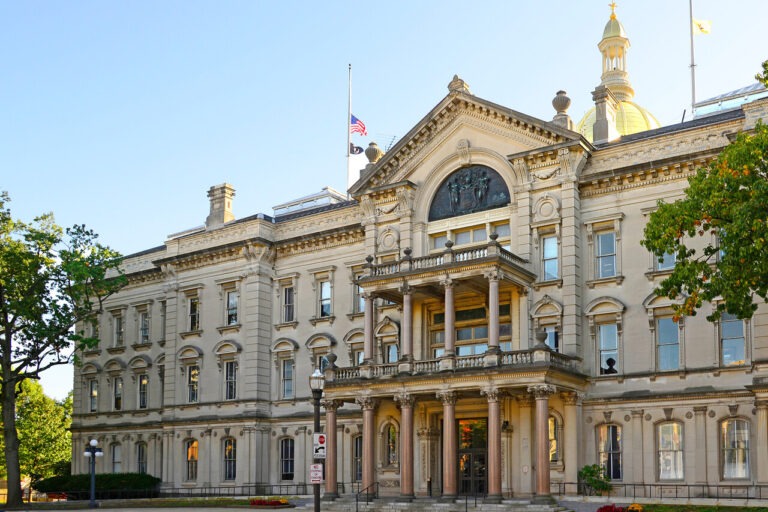
New Jersey has launched the nation’s first statewide “Target Zero” plan, aiming to eliminate traffic deaths by 2040. The initiative, developed by the Target Zero Commission, outlines 68 recommendations to improve road safety, including redesigning dangerous intersections, expanding speed enforcement, and investing in pedestrian and cyclist protections. Officials emphasize that success depends on collaboration across state agencies, municipalities, and communities.
”The 72-page plan, described as the nation’s first statewide strategy to end roadway fatalities, lays out an ambitious roadmap: 29 legislative actions for lawmakers to consider and 39 additional measures for state agencies and local law enforcement to implement.”
While ambitious, the plan reflects growing concern over rising roadway fatalities and seeks to align New Jersey with international “Vision Zero” efforts. Implementation challenges remain, but leaders hope the strategy will make the state a model for traffic safety nationwide.
For more than a century, the stretch of waterfront known as the Long Slip ran quietly beside Hoboken Terminal. It was a 2,000-foot barge canal cut into the edge of the Hudson River. Once bustling with marine and freight traffic serving the adjacent railyards, the canal eventually fell into disuse as shipping patterns shifted away from the Hoboken waterfront. It became stagnant and largely forgotten.
In 2012, Superstorm Sandy brought the Long Slip into public view. When the storm surge swept up the Hudson River, it funneled directly into the canal and through to the rail yard beyond, flooding critical commuter infrastructure and crippling train service. The event exposed how this dormant waterway had become a vulnerability and a direct flood path to one of the region’s busiest transportation hubs.
Today, that vulnerability is being turned into strength. Through NJ Transit’s Long Slip Fill and Rail Enhancement Project, the canal is being filled and re-engineered into a resilient, elevated rail yard and passenger platform complex designed to withstand future storms and strengthen the state’s commuter network.
Engineering resilience on the waterfront
Caption: A project map showing the proposed track layout for NJ TRANSIT’s Long Slip Fill and Rail Enhancement Project in Hoboken. The diagram highlights key rail yard features, future substation placement, and how the upgrades will improve service reliability and protect critical rail infrastructure from storm impacts.
Source: NJ TRANSIT Resilience Program, Long Slip Supplemental Environmental Assessment, June 2016.
The project is being delivered in phases and is currently in Phase 2. Phase 1 focused on eliminating the canal’s flood risk. Crews filled the 2,000-foot waterway and raised it 10.5 feet, which is above the Federal Emergency Management Agency base flood line. That work closed the gap that once allowed stormwater to surge directly into the yard.
At the same time, the municipal Combined Sewer Overflow (CSO) outfall, part of Jersey City’s shared storm and sanitary system, was extended and redirected. The extension ensures that when major storms hit, the system can discharge overflow safely and in compliance with modern environmental standards, without compromising the new fill or flooding nearby rail infrastructure. Phase 1 was completed in mid-2023 and received industry recognition for its complexity and significance to the region’s transportation network.
With the fill in place, the project transitioned into Phase 2, which focuses on new commuter rail infrastructure. The rebuilt railyard will include six new tracks, three high-level ADA accessible passenger platforms, and a new personnel and passenger facility. Phase 2 also includes installation of supporting infrastructure such as power, signal, and communication systems. The design increases operational flexibility for NJ Transit’s Hoboken Division and provides additional layover capacity for trains that begin or end their trips at the terminal.
Complex construction in a confined environment
Source: NJ TRANSIT Resilience Program, Long Slip Supplemental Environmental Assessment, June 2016.
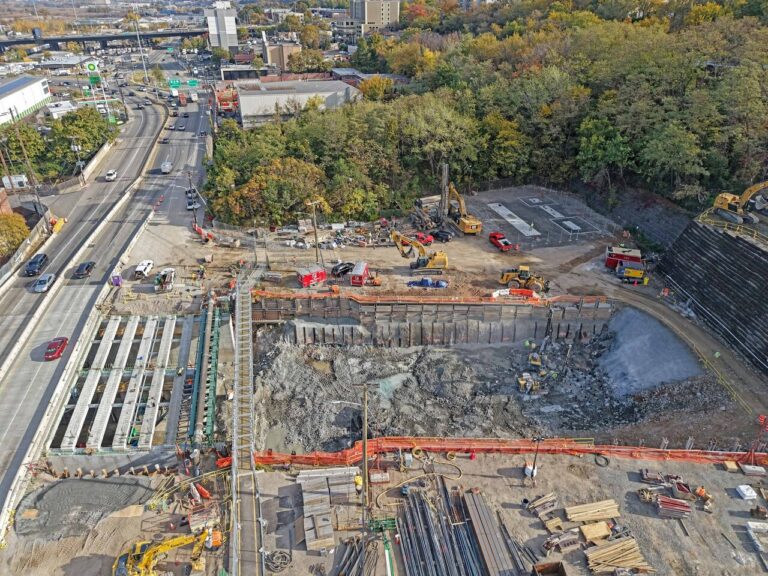
Caption: Construction teams work within the tight Hoboken waterfront corridor beside active rail lines.
Working within the Hoboken waterfront corridor presents unique challenges. The Long Slip sits immediately beside active Hudson Bergen Light Rail lines, multiple NJ Transit commuter tracks, and the PATH tunnels that run beneath the area. Each element of construction, from excavation to track alignment, must be carefully staged to avoid service disruptions or interference with underground structures.
To maintain safety and precision, the project uses extensive surveying, geotechnical monitoring, and coordination with multiple agencies, including Jersey City’s Municipal Utilities Authority, the Port Authority of New York and New Jersey, and NJ Transit’s Resilience and Capital Planning teams.
Building the next generation of rail infrastructure
Caption: A digital rendering of NJ TRANSIT’s Long Slip Fill and Rail Enhancement Project, showing the elevated rail embankment and new track configuration designed to eliminate the flood-prone canal.
Source: NJ TRANSIT Resilience Program, Long Slip Supplemental Environmental Assessment, June 2016.
The project is expected to reach completion in November 2028. Once finished, the new platforms will connect directly to Hoboken Terminal’s existing concourses, allowing passengers to access trains more efficiently and safely even during heavy rain or flood conditions.
The Long Slip project demonstrates how legacy infrastructure can be repurposed to meet modern climate risks. By eliminating a major flood pathway and adding new rail capacity in its place, NJ Transit is strengthening the resilience of one of the busiest nodes in the state’s transportation network. As storms intensify and coastal pressures rise, projects like this will play a central role in keeping New Jersey moving.
References
AECOM Technical Services. Track and Station Engineering and Construction Assist Services – Long Slip Fill and Rail Enhancement Project. NJ Transit Procurement Records.
E.E. Cruz & Company Inc. Phase 1 CSO Extension Contract Award (IFB 18-035X). NJ Transit Procurement Records.
NJ Transit. Long Slip Fill and Rail Enhancement Project Overview. NJ Transit Resilience Program.
STV Inc. Project of the Year – Long Slip Fill and Rail Enhancement Project.
YU & Associates Inc. NJ Transit Long Slip Canal Fill and Rail Enhancement.
Hudson County View. NJ Transit Board Approves Contracts for $213 Million Upgrades at Hoboken Terminal.
New Jersey Treasury. Hurricane Sandy Quarterly Report – Long Slip Fill and Rail Enhancement Project.
The stretch of rail between Newark and New York Penn Station is the busiest piece of the Northeast Corridor. It carries more people and more economic activity than any other passenger rail segment in the country which is why even a small disruption can have an outsized impact. A problem in the Hudson Tunnel does not stay in the Hudson Tunnel. If this link falters, delays spread quickly and affect everything from trains to buses and road traffic.
The Hudson Tunnel Project aims to fix the weakest point in the country’s most important rail corridor. As the centerpiece of the broader Gateway Program, it will build a new two-tube rail tunnel under the Hudson River and fully rehabilitate the existing 1910 North River Tunnel. Right now, both directions of travel are forced through a single pair of tubes. If one tube must be taken out of service, the entire cross-Hudson connection is compromised. With two separate tunnels in service, trains can be shifted between them so that maintenance, repairs or emergencies never require a full shutdown of service.
The project is more than a transportation upgrade. It is an investment in the long-term resilience of a region that anchors nearly 20 percent of the U.S. economy.
Five key facts on the Hudson River tunnels
Hudson Tunnel Project Map provided by the Gateway Development Commission
1. The original tunnel was a landmark of early 20th century engineering The North River Tunnel opened in 1910 and was considered one of the most ambitious rail projects of its time. It was built with hand-dug shafts, compressed-air work chambers and early electric-powered trains. More than a century later, it remains the only direct rail link between New Jersey and Manhattan.
2. The new tunnel will use modern Tunnel Boring Machines to carve through bedrock and river sediments Unlike the original tunnel, which relied on labor-intensive excavation, the new crossing will be built with state-of-the-art TBMs designed specifically for the geology of the Palisades and the Hudson River. These machines create a smoother tunnel lining, improved waterproofing and a safer construction environment.
3. The existing tunnel was severely damaged by Hurricane Sandy Saltwater flooded the 1910 tunnel in 2012, leaving behind chloride contamination that continues to corrode concrete and electrical systems. Without a second tunnel, it cannot be fully repaired without shutting down rail service between New York and New Jersey.
4. It is the region’s single point of failure Today only two tracks carry all Amtrak and NJ Transit trains into Manhattan. When even one tube slows down, the entire Northeast Corridor feels the impact. A new tunnel introduces the redundancy needed to keep trains moving during maintenance or emergencies.
5. A four-track Hudson crossing will transform regional mobility Once the new tunnel opens and the old one is rebuilt, the number of tracks under the river will double. This added capacity will reduce delays, strengthen supply chains and give the Northeast a modern and resilient rail system built for the next century.
The Hudson Tunnel Project is a long-term investment in the reliability of the Northeast Corridor and in the economic strength of the region it supports. Its progress marks a turning point for the region’s transportation future and a reminder of what becomes possible when the country commits to rebuilding the systems that millions depend on every day.
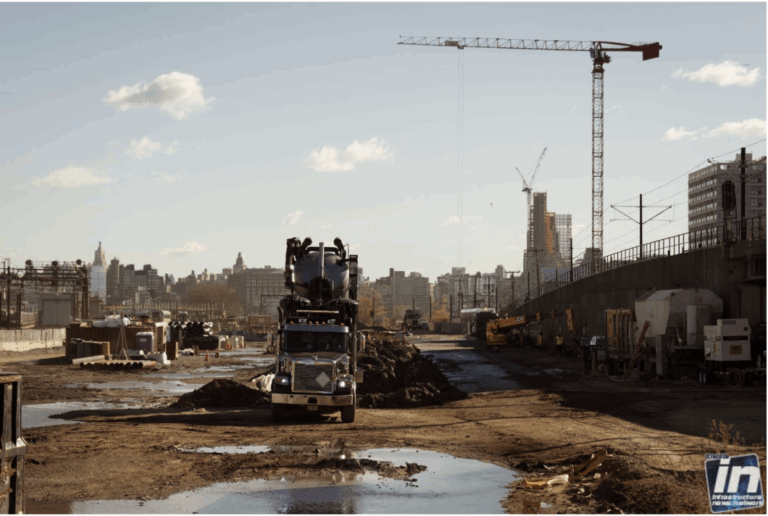
“Gov. Phil Murphy has announced $150 million in Municipal Aid grants, with 537 municipalities across the state receiving funds for road, bridge, safety, and quality-of-life improvements.
Every municipality that applied for funding received a grant.”
By the time floodwaters recede and utility crews finish restoring power, the true cost of a natural disaster is only beginning to tally. In New Jersey, rivers, coastlines and dense population create a volatile mix during extreme weather. Nature’s fury has come with a steep price tag. Here are the five most financially devastating natural disasters in New Jersey history, ranked from fifth to first by inflation-adjusted costs and impact on infrastructure and communities.
5. Hurricane Floyd (September 1999) – ~$479 Million (Adjusted)
Tropical Storm Floyd dropped up to 10 inches of rain on New Jersey, causing record flooding along the Raritan River and beyond. Bound Brook, Manville and other riverfront towns were hit especially hard, with entire streets submerged and homes destroyed.
The damage reached $250 million in 1999 dollars, equivalent to roughly $479 million today. Federal disaster assistance helped repair roads and bridges but many homeowners without flood insurance faced steep out-of-pocket costs. More than 600,000 residents lost power during the storm.
Floyd’s devastation helped revive interest in long-delayed flood control investments, including the Green Brook Flood Control Project.
4. Hurricane Irene (August 2011) – ~$1 Billion
Just one year before Sandy, Hurricane Irene delivered a sobering preview of what was to come. The storm knocked out power to 1.5 million homes and flooded hundreds of buildings. Torrential rain caused widespread inland flooding, particularly along the Passaic and Raritan River basins.
Statewide damage totaled approximately $1 billion. FEMA processed thousands of claims for temporary housing and repairs while local governments worked to restore bridges, roads and utility networks.
Irene spurred mitigation efforts including the expansion of the Blue Acres buyout program and investment in green infrastructure.
Before the era of modern emergency management, Hurricane Diane delivered one of New Jersey’s deadliest and most destructive floods. Following Hurricane Connie by just days, Diane brought more than a foot of rain to the state’s northwest, triggering flash floods and river overflows.
The statewide damage exceeded $150 million in 1955 dollars, equivalent to roughly $1.79 billion today. Hundreds of bridges and roads were destroyed, and dozens of New Jersey residents died. With no federal flood insurance program at the time, many families relied on charities, the Army Corps of Engineers and limited state assistance to recover.
Diane catalyzed the development of key water management infrastructure. Spruce Run and Round Valley reservoirs in Hunterdon County were both constructed in the following decade. While primarily intended for water supply, they also provide important flood mitigation capacity.
2. Hurricane Ida (September 2021) – ~$2 Billion
When the remnants of Hurricane Ida swept through New Jersey, they unleashed catastrophic flooding. In just a few hours, record-breaking rainfall overwhelmed sewer systems and turned streets into rivers, particularly in central and northern counties such as Somerset, Middlesex and Union. For towns like Manville and Bound Brook, which had also suffered during Floyd and Irene, Ida’s devastation reinforced the need for stronger long-term floodplain planning.
State officials estimated Ida’s damage at $2 billion. Federal assistance covered a significant portion, with more than $870 million disbursed for housing aid, public infrastructure and emergency services. Insurance losses added hundreds of millions more. As in prior storms, gaps in flood insurance left many households unprotected.
1. Hurricane Sandy (October 2012) – ~$30 Billion
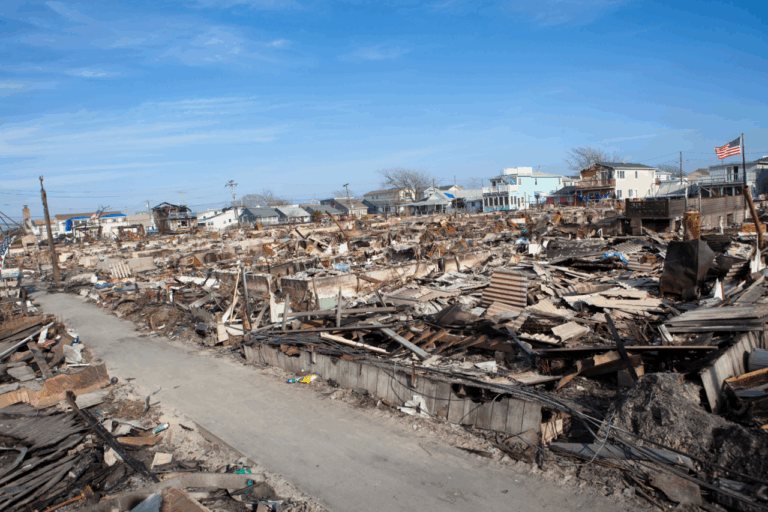
No weather event has left a deeper financial or emotional scar on New Jersey than Hurricane Sandy. Making landfall as a post-tropical cyclone, Sandy sent a 14-foot storm surge crashing into the Jersey Shore, inundating neighborhoods from Hoboken to Atlantic City and causing damage throughout the state. Nearly 346,000 homes were damaged or destroyed and more than 2 million residents lost power.
Estimates placed the storm’s total cost in New Jersey at approximately $30 billion. Insurance companies paid out nearly $19 billion in claims across New York and New Jersey but much of the financial burden, especially for flood-related damage, fell on the National Flood Insurance Program and homeowners without adequate coverage.
Looking Ahead: Investing in Resilience
These five disasters have collectively caused more than $35 billion in direct damage to New Jersey, much of it within the past 25 years. That figure does not reflect the broader toll on local economies, mental health or long-term recovery.
While climate change is increasing the frequency and severity of extreme weather events, New Jersey is not without tools. Resilience planning, smarter development, stronger building codes and modern infrastructure can significantly reduce future losses.
Sustained investment in stormwater systems, flood control, energy grids and buyout programs does more than prevent damage. It saves lives and protects the state’s economy. With thoughtful planning and proactive action, New Jersey can face the next storm more prepared than the last.
Grid operator PJM says it has adequate resources to serve its customers this winter. PJM said it will have 180,800 Megawatts (MW) of capacity with a forecasted peak demand of 145,700 MW. The forecasted demand would set a record if reached. PJM reached an all-time winter high of 143,700 in January; 2,000 MW lower than this winter’s forecast. While the winter forecast is manageable, PJM said it continues to work with stakeholders to reverse the trend of demand growing faster than generation.
Grid operator PJM has filed a proposal with the Federal Regulatory Energy Commission (FERC) that would attempt to strike a reasonable balance between wholesale cost and auction results to increase investment in generation.
”The periodic review process is typically conducted every four years. However, the proposal PJM filed on Nov. 7 resulted from a review initiated by PJM a year earlier than required by the PJM Tariff, given the rapidly changing dynamics in the marketplace. Those dynamics include tightening supply and demand margins driving record capacity prices. New Jersey electricity prices surged as much as 20% beginning in June.”
“Over those three decades, the U.S. population soared by 28% and the economy, as measured by gross domestic product adjusted for inflation, more than doubled.
Yet U.S. emissions from many of the activities that produce greenhouse gases – transportation, industry, agriculture, heating and cooling of buildings – have remained about the same over the past 30 years. Transportation is a bit up; industry a bit down. And electricity, once the nation’s largest source of greenhouse gas emissions, has seen its emissions drop significantly.”
Between 2005 and 2022, the U.S. cut climate-changing emissions by 17% even as its economy grew by over 75%. This decoupling was driven by a transition from coal to natural gas and renewables, improved energy efficiency, and structural economic changes favoring less energy-intensive sectors.
The Associated Press reports that the International Energy Agency says that the world is on track to build more renewable energy projects in a five-year period than it has in the last 40 years, but natural gas will continue to be relied upon to meet rising demand.



![N.J. first state to unveil ‘ambitious’ statewide plan to reduce traffic deaths to zero [NJ.com]](https://tristateinfrastructurenews.com/wp-content/uploads/2025/12/large-TINN-Lede-Image-NJ-2040-Vision-0-768x512.jpg "N.J. first state to unveil ‘ambitious’ statewide plan to reduce traffic deaths to zero [NJ.com]")



![Central Jersey municipalities to receive millions from state for road projects [my central jersey]](https://tristateinfrastructurenews.com/wp-content/uploads/2025/12/large-TINN-Lede-Image-v25-10-Construction-768x512.jpg "Central Jersey municipalities to receive millions from state for road projects [my central jersey]")

![PJM Says Winter Power Supply Adequate [ROI-NJ]](https://tristateinfrastructurenews.com/wp-content/uploads/2025/12/large-AdobeStock_133490998-768x512.jpeg "PJM Says Winter Power Supply Adequate [ROI-NJ]")
![PJM Files proposal with FERC to Update Capacity Auction Rules [ROI-NJ]](https://tristateinfrastructurenews.com/wp-content/uploads/2025/12/large-AdobeStock_515750273-768x511.jpeg "PJM Files proposal with FERC to Update Capacity Auction Rules [ROI-NJ]")
![How the US cut climate-changing emissions while its economy more than doubled [The Conversation]](https://tristateinfrastructurenews.com/wp-content/uploads/2025/11/large-image-2-768x256.png "How the US cut climate-changing emissions while its economy more than doubled [The Conversation]")
![International Energy Agency Says Renewable Energy Projects to Rise but World Will Keep Relying on Fossil Fuels, Especially Natural Gas [AP]](https://tristateinfrastructurenews.com/wp-content/uploads/2025/11/large-AP-IEA-renewables-rise-but-fossil-remains-768x512.jpg "International Energy Agency Says Renewable Energy Projects to Rise but World Will Keep Relying on Fossil Fuels, Especially Natural Gas [AP]")