Our Infrastructure Matters Ad
Home Blog Page 36

$73.5M beach replenishment project starts in January at Jersey Shore [AP]

”The U.S. Army Corps of Engineers said Friday that work to widen beaches in Ocean County will begin in January, the vanguard of a project that will pump 2.1 million cubic yards of sand onto the shoreline between the Manasquan Inlet and Seaside Park.”

Read the full story here: https://apnews.com/article/beach-replenishment-new-jersey-shore-erosion-f58e63a0dec42eb264064b78aa76…

Code Blue Alert issued for all 21 counties in New Jersey amid freezing temperatures [News 12]

0

”A Code Blue alert has been issued for all 21 counties in New Jersey, effective through most of the week and into next week for some counties, including Hudson County.”

See more at News 12: https://newjersey.news12.com/code-blue-alert-issued-for-all-21-counties-in-new-jersey-amid-freezing-temperatures

The major projects New Jersey is spending federal infrastructure funding on [MSN/Truck Parking Club]

0

”The federal government has announced $12.3 billion in funds toward New Jersey infrastructure projects. Most of these funds are going toward transportation projects, at 77.3%, which this analysis will cover more thoroughly in the next section.

Perhaps surprisingly, Hudson County received the most federal funding in the state at $1.2 billion, despite not being the most populous. However, that only includes projects where White House data specified the county, leaving out billions of dollars across hundreds of projects.

Some of the largest non-transportation projects in New Jersey were funded through the Broadband Equity, Access, And Deployment Program; the Superfund; the Greenhouse Gas Reduction Fund – Solar for All Program; and others.”

Read the full story on MSN: https://www.msn.com/en-us/urban-infrastructure/transportation-infrastructure/the-major-projects-new-jersey-is-spending-federal-infrastructure-funding-on/ar-AA1vFsHW

Connecticut to receive $291 million for transportation, infrastructure projects [NBC]

0

“Connecticut will be receiving nearly $291 million from the federal government for several transportation and infrastructure projects meant to provide safer, more reliable service for commuters.

‘We’re talking here about transforming rail,’ Sen. Richard Blumenthal (D-Connecticut) said during a press conference at Union Station in Hartford on Friday.”

Read the full story on NBC Connecticut: https://www.nbcconnecticut.com/news/local/fedeeral-government-investing-291-million-dollars-transportation-infrastructure-projects/3434492/

Century Old Raritan River Rail Bridge to be Replaced

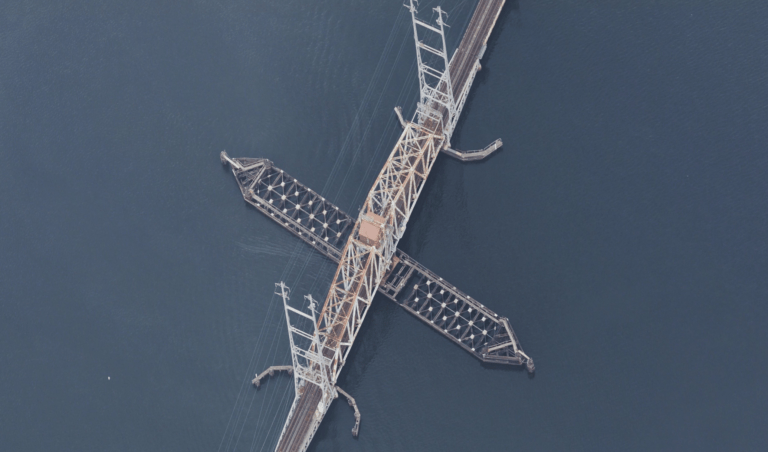
The Raritan River Bridge, a century-old swing bridge on the North Jersey Coast Line (NJCL), has been in service since 1908. Over the years, it has become increasingly vulnerable to extreme weather events, as highlighted by Superstorm Sandy in 2012. The storm caused significant damage, revealing that the bridge was not designed to withstand the lateral forces of ocean surges. This led to a suspension of both train services and marine vessel operations for three weeks, underscoring the need for a more resilient structure.

To address these issues, NJ Transit has advanced the construction of a new vertical lift rail bridge. This new bridge, which will provide a two-track movable span across the Raritan River, will be positioned slightly off the original alignment between Perth Amboy and South Amboy. The new design includes a liftable center span to accommodate marine traffic and incorporates modern communication systems, signals, overhead catenary, and other associated site work.

The new bridge aims to enhance operational efficiency and preparedness for extreme weather events. NJ Transit President and CEO Kevin S. Corbett has emphasized the critical nature of this project for the resiliency and reliability of the NJCL, which serves thousands of daily commuters.

NJ Transit has awarded a contract worth up to $444 million to Skanska Koch Inc. for the construction of the new bridge. This project is backed by a grant from the Federal Transit Administration exceeding $446 million. The approaches to the new bridge are already being constructed under a separate contract awarded in June 2020, marking significant progress in this essential infrastructure upgrade.

SOURCE: https://www.njtransit.com/press-releases/nj-transit-advances-construction-new-raritan-river-bridge

Amtrak gives update on Susquehanna River Bridge megaproject [ABC27]

“Amtrak has announced it has completed an early construction milestone for the Susquehanna River Bridge Project.

According to Amtrak, construction workers removed the final remnant pier from the river, a necessary step before constructing two new bridges began. The new bridges will replace the two-track Susquehanna River Bridge, originally opened in 1906.”

Read the full story on ABC27.com: https://www.abc27.com/local-news/amtrak-gives-update-on-susquehanna-river-bridge-megaproject/amp/

New York City Congestion Pricing: A New Jersey Perspective

New York City’s congestion pricing plan, set to take effect on January 5, 2025, has sparked significant debate and legal challenges, particularly from New Jersey. This plan aims to reduce traffic congestion in Manhattan by charging vehicles entering the area below 60th Street. While the Metropolitan Transportation Authority (MTA) and supporters argue that it will improve traffic flow and generate revenue for public transportation, New Jersey officials and residents have raised economic and environmental concerns.

New Jersey Viewpoint

New Jersey officials have expressed strong opposition to the congestion pricing plan, citing potential negative impacts on the state’s economy. The plan could deter commuters and businesses from traveling to New York City, affecting local businesses that rely on cross-border traffic. Additionally, the increased costs for commuters could strain household budgets, particularly for those who rely on driving for work.

Governor Phil Murphy has been vocal about his concerns, stating, “This plan will unfairly burden New Jersey residents and businesses, who already face high tolls and taxes. We need a fair solution that doesn’t penalize our commuters.” 

New Jersey’s Environmental Concerns

Environmental concerns have also been a focal point of New Jersey’s opposition to the congestion pricing plan. Critics argue that the plan will simply shift traffic congestion and pollution to New Jersey communities, particularly those near the George Washington Bridge. Increased traffic in these areas could lead to higher emissions and worsen air quality, posing health risks to residents.

NJ Representative Josh Gottheimer has been a vocal opponent, “New York has completely failed to address and mitigate the cancer-causing pollution and traffic the Congestion Tax will wreak on Jersey families. The MTA clearly doesn’t care about the health effects and environmental impact the Congestion Tax will have on Jersey children and families. They are just so desperate for the cash to pay for their woeful mismanagement that they’re willing to do anything — even if it means harming Jersey families.“

Fort Lee Mayor Mark Sokolich has also spoken out about the potential environmental impact around the George Washington Bridge, “To absorb that additional traffic is going to all but destroy the quality of lives we’ve managed to accumulate here in Fort Lee…with that comes pollutants, filth, dirt, atmosphere — it impacts everybody in my borough, and it impacts everybody in the region.”

The Lawsuit

In early 2024, Governor Murphy and New Jersey attorney Randy Mastro filed a lawsuit on behalf of the state against the MTA and the Federal Highway Administration (FHWA). The lawsuit argued that the environmental assessment for the plan was inadequate and that it failed to consider the impacts on New Jersey communities.

In December 2024, Judge Leo Gordon issued a mixed ruling. While he largely sided with the MTA and FHWA, he found that they did not provide enough specifics on how they would address the negative environmental impacts on New Jersey. The judge gave the FHWA until January 17, 2025, to provide additional data on mitigation measures.

What’s Next

Despite the judge’s ruling, the MTA has stated that congestion pricing will proceed as planned on January 5, 2025. New Jersey officials have vowed to continue their legal challenge, seeking an injunction to block the plan. The judge’s decision has opened the door for further negotiations and potential revisions to the plan to address New Jersey’s concerns.

Looking ahead, the future of NYC’s congestion pricing plan remains uncertain. If the legal challenges are successful, the plan could be delayed or even scrapped. However, if the MTA and FHWA can address New Jersey’s concerns and provide adequate mitigation measures, the plan may move forward as intended. The ongoing legal battle and negotiations will determine the ultimate fate of the plan and its impact on both New York and New Jersey residents.

Sources

“Bergen officials sue to block NYC congestion pricing, calling it ‘cancer-causing’ tax”, NorthJersey.com, https://www.northjersey.com/story/news/transportation/2023/11/01/bergen-county-nj-lawsuit-block-nyc-congestion-pricing/71396093007/?form=MG0AV3

“Gottheimer on New York congestion pricing”, New Jersey Globe, https://newjerseyglobe.com/congress/gottheimer-on-new-york-congestion-pricing/?form=MG0AV3

“Gov. Phil Murphy reacts after MTA review board lays out different scenarios for congestion pricing”, ABC7, https://abc7ny.com/congestion-pricing-nyc-phil-murphy-mta/13857602/?form=MG0AV3

“Congestion pricing ruling in New Jersey will not delay start date, MTA CEO says”, CBS News, 
https://www.cbsnews.com/newyork/news/nyc-congestion-pricing-new-jersey-lawsuit-mta/?form=MG0AV3

“How will congestion pricing affect New Jersey and upstate commuters?”, NY1, https://ny1.com/nyc/manhattan/transit/2024/12/30/how-will-congestion-pricing-affect-new-jersey-and-upstate-commuters-?form=MG0AV3

“New York and New Jersey at odds after latest congestion pricing ruling”, CBS News New York, https://www.yahoo.com/news/york-jersey-odds-latest-congestion-122500324.html?form=MG0AV3

“MTA says congestion pricing will start Sunday; NJ claims judge’s ruling puts brakes on plan”, ABC 7 New York, https://www.msn.com/en-us/news/us/mta-says-congestion-pricing-will-start-sunday-nj-claims-judges-ruling-puts-brakes-on-plan/ar-AA1wLEPu?form=MG0AV3

NERC: Plant Closures, Surging Demand Pose Risk to Grid Over the Next Decade

”Over half of North America is at risk of energy shortfalls in the next 10 years amid surging electricity demand and thermal plant retirements, according to a new report from the North American Electric Reliability Corp.

Less overall capacity will enter the bulk power system in the next 10 years than NERC previously projected, particularly from always-available resources. And that new capacity will fall short of future demand growth, the grid watchdog said in its latest annual Long-Term Reliability Assessment, released Dec. 17.

‘The trends point to critical reliability challenges facing the industry: satisfying escalating energy growth, managing generator retirements, and accelerating resource and transmission development,’ the nearly 150-page report said.”

Read the full story here: https://www.electric.coop/nerc-plant-closures-surging-demand-pose-risk-to-grid-over-the-next-decade

I-80 sinkhole causing traffic nightmare in New Jersey. How to avoid the highway in Wharton. [CBS New York]

“The New Jersey Department of Transportation said the highway will remain closed ‘until further notice.’

The eastbound side near Exit 34 in Wharton has been shut down since Thursday morning, once DOT crews arrived at the huge sinkhole that had swallowed a portion of the right lane and shoulder.”

Read the full story at CBS New York: https://www.msn.com/en-us/news/us/i-80-sinkhole-causing-traffic-nightmare-in-new-jersey-how-to-avoid-the-highway-in-wharton/ar-AA1wwO7b?ocid=BingNewsSerp

Low Batt: The Challenge of Batteries in Winter

0

Batteries, like humans, aren’t big fans of cold weather and don’t work well when the temperature drops. You’ll notice it in your phone – leave it in the cold and the battery life drops precipitously. When winter chills set in, both electric vehicles (EVs) and battery storage systems, using similar battery technology as your phone, face unique challenges. 

Electric Vehicles (EVs)

EV batteries are typically lithium-ion, which are sensitive to temperature changes. When temperatures drop, the chemical reactions inside these batteries slow down, reducing their efficiency and capacity. Here’s a closer look at the impact:

  1. Reduced Range: The primary concern for EV owners in cold climates is the reduced driving range. Cold weather can decrease the range of an EV by as much as 41%. This occurs because the battery’s ability to store and deliver power diminishes. For instance, a battery that provides 100 miles on a warm day might only offer around 60 miles in freezing conditions.
  2. Increased Energy Consumption: To keep the cabin warm, EVs need to draw power from the battery to operate the heater. Unlike traditional internal combustion engine vehicles that can use waste heat from the engine, EVs rely entirely on their battery for heating. This additional power demand further reduces the available range.
  3. Slower Charging: Charging an EV in cold weather can be slower than usual. The battery management system might limit the charging speed to prevent damage. Fast-charging an EV in frigid temperatures can also be less effective, making road trips more time-consuming.
  4. Battery Degradation: Repeated exposure to cold weather can contribute to long-term battery degradation. Although manufacturers are continuously improving battery technology to mitigate these effects, the cumulative impact of cold weather over several winters can reduce the overall lifespan of the battery.

Battery Storage Systems

For stationary battery storage systems, such as those used in homes or renewable energy installations, cold weather can also pose significant challenges:

  1. Reduced Efficiency: Just like in EVs, the chemical reactions within battery storage systems slow down in cold temperatures, reducing their efficiency. This means that less energy can be stored and delivered, which can be particularly problematic during peak demand times.
  2. Thermal Management: Effective thermal management systems are essential for maintaining optimal battery performance in cold climates. These systems can heat the battery to maintain it within an operational temperature range. However, this requires additional energy, which can decrease the overall efficiency of the storage system.
  3. Capacity Loss: Cold weather can lead to a temporary loss in capacity, meaning that the battery can hold less energy than it would under ideal conditions. This can be a significant issue for remote areas or during power outages when reliable battery performance is crucial.
  4. System Longevity: Continuous exposure to cold can accelerate the aging process of battery storage systems. Ensuring that these systems are well-insulated and protected from extreme temperatures can help mitigate long-term damage and prolong their lifespan.

Strategies for Mitigation

  1. Preconditioning: For EVs, preconditioning the battery while the vehicle is still plugged in can help. This means warming up the battery and the cabin before starting a trip, reducing the immediate power draw.
  2. Insulation: Proper insulation and thermal management systems are vital for both EVs and battery storage systems. This can help maintain the battery within an optimal temperature range, improving efficiency and lifespan.
  3. Technology Advancements: Researchers are continuously working on developing batteries with better performance in cold weather. Solid-state batteries and other advanced technologies show promise for the future.

In summary, while cold weather poses significant challenges for batteries in both EVs and storage systems, understanding these issues and adopting mitigation strategies can help ensure reliable performance year-round.

Sources

  1. U.S. Department of Energy, “Electric Vehicles: Cold Weather Impacts”, https://www.energy.gov/eere/electricvehicles/electric-vehicles-cold-weather-impacts
  2. Tesla, ‘Tesla Cold Weather Tips”, https://www.tesla.com/support/cold-weather
  3. Battery University, “How to Prolong Lithium-based Batteries”, https://batteryuniversity.com/article/bu-808b-what-causes-lithium-ion-to-die
  4. National Renewable Energy Laboratory (NREL), “Battery Performance and Storage”, https://www.nrel.gov/docs/fy21osti/79657.pdf
  5. Journal of Power Sources, “Temperature Effects on Batteries”, https://www.sciencedirect.com/science/article/pii/S037877531631120X