



What does mean for energy costs, reliability, emissions, and jobs?
New Jersey has relied on Nuclear for nearly 50 years
New Sherrill administration pivoting back to nuclear
New nuclear has potential to create thousands of green jobs and clean power
Environmentalists opposed
New Jersey runs on nuclear
Few states rely on nuclear power as heavily as New Jersey. The Salem and Hope Creek generating stations in Lower Alloways Creek Township – together known as the Artificial Island complex – produce roughly 40 percent of the state’s electricity and more than 80 percent of its carbon‑free power. Only Illinois and South Carolina depend more on nuclear as a share of total generation.
New Jersey’s nuclear fleet dates back to the 1970s and 1980s, when Salem Units 1 and 2 and Hope Creek came online. For decades, they have served as the backbone of the state’s grid, operating at high capacity factors and providing steady baseload power even as natural gas, solar, and offshore wind have expanded. Nationally, nuclear power accounts for about 19 percent of U.S. electricity. In New Jersey, it is more than double that share—an indication of how central the technology has been to the state’s energy identity.
Nuclear’s role
Nuclear power remains one of the few large‑scale, zero‑emission energy sources capable of running around the clock. Unlike natural gas or coal, nuclear reactors emit no carbon dioxide during operation. Unlike solar and wind, they are not dependent on weather conditions.
Modern reactor designs, particularly small modular reactors (SMRs) and advanced Gen III+ systems, have also made significant strides in reducing waste volumes, improving safety systems, and simplifying construction. Many designs use passive safety features that rely on gravity and natural circulation rather than pumps or external power.
Globally, nuclear remains a key pillar of decarbonization strategies. France, long the world’s most nuclear‑dependent nation, still generates about 70 percent of its electricity from reactors and is now planning a major new build‑out. Germany, by contrast, shuttered its last nuclear plants in 2023 and has since faced rising emissions and increased reliance on coal and imported natural gas—an outcome that has sparked political regret even among some former anti‑nuclear advocates.
Murphy’s wind
When New Jersey debated whether to keep its nuclear plants open in 2017, the state commissioned a detailed economic analysis from the Brattle Group. The findings were unequivocal: keeping Salem and Hope Creek online would save consumers money, even after accounting for the Zero Emission Certificate (ZEC) subsidies needed to keep the plants financially viable. Brattle’s economists concluded that if the reactors closed, wholesale electricity prices would rise, costing New Jersey households and businesses hundreds of millions of dollars per year. Nuclear plants, they found, suppress market prices because they operate at low marginal cost and run nearly continuously.
But while the Murphy administration extended the ZEC, their primary focus was launching offshore wind, and they expended considerable resources towards that end.
Sherrill’s pivot
Governor Mikie Sherrill has made clear that New Jersey must expand its in-state energy supply to keep costs down and meet rising demand driven by data centers, electrification, and economic growth. Contrary to the prior administration, Sherrill is favoring an all-of-the-above energy approach, including nuclear. In April, Sherrill signed legislation lifting a decades‑old restriction that effectively prevented new nuclear construction in the state. She also launched a Nuclear Task Force charged with evaluating siting, financing, workforce needs, and technology options for next‑generation reactors.
New Jersey is not alone. New York Governor Kathy Hochul has directed her administration to explore advanced nuclear as part of the state’s long‑term energy strategy. States including Virginia, Wyoming, Tennessee, and Kentucky are also positioning themselves for SMR deployment. The shift reflects a broader national trend: as renewable energy grows but grid reliability challenges mount, policymakers are increasingly looking to nuclear as a firm, carbon‑free anchor.
Salem 2.0
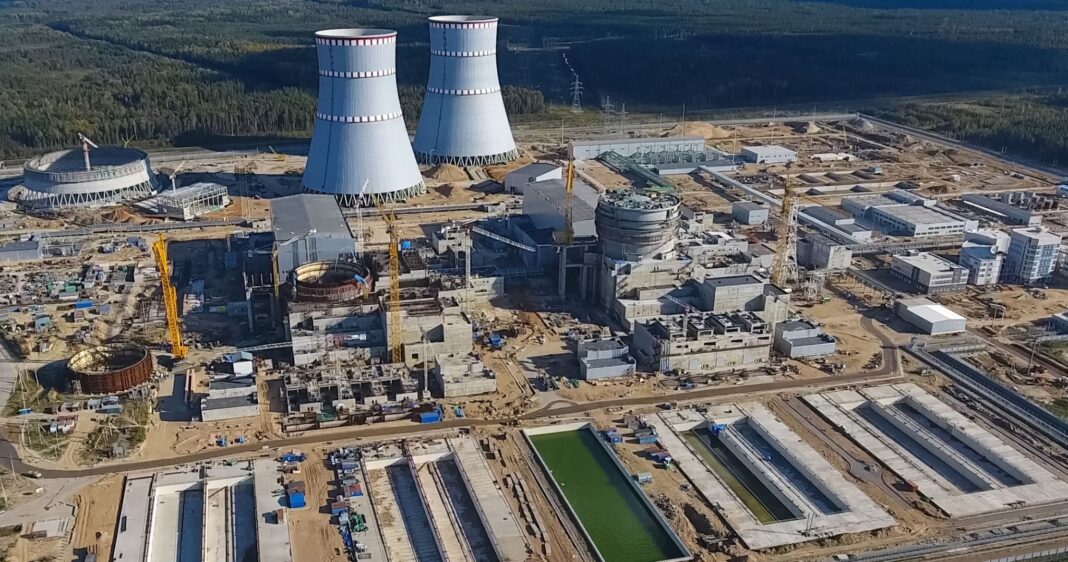
If New Jersey builds a new reactor, Salem County is the most likely location. The Artificial Island complex already hosts three reactors, a trained workforce, transmission infrastructure, and a community accustomed to nuclear operations. Industry analysts say co‑locating new reactors at existing sites dramatically reduces permitting challenges and construction costs. It also maximizes job creation.
A new large‑scale reactor at Salem could generate 8,000 to 10,000 construction jobs at peak—similar to the workforce needed for Plant Vogtle Units 3 and 4 in Georgia, the first new U.S. reactors built in more than 30 years. Vogtle also created roughly 800 permanent jobs once operational. Even a smaller SMR project would likely create 1,500 to 3,000 construction jobs and 200 to 400 permanent positions, according to industry estimates.
For Salem County – one of the most economically challenged regions in the state – the potential impact is significant.
Environmental opposition
Despite nuclear power’s track record of providing low‑cost, zero‑emission electricity, many of New Jersey’s environmental organizations remain staunchly opposed to new reactors. Groups including Clean Water Action, Environment New Jersey, Empower NJ, NJ Citizen Action, and the Sierra Club have argued that nuclear waste, safety concerns, and high capital costs outweigh the benefits. They have urged the state to focus instead on offshore wind, solar, storage, and energy efficiency.
These groups have also opposed recent nuclear‑related legislation in Trenton, including bills directing the Department of Environmental Protection to study new reactor feasibility and proposals to create a state‑run advanced nuclear procurement program. Their opposition stands in contrast to the position of many climate scientists, grid experts, and international agencies, including the Intergovernmental Panel on Climate Change, which have concluded that nuclear power is essential to meeting global decarbonization goals.
Giant steps
New Jersey’s nuclear future will be shaped by several key decisions in the coming months:
- The Nuclear Task Force will deliver recommendations on siting, technology, and financing.
- The Legislature will continue debating the “Power NJ Act,” which would authorize the state to procure advanced nuclear generation.
- PSEG and potential private developers will evaluate whether to pursue SMRs or larger reactors at Salem.
- The Board of Public Utilities will determine how nuclear fits into long‑term planning for affordability and reliability.
The stakes are high. With electricity demand rising faster than new generation is coming online, and with Murphy’s offshore wind ambitions essentially dead in the water, New Jersey must decide whether nuclear will remain a cornerstone of its energy system. For now, the Sherrill administration appears to be charting a pragmatic middle path: preserving the existing fleet, exploring next‑generation options, and weighing nuclear’s role alongside renewables in a rapidly changing grid.
Sources:
Berkman, M., & Murphy, D. (2026). Salem and Hope Creek nuclear power plants’ contribution to the New Jersey economy. The Brattle Group. https://www.brattle.com/insights-events/publications/brattle-economists-evaluate-impacts-of-the-salem-and-hope-creek-nuclear-power-plants-on-new-jerseys-economy-and-environment/
U.S. Energy Information Administration. (2024). New Jersey: State energy profile. https://www.eia.gov/state/?sid=NJ
U.S. Energy Information Administration. (2024). Nuclear power and the U.S. electricity mix. https://www.eia.gov/tools/faqs/faq.php?id=207&t=3
International Energy Agency. (2023). France 2023 energy policy review. https://www.iea.org/reports/france-2023
Reuters. (2023). Germany shuts last nuclear plants, critics warn of higher emissions. https://www.reuters.com/world/europe/germany-shuts-last-nuclear-plants-critics-warn-higher-emissions-2023-04-15
U.S. Nuclear Regulatory Commission. (2024). Reactor information: Salem & Hope Creek. https://www.nrc.gov/reactors/operating/list-power-reactor-units.html
Southern Company. (2024). Plant Vogtle Units 3 & 4. https://www.southerncompany.com/innovation/vogtle-3-and-4.html
U.S. Department of Energy. (2023). Vogtle Unit 3 begins commercial operation. https://www.energy.gov/ne/articles/vogtle-unit-3-begins-commercial-operation
New Jersey Legislature. (2026). Bill S3870/A4528. https://www.njleg.state.nj.us/
New Jersey Legislature. (2026). Bill S4296. https://www.njleg.state.nj.us/
Office of the Governor of New Jersey. (2026). Governor Sherrill launches Nuclear Task Force. https://nj.gov/governor/news/
New York State Energy Research and Development Authority. (2024). Advanced nuclear feasibility and planning. https://www.nyserda.ny.gov/
Intergovernmental Panel on Climate Change. (2022). Mitigation of climate change: Summary for policymakers. https://www.ipcc.ch/report/ar6/wg3
Food & Water Watch. (2024). Statement on nuclear expansion proposals in New Jersey. https://www.foodandwaterwatch.org/
Sierra Club New Jersey. (2024). Sierra Club NJ opposes new nuclear development. https://www.sierraclub.org/new-jersey