


Impact of 2009 Site Remediation Reform Act (SRRA)
TLDR:
1. In 2009, New Jersey passed the Site Remediation Reform Act (SRRA) to resolve a massive, decades-long case backlog at the NJDEP.
2. The law established Licensed Site Remediation Professionals (LSRPs) to independently manage and approve site cleanups under state audit oversight.
3. The program drastically accelerated brownfield redevelopment and modernized environmental remediation across New Jersey, while maintaining strict regulatory compliance.
The establishment of federal and state environmental protection agencies in the late 1960s and early 1970s – most notably the U.S. Environmental Protection Agency (EPA) in 1970 and the New Jersey Department of Environmental Protection (NJDEP) in 1970 – marked a pivotal shift toward structured environmental governance. Created in response to rising public concern over industrial pollution, ecological degradation, and public health risks, these regulatory bodies were tasked with enforcing environmental standards, monitoring pollution, and managing natural resources. Over the following decades, they achieved major milestones, including significant reductions in air and water pollution, the regulation of hazardous waste, and the implementation of robust permitting frameworks to safeguard public health and ecological systems.
A growing DEP backlog
Prior to 2009, the New Jersey Department of Environmental Protection (NJDEP) maintained direct oversight over every stage of environmental cleanups across the state. Under this hands-on model, individual case managers were tasked with reviewing and approving preliminary assessment reports, site investigations, remedial action workplans, and final sampling results before issuing official “No Further Action” letters. While this centralized regulatory framework functioned adequately during its early years, the steady expansion of industrial activities, heightened environmental awareness, and increasingly complex regulatory standards caused the volume of active cases to outpace the agency’s administrative capacity over the 1980s and 1990s.
As years passed, this structural mismatch led to a massive and compounding case backlog. By the early 2000s, tens of thousands of contaminated site cases remained open—many languishing without active review for years or even decades. The accumulating workload stretched NJDEP staff thin, creating severe operational bottlenecks. Property owners and developers faced multi-year delays for single report approvals, while municipalities saw brownfield sites stall indefinitely due to administrative gridlock. Industry stakeholders cited New Jersey’s environmental approval timeline as one of the nation’s slowest, compounding economic stagnation on sites in urgent need of renewal.
By the mid-2000s, the continuously expanding backlog had created an unsustainable operational burden for the NJDEP, severely constraining both environmental protection efforts and state economic development. Recognizing that state staffing could never scale to match the sheer volume of cases under the traditional direct-review model, a coalition of legislators, environmental advocates, and industry representatives pressed for systemic reform. This culminated in the enactment of the Site Remediation Reform Act (SRRA) in 2009, which fundamentally restructured New Jersey’s remediation framework by shifting day-to-day oversight from state case managers to licensed private-sector professionals.
Cramer Hill Waterfront Park (formerly Harrison Avenue Landfill), Camden
SRRA and LSRPs
Implementing SRRA required building an entirely new professional licensing system. The state created the Site Remediation Professional Licensing Board, established strict qualifications, and developed a code of conduct and continuing‑education requirements for Licensed Site Remediation Professionals (LSRP), who would manage and oversee the backlog of cases. To become an LSRP, applicants needed years of experience, thousands of hours of New Jersey‑specific remediation work, and demonstrated expertise in hydrogeology, engineering, and regulatory compliance.
The transition was rapid. Thousands of cases were transferred from DEP case managers to newly licensed LSRPs. Retained directly by property owners, developers, and responsible parties rather than the state, LSRPs assumed responsibility for driving cleanups forward, conducting site investigations, issuing binding remediation approvals, and filing official closure documents. DEP shifted its role from direct oversight to auditing, enforcement, and handling the most sensitive or high‑risk sites. LSRPs interfaced with the department by submitting mandatory compliance reports and key technical deliverables, which the DEP monitored through random audits and regulatory oversight. The private sector adapted quickly, with environmental consulting firms reorganizing around LSRP leadership and municipalities learning how to work with LSRPs instead of DEP case managers.
By 2012, the program was fully operational. By 2015, it had become the standard model for nearly all remediation work in the state. Today, New Jersey has roughly 600–650 active LSRPs, far more than DEP could ever employ in equivalent roles. The program is now deeply embedded in the state’s environmental and redevelopment ecosystem.
Impact and effectiveness
The LSRP program’s impact has been significant. The most immediate and measurable improvement was speed. Cleanups that once took years to move through DEP review cycles now progress continuously under LSRP oversight. Thousands of backlogged cases were closed within the first five years of the program. Brownfield redevelopment accelerated, and municipalities saw long‑stalled projects finally move forward.
Effectiveness is also reflected in the program’s stability. The vast majority of Response Action Outcomes (RAOs)—the LSRP‑issued equivalent of DEP’s former No Further Action letters—are accurate, compliant, and remain valid after DEP audits. Audit data shows that major deficiencies are rare, and most issues identified are minor documentation gaps or technical clarifications.
The program also improved predictability. Developers and property owners gained a clearer path to closure, and financing became easier because lenders could rely on RAOs rather than waiting for DEP signoff. For many stakeholders, the LSRP model has been a net positive for environmental protection, economic development, and regulatory efficiency.
Notable projects utilizing LSRPs
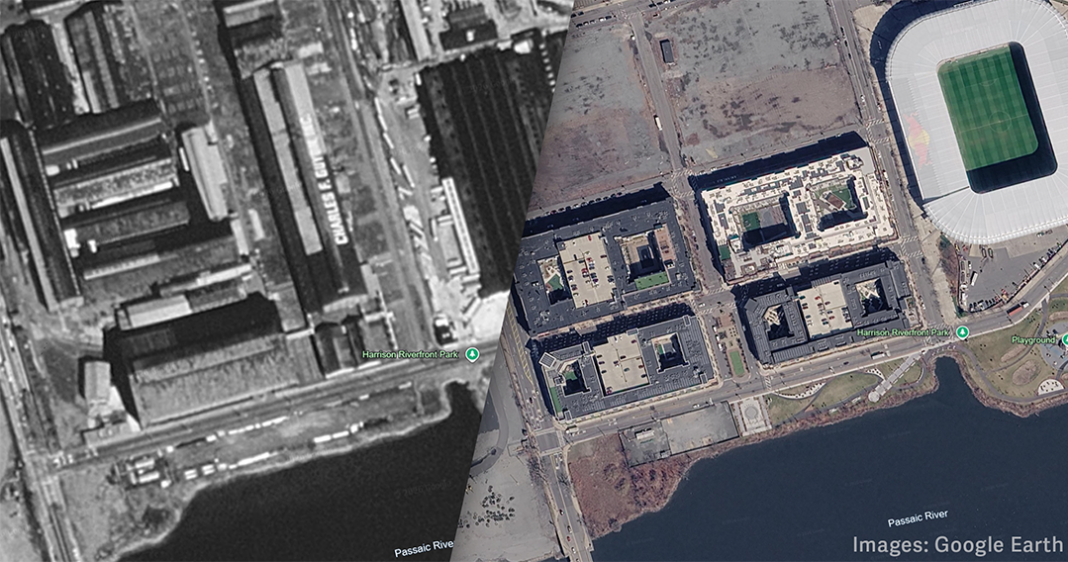
- Harrison Waterfront Redevelopment (North Jersey): LSRP oversight enabled the remediation of heavily contaminated former industrial waterfront land, transforming brownfields into a thriving transit-oriented residential and commercial hub.
- Liberty State Park & Jersey City Waterfront Restoration (North Jersey): Utilized LSRP oversight to remediate legacy rail yard contamination, soil impacts, and historic fill, converting degraded industrial land into accessible public parkland and restored urban habitats.
- Trenton Waterfront & Roebling Complex (Central Jersey): Accelerated environmental investigations and soil cleanup at historic industrial wire manufacturing facilities, facilitating adaptive reuse for commercial and community spaces.
- Camden Waterfront & Harrison Avenue Landfill Redevelopment (South Jersey): Successfully closed and capped complex brownfield landfills under LSRP direction, paving the way for public parkland, commercial development, and community revitalisation.
Criticisms
Despite its successes, the LSRP program has faced persistent criticism. The most common concern is the perceived “privatization” of environmental oversight. Because LSRPs are hired by responsible parties, critics argue that conflicts of interest are inherent. Environmental groups worry that some LSRPs may feel pressure to minimize cleanup scope or costs.
Quality variability is another concern. While most LSRPs are highly competent, DEP audits have uncovered cases where groundwater plumes were not fully delineated, vapor intrusion was underestimated, or historic fill was mischaracterized. These issues are exceptions, but they are real and can have significant consequences for redevelopment projects.
Municipalities have raised transparency concerns, particularly in environmental justice communities. Under SRRA, DEP no longer reviews every step, and some cities feel excluded from the remediation process. They argue that community notification and oversight should be stronger for legacy industrial sites.
Finally, some critics say that the DEP’s audit program is inconsistent. Audits can take years, and interpretations vary between reviewers. While audits are essential for quality control, they can create uncertainty for developers who rely on RAOs.
Harrison Waterfront (SOURCE: Google Maps)
Current status
Today, the LSRP program is stable, mature, and widely accepted. It is the backbone of New Jersey’s remediation system, and DEP has neither the staffing nor the budget to return to the pre‑SRRA model. DEP’s role is now focused on audits, enforcement, emerging contaminants, and high‑risk cases.
Audit activity has increased, especially for vapor intrusion, PFAS, groundwater delineation, and ecological risk. The Licensing Board has become more active, issuing more reprimands and clarifying ethical standards. Municipalities are more engaged, and environmental justice considerations are becoming central to DEP’s oversight strategy. In short, the program is functioning well, but oversight is tightening.
Future
The future of the LSRP program will be defined by more oversight, more documentation, and more focus on emerging contaminants. Likely developments include:
- Higher audit frequency and more detailed audit criteria
- Stronger environmental justice requirements, including community notification
- More PFAS‑related investigations, which will reshape groundwater remediation
- Potential legislative updates to strengthen the Licensing Board and clarify conflict‑of‑interest rules
- Greater DEP involvement in sensitive or high‑risk sites
The LSRP program has transformed New Jersey’s remediation landscape, critically important in a small state with a long industrial past. The LSRP program solved a backlog crisis and created a modern, professionalized system.
Sources:
- New Jersey Department of Environmental Protection. (2009). Site Remediation Reform Act (SRRA) – Overview.
https://dep.nj.gov/wp-content/uploads/srp/about-ssra.pdf - New Jersey Department of Environmental Protection. (2023). Contaminated Site Remediation & Redevelopment Program (CSRR) – About.
https://dep.nj.gov/srp/ - New Jersey Site Remediation Professional Licensing Board. (2023). Licensed Site Remediation Professional Program – Rules and Guidance.
https://dep.nj.gov/srp/lsrp/ - Town of Harrison. Municipal Access Plan
https://www.nj.gov/dep/cmp/access/docs/draftmpaps/harrison.pdf - New Jersey Department of Environmental Protection. Revitalization History.
https://dep.nj.gov/parksandforests/urban-state-parks-initiatives/liberty-state-park-revitalization-program/revitalization-history/ - City of Trenton Better Environmental Solutions for Trenton (BEST) Advisory Committee. (2018). Brownfields Program Action Plan
https://trentonnj.org/DocumentCenter/View/221/2018-Brownfields-Action-Plan-PDF - Camden Redevelopment Agency. Closure and Environmental Remediation of the Former Harrison Avenue Landfill.
https://dep.nj.gov/wp-content/uploads/ej/cra-hal-presentation.pdf