


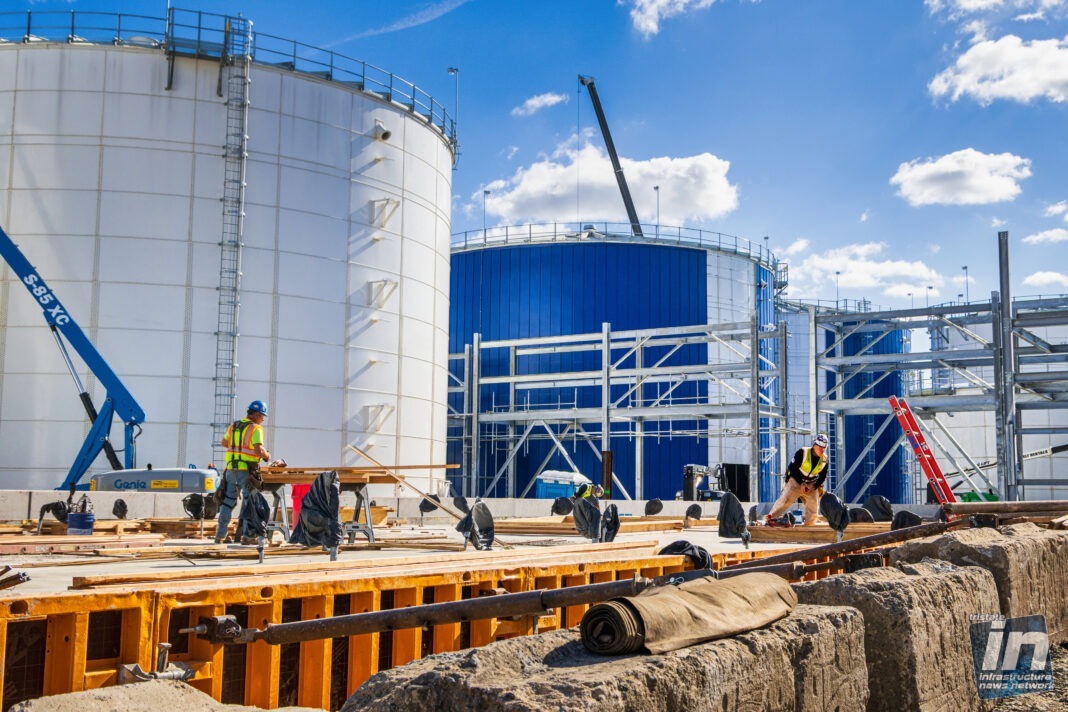
Amid the refineries and fuel depots of Linden, a different kind of energy project is emerging. The Linden Renewable Energy facility (LRE) will convert 1,475 tons of organic waste into 3,783 million BTUs of renewable natural gas (RNG) each day, channeling sustainable energy through the same pipeline network once reserved for fossil fuels. The output equals roughly 31,500 gallons of gasoline daily, enough to power thousands of homes.
At first glance, it seems out of place among the fossil-fuel giants. But that contrast may be what makes the project so significant. LRE represents both a technological milestone and a symbolic one — a demonstration that clean energy infrastructure can take root in the very heart of New Jersey’s industrial belt. Take a look inside the only large-scale green energy project currently under construction in New Jersey.
From waste to energy: how it works
At its core, the Linden Renewable Energy project (LRE) is designed to take food scraps, yard trimmings and other organic waste and turn them into usable fuel. Before arriving on site, the material is processed in de-packaging and sorting facilities where non-biodegradable items are removed. The cleaned organic matter is then delivered to Linden for processing.
The waste is placed in sealed, oxygen-free tanks where naturally occurring microbes break it down through anaerobic digestion. This process produces biogas, primarily methane and carbon dioxide, which is purified, upgraded and injected into the existing Elizabethtown Gas system as RNG.
In addition to gas, the system produces a nutrient-rich byproduct called digestate, which can be refined into fertilizer or soil conditioner. In the end, the facility takes organic material that would otherwise be discarded and transforms it into two valuable resources: clean energy and agricultural feedstock.
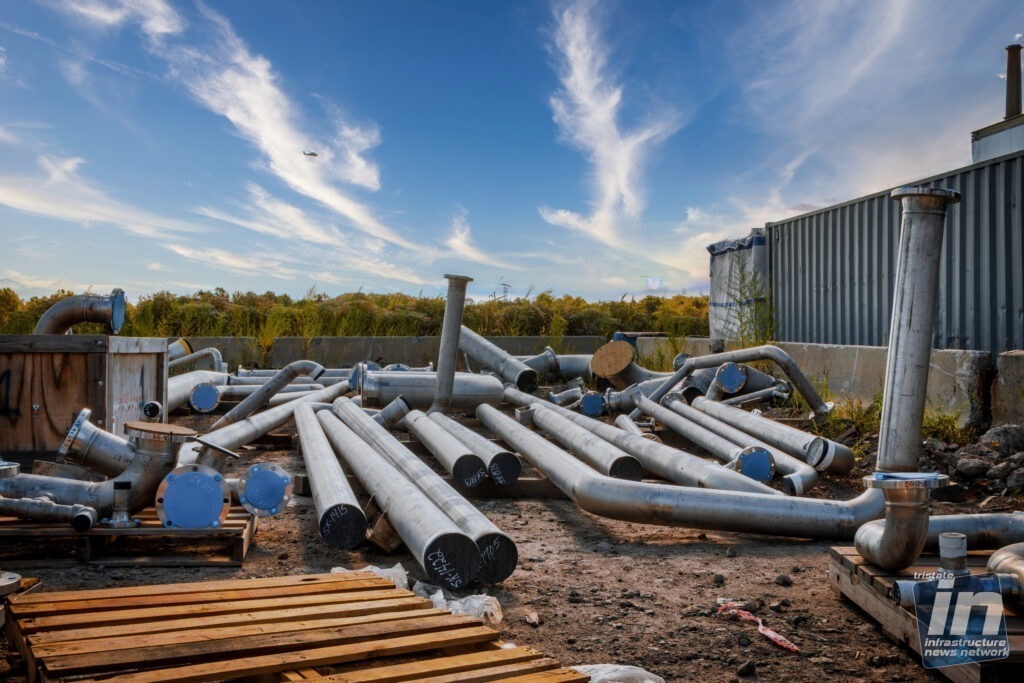
Photo Caption: Pipes awaiting installation at the Linden Renewable Energy facility will carry renewable natural gas to Elizabethtown Gas’s distribution system, where it will blend with existing natural gas supplies and serve homes and businesses across the region.
An industrial ecosystem reborn
The Linden site sits at Tremley Point Road, Block 587, Lot 8.02, within the Union County Solid Waste Management District. It’s a strategic location. The facility connects directly to existing gas infrastructure and is close to the Linden Cogen power plant, the Citgo Petroleum Terminal, and the Phillips 66 refinery.
The proximity offers clear logistical advantages. With major gas pipelines, utility corridors and industrial roadways already in place, the project can connect directly to existing systems rather than building new ones. Access to established transmission routes shortens construction timelines, reduces permitting challenges and allows renewable gas to flow into the network more efficiently. The site’s location also ensures a steady supply of utilities such as power, water, and waste management, which are all essential for large-scale processing.
The neighboring Linden Cogen plant recently began hydrogen blending, using refinery off-gas to reduce carbon emissions. With LRE adding RNG to the mix, the area is evolving into one of the most diversified energy clusters in the Northeast, a living model of how traditional and renewable systems can coexist.
A model for circular infrastructure
Linden’s significance reaches beyond renewable energy. It represents a broader shift in how infrastructure systems can intersect and adapt.
Waste infrastructure becomes energy infrastructure. Landfills and waste transfer stations can evolve into energy producers rather than endpoints.
Legacy energy assets find new purpose. Gas pipelines once built for fossil fuels are now adapting to carry renewable gas and hydrogen blends.
Co-location creates efficiency. By situating green projects alongside existing industrial networks, costs drop and permitting complexity lessens.
For infrastructure professionals, the project offers a living case study in adaptive reuse, an approach where the grid becomes more sustainable not by starting over, but by transforming what is already there.
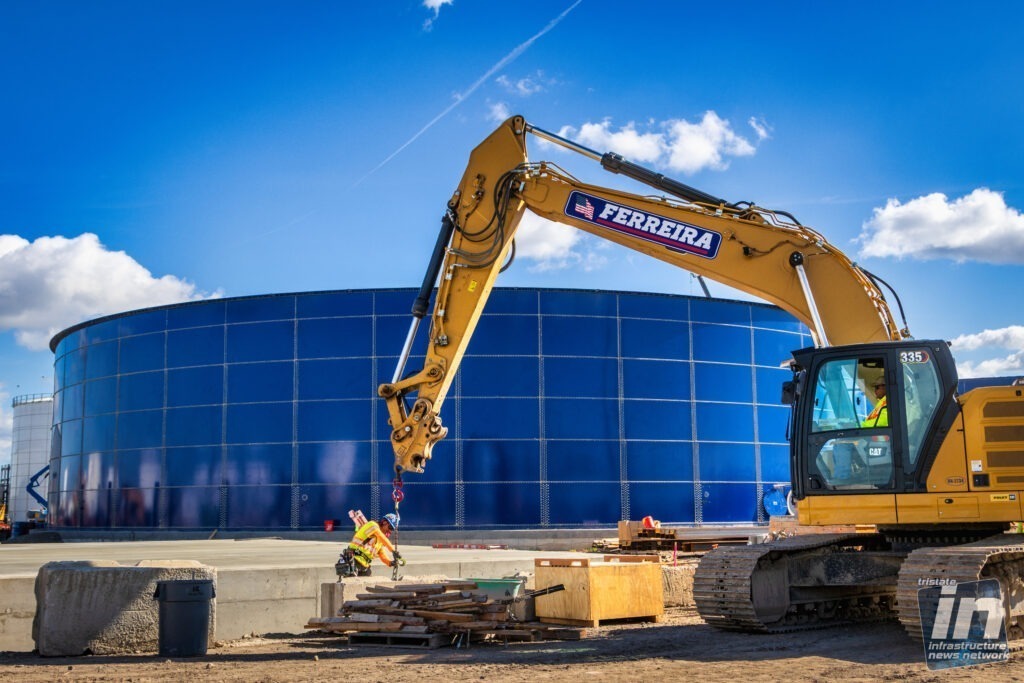
Photo caption: Holding tanks will store and process organic waste as part of the anaerobic digestion system that produces renewable natural gas (RNG). Inside these sealed tanks, microorganisms break down food waste and other organic materials to generate methane-rich biogas, which is then cleaned, upgraded, and injected into the distribution network.
The road ahead
Construction at Linden Renewable Energy is expected to continue through its commissioning phase, with full operations anticipated soon after. When complete, the plant will stand as both an engineering achievement and a statement that even in New Jersey’s most industrial corridors, a cleaner energy future can take shape. Through the maze of pipelines and refineries, the state’s next chapter in infrastructure is already being built — one tank of renewable gas at a time.
Key Project Facts
- Name: Linden Renewable Energy, LLC
- Location: Tremley Point Road, Linden, NJ
- Partners: South Jersey Industries, Elizabethtown Gas, regional developers
- Capacity: 1,475 tons of organic waste/day
- Output: 3,783 million BTU/day of renewable natural gas
- System Connection: Elizabethtown Gas network
- Status: Under construction – New Jersey’s only active large-scale green energy build
Sources
South Jersey Industries. (n.d.). Linden Renewable Energy project. https://www.sjindustries.com/misc/linden-renewable-energy-project
South Jersey Industries. (n.d.). SJI Renewable Energy Ventures media kit (Final v3) [PDF]. https://www.sjindustries.com/SJI/media/pdf/SJI-REV_MediaKit_final_v3.pdfUnion County Utilities Authority. (2020, July). Linden Renewable Energy, LLC Plan Amendment [PDF]. https://ucnj.org/wp-content/uploads/2020/07/UCUA-Linden-Renewable-Energy-LLC-Plan-Amendment.pdf