




New research finds that project labor agreements can help manage workforce shortages, improve project efficiency and provide access to a larger pool of skilled construction workers.
The study challenges longstanding claims that PLAs inherently increase construction costs, finding that cost differences largely disappear when comparable projects and construction timing are properly accounted for.
With New Jersey municipalities, counties and school districts now having greater access to optional PLAs, researchers say public owners have another tool to consider when planning complex construction projects.
A new study is taking a closer look at how project labor agreements can help public owners manage one of the industry’s biggest challenges: finding enough skilled workers to get projects built.
The 2026 white paper, Project Labor Agreements in New Jersey: Skilled Labor, Apprenticeship Investment, and Evidence on Construction Costs, was authored by University of Utah economics professor Peter Philips and labor economist Kevin Conner and commissioned by the Engineers Labor-Employer Cooperative (ELEC 825).
The research examines construction costs, apprenticeship investment and workforce availability in New Jersey, while revisiting longstanding arguments over whether project labor agreements, commonly known as PLAs, make public construction more expensive.
A PLA is a pre-hire agreement that establishes wages, benefits, work rules, training standards and procedures for resolving labor disputes before construction begins. They can also include no-strike and no-work-stoppage provisions intended to provide greater predictability over the life of a project. Recent changes in New Jersey law have given municipalities, counties and school districts greater access to PLAs as an optional project-delivery tool.
For Mark Longo, Director of ELEC 825, that makes understanding how PLAs actually perform increasingly important for public officials deciding how to deliver major construction projects.

“Giving municipalities greater access to project labor agreements gives them another tool to consider when they are planning complex public construction,” Longo said. “A PLA is not mandatory and it is not necessarily the right fit for every project. But when communities are making major investments of taxpayer dollars, they should have the ability to look at the evidence, evaluate the needs of the project and determine whether a PLA can help them deliver it more efficiently.”
A growing skilled workforce challenge
The study comes as New Jersey’s construction industry faces a significant shortage of skilled workers. According to the report, 73 percent of New Jersey contractors surveyed in 2025 reported severe difficulty finding qualified workers, while filling an open position took an average of 71 days.
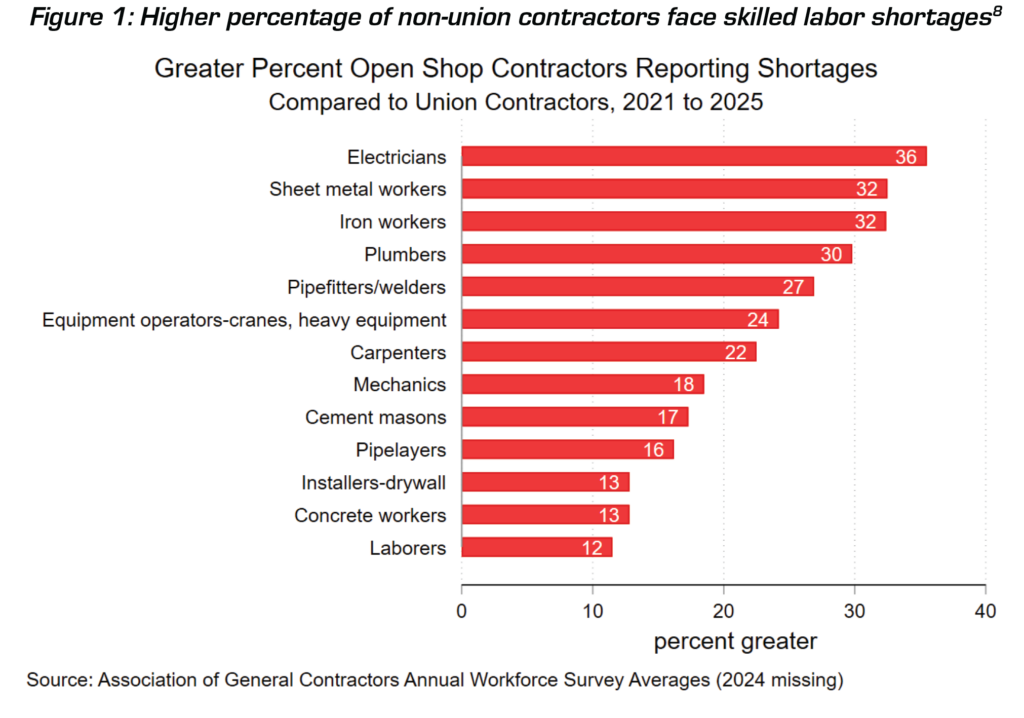
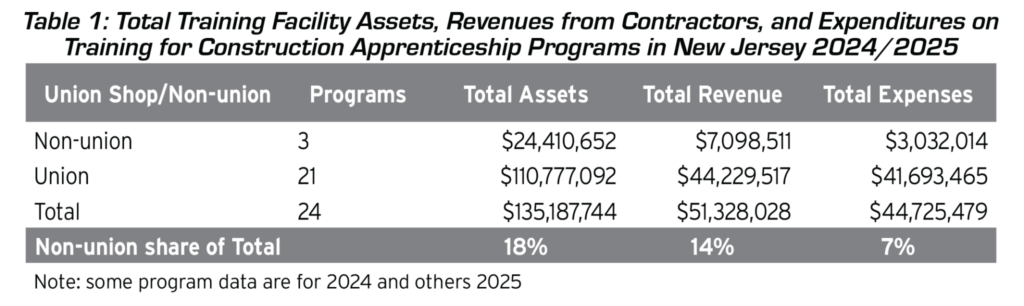
Researchers found meaningful differences between contractors participating in union apprenticeship systems and those that do not. The study points to New Jersey’s union apprenticeship network as a major source of long-term workforce investment and a potential advantage on projects requiring large numbers of skilled workers.
The report examined 24 registered construction apprenticeship programs, representing approximately $135 million in training-facility assets. Twenty-one union programs account for approximately 82 percent of the value of those facilities and the overwhelming majority of reported apprenticeship expenditures.
“The skilled workforce gap is real, and it is only going to become more important as New Jersey builds more transportation, water, energy and public infrastructure,” Longo said. “One of the strengths of a PLA is the ability to tap into a deep pool of trained workers and apprenticeship programs. When a project needs qualified people at the right time, having access to that workforce can make a major difference.”
PLAs can provide participating contractors with access to union hiring halls and trained workers when additional manpower is needed. The study also notes that non-union contractors are not necessarily excluded from PLA projects. They can compete for the work, bring key employees to the project and use union hiring halls to supplement their workforce.
For a municipality or other public owner, researchers argue that arrangement can combine contractor competition with access to workers from a broader segment of the construction industry.
Looking beyond the initial bid
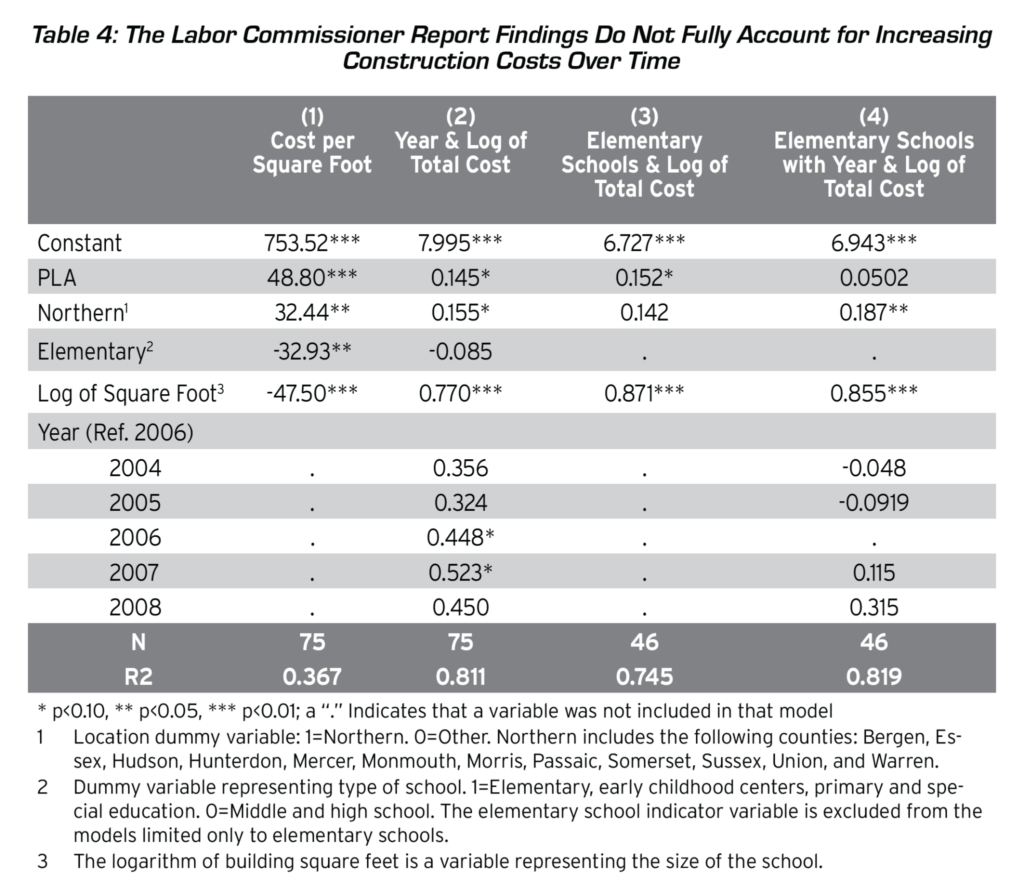
The study also revisits one of the most persistent criticisms of PLAs: that they increase the cost of public construction. For years, people have cited a 2010 New Jersey Department of Labor analysis that found school projects using PLAs appeared to cost approximately 19 percent more per square foot.
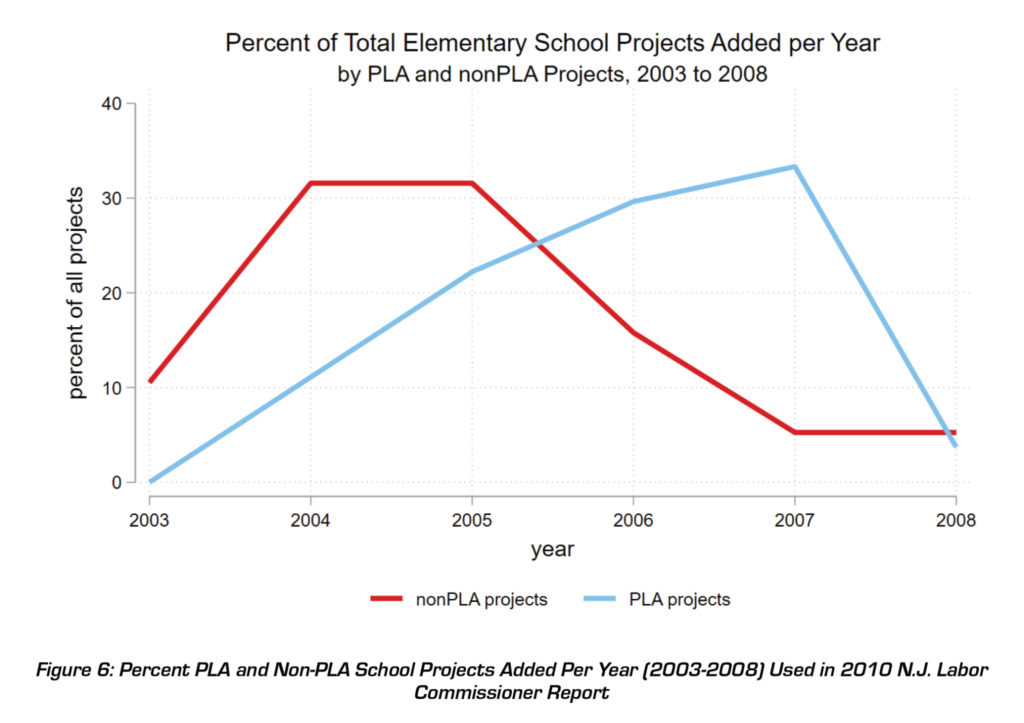
Philips and Conner found significant methodological limitations in that analysis, including differences in when PLA and non-PLA projects were constructed during a period of rapidly rising construction costs.
After researchers adjusted the analysis to better account for timing and project characteristics, the estimated cost difference became substantially smaller. Among the most comparable elementary school projects, the estimated PLA cost effect was not statistically significant.
The study argues that project owners should also consider more than the initial bid when evaluating construction costs. Worker shortages can delay critical portions of a project, creating additional expenses through extended project management, financing, inflation, change orders and delayed use of the completed facility. Standardized work rules, dispute-resolution procedures and reliable access to trained workers can therefore have economic value even when those benefits do not appear in the original bid price.
The broader research reviewed in the white paper also found that PLA projects tend to be completed faster than comparable non-PLA projects and that PLAs do not necessarily reduce the number of bidders competing for work.For New Jersey’s municipalities and other public entities, the takeaway is not that every construction project should use a PLA. Instead, the research suggests PLAs can be one option for managing workforce availability, scheduling and project-delivery risk.
As New Jersey confronts both a shortage of skilled construction workers and a major pipeline of infrastructure investment, those considerations are likely to become increasingly important.
“The point is to give public owners options,” Longo said. “Municipalities know their projects and their communities. If a project labor agreement can provide workforce certainty, reduce the risk of disruptions and help get an important project completed on schedule, they should have the opportunity to use it.”
NJ Biz recently spoke with study co-author Kevin Conner about the research, New Jersey’s skilled workforce shortage and what the findings mean for public construction.
Source:
Philips, P., & Conner, K. (2026). Project Labor Agreements in New Jersey: Skilled labor, apprenticeship investment, and evidence on construction costs. Engineers Labor-Employer Cooperative (ELEC 825). https://elec825.org/project-labor-agreements-in-new-jersey/