



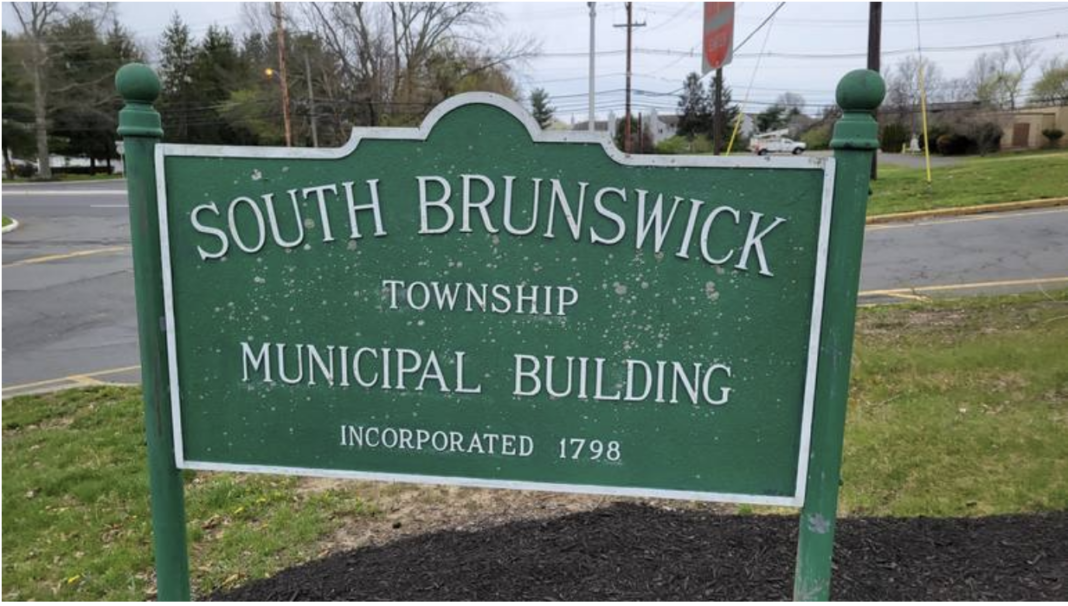
South Brunswick is emerging as a major hub for data center development due to its location, infrastructure, and access to power.
Growing demand for AI, cloud computing, and digital services is driving new investment in digital infrastructure.
Local leaders see data centers as an economic development opportunity that could strengthen the tax base and support construction activity.
From brick manufacturing to the old Ford Edison assembly plant, the Route 1 corridor has long been an economic engine for Central New Jersey. But as manufacturing leaves (Ford closed in 2004) and as artificial intelligence, cloud computing, and digital services continue to expand, communities across the country are competing to attract the infrastructure powering the modern economy. Increasingly, South Brunswick is finding itself at the center of that conversation.
With the Lumen datacenter on Route 1 and another facility being built just down the road, the township is quietly emerging as one of New Jersey’s most attractive locations for data center development, thanks to a combination of strategic location, access to major fiber networks, available industrial land, and proximity to critical power infrastructure.
Industry experts say demand for data center capacity is accelerating rapidly as businesses, governments, and consumers become increasingly reliant on digital technologies. Data centers operate behind the scenes, essential to nearly every aspect of modern life. Everything from streaming services and online banking to artificial intelligence platforms and cloud computing depends on facilities capable of storing, processing, and transmitting enormous amounts of digital information.
South Brunswick’s location offers several advantages for companies seeking to invest in that growth. Situated between New York City and Philadelphia, with access to major transportation corridors and robust telecommunications infrastructure, the township is well-positioned to support large-scale digital operations.
For local communities, data center investment can offer a different economic development model than traditional commercial projects. These facilities typically require substantial upfront construction activity and infrastructure investment while contributing significantly to the local tax base.
Supporters argue that attracting data infrastructure is increasingly similar to attracting railroads, ports, or industrial parks in previous generations — a long-term investment in the systems that power economic growth.
The rise of artificial intelligence is expected to further increase demand for computing capacity and electricity nationwide. As a result, states and municipalities are increasingly evaluating how to expand both digital infrastructure and the energy resources needed to support it. That challenge is particularly relevant in New Jersey, where growing electricity demand, grid reliability concerns, and discussions about future energy generation have become major policy issues.
As technology companies continue searching for locations capable of supporting the next generation of digital infrastructure, South Brunswick appears well-positioned to benefit from one of the fastest-growing sectors of the American economy.
Sources:
My Family Travels. (2026). This small town is secretly the data center capital of New Jersey. https://myfamilytravels.com/
New Jersey Business Magazine. (2025). Data centers and the future of New Jersey’s digital infrastructure. New Jersey Business Magazine.
U.S. Department of Energy. (2024). Electricity demand growth and the future of grid infrastructure. Office of Electricity.