


New Jersey is in a period of structural energy imbalance. Over the past decade, the state has retired several natural‑gas plants without replacing them with equivalent in‑state generation. At the same time, New Jersey’s once‑ambitious offshore wind program collapsed under a combination of post‑COVID cost inflation and federal policy shifts, including a de facto halt on new offshore wind approvals and uncertainty around federal tax‑credit timing. The result is stark: New Jersey now produces less electricity than it consumes, relying heavily on imports from PJM at a time when regional demand and capacity prices have surged. This dependence has contributed to rising electricity costs for households and businesses and has exposed the state to volatility in the wholesale market.
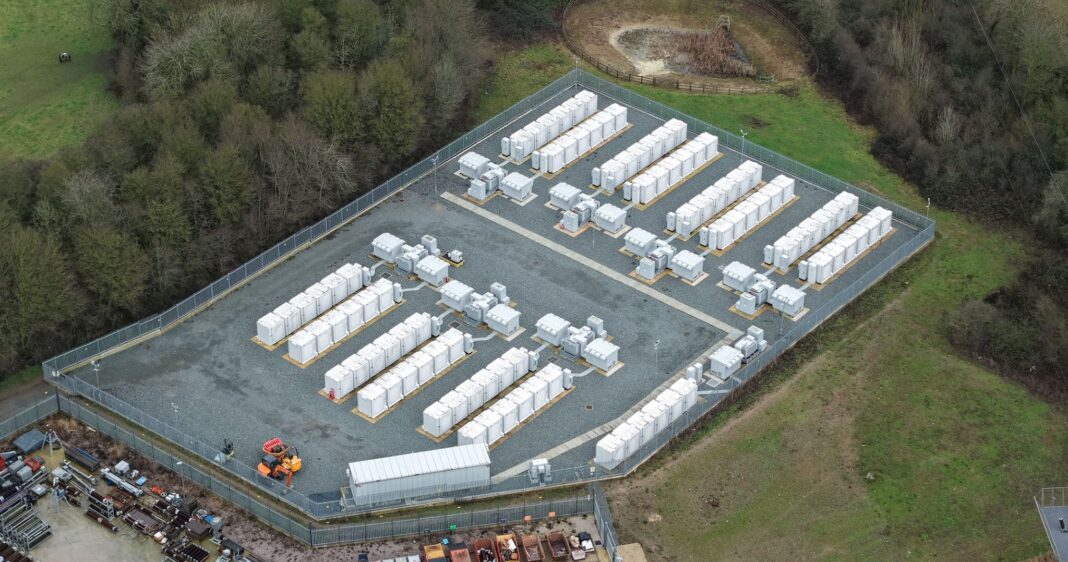
To stabilize prices and rebuild in‑state capacity, New Jersey is turning to battery energy storage, which regulators say can be deployed faster than new generation and is essential to meeting the state’s statutory goal of 2,000 MW of storage by 2030. In March 2026, the New Jersey Board of Public Utilities (NJBPU) approved the state’s first major tranche of storage incentives—three projects totaling 355 MW—under the Garden State Energy Storage Program (GSESP). These projects represent the first concrete step toward rebuilding New Jersey’s energy resilience.
Woods Landing Storage
- Sayreville (Middlesex County)
- Capacity: 200 MW
- Developer: Woods Landing Storage LLC
- Program: GSESP Phase 1, Tranche 1
- Purpose: Provide flexible, on‑demand power to the PJM grid and reduce peak‑period costs.
Woods Landing Storage is proposed in Sayreville, a municipality with large tracts of industrial and former industrial land along the Garden State Parkway and Route 9 corridors. While NJBPU filings do not specify the exact parcel, Sayreville’s likely siting areas include vacant industrial land, former manufacturing parcels, and utility‑adjacent lots. These areas are typically bordered by warehouses, distribution centers, and open industrial fields, making them compatible with battery‑storage siting.
Next steps
The project has state incentive approval, but still requires:
- Local land‑use approvals
- DEP environmental permitting
- PJM interconnection studies
No commercial operation date has been published.
Two Rivers Energy Storage
- Ridgefield (Bergen County)
- Capacity: 150 MW
- Developer: Two Rivers Energy Storage LLC
- Program: GSESP Phase 1, Tranche 1
- Purpose: Support reliability in a constrained North Jersey load pocket and reduce congestion costs.
Two Rivers Energy Storage is proposed in Ridgefield, one of the most industrialized municipalities in Bergen County. Ridgefield’s landscape is dominated by logistics centers, warehouses, trucking yards, and light‑industrial facilities, especially near the New Jersey Turnpike and major transmission corridors. The project is expected to be sited on existing industrial land or a redeveloped industrial parcel, with adjacent uses likely including warehousing, commercial operations, and utility infrastructure.
Next steps
The project must still complete:
- Municipal planning board review
- DEP environmental permitting
- PJM interconnection queue entry
No construction or operation timeline has been released.
North America Energy Storage Corp
- Bordentown (Burlington County)
- Capacity: 5 MW
- Developer: North America Energy Storage Corp
- Program: GSESP Phase 1, Tranche 1
- Purpose: Provide localized grid support and contribute to the state’s initial storage build‑out.
The smallest of the three projects is located in Bordentown, a municipality with a mix of light industrial parcels, commercial corridors, and open land near the New Jersey Turnpike and Route 130. The project is expected to occupy a small industrial or commercial parcel, with adjacent land likely consisting of similar industrial uses, parking lots, or open commercial fields.
Next steps
The project must still undergo:
- Local zoning and planning approvals
- Environmental review
- PJM interconnection
Given its smaller size, it may progress more quickly through development.
Why These Projects Matter
The approval of these three projects marks a strategic pivot in New Jersey’s energy strategy. With offshore wind stalled and natural‑gas retirements outpacing new generation, the state faces a widening gap between supply and demand. Storage offers a near‑term solution that can:
- Reduce exposure to PJM capacity price spikes
- Improve grid reliability
- Support future renewable generation
- Provide peak‑shaving and load‑balancing services
While battery storage facilities like this offer great promise, they are not without controversy. California’s Moss Landing grid-scale battery storage facility caught fire in January 2025 and the local community is still dealing with the aftermath. And in Staten Island, residents have voiced concerns about the BESS being built in their neighborhood.NJBPU has already launched Tranche 2, seeking an additional 645 MW of storage, and opened a 3‑GW expansion of the Community Solar Energy Program, signaling a broader shift toward distributed, flexible resources. These initial 355 MW of storage are only the beginning. Once built, they will help New Jersey rebuild its in‑state capacity, reduce dependence on imports, and lay the groundwork for a more resilient and affordable energy system.
Sources:
NJ Spotlight News. (2026, March 31). New Jersey turns to big batteries’ storage as power prices rise. https://www.njspotlightnews.org
Energy Storage Tenders. (2026, March 9). New Jersey awards 355 MW energy storage, seeks another 645 MW.https://pv-magazine-usa.com
Solar Power World. (2026, March 5). New Jersey expands state community solar program by 3 GW.https://www.solarpowerworldonline.com