



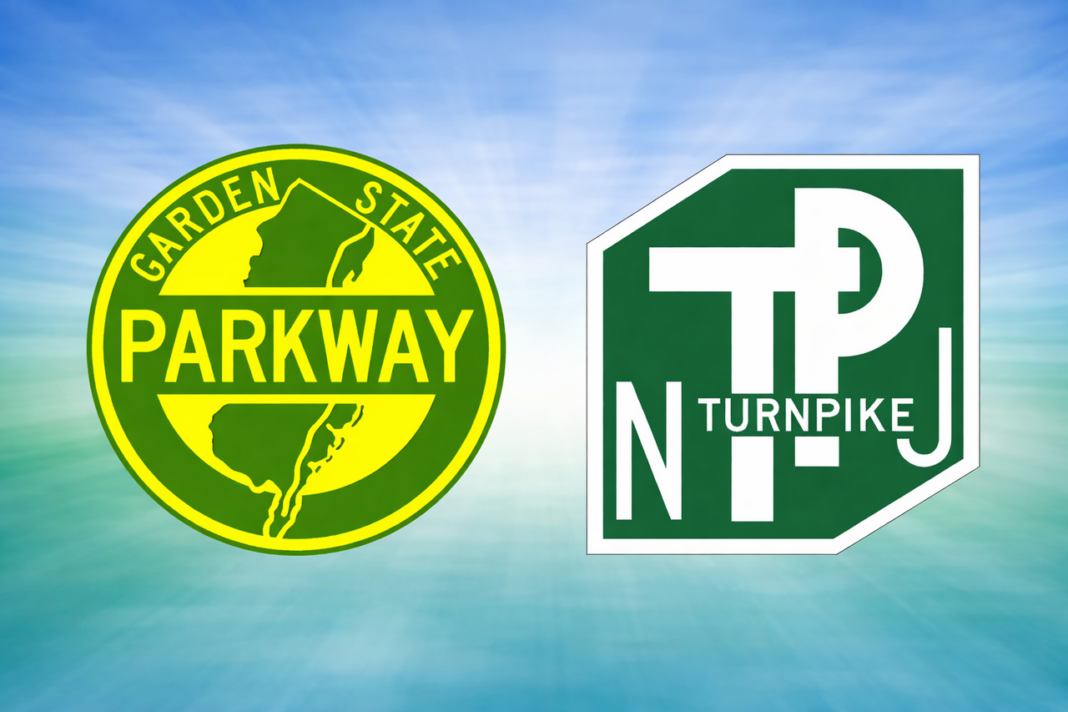
How the Turnpike–Parkway merger streamlined New Jersey’s toll roads
In 2003, New Jersey made a major change to how two of its most important highways were managed. The state merged the New Jersey Highway Authority, which operated the Garden State Parkway, into the New Jersey Turnpike Authority, creating a single agency responsible for both of the state’s primary toll roads. The plan was developed with input from the state’s Toll Road Consolidation Commission and was brought to fruition during the McGreevey Administration. The consolidation improved efficiency and reduced duplicative administrative costs for two highways that serve as the backbone of the state’s transportation network
At the time, the decision generated debate in Trenton and among transportation observers. But more than two decades later, the consolidation is widely viewed as a practical step that improved coordination between the roadways and created operational efficiencies that benefit drivers, and tax-payers, across New Jersey.
The road to consolidation
Before the merger, the state’s toll highways were managed by two separate agencies.
The New Jersey Turnpike Authority, created in 1948, operated the New Jersey Turnpike, a critical freight and commuter corridor linking Delaware to the George Washington Bridge. The Garden State Parkway, which runs north–south along the state’s eastern corridor, was managed by the New Jersey Highway Authority, created in 1952.
For decades, the two authorities functioned independently, with separate executive and administrative staffs, maintenance operations, procurement systems, and engineering. As both highways grew busier and the complexity of maintaining them increased, policymakers began questioning whether two agencies were necessary to manage what were effectively complementary pieces of the same statewide transportation system.
In the early 2000s, a state study recommended consolidating the agencies to reduce duplication and improve coordination. The New Jersey Legislature approved legislation in 2003 dissolving the New Jersey Highway Authority and transferring its responsibilities to the New Jersey Turnpike Authority. The change took effect on July 9, 2003.
Improving efficiency and coordination
One of the primary goals of the merger was to streamline operations.
The merger also improved coordination between the highways themselves. Although the Turnpike and Parkway serve different traffic patterns, they operate within the same regional transportation network. Managing both corridors under one authority allows planning, maintenance and infrastructure improvements to be coordinated across the system.
The consolidation also made it easier to standardize equipment, procurement and operational practices. Toll collection systems were simplified and the rollout of electronic tolling technology accelerated, helping modernize operations across both highways.
Strengthening investment power
The Turnpike Authority is responsible not only for maintaining the highways but also for issuing bonds and managing capital programs to support major construction projects. By bringing the Garden State Parkway under the same authority, the state created a more financially stable organization capable of managing significant investments in infrastructure.
Since 2003, several major projects have helped New Jersey roadways keep pace with population growth. The widening New Jersey Turnpike between Interchanges 6 and 9 was one of the largest highway expansion projects in state history, which added new car and truck lanes to relieve congestion along a critical freight corridor.
On the Garden State Parkway, the authority completed a multi-year widening project between Toms River and Lakewood, expanding the roadway to accommodate more shore-goers in the summer.
Additional investments have included the reconstruction of major interchanges and the expansion of electronic tolling through E-ZPass and cashless tolling systems. The authority has also replaced aging bridges, upgraded service areas and implemented safety improvements such as new barriers, lighting and traffic management systems designed to improve reliability for millions of drivers each year.
A model of practical government reform
The Turnpike–Parkway consolidation stands out as an example of a reform that achieved its intended goals. For drivers traveling between North Jersey and the Shore, or for trucks carrying goods along the busy I-95 corridor, the benefits of that consolidation are experienced every day. What once required two separate agencies is now handled by one coordinated authority, helping keep traffic moving and infrastructure maintained across the Garden State.
At a time when Governor Mikie Sherrill has outlined a budget strategy focused on spending restraint and tax stability, the success of the Turnpike–Parkway merger raises a broader question. If streamlining these two agencies produced lasting efficiencies without sacrificing service, what other parts of state government might benefit from similar consolidation? As New Jersey looks for ways to manage costs while maintaining essential services, the 2003 toll-road merger offers a practical example of how targeted structural reforms can deliver long-term value for taxpayers and motorists alike.
Sources
New Jersey Legislature. (2003). Public Law 2003, Chapter 79: An act concerning the consolidation of the New Jersey Highway Authority and the New Jersey Turnpike Authority.
New Jersey Turnpike Authority. (n.d.). History of the New Jersey Turnpike Authority and the Garden State Parkway.
New Jersey Department of Transportation. (2003). Governor McGreevey plan for merging the Garden State Parkway and New Jersey Turnpike authorities.Wikipedia contributors. (2025). New Jersey Turnpike Authority. In Wikipedia, The Free Encyclopedia.