


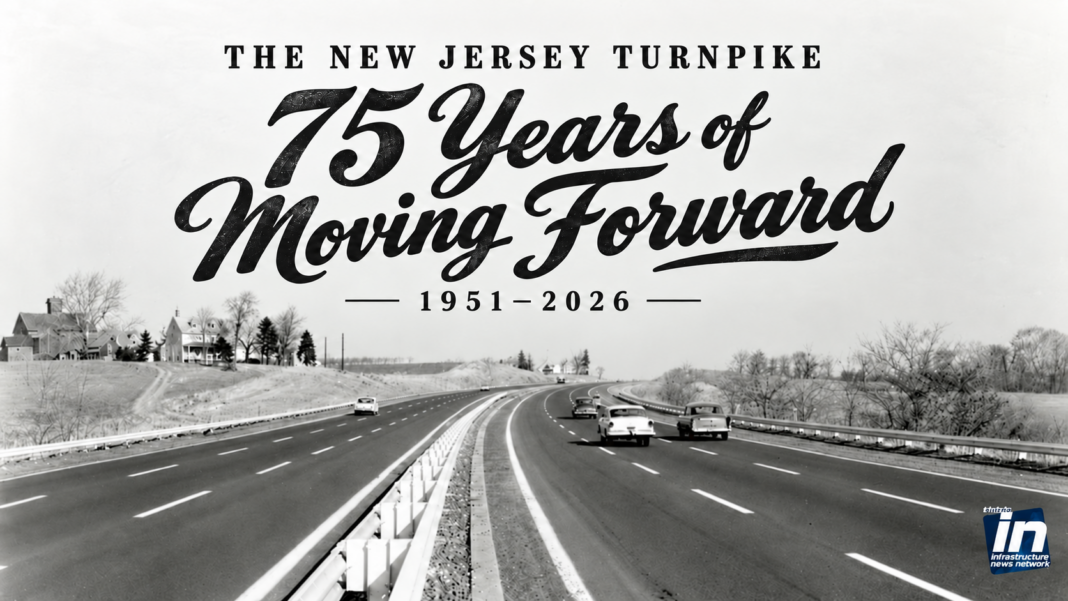
The New Jersey Turnpike turns 75 today, marking a history of rapid construction, expansion and rebuilding that helped shape how people and goods move through the state.
TLDR:
1. The Turnpike’s first 44 miles opened November 5, 1951.
2. Widening projects and extensions transformed the highway into a major route for commuters, freight and access to ports.
3. Its next chapter centers on replacing aging bridges while keeping traffic moving, including reconstruction of the Newark Bay crossing.
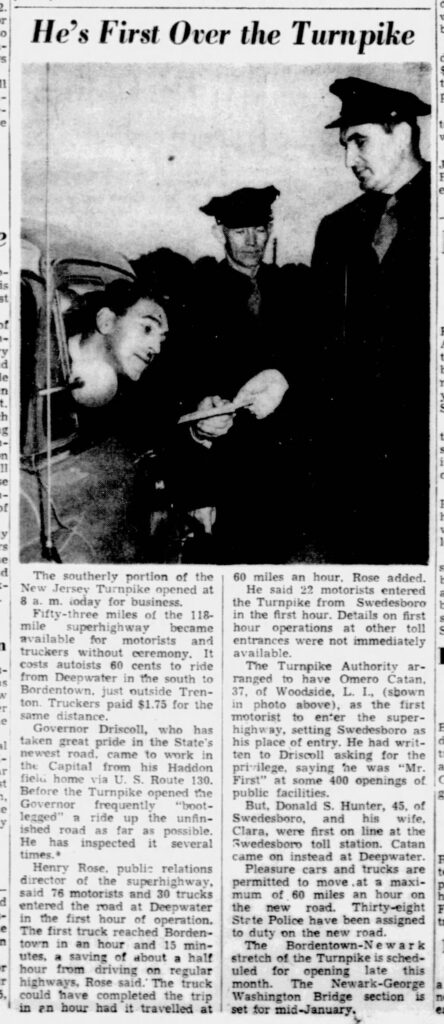
The New Jersey Turnpike turns 75 today, marking a history of rapid construction, expansion and rebuilding that helped shape how people and goods move through the state.The New Jersey Turnpike began carrying traffic on November 5, 1951, when its first 44 miles opened between Salem County and Westampton in Burlington County. Seventy-five years later, the completed highway runs 148-miles, with extensions and separate roadways carrying traffic efficiently through one of the country’s most heavily developed transportation corridors.
The Turnpike was like a new frontier of highway construction. Crews crossed farmland, demolished buildings, erected bridges and stabilized deep marshland to create a continuous highway where none had existed.
For drivers crossing New Jersey before the Turnpike, the journey involved congested local roads, traffic circles and crowded streets through industrial cities. In its January 1952 coverage of the new highway, LIFE described a trip that could take as long as five hours; the Turnpike offered a roughly two-hour journey over its original 118-mile route.
The state established the New Jersey Turnpike Authority in 1948 to build, maintain and operate toll-road projects. The arrangement gave New Jersey a dedicated agency to deliver a major highway and collect revenue from the motorists using it. Their objective was to provide a continuous express route across the state, allowing through traffic to bypass the intersections and ease local congestion that was building as more families became vehicle owners.
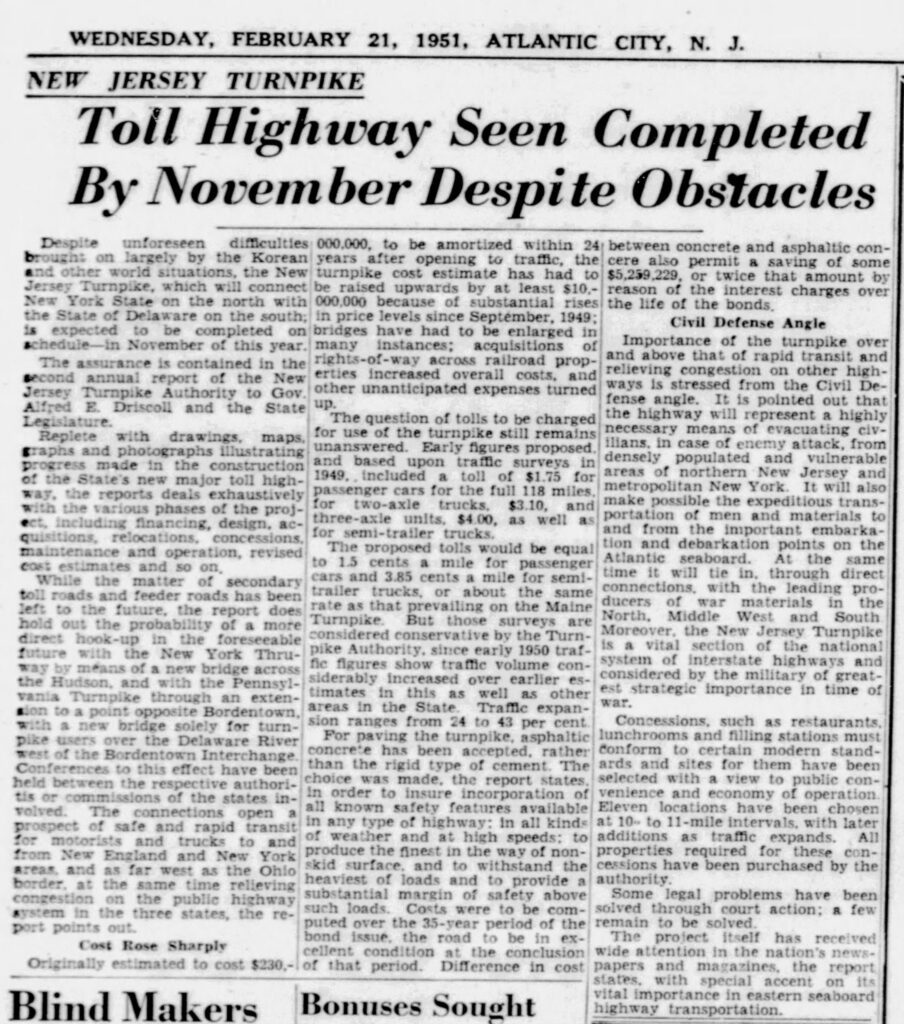
Construction began in January 1950. The original 118-mile highway took about two years to build, an unusually compressed schedule for a project crossing so much land and so many existing transportation routes.
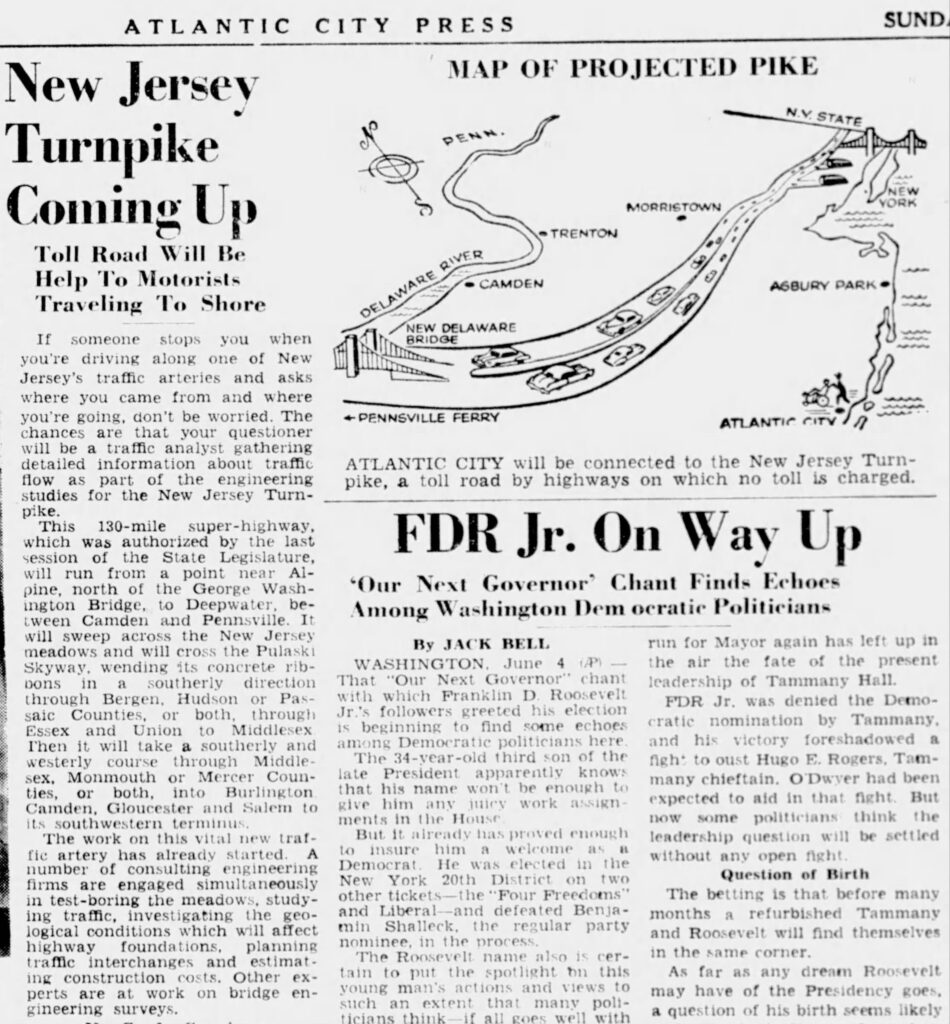
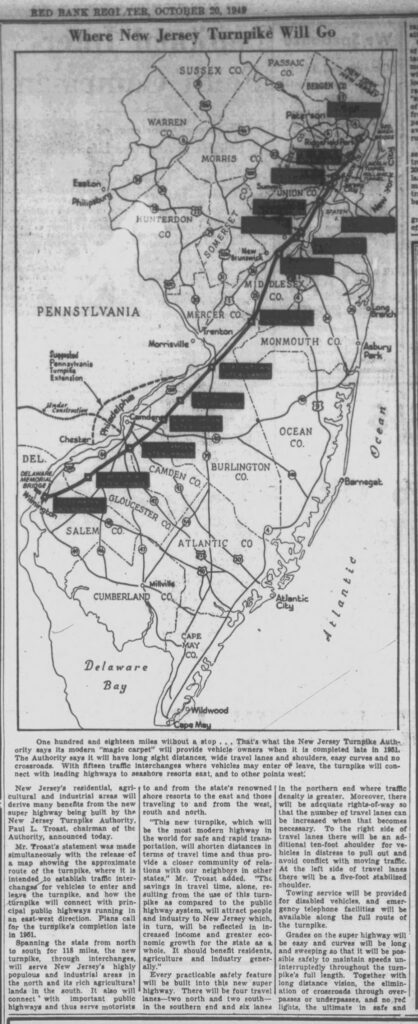
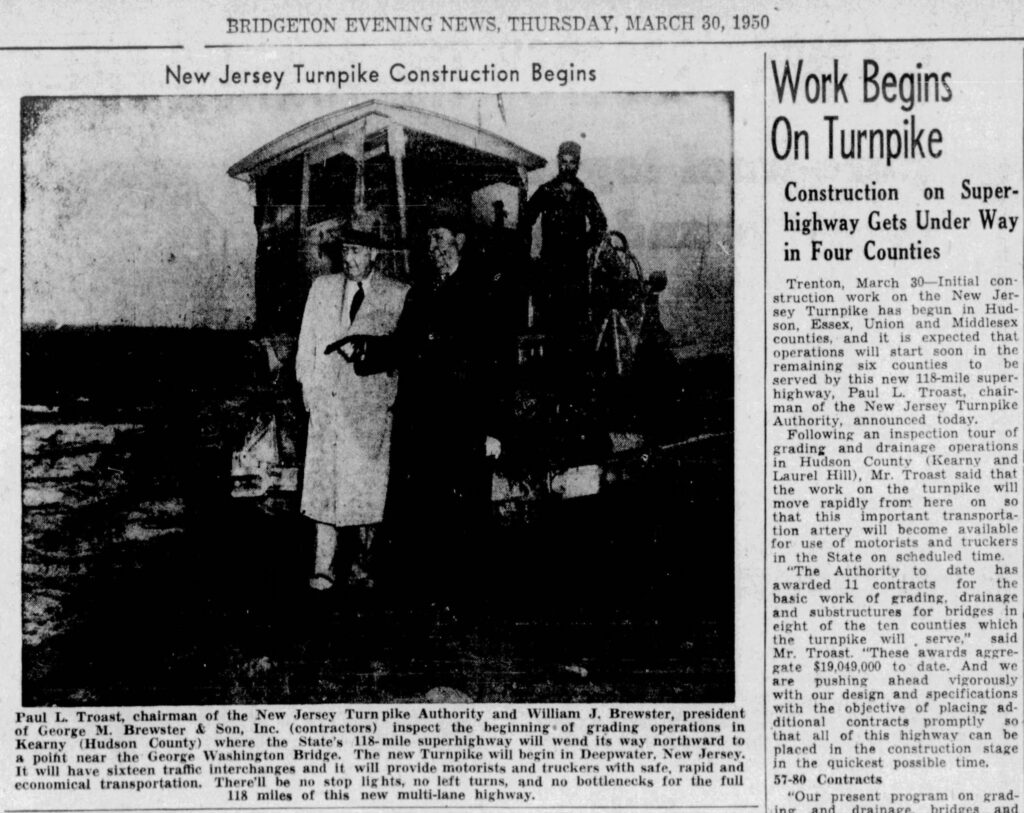
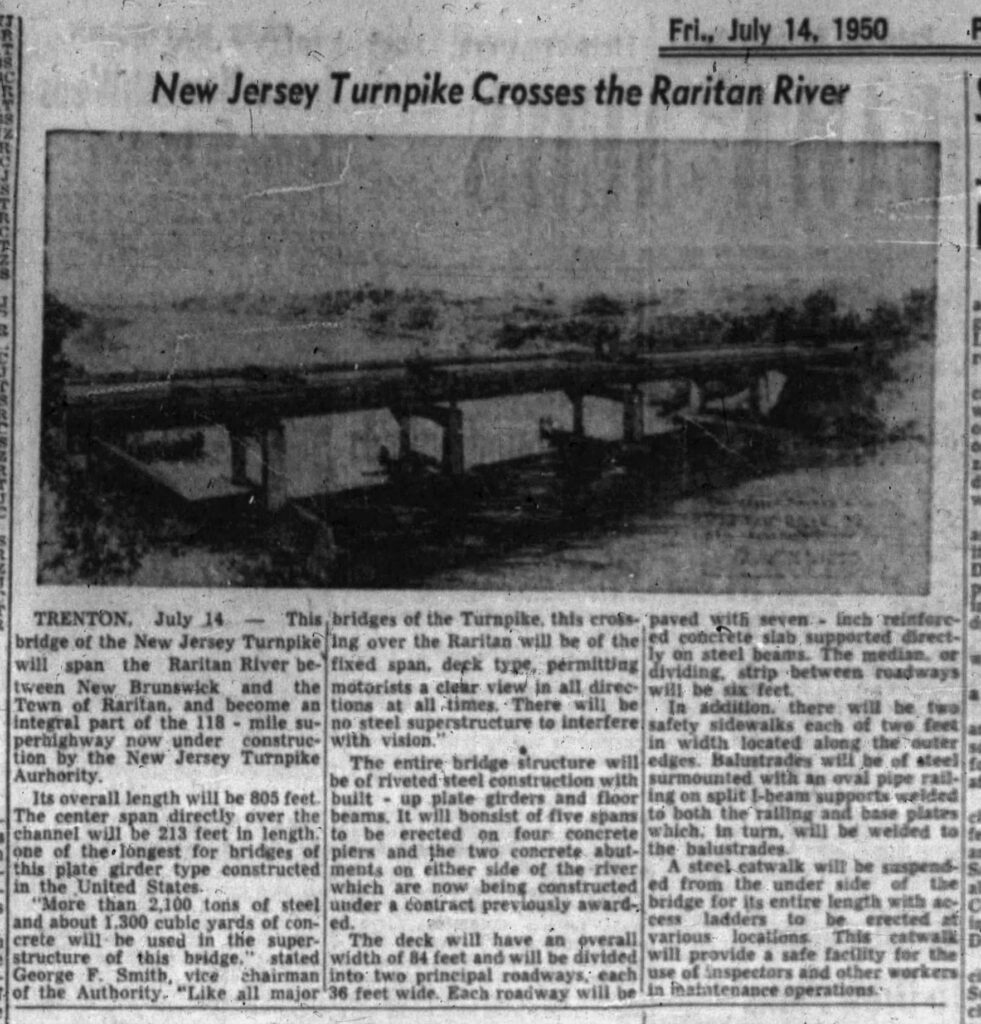
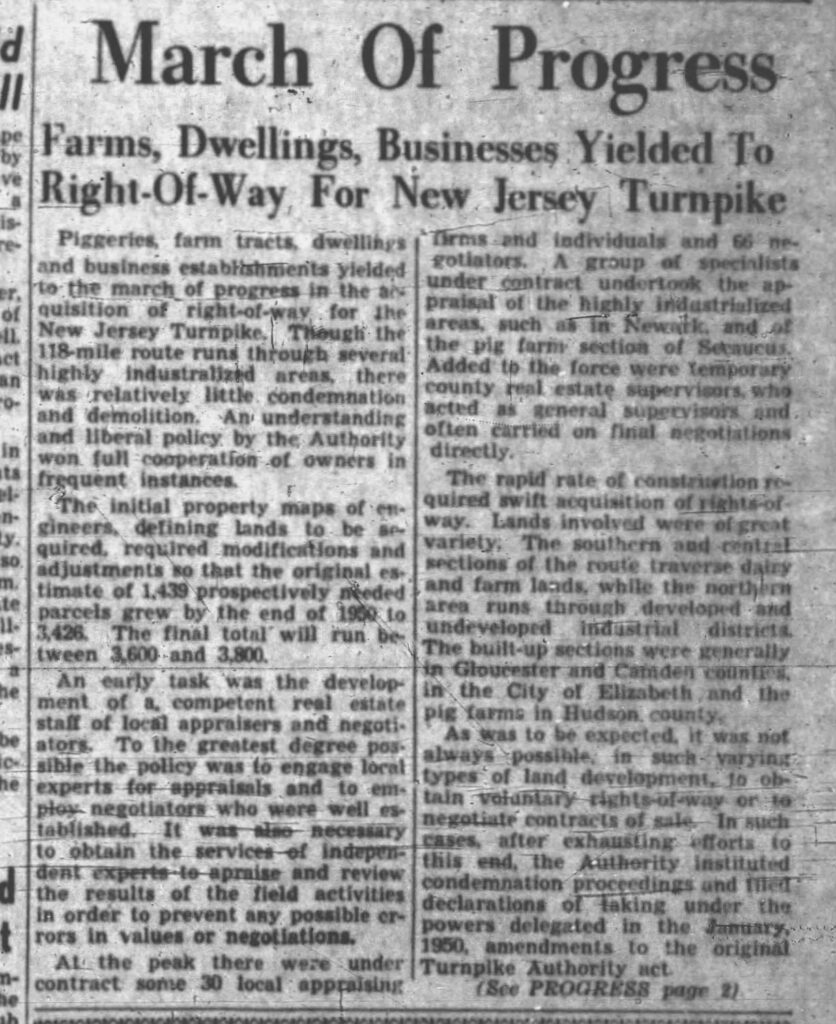
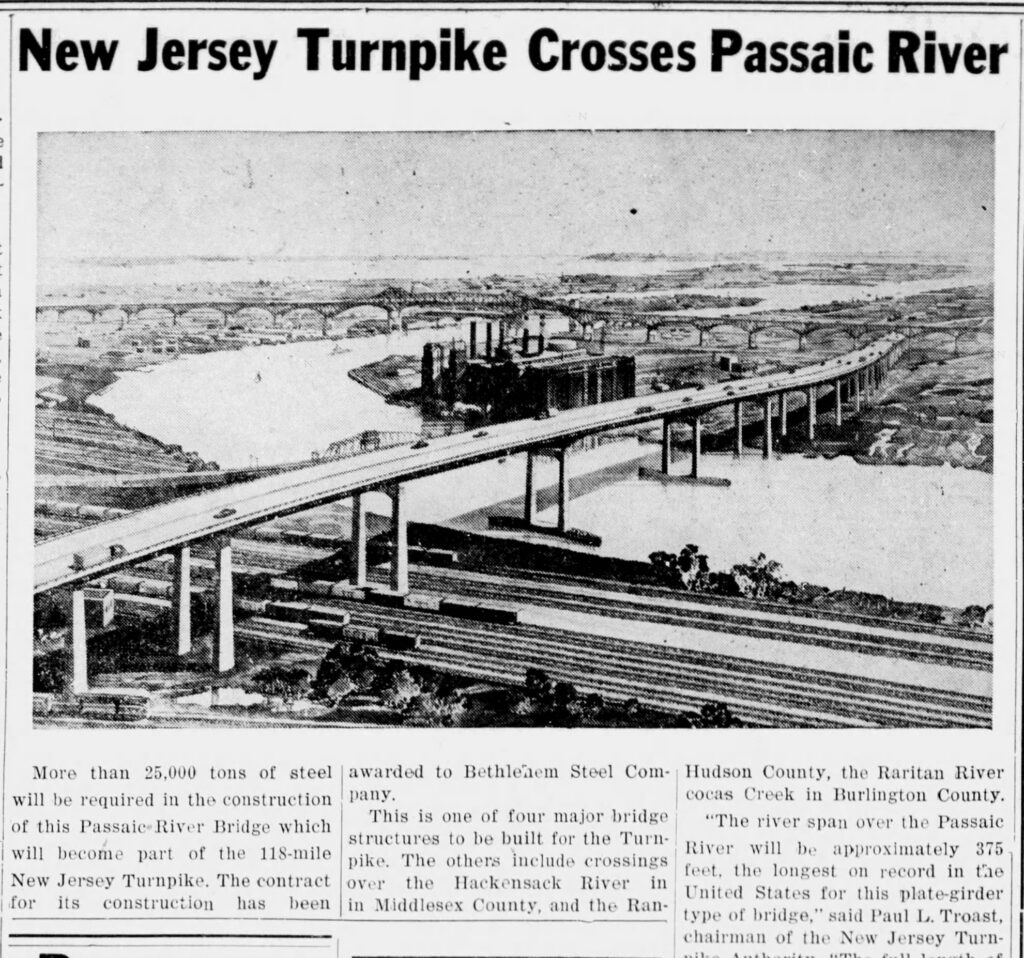
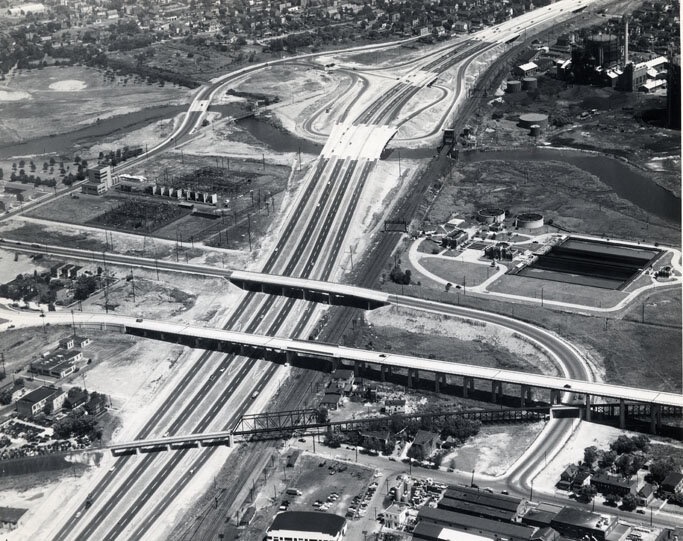
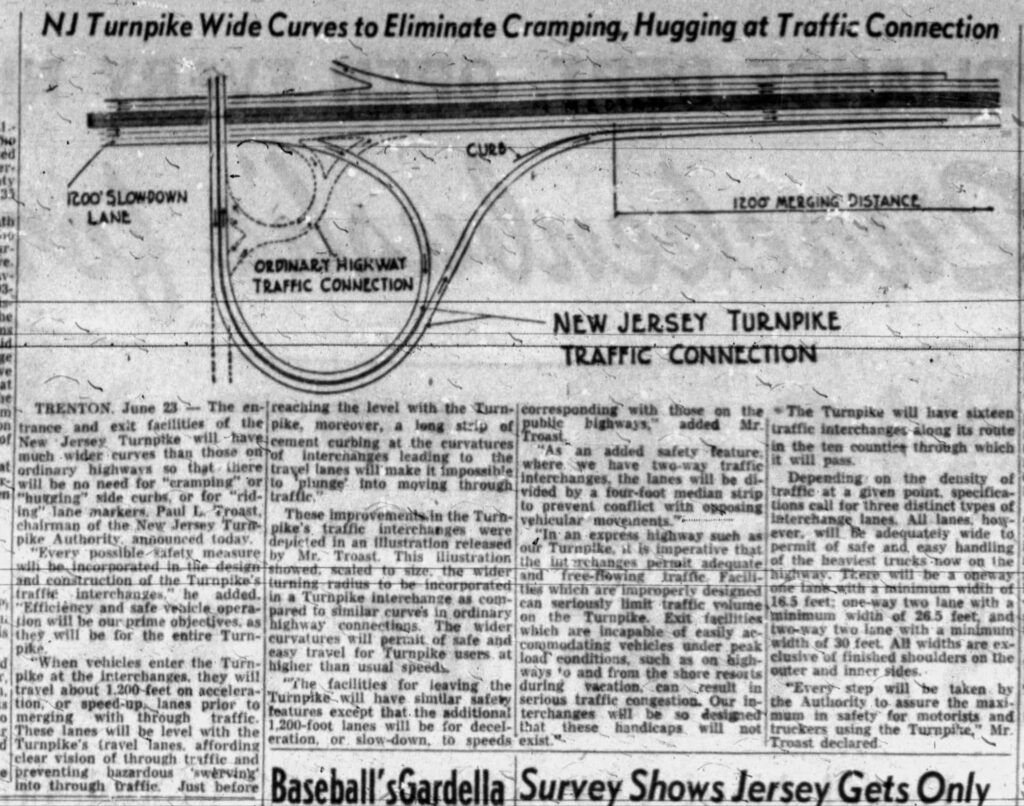
LIFE’s contemporary account documented the scale of the undertaking: approximately 3,500 real estate transactions and crossings of 196 highways and railroads. In urban areas, houses were demolished and families relocated; in rural communities, farmland was acquired for the highway’s right of way. The speed of construction was an engineering achievement, but its consequences reached well beyond the road itself.
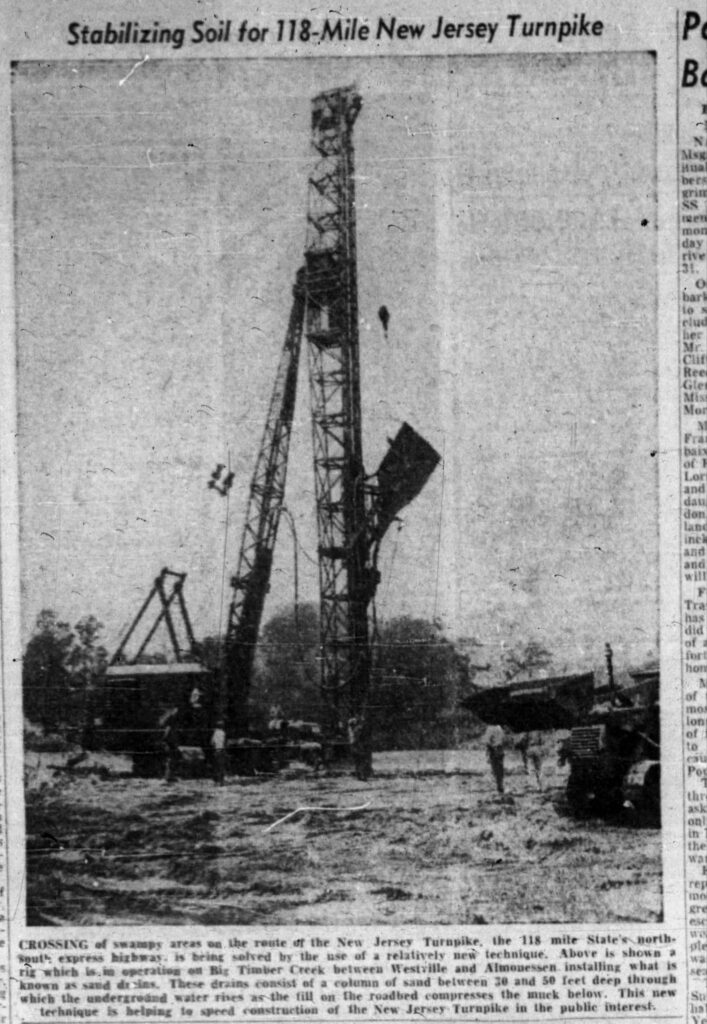
Some of the hardest work occurred in the Meadowlands near Secaucus, where crews encountered deep, waterlogged ground. Engineers installed vertical sand drains and placed heavy fill above them, using the weight to force water out of the soft soil. The process helped consolidate the ground before the highway was built on top.
The expansion
In 1952, its first full calendar year of operation, the Turnpike carried 17.9 million vehicles and generated $16.2 million in toll revenue. Traffic soon exceeded expectations. According to the New Jersey Historical Society, widening had not been anticipated until 1975; instead, an 83-mile widening project began in 1955, just a few years after the road opened. In 1966, the Turnpike introduced its familiar system of inner roadways for passenger vehicles and outer roadways open to all vehicles.
The highway also gained new connections. The Newark Bay-Hudson County Extension and the route now known as the Pearl Harbor Memorial Turnpike Extension opened in 1956, followed by the Western Spur in 1970 and the I-95 Extension in 1992. Together, these additions expanded the original road into the network motorists use today.
The Hudson County connection had been sought even before the original Turnpike opened. Bayonne Assemblyman Vincent R. Casciano and local officials pressed for direct access to the highway, arguing that Hudson County should share in its economic benefits. The extension opened in stages in 1956, linking Newark with Bayonne and Jersey City.
One of the largest changes came in 2014, when the Interchange 6-to-9 Widening Program brought additional capacity to the corridor between Burlington and Middlesex counties. The project added 170 lane miles and extended the separate outer roadways south to near Interchange 6 in Mansfield Township. (See “The NJ Turnpike Interchange 6 to 9 Widening Program – 10 Years After”)
The Authority’s 2014 annual report placed the anticipated final cost at approximately $2.3 billion, about $200 million below the original budget. It described the work as the largest capacity expansion in the agency’s history. The project also included a new Interchange 8 toll plaza and additional toll lanes at Interchange 7A.
Originally four lanes wide, the Turnpike now reaches 14 lanes in some areas. Its mainline and extensions connect regional travel with routes toward New York City and Pennsylvania, while serving the industrial and port communities along its northern corridor.
What the Turnpike carries today and tomorrow
The scale of today’s traffic is far beyond what the original highway handled. During the first six months of 2026 alone, the Turnpike recorded approximately 126.4 million toll transactions, including 18.3 million commercial-vehicle transactions, according to the Authority’s unaudited financial summary. These figures count trips through the toll system, rather than individual vehicles or drivers.
Toll collection has changed as well. E-ZPass accounted for 93.8% of Turnpike transactions during that period, including 97.8% of commercial-vehicle transactions. The road generated approximately $859 million in toll revenue in those six months (See “Who pays for New Jersey’s roads?”)
The turnpike’s next chapter involves replacing infrastructure that has carried decades of traffic. The Newark Bay-Hudson County Extension contains 29 bridges, many of which the Authority identifies as reaching the end of their service lives. Its reconstruction program prioritizes the section between Interchanges 14 and 14A, including replacement of the Newark Bay Bridge.
The Authority’s published schedule targets completion of the first new Newark Bay Bridge in 2031. That work illustrates how the construction challenge has changed: the original builders created a highway across New Jersey; today’s crews must renew major structures while the transportation network continues operating around them.
At 75, the Turnpike’s importance rests in the daily movement it supports, from commuting to commercial deliveries and access to port facilities. Its future will depend on maintaining that reliability while replacing aging infrastructure and accounting for the communities through which the road passes.
Sources:
LIFE. (n.d.). New Jersey Turnpike: The building of a superroad. https://www.life.com/history/new-jersey-turnpike-the-building-of-a-superroad/
Tri-State Infrastructure News. (n.d.). The New Jersey Turnpike was meant to be free, so what happened? https://tristateinfrastructurenews.com/the-new-jersey-turnpike-was-meant-to-be-free-so-what-happened/