


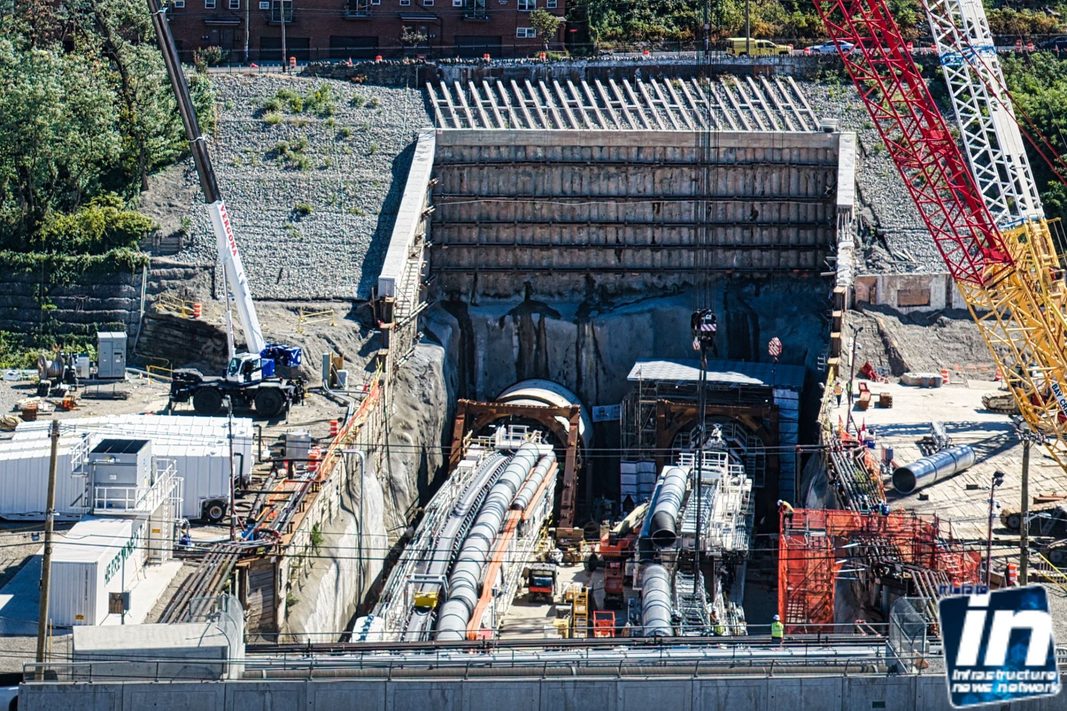
Exclusive aerial photography takes readers inside the massive North Bergen construction site as crews launch one of America’s most ambitious infrastructure projects.
North Bergen, New Jersey | October 8, 2026 | Gateway Program
These photographs document work at the Palisades Tunnel Project, part of the Gateway Program’s $16 billion Hudson Tunnel Project.
The photos capture a particularly significant moment: the first tunnel boring machine (TBM) began excavating on October 8, the same day these photographs were taken. The Schiavone Lane Dragados joint venture is responsible for this section, which involves boring two parallel tunnels approximately 5,100 feet through the New Jersey Palisades from North Bergen to the Hudson County Access Shaft near the Weehawken–Hoboken border.
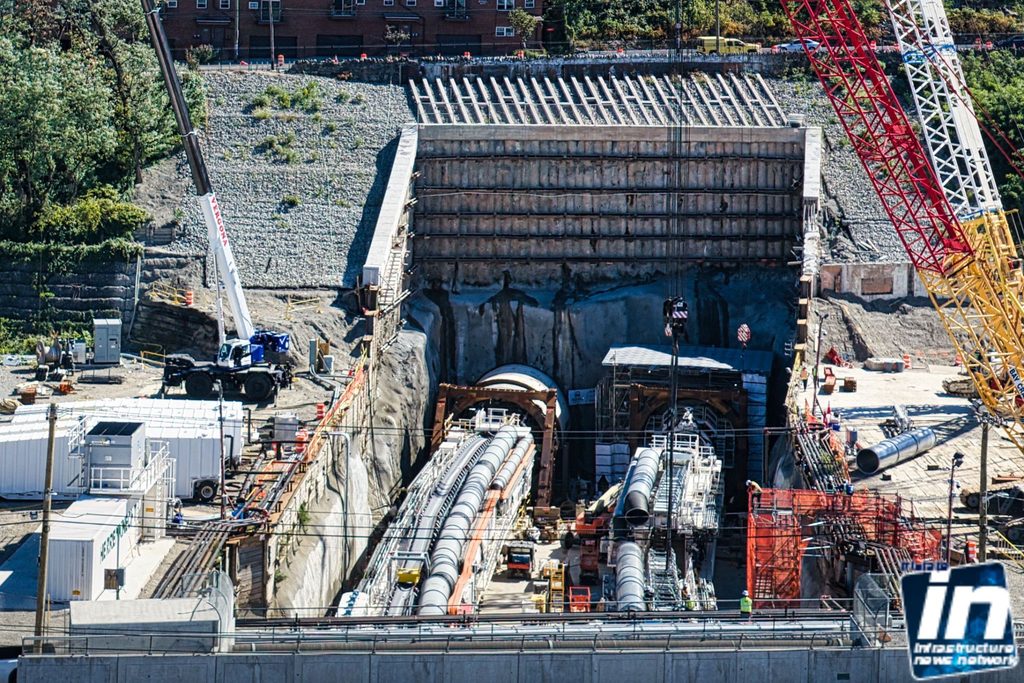
Looking into the Palisades Tunnel launch box in North Bergen, the trailing support systems of two tunnel boring machines extend toward the tunnel portals. The machines are designed to excavate parallel rail tunnels through approximately one mile of Palisades rock. Each TBM weighs more than 1,680 tons and operates with a support assembly extending roughly 500 feet behind its cutterhead.
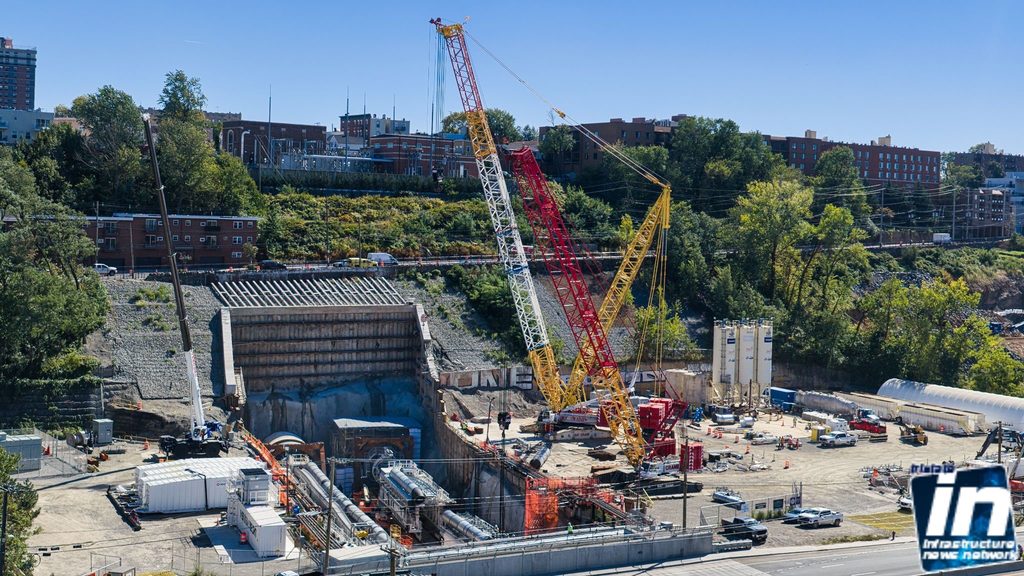
A broad view of the Palisades Tunnel construction site shows the two tunnel boring machine assemblies positioned in the excavated launch box, surrounded by lattice-boom crawler cranes, support equipment and construction staging areas. Located at the base of the New Jersey Palisades alongside Tonnelle Avenue, this site serves as the starting point for the first underground excavation phase of the Hudson Tunnel Project.
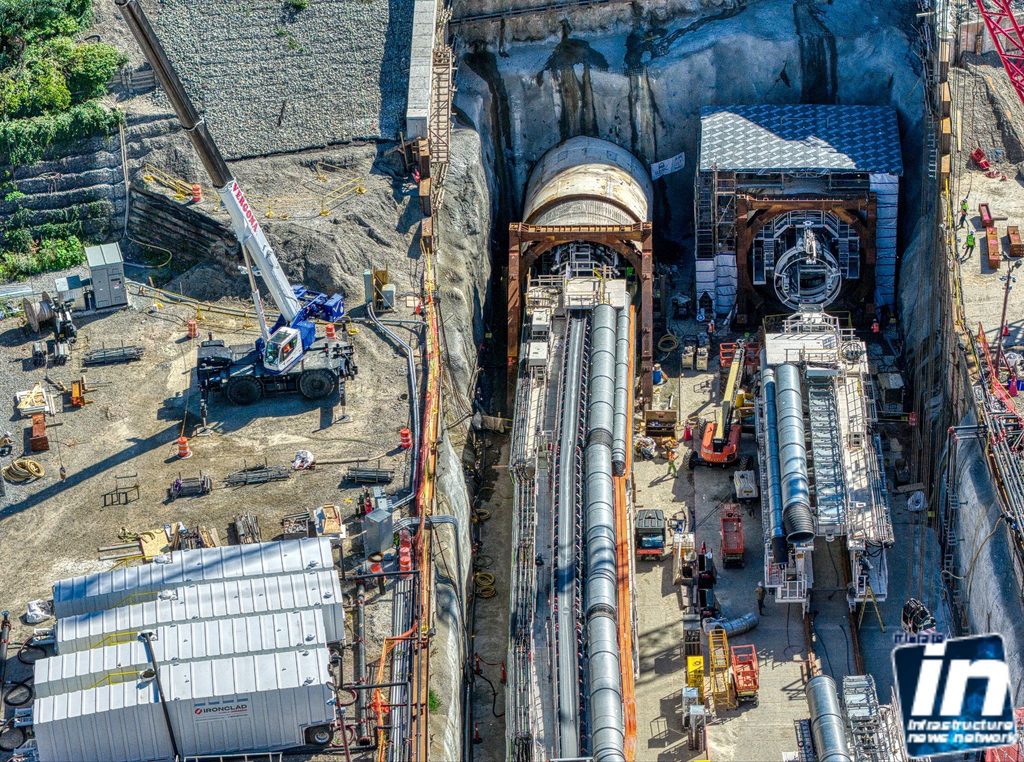
From above the launch box, the two tunnel boring machine assemblies can be seen entering separate openings in the rock face. Their trailing gantries carry the mechanical and support systems needed for tunneling operations. The machines will excavate two approximately 5,100-foot tunnels through the Palisades, eventually reaching the Hudson County Access Shaft near Weehawken and Hoboken.
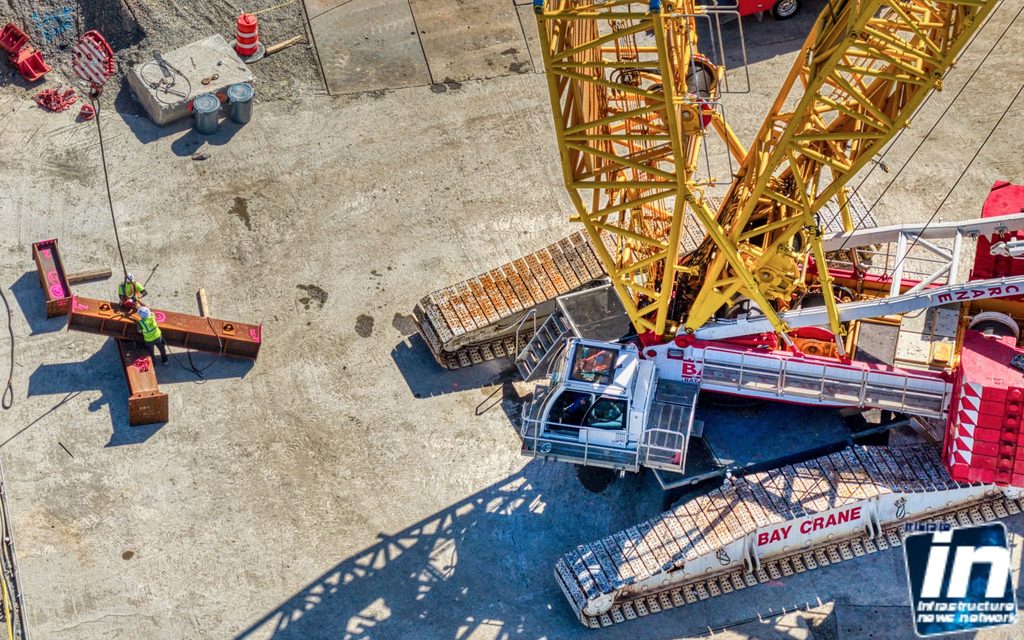
Workers guide a large steel structural assembly during a crane lift at the Palisades Tunnel construction site. The Bay Crane lattice-boom crawler crane is positioned alongside the launch box, where crews are handling heavy components and supporting equipment for the two tunnel boring machines. The operation illustrates the extensive aboveground construction and material handling necessary to support tunneling beneath the Palisades.
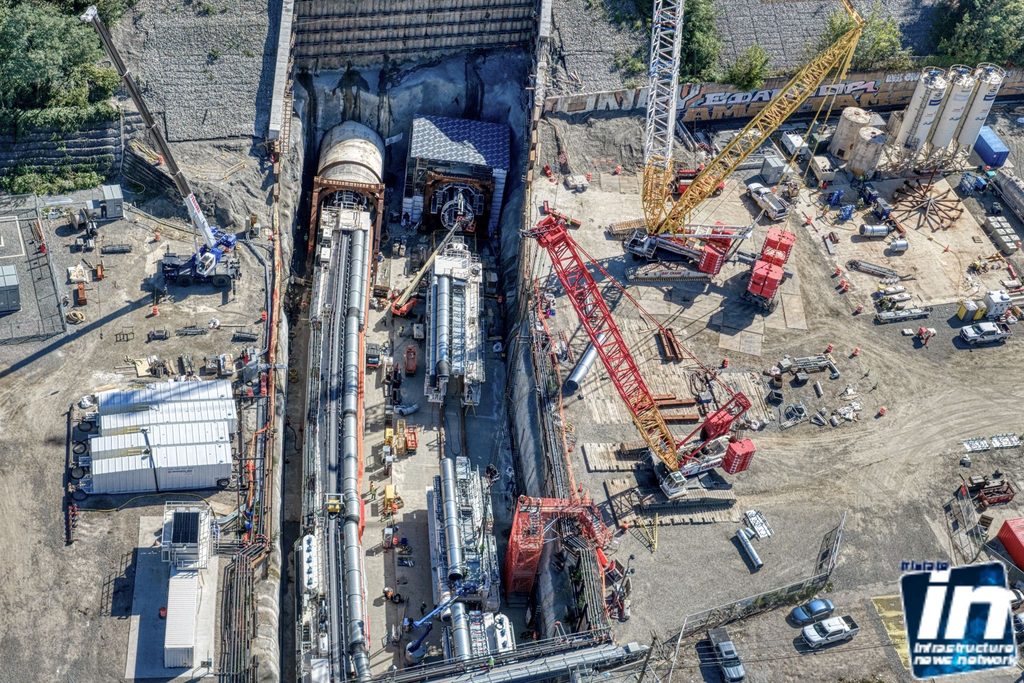
A close-up aerial view captures the front portion of a tunnel boring machine’s trailing gantry inside the North Bergen launch box. Steel support frames, elevated work platforms and heavy mechanical equipment surround the machine as crews prepare for and begin underground excavation. The TBMs will cut through hard Palisades rock while installing precast concrete lining segments to form the permanent tunnel walls.
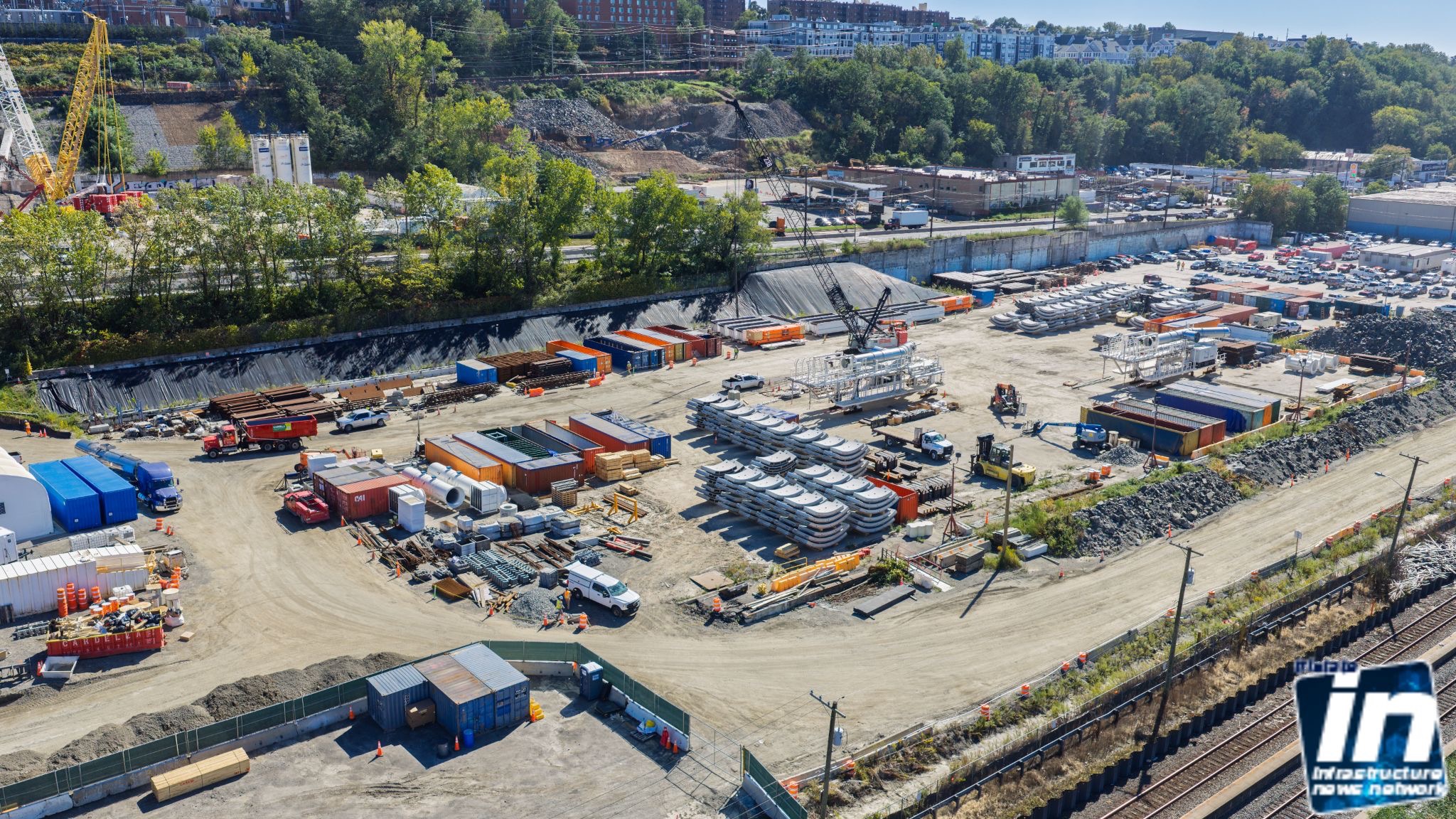
Precast concrete tunnel lining segments are stacked in rows at a construction staging area near the North Bergen portal, alongside large sections of tunnel boring machine support equipment. A crawler crane lifts a shipping container while crews organize materials for the underground excavation. The curved concrete segments will be assembled into rings behind the advancing TBMs, creating the permanent lining of the new rail tunnels.
At the foot of the Palisades near the Weehawken–Hoboken border, crews are excavating the Hudson County Access Shaft, a critical connection between the land and river sections of the Hudson Tunnel Project. The shaft’s concrete perimeter wall is in place, and workers and heavy equipment are removing material from within, supported by surface cranes and ventilation systems. Once completed, the shaft will allow crews to retrieve the two tunnel boring machines digging approximately one mile east from North Bergen beneath the Palisades and lower a separate pair of machines to build the next section beneath the Hudson River toward Manhattan.
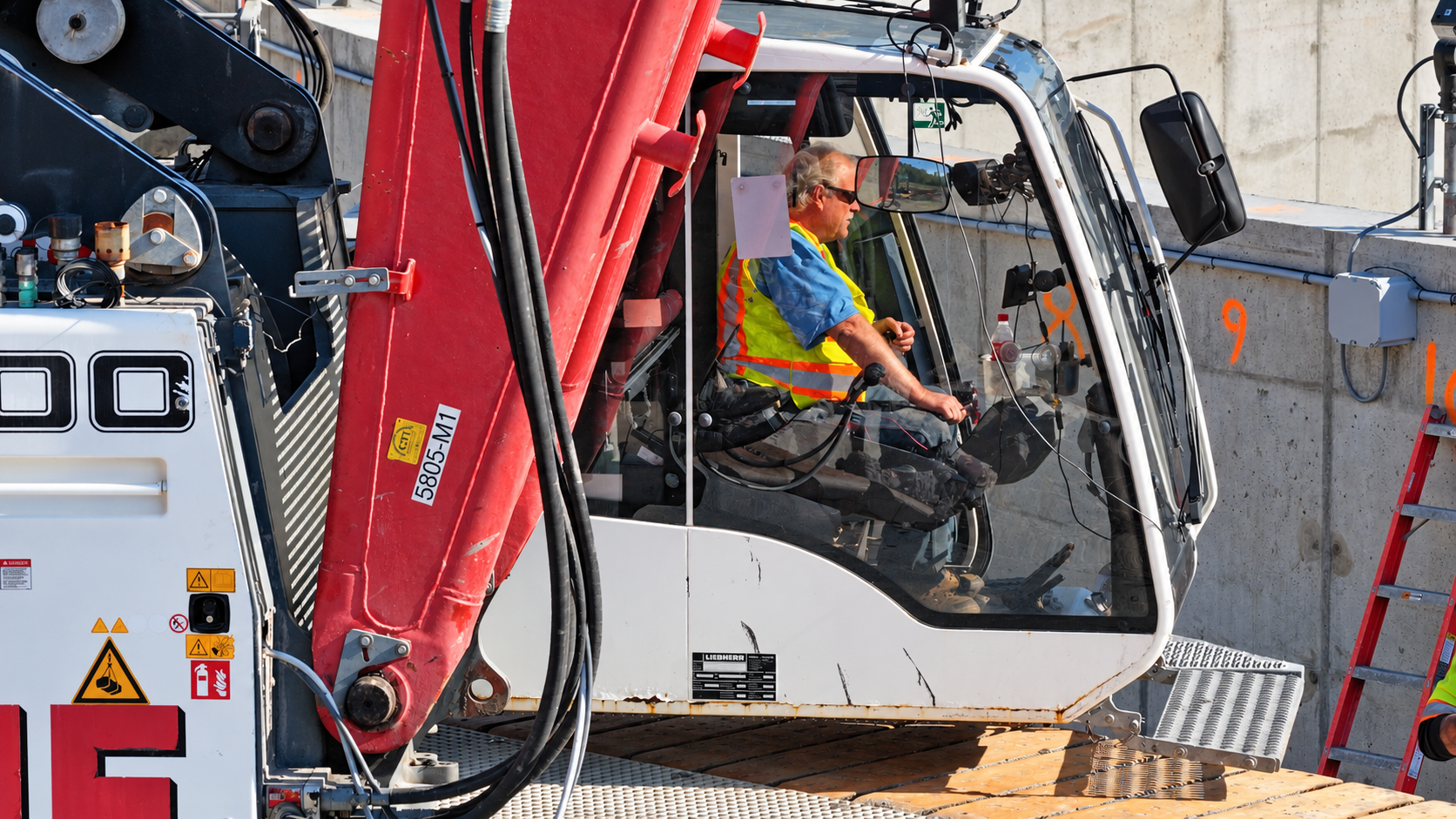
Operating Engineer Gary Lalevee works at the controls of a Liebherr crawler crane beside the Hudson County Access Shaft in Weehawken. The crane supports construction below street level by lifting equipment, supplies and personnel between the surface and the shaft.
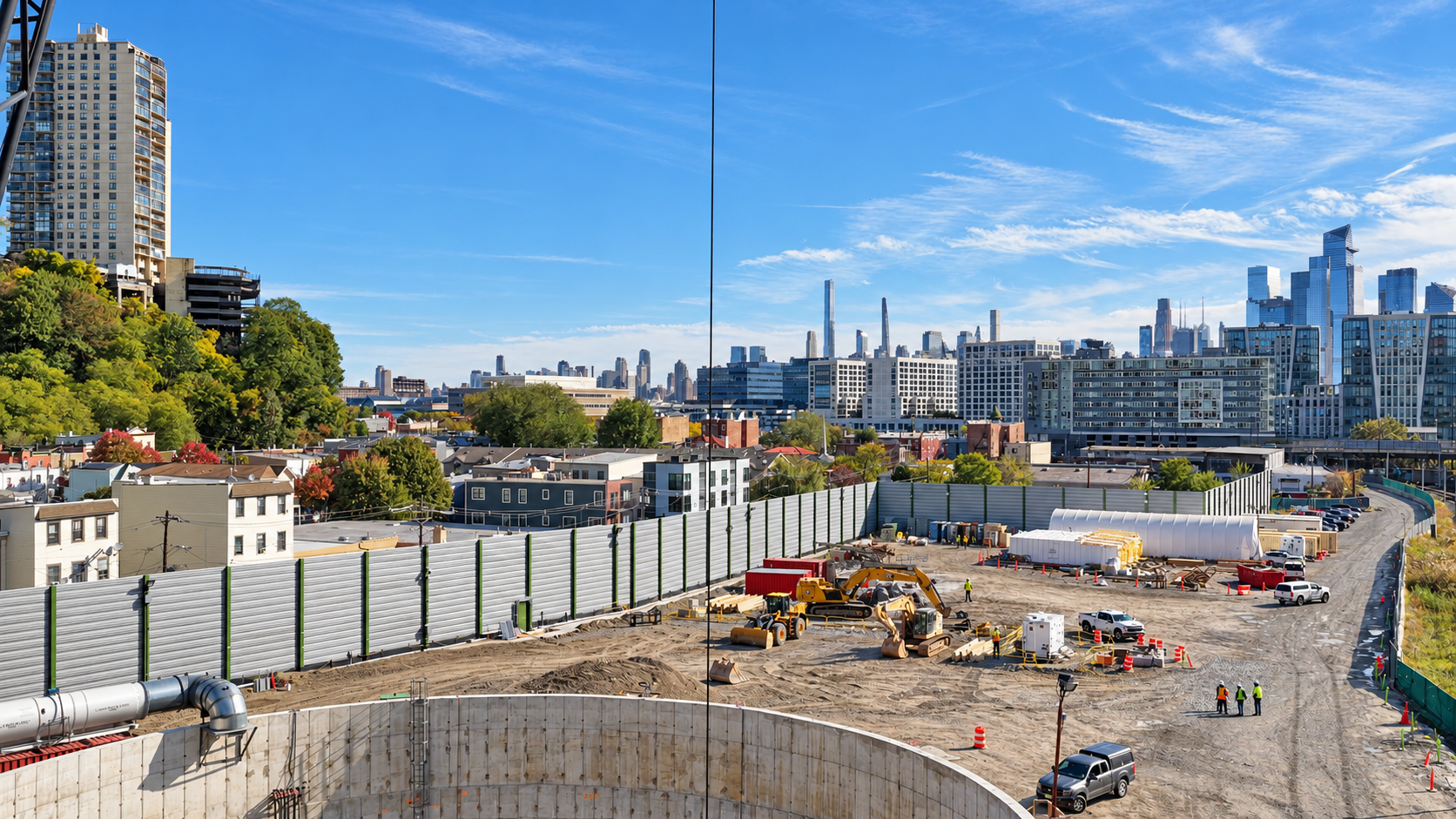
The Hudson County Access Shaft construction site sits between the Palisades and the Hudson River waterfront, with Manhattan visible beyond. The shaft will provide access to remove the machines digging through the Palisades and lower a separate pair of tunnel boring machines that will build the next stretch beneath the Hudson River.
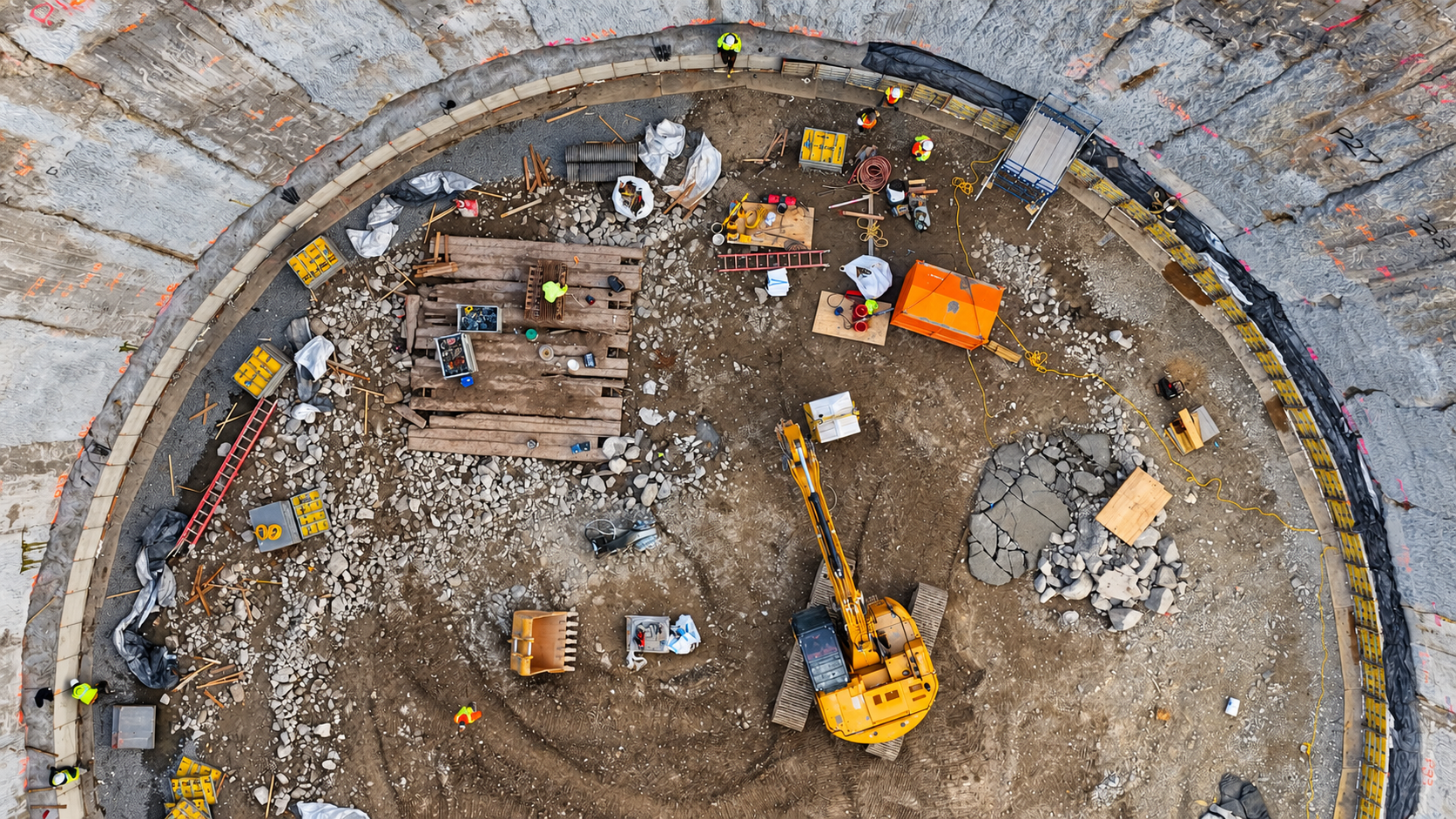
A birds eye view of the bottom of the Hudson County Access Shaft. Excavation is opening the underground space needed to receive the Palisades tunnel boring machines. Currently, the shaft is about 60 feet deep. It will reach 120-130 feet before blasting begins. The concrete perimeter wall holds back surrounding ground and helps keep groundwater out.
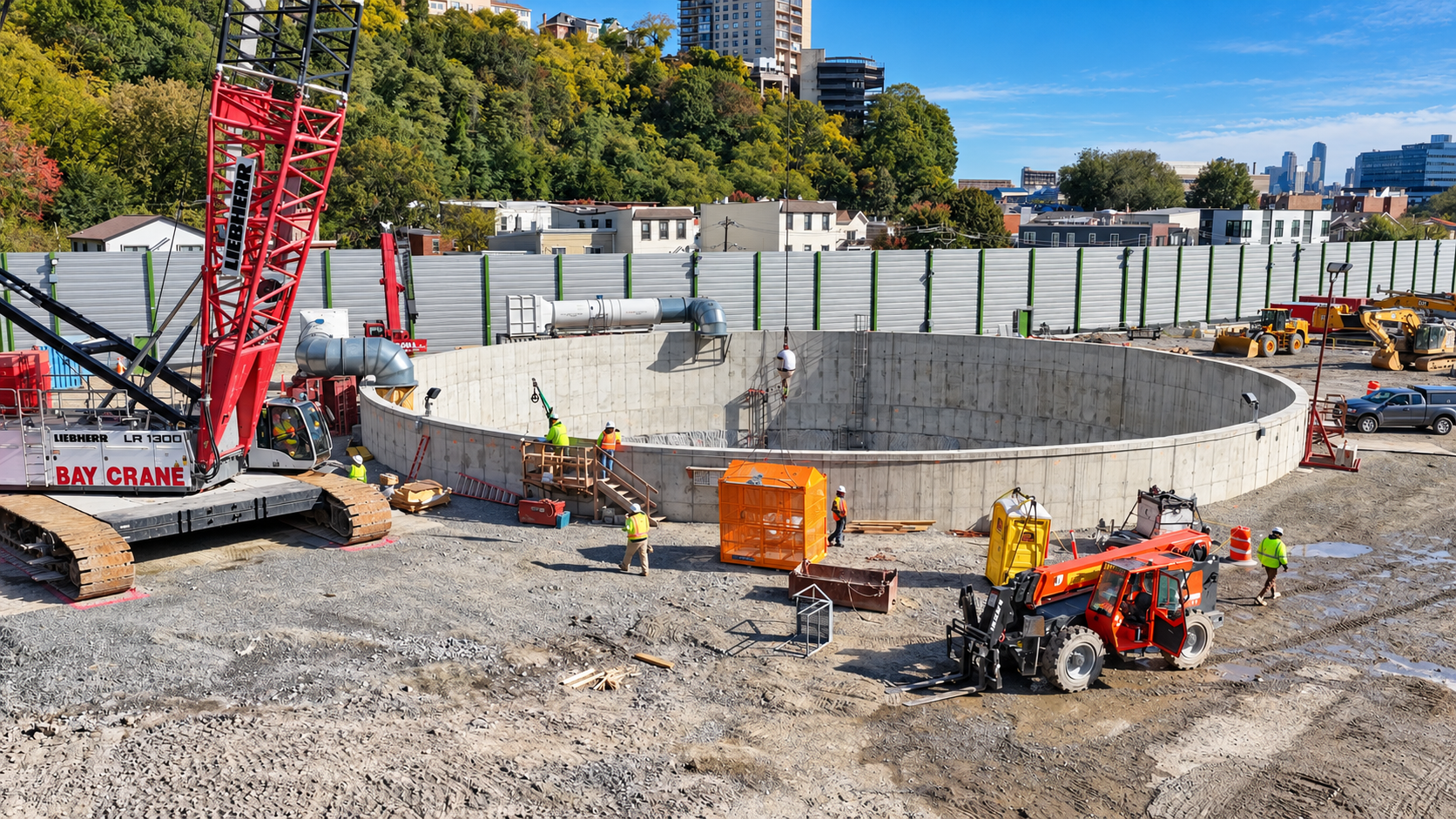
A crawler crane, telehandler and ground crew support work around the rim of the Hudson County Access Shaft. Large ventilation ducts extend over the concrete wall to circulate air below. The crane provides a lifting connection between the surface staging area and the excavation.
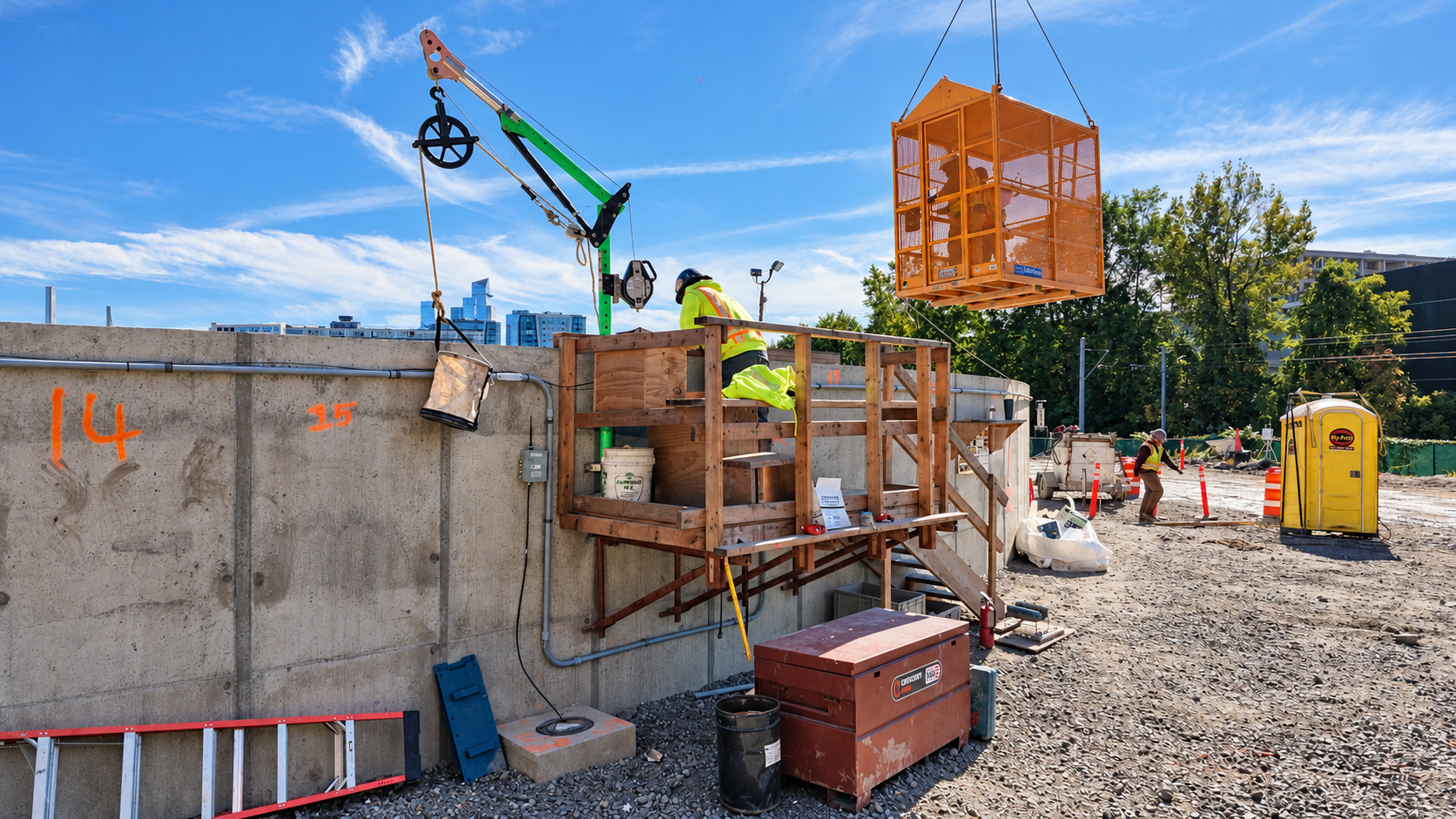
A crane suspends an orange personnel cage beside the shaft’s access platform as workers coordinate the lift. The enclosed cage carries workers between ground level and the work area below, where crews are excavating the shaft.
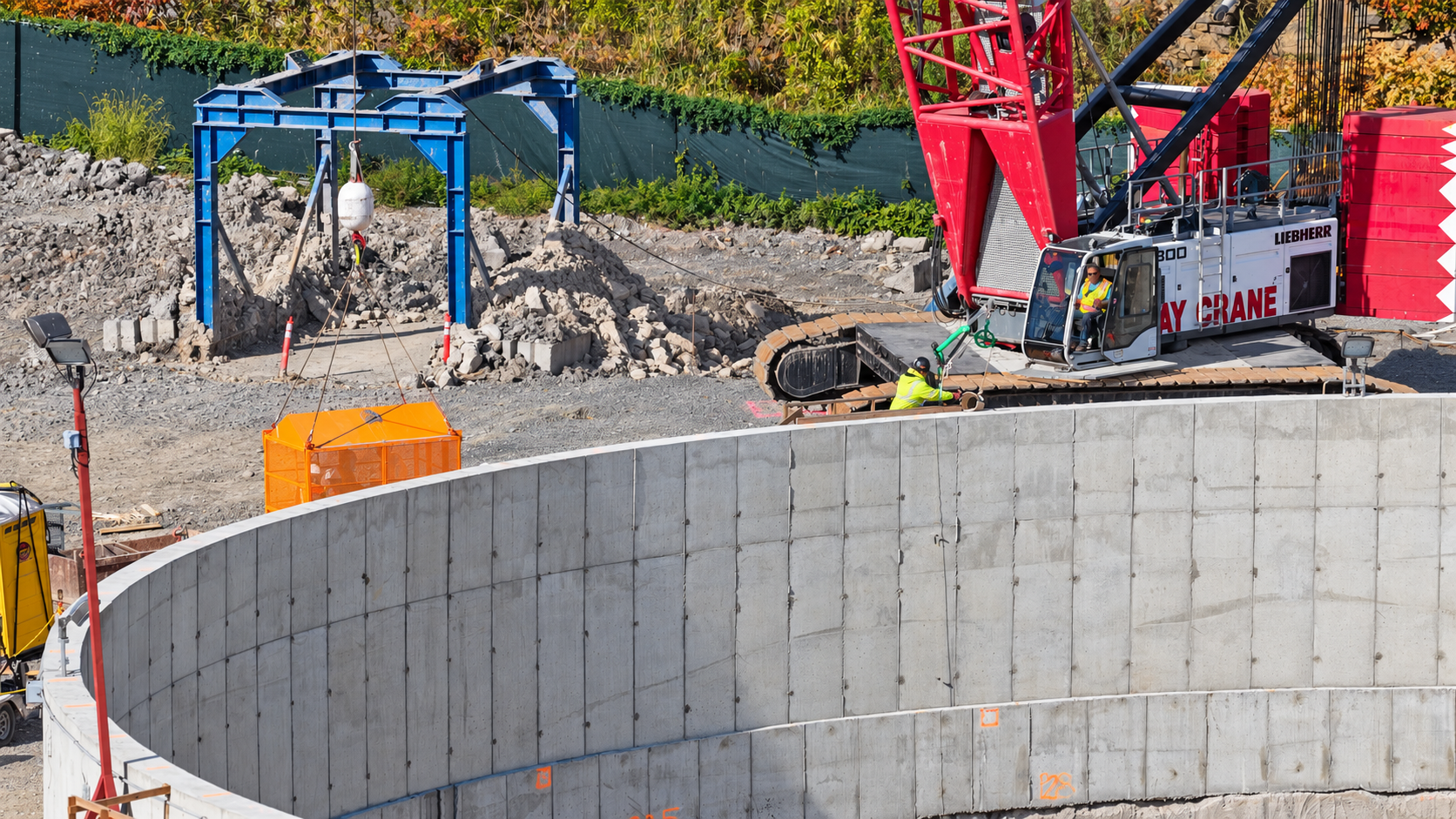
Operating Engineer Gary Lalevee and a worker stationed at the shaft’s edge coordinate a lift involving an orange personnel cage. Suspended from the crane by steel rigging, the cage provides transportation for workers between the surface and the excavation below.
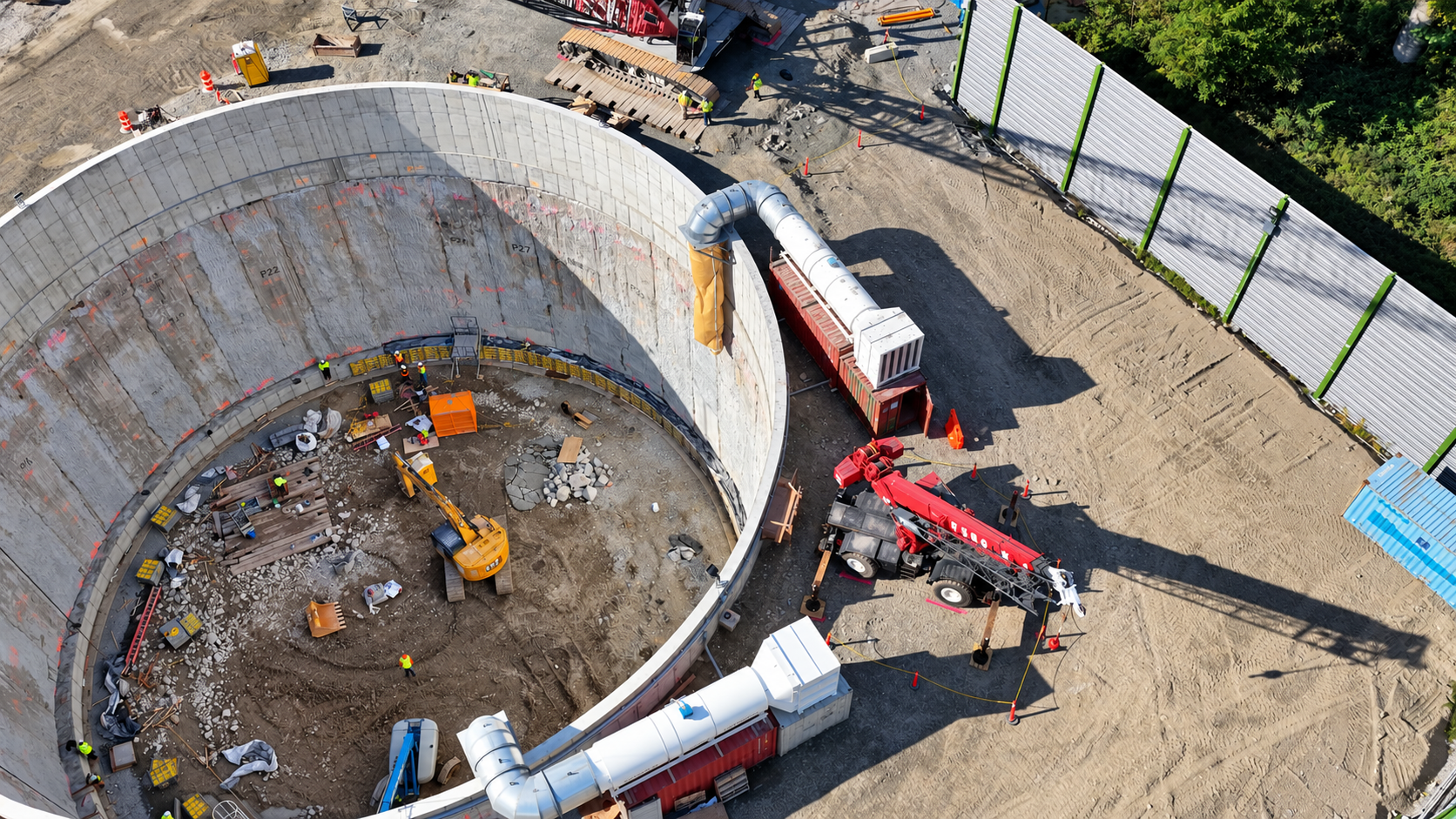
Crews and an excavator work at the bottom of the Hudson County Access Shaft in Weehawken. Large ventilation units outside the shaft connect to ducts extending over the rim, circulating air through the excavation as work progresses deeper underground.
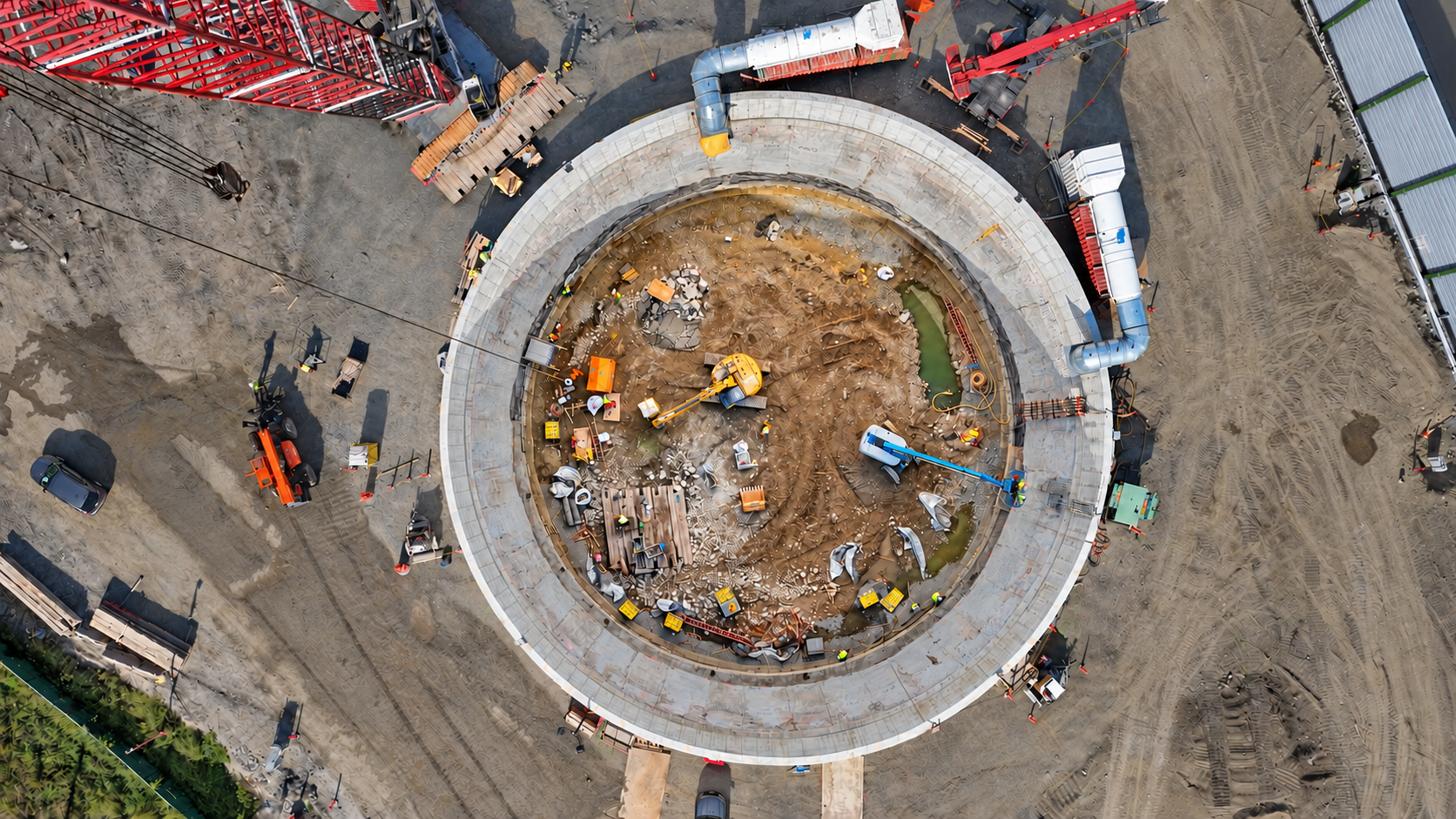
A straight-down aerial view shows excavation underway inside the Hudson County Access Shaft in Weehawken. An excavator handles material on the shaft floor while workers use a boom lift to reach the concrete perimeter wall; cranes and large ventilation ducts support the operation from above.