



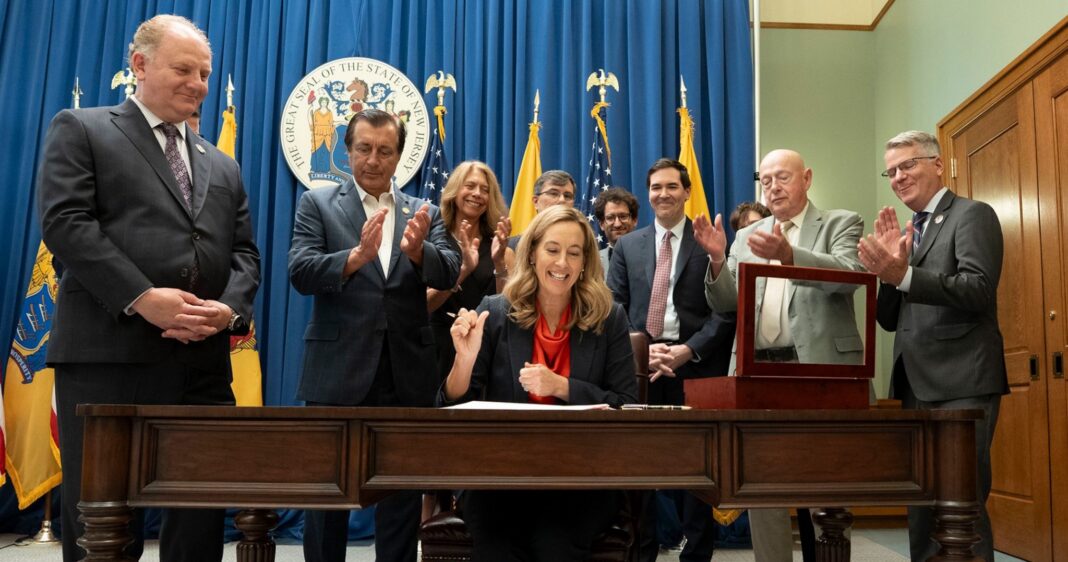
Governor Mikie Sherrill has signed the Power NJ Act, creating a competitive process to procure at least 1,100 megawatts of new nuclear generation in New Jersey.
The bipartisan legislation includes multiple safeguards designed to protect ratepayers while expanding reliable, around-the-clock energy generation.
State officials and lawmakers say the measure positions New Jersey to meet growing electricity demand while supporting economic growth and infrastructure investment.
Governor Mikie Sherrill has signed the Power NJ Act, officially launching New Jersey’s procurement process for a new generation of nuclear power facilities as the state seeks to meet rising electricity demand while strengthening grid reliability.
The legislation, which passed both houses of the Legislature unanimously, directs the New Jersey Board of Public Utilities (NJBPU) and the New Jersey Economic Development Authority (NJEDA) to jointly administer a competitive process to procure at least 1,100 megawatts of new nuclear generation.
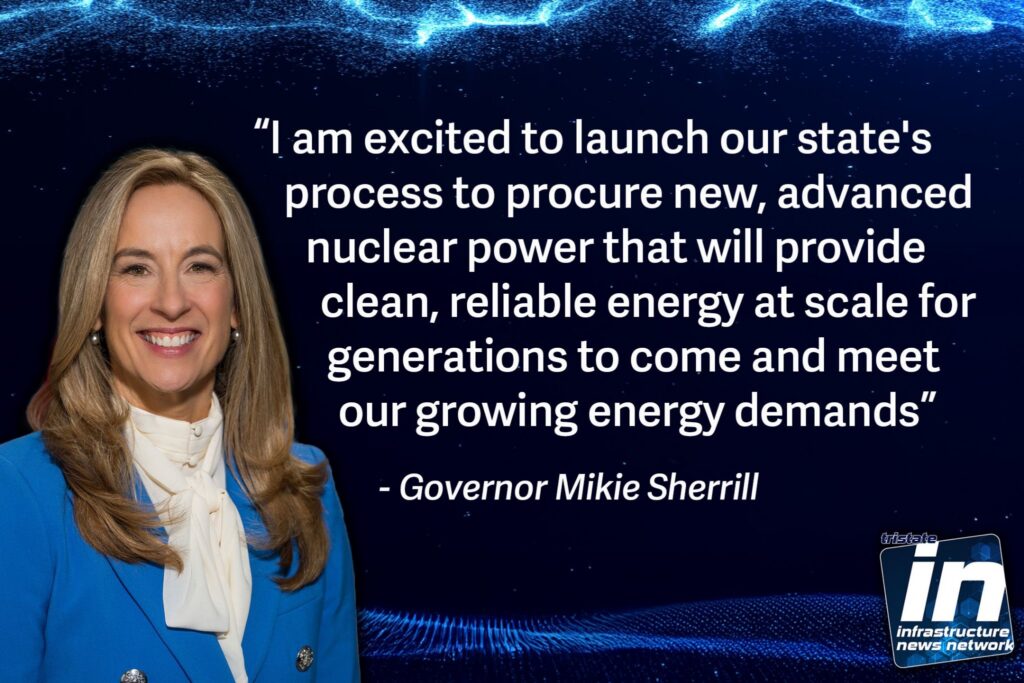
“The decisions we make today will determine the future we leave our kids, so we are putting New Jersey on a path to an affordable and secure energy future,” Governor Sherrill said. “I am excited to launch our state’s process to procure new, advanced nuclear power that will provide clean, reliable energy at scale for generations to come and meet our growing energy demands.”
Unlike traditional project financing models, the legislation includes several provisions intended to protect ratepayers. Customers will not bear construction costs, nor will they be responsible for project cost overruns. Developers must also secure federal financing before receiving final approval, and the NJBPU must determine that any selected project provides a net benefit to ratepayers before construction can proceed.
The legislation was sponsored by Senate President Nicholas Scutari (D-Union), Senator Bob Smith (D-Middlesex), Senator John Burzichelli (D-Gloucester), Assemblyman Wayne DeAngelo (D-Mercer, Middlesex), Assemblyman David Bailey Jr. (D-Gloucester, Salem, Cumberland), and Assemblyman Robert Karabinchak (D-Middlesex), with additional bipartisan co-sponsorship from lawmakers including Senator Latham Tiver (R-Burlington), underscoring the broad legislative support behind the measure.
“As New Jersey strives to meet growing energy demands, we need to be proactive in pursuing reliable and forward-looking solutions,” said Assemblyman Wayne DeAngelo (D-Mercer, Middlesex). “Advanced nuclear technology has the potential to strengthen our energy infrastructure, support good-paying jobs, and provide a stable source of power that can meet future needs.
“This bill is about building a strong energy future while making sure we are creating opportunities and protecting ratepayers.”
“The Power NJ Act is now law, marking a major step toward a more reliable, affordable energy future for New Jersey,” Tiver said. “I was proud to support this bipartisan legislation because our state needs more dependable power generation, stronger grid capacity, and good-paying union construction jobs. Advanced nuclear energy can help meet growing demand while providing reliable, around-the-clock electricity for families, businesses, schools, and hospitals.”
Tiver also noted that the new law builds on legislation enacted earlier this year that removed New Jersey’s longstanding permitting barrier to new nuclear development.
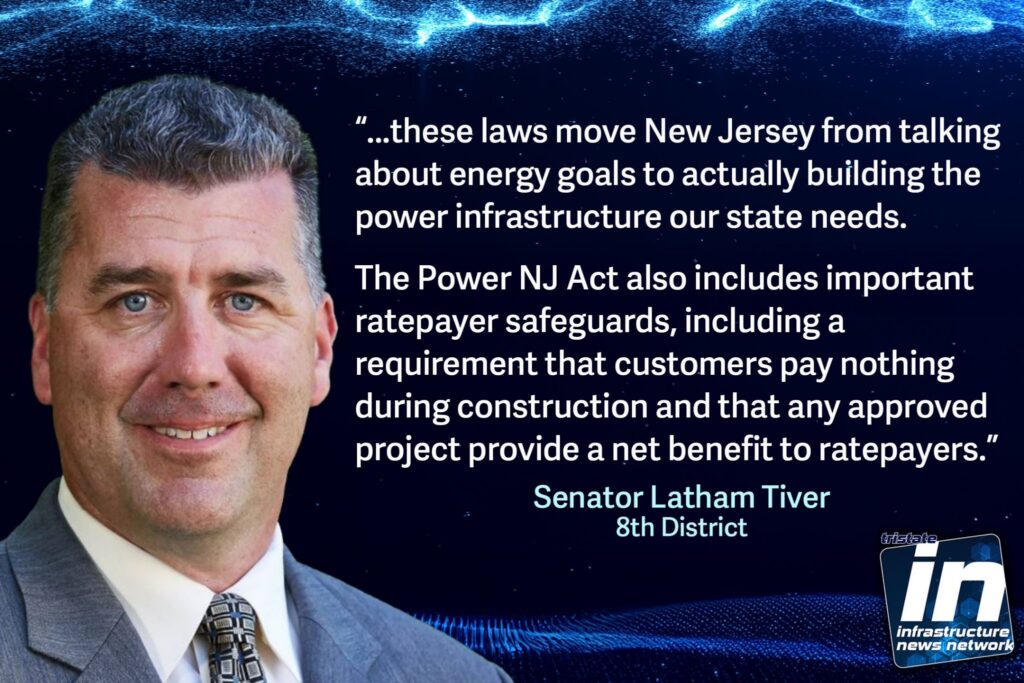
“This progress would not have been possible without first removing New Jersey’s outdated permitting barrier on new nuclear development,” Tiver said. “Together, these laws move New Jersey from talking about energy goals to actually building the power infrastructure our state needs.”
The legislation establishes a multi-year procurement process beginning with a Request for Expressions of Interest expected to be issued within 180 days. Qualified developers will then enter negotiations with the NJBPU and NJEDA before the Board determines whether a proposed project meets the law’s financial, regulatory, and public interest requirements.
Nuclear energy already plays a significant role in New Jersey’s electric grid, providing more than 40 percent of the state’s electricity and more than 80 percent of its carbon-free electricity generation.
Supporters argue that expanding nuclear generation will help address growing electricity demand driven by economic development, electrification, artificial intelligence, and data center expansion while improving long-term grid reliability.
Business organizations across the state praised the legislation following its signing.
The New Jersey Business & Industry Association called the bill “an important step” toward increasing affordable, reliable, and abundant energy, while the New Jersey Chamber of Commerce said expanding advanced nuclear generation would strengthen the state’s long-term economic competitiveness.
If the procurement timeline remains on schedule, the NJBPU is expected to begin accepting developer proposals by early 2027, with final project approvals potentially occurring in 2028.
Source:
Governor’s Office, State of New Jersey. (2026, July 13). Governor Sherrill signs legislation launching procurement process for new nuclear energy and setting strong safeguards to protect ratepayers from costs.
New Jersey Legislature. (2026). Power NJ Act (A4881/S4296).