


When the New Jersey Turnpike opened to drivers in the early 1950s, it came with a promise: tolls were temporary.
The plan was to charge drivers until the cost of building the highway was paid off. After that, the road would become part of the state highway system and toll booths would come down.
To build the Turnpike, the state issued $250 million in revenue bonds, the largest toll-road bond issue in the country at the time. These bonds were designed to be paid off over 35 years, and once they were retired, toll collection was supposed to end. Early Turnpike brochures proudly noted that state law provided for the highway to become toll-free once the debt was cleared.
This idea was not unique to New Jersey. In the mid-twentieth century, other toll roads like the Garden State Parkway and New York Thruway made similar promises. The toll was framed as a temporary user fee, not a permanent cost for drivers.
What Changed?
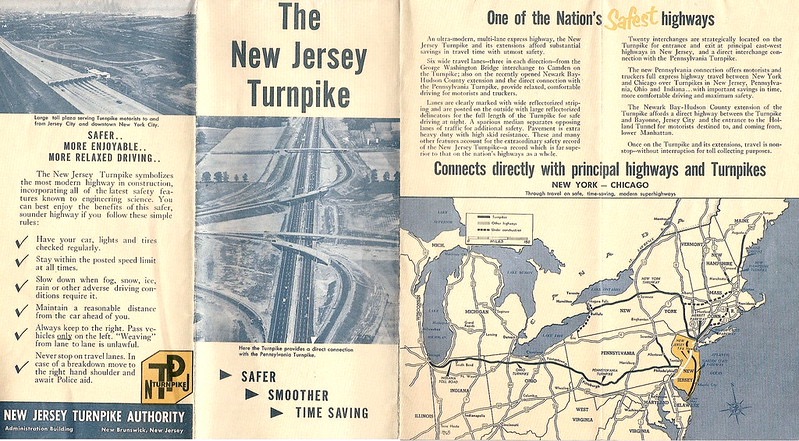
The original NJ Turnpike brochure from 1956. Courtesy of John on Flickr.
Several things happened to derail that original vision. First, the Turnpike quickly became a vital piece of infrastructure as traffic surged beyond expectations. That led to expansions, including widening projects, new interchanges and a major 1956 connection to the Pennsylvania Turnpike. Each new project required additional funding, and that meant more bonds. With every new round of borrowing, the timeline for removing tolls was pushed further into the future.
The Turnpike Authority was also set up as a self-funding agency. It was responsible not only for debt payments but also for the day-to-day operation of the road, including maintenance, snow removal, and policing. If the tolls had disappeared, the state would have needed to step in and fund those costs through taxes or general revenue. That never happened. Instead, it was politically easier to leave tolls in place.
By the 1970s and 1980s, the idea of a toll-free Turnpike had largely faded. Rather than phasing tolls out, the state began raising them periodically to keep up with inflation and to pay for ongoing upgrades.
Toll Money Finds New Uses
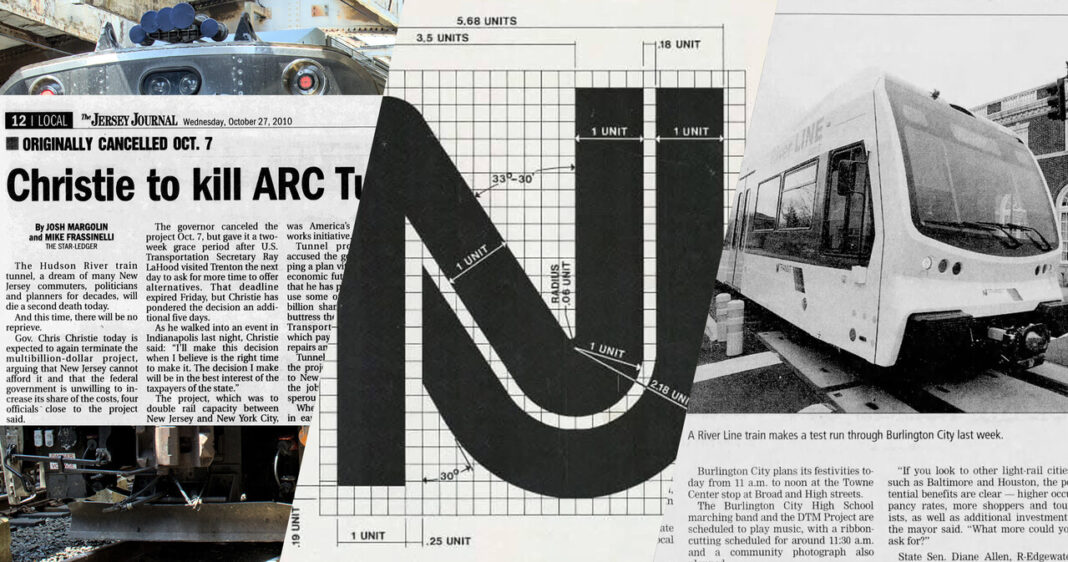
In time, toll revenue became more than just a way to fund road maintenance. It became a tool for financing broader transportation goals. During the late 2000s, Governor Jon Corzine backed a plan to increase tolls significantly. Between 2008 and 2011, tolls on both the Turnpike and Garden State Parkway were doubled. The revenue was supposed to help fund the Access to the Region’s Core (ARC) rail tunnel and other large-scale transit projects.
Although the ARC tunnel was later canceled, the toll money remained in use. By 2014, more than $300 million in annual toll revenue was being directed to NJ Transit and the state’s general transportation fund. Money that had once gone exclusively to the Turnpike was now helping cover the costs of buses, trains, and other infrastructure.
This shift also changed the political landscape. Tolls became a convenient funding source that did not require raising taxes. The Turnpike and Parkway were producing over a billion dollars in annual toll revenue combined. Removing tolls or even freezing rates would have left a massive hole in the state’s transportation budget.
What Tolls Look Like Today
Fast forward to the present, and tolls are not only still in place, they are rising. As of 2024, a one-way trip down the full length of the Turnpike in a passenger car costs about $20 with E-ZPass. Drivers without E-ZPass pay even more through license plate billing.
In 2020, the state approved a new policy that allows for annual toll increases of up to three percent. While the toll booths themselves are beginning to disappear, replaced by electronic tolling and license plate readers, the fees are as present as ever. The state has moved toward a cashless system in the name of efficiency and traffic flow, but the cost of driving the Turnpike continues to grow.
The Road Ahead
For those who remember the original pitch, the current situation feels like a broken promise. What was once framed as a short-term fee to build a highway has turned into a permanent and growing cost for drivers.
At the same time, the funding reality is hard to ignore. The Turnpike and Parkway carry millions of vehicles each year and require constant maintenance and upgrades. Without tolls, the state would need to find billions in new revenue to keep them running.
It should also be noted that approximately 1/3 of all New Jersey Turnpike traffic (and 1/2 of heavy truck traffic) is from out-of-state drivers. Tolls enable the state to make those out-of-state drivers pay for maintenance and upkeep. Without tolls, many would get a free ride.
There are no serious proposals on the table to eliminate tolls. Instead, the focus is on modernizing toll collection and expanding the roads to handle future traffic demands. While the booths may eventually vanish from the landscape, the tolls themselves are unlikely to go anywhere.
Sources
New Jersey Turnpike Authority. (2024). Toll rates and information. Retrieved from https://www.njta.com/toll-rates
NJ Spotlight News. (2014, September 29). Turnpike tolls diverted to NJ Transit costs, not road maintenance. Retrieved from https://www.njspotlightnews.org
ROI-NJ. (2020, May 27). Turnpike Authority approves toll hikes to fund $24 billion capital plan. Retrieved from https://www.roi-nj.com
The New York Times. (2007, October 10). Corzine’s toll hike proposal aims to fund state debt and transit projects. Retrieved from https://www.nytimes.com
CentralJersey.com. (2026, January 27). How to use winter road salt responsibly. Retrieved from https://centraljersey.com/2026/01/27/how-to-use-winter-road-salt-responsibly/
New Jersey Department of Transportation. (n.d.). Municipal Aid Grant Program overview. Retrieved from https://www.state.nj.us/transportation/