


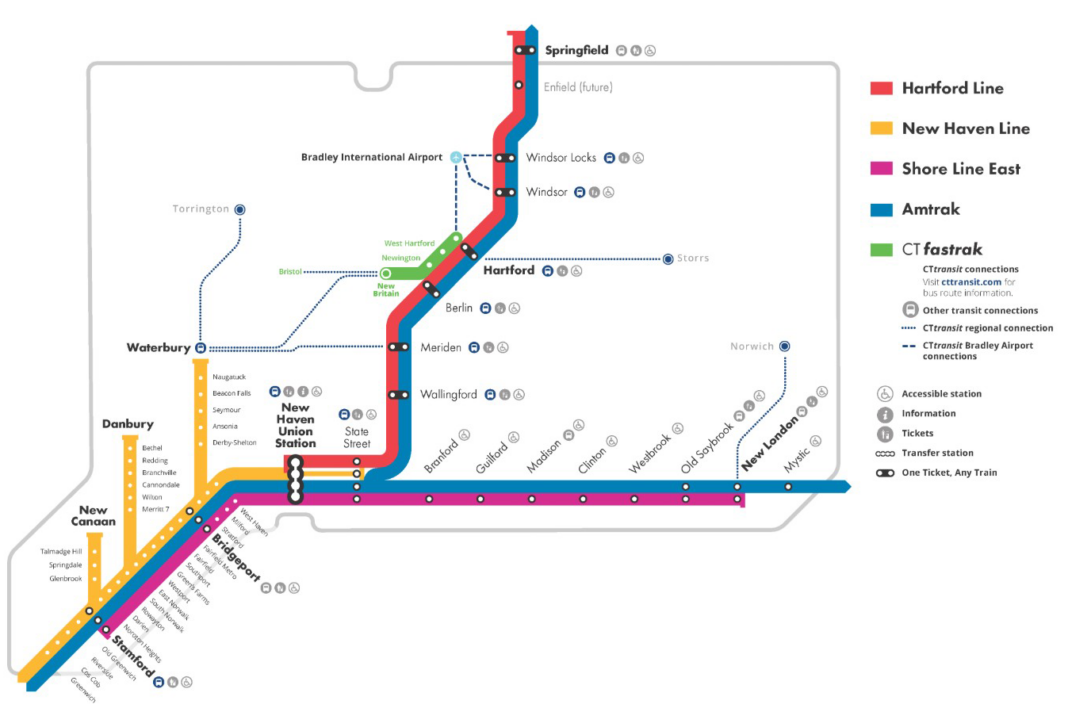
A long-overdue modernization effort is coming to the Metro-North Railroad New Haven Line, where officials are moving to replace aging passenger information systems with a more integrated, real-time digital platform.
The upgrades, reported by CT Insider, focus on improving how riders receive critical service information especially during delays, disruptions, and peak-hour congestion.
From Patchwork to Platform
For years, passenger communications along the New Haven Line have relied on a fragmented mix of legacy systems: static signage, inconsistent LED boards, and often unintelligible public address announcements. The result has been a commuter experience defined less by service reliability than by information gaps.
The planned improvements aim to standardize and centralize that system.
At the core of the project:
- Real-time train tracking integration
- Upgraded digital display boards with dynamic updates
- Improved audio announcement clarity and consistency
- System-wide synchronization between control centers and stations
In plain terms: fewer contradictions between what riders see, hear, and actually experience.
The Operational Value: Information as Infrastructure
While the project does not increase track capacity or reduce travel times, it addresses a critical—but often overlooked—component of rail operations: information reliability.
Transit planners increasingly treat passenger information systems as essential infrastructure, not an add-on. When disruptions occur, the ability to deliver accurate, timely updates can:
- reduce platform crowding
- improve boarding efficiency
- prevent cascading delays caused by rider confusion
- maintain public confidence in the system
For a corridor as heavily utilized as the New Haven Line, even marginal gains in rider flow and decision-making can have system-wide impacts.
Phased Rollout, Targeted Impact
The upgrades will be implemented in phases across Connecticut stations, including high-volume hubs such as Stamford, Bridgeport, and New Haven.
Rather than a single systemwide switchover, riders can expect incremental improvements as installations and testing proceed. Some temporary disruptions are likely during deployment, but officials characterize them as limited in scope, primarily tied to equipment installation rather than service outages.
Funding and Context
The project is funded through a combination of state and federal transportation dollars, aligning with broader efforts to modernize aging rail infrastructure across the Northeast.
While less visible than track replacements or rolling stock upgrades, investments in communication systems are increasingly prioritized as agencies confront rising rider expectations shaped by real-time data in other sectors.
A Necessary Upgrade, Not a Flashy One
For infrastructure observers, the significance of the project lies less in innovation than in standardization and execution.
This is not a leap forward in rail technology, it is a correction of longstanding deficiencies.
But for the hundreds of thousands of riders who depend on the New Haven Line, the impact could be immediate and tangible: clearer information, fewer missed connections, and a system that behaves less like a black box when things go wrong.
Sources:
Gurciullo, B. (2026, March 30). Metro-North commuters in CT will soon see train info easier, hear announcements better. CT Insider.https://www.ctinsider.com/news/article/ct-metro-north-train-station-upgrade-audio-visual-22096639.php
Metropolitan Transportation Authority. (2025). 2025–2029 capital plan.
https://future.mta.info/capitalplan