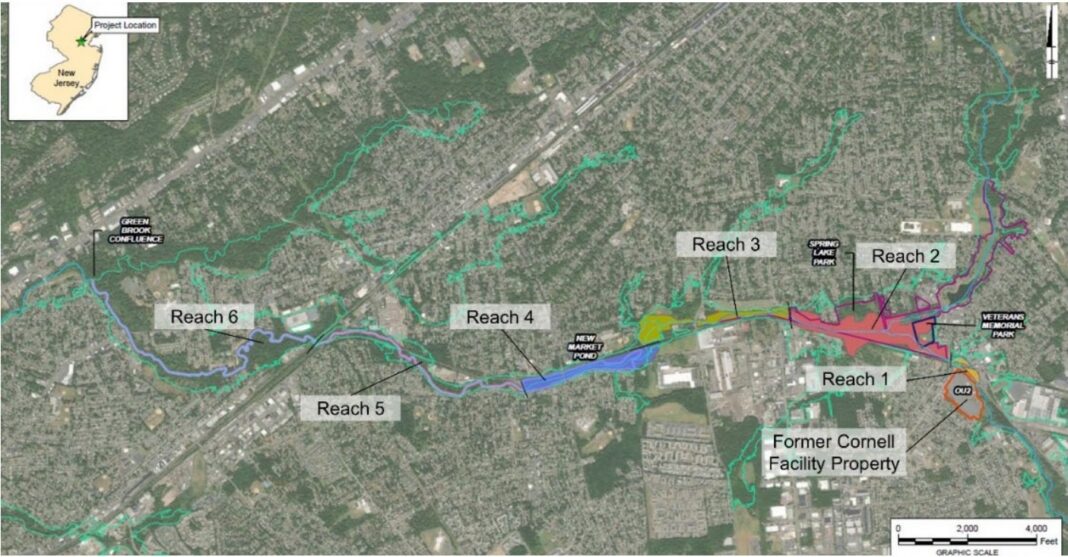



This {waves hand at map of New Jersey} doesn’t maintain itself. It’s been a packed week across utilities, coastal resilience, nuclear policy, cyber risk, dredging, and clean‑energy transmission. Take five minutes to stay up to date.
JCP&L rate case uses offsets to hold bills flat until 2028
JCP&L has filed a rate case that would normally raise residential bills, but the utility is proposing an unusual structure: using accumulated credits and offsets to keep customer charges flat until January 2028. The filing seeks recovery of storm‑response costs and grid‑modernization investments under EnergizeNJ, while delaying the impact on households for nearly two years. Once offsets expire, typical residential bills would rise about 8.8%, or roughly $14 per month for an average user. The approach reflects growing pressure to balance affordability with reliability upgrades.
Federal funding secured for Monmouth County beach replenishment
New federal dollars are headed to Monmouth County for another round of beach replenishment, supporting dune reinforcement and sand placement along erosion‑prone stretches of the Shore. The funding, championed by Rep. Frank Pallone, aims to protect homes, tourism assets, and critical infrastructure from increasingly severe coastal storms. While replenishment remains controversial due to cost and long‑term sustainability concerns, local officials argue it is essential for both safety and economic stability.
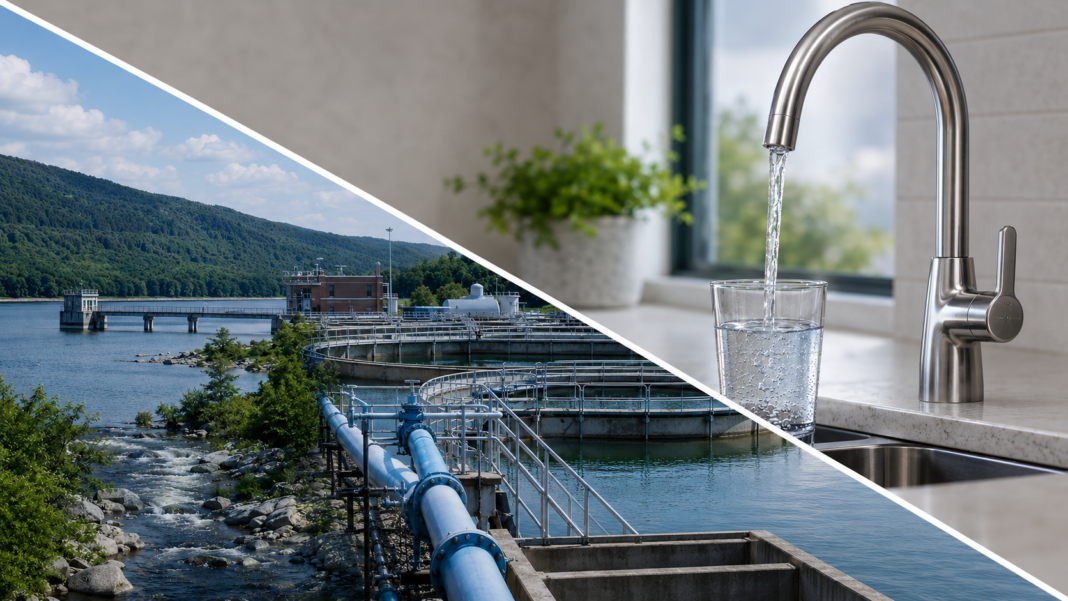
Jefferson Township receives PFAS treatment funding for Moosepac Wells
Jefferson Township has secured financing for a permanent polyfluoroalkyl substances (PFAS) filtration system for its Moosepac Wells. The township received approval from the New Jersey Infrastructure Bank to fund the project intended to ensure continued delivery of safe and reliable drinking water and meet state and federal requirements. Construction for the project is expected to begin in the fall.
Cyber vulnerabilities put NJ water systems at risk
New Jersey’s water utilities, especially smaller systems, remain vulnerable to cyberattacks due to outdated SCADA systems, weak passwords, and limited network segmentation. Recent national incidents have shown hackers can manipulate chemical dosing or disable pumps, raising concerns about public‑health risks. Cybersecurity must be treated as core infrastructure, not an IT side project, as water systems become increasingly digital.
Read more: https://tristateinfrastructurenews.com/could-hackers-shut-down-new-jerseys-water-systems/
Oyster Creek moves forward with license termination
The Nuclear Regulatory Commission has approved Oyster Creek’s plan to terminate its operating license, advancing the long‑running decommissioning of the former New Jersey nuclear plant. The approval clears a major regulatory hurdle and shifts the site fully into restoration and redevelopment planning, while spent‑fuel management and radiological cleanup continue.
Legacy nuclear site prepares for four SMR‑300 reactors
A 49‑year‑old U.S. nuclear site is preparing to host four SMR‑300 small modular reactors, positioning itself as a next‑generation clean‑energy hub. Existing infrastructure – grid interconnections, cooling systems, and community familiarity – makes legacy nuclear campuses ideal for modular reactor deployment. If built, the SMRs would provide firm, zero‑carbon power to support data centers, industrial loads, and regional decarbonization goals.
Canadian hydropower now flowing into New York City via CHPE
The Champlain Hudson Power Express (CHPE) transmission line is now delivering Canadian hydropower directly into New York City through a buried HVDC cable running under Lake Champlain and the Hudson River. The project supplies up to 1,250 MW of firm, low‑carbon electricity, helping New York meet clean‑energy mandates and reduce reliance on in‑city fossil plants.
Read more: https://tristateinfrastructurenews.com/chpe-brings-canadian-hydropower-to-ny/
Bridge outage to cause major disruptions for Amtrak and NJ Transit
A critical Northeast Corridor bridge outage in New Jersey has forced Amtrak and NJ Transit to reroute trains and reduce capacity through one of the system’s busiest segments. Riders are experiencing delays and schedule changes that could last weeks, underscoring the fragility of aging rail infrastructure and the urgency of Gateway‑related upgrades.
Nantucket blade wash‑ups highlight offshore wind maintenance gaps
A series of turbine‑blade wash‑ups near Nantucket—66 of 72 blades from offshore operations—has sparked questions about maintenance standards and retrieval protocols. Rather than framing the incident as a failure of offshore wind itself, the report emphasizes the need for stronger oversight of equipment integrity, better storm‑damage monitoring, and clearer rules for recovering debris to protect coastal ecosystems.
Read more: https://www.ecoportal.net/en/turbine-blade-nantucket-beaches-66-of-72-blades/31027/
Ocean county waterways set for $8.4m dredging project
An $8.4 million dredging program will deepen key Ocean County waterways, improving navigation for commercial operators, recreational boaters, and emergency responders. The project will remove shoaling that has built up over years, supporting tourism and fishing while requiring careful environmental management of dredged material.
Read more: https://patch.com/new-jersey/barnegat-manahawkin/ocean-county-waterways-set-8-4m-dredging-project
Faces of infrastructure: Ben Hertz‑Shargel
A profile of Ben Hertz‑Shargel explores his work on grid modernization, virtual power plants, and policies that push large energy users to invest in their own generation and grid upgrades. His career reflects how individual experts are shaping the rules of the emerging AI‑era energy system.
Read more: https://tristateinfrastructurenews.com/faces-of-infrastructure-ben-hertz-shargel/
Have a good week!