


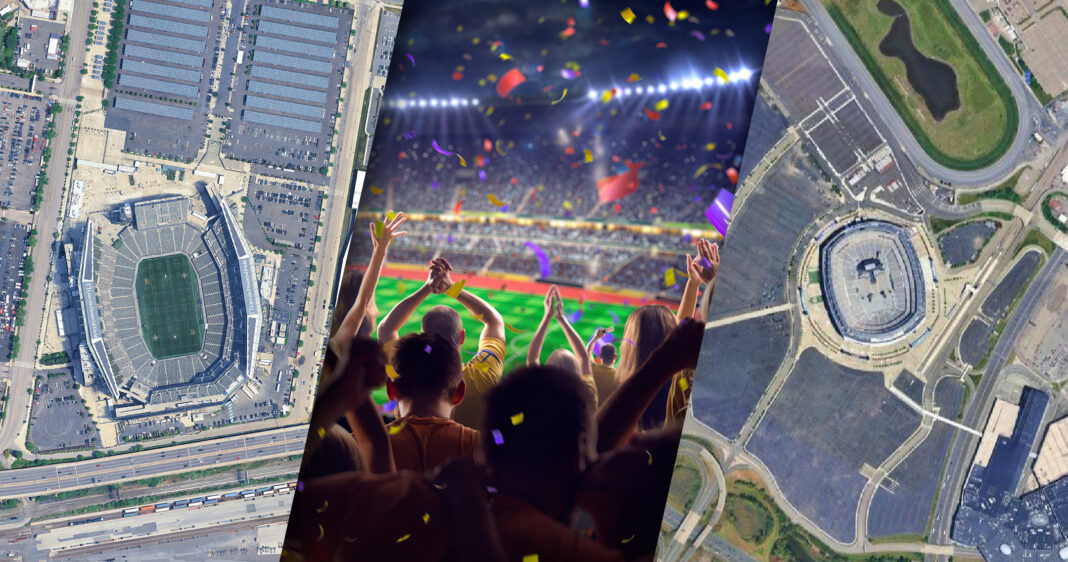
World Cup hosts New Jersey and Philadelphia approached event transportation in fundamentally different ways.
Philadelphia secured federal funding and corporate sponsorships to control transportation costs
New Jersey passed the costs onto fans
Two weeks into the 2026 FIFA World Cup, the transportation story is no longer about whether fans can get to games. For the most part, they can. The more important question is who is paying the price for moving them. A comparison between Philadelphia and the New York/New Jersey host region reveals two dramatically different approaches to managing World Cup transportation. Philadelphia largely used sponsorships, federal funding, and existing transit operations to absorb costs. New Jersey, by contrast, has pushed a larger share of the burden onto riders, commuters, and local residents. The result is that Philadelphia’s transportation plan has largely been viewed as a public benefit while New Jersey’s has increasingly become a source of public frustration.
The difference begins with funding. Philadelphia secured millions in federal transportation support ahead of the tournament and aggressively pursued private-sector partnerships. Most notably, Airbnb partnered with Philadelphia Soccer 2026 and SEPTA to provide free rides home after World Cup matches. The sponsorship transformed transportation from a cost burden into a fan amenity. The message was straightforward: use transit and we’ll make it easier and cheaper.
New Jersey’s message was very different. Officials encouraged fans to use mass transit rather than drive, but the transportation system simultaneously imposed some of the highest event-related transit costs seen anywhere in the tournament. NJ Transit round-trip rail fares approaching $100 became one of the most discussed aspects of the region’s transportation plan.
The contradiction was obvious. If public officials want fans to leave their cars at home, transit must be attractive. Instead, many visitors found themselves comparing expensive train tickets against driving, rideshare options, or informal transportation arrangements. That created a second problem that has received less attention: the impact on people who are not attending World Cup matches.
In order to accommodate tournament operations, parking lots and staging areas throughout the Meadowlands region have been repurposed, restricted, or subjected to enhanced security controls. The resulting disruptions have extended beyond ticket holders and into the daily routines of North Jersey commuters and businesses. Residents have encountered altered traffic patterns, increased congestion around transportation hubs, and reduced flexibility in areas surrounding World Cup operations. While those impacts may be temporary, they represent a real cost imposed on the broader public.
The transportation plan effectively asks local residents to absorb inconvenience while visitors pay premium prices for access. Neither group is particularly happy with the arrangement, and the rideshare situation has become another flashpoint. Unlike many major event venues where rideshare pickup and drop-off areas are located adjacent to stadium facilities, World Cup transportation planning in the Meadowlands requires Uber and Lyft users to utilize designated areas located roughly 1.3 miles from MetLife Stadium. For able-bodied visitors, that may simply be an inconvenience. But for elderly attendees, families with children, visitors unfamiliar with the area, and individuals with mobility limitations, it becomes a much more significant challenge.
Accessibility advocates have increasingly argued that transportation planning should not be judged solely on vehicle throughput and crowd management metrics. The ability of all users to safely and reasonably access an event is equally important.
That is where Philadelphia’s approach appears to have produced better results. Philadelphia’s transportation strategy was not perfect; traffic increased, transit agencies faced operational pressure, and residents experienced disruptions associated with hosting a global sporting event. But the city largely avoided creating additional barriers for the very people officials wanted to move. Transit fares remained familiar. Sponsored rides reduced costs. Event transportation was integrated into existing public transit networks rather than layered on top of them through special pricing structures and complex access arrangements. Most importantly, Philadelphia appears to have minimized the burden placed on people who were not attending matches.
Infrastructure planners increasingly evaluate mega-events based not only on how successfully they move attendees but also on how much disruption they create for everyone else. A transportation system that efficiently moves 80,000 fans while inconveniencing hundreds of thousands of commuters may be operationally successful but politically unsuccessful. That appears to be the emerging challenge facing New Jersey. The region deserves credit for handling enormous crowds and avoiding major transportation failures. Moving World Cup-scale attendance is an extraordinarily difficult task. But operational success does not eliminate questions about cost allocation, accessibility, and public impact.
The first two weeks of the tournament suggest that Philadelphia and New Jersey made fundamentally different policy choices. Philadelphia sought outside funding to reduce burdens on riders. New Jersey relied more heavily on fares, restrictions, and operational controls to manage demand. Both systems are functioning. Only one appears to have generated significant public goodwill in the process.
As the World Cup enters its most heavily attended stages, transportation officials across North America should be paying close attention. The lesson may not be about trains, buses, or stadium access at all. It may be about who bears the cost when a region hosts one of the world’s largest sporting events.
Sources:
SEPTA. (2024). Service plan for FIFA World Cup 2026. https://wwww.septa.org/news/service-plan-fifa-world-cup-2026/
Philadelphia Soccer 2026 Host Committee. (2024). Airbnb teams up with Philadelphia Soccer 2026 to get fans home with free SEPTA rides after FIFA World Cup 26 matches. https://phillyfwc26.com/press/airbnb-teams-up-with-philadelphia-soccer-2026-to-get-fans-home-with-free-septa-rides-after-fifa-world-cup-26-matches
Philadelphia Voice. (2024). SEPTA gets federal funding for World Cup transportation improvements. https://www.phillyvoice.com/septa-world-cup-transit-service-fanfest/
Fox43. (2024). Fetterman secures over $8 million for transit ahead of FIFA World Cup. https://www.fox43.com/article/news/local/fetterman-secures-over-8-million-for-transit-ahead-of-fifa-world-cup
NJ Transit. (2024). FIFA World Cup 2026™: New York New Jersey Host Committee and NJ Transit announce transportation plan. https://www.njtransit.com/press-releases/fifa-world-cup-2026tm-new-york-new-jersey-host-committee-and-nj-transit-announce
New Jersey Monitor. (2026). NJ Transit World Cup transportation costs and fares. https://newjerseymonitor.com/2026/04/17/nj-transit-world-cup-metlife/
New York Post. (2026, June 16). Soccer fans face travel headaches over World Cup matches at MetLife. https://nypost.com/2026/06/16/us-news/soccer-fans-face-more-travel-hell-over-world-cup-match-at-metlife/
New York Post. (2026, June 12). Travel plans for thousands of fans still up in the air. https://nypost.com/2026/06/12/us-news/world-cup-chaos-expected-as-travel-plans-for-50000-fans-still-up-in-the-air-for-first-new-jersey-game/
New York Post. (2026, June 22). Storms set to wallop NYC area for local World Cup match, creating ‘perfect storm’ of chaos for commuters. https://nypost.com/2026/06/22/us-news/storms-set-to-wallop-nyc-area-for-local-world-cup-match-creating-perfect-storm-of-chaos-for-commuters/
Higgs, L. (2026, June 10). World Cup 2026: NJ Transit details service plan for MetLife Stadium matches. NorthJersey.com / The Record. https://www.northjersey.com/story/news/transportation/2026/06/10/nj-transit-world-cup-2026-metlife-stadium-service-plan/74012345007
Higgs, L. (2026, June 14). Fans frustrated by long walks, delays, and confusion at first MetLife World Cup match. NorthJersey.com / The Record. https://www.northjersey.com/story/news/2026/06/14/world-cup-metlife-stadium-nj-transit-fan-complaints/74045623007/
Mooney, J. (2026, May 22). NJ Transit braces for World Cup crowds with limited rail capacity and major operational challenges. NJ Spotlight News. https://www.njspotlightnews.org/2026/05/nj-transit-world-cup-rail-capacity-challenges-metlife
Johnson, T. (2026, April 30). World Cup 2026: Transportation upgrades lag as NJ prepares for massive crowds. NJ Spotlight News. https://www.njspotlightnews.org/2026/04/world-cup-2026-nj-transportation-upgrades-delays/